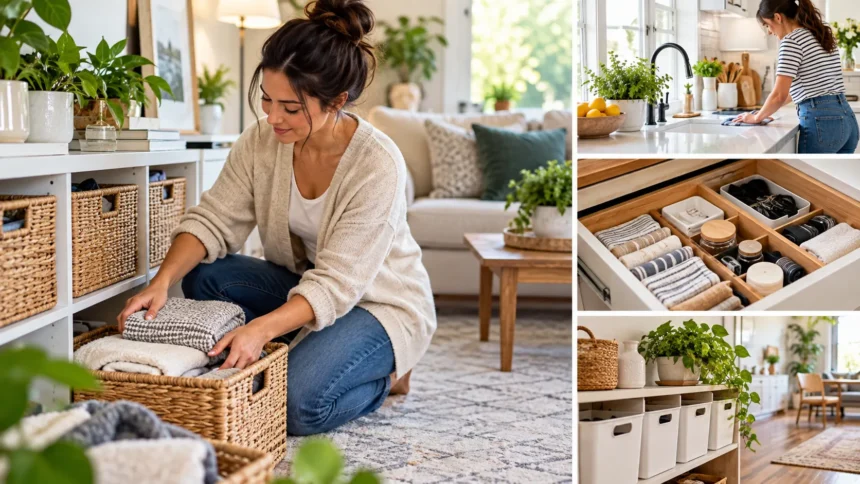
Keeping your home organized does not require spending hours cleaning every day. In most homes, clutter builds because small tasks are delayed until they become bigger problems. A few simple daily habits can prevent mess from piling up, make cleaning easier, and help your living space feel calmer without turning home organization into another exhausting responsibility.
The most effective home organization routines are usually the simplest ones. Returning items after using them, clearing surfaces, managing laundry, and spending a few minutes tidying high-traffic areas can make a noticeable difference. These habits work because they prevent clutter instead of waiting until your home becomes messy enough to require a major cleanup.
You do not need a perfectly organized home for these routines to work. The goal is to create manageable systems that fit naturally into everyday life and are easy for everyone in the household to follow. By consistently completing a few small tasks, you can maintain a cleaner, more functional home with much less effort.
Make Your Bed Every Morning
Making your bed is one of the simplest daily organization habits, yet it can immediately make a bedroom look more orderly. It only takes a few minutes and creates a clear visual improvement at the beginning of the day. Starting with one completed task can also encourage you to keep other areas of the bedroom tidy.
A made bed naturally becomes the visual center of a cleaner bedroom. When the bed looks neat, clothing on the floor, scattered accessories, or cluttered bedside tables become easier to notice. This awareness can encourage you to put away small items before they develop into larger piles that require more time to organize later.
You do not need decorative pillows or a complicated bedding routine. Simply straighten the sheets, pull up the blanket, and arrange the pillows in a way that feels practical. The purpose is to establish an easy morning habit that takes very little effort while helping your bedroom feel calmer and more organized throughout the day.
Put Things Away Immediately After Using Them
One of the most effective ways to keep your home organized is to return belongings to their proper place as soon as you finish using them. Leaving one item on a countertop may seem harmless, but several small items quickly turn into visible clutter. Putting things away immediately prevents these small messes from accumulating.
This habit works particularly well for everyday belongings such as shoes, jackets, toiletries, kitchen tools, chargers, and children’s toys. Instead of telling yourself that you will put something away later, take the extra few seconds to return it immediately. Those tiny actions can eliminate the need for lengthy cleanup sessions at the end of the week.
Making this habit easier requires giving frequently used items clear storage locations. If you regularly hesitate because you do not know where something belongs, create a permanent place for it. Hooks, trays, baskets, shelves, and drawers can provide convenient homes that make putting belongings away almost automatic.
Follow the One-Minute Rule for Small Tasks
Small household tasks are easy to postpone because they do not feel urgent. Unfortunately, several unfinished tasks can quickly make a home look disorganized. A useful approach is to complete anything that takes roughly one minute whenever you notice it, rather than adding another small job to your mental list.
Examples include hanging up a jacket, throwing away packaging, returning a cup to the kitchen, placing shoes on a rack, or putting toiletries back into a drawer. Each task may seem insignificant individually, but completing these actions immediately prevents clutter from spreading throughout the home and becoming more difficult to manage.
The one-minute rule also helps reduce decision fatigue. Instead of constantly thinking about tasks that still need attention, you complete them before they become another responsibility. Over time, this simple organization habit can significantly reduce visible mess and make keeping your home tidy feel much easier.
Clear Kitchen Counters Every Evening
Kitchen counters naturally attract clutter because they are used throughout the day for food preparation, mail, bags, groceries, dishes, and household items. Clearing them every evening provides a fresh starting point for the following morning. It also makes the kitchen easier to clean and more comfortable to use when preparing meals.
Begin by returning ingredients, utensils, appliances, and other belongings to their designated locations. Put dirty dishes into the dishwasher or wash them, discard packaging, and relocate anything that does not belong in the kitchen. Once the surface is clear, a quick wipe can make the entire room feel noticeably cleaner.
Keeping counters clear does not mean hiding every appliance or removing everything decorative. Everyday items such as a coffee maker or fruit bowl can remain if they are genuinely useful. The goal is to prevent the countertop from becoming a permanent storage area for unrelated belongings that slowly create visual and physical clutter.
Do a Quick Evening Reset
A short evening reset is one of the best daily habits for maintaining an organized home. Spend approximately ten to fifteen minutes walking through the busiest areas and returning misplaced belongings to their proper locations. This small routine prevents the mess created during one day from carrying into the next.
Focus on high-impact tasks instead of trying to clean the entire house. Put away shoes, collect toys, straighten sofa cushions, clear the dining table, and move dirty clothes into laundry baskets. Completing a few visible tasks can make your home feel significantly more organized without requiring a long nighttime cleaning routine.
The reset can also become a shared household habit. Children can put away toys, teenagers can manage their belongings, and adults can focus on common spaces. When everyone contributes a few minutes, maintaining an organized home becomes easier and prevents one person from being responsible for repeatedly cleaning up after the entire household.
Deal With Paperwork as Soon as Possible
Mail, receipts, school notices, bills, and other paperwork can quickly create clutter on tables and countertops. Instead of placing every piece of paper into a growing pile, try to deal with it when it enters your home. A few seconds of sorting can prevent weeks of unnecessary paper buildup.
Create simple categories for documents that need action, filing, recycling, or immediate attention. Junk mail can be discarded, bills can be scheduled, and important forms can be placed in a dedicated folder. Having one specific location for necessary paperwork makes documents easier to find and prevents them from spreading into several rooms.
Digital options can also reduce physical clutter when appropriate. Electronic bills, scanned records, and digital receipts can decrease the amount of paper requiring household storage. However, maintain a simple digital folder system as well, because replacing physical clutter with disorganized digital files does not completely solve the organizational problem.
Keep Laundry Moving Every Day
Laundry can quickly become one of the biggest sources of household clutter when clothes collect on floors, chairs, beds, and bathroom surfaces. Using laundry baskets consistently helps keep dirty clothing contained. Place hampers in convenient locations so family members can easily use them instead of leaving clothes wherever they remove them.
Depending on the size of your household, running smaller loads regularly may be easier than waiting for a large laundry day. Washing one load when needed can prevent overflowing baskets and reduce the amount of folding required at once. Choose a schedule that realistically fits your household rather than following a system that feels difficult to maintain.
Try to complete the entire laundry cycle whenever possible: wash, dry, fold, and put away. Clean clothing left in baskets often becomes another type of clutter and may eventually mix with dirty clothes. Finishing the process ensures bedrooms and shared spaces stay more organized while making clothing easier to locate.
Keep Entryways Free From Clutter
The entrance of a home can quickly become messy because shoes, bags, coats, keys, and deliveries often stop there first. Creating a simple drop zone helps contain these everyday items. Hooks, baskets, shoe racks, and small trays can give frequently used belongings convenient locations near the door.
Encourage family members to put their belongings away immediately when they arrive home. Shoes can go onto the rack, coats onto hooks, and keys into a designated tray. This small arrival routine prevents items from traveling deeper into the home and being left on dining chairs, sofas, countertops, or bedroom floors.
Review the entryway regularly because unnecessary items can accumulate even when storage is available. Seasonal jackets, unused shoes, old bags, and random belongings may begin occupying valuable space. Keeping only frequently used items near the entrance makes the area more functional and creates a calmer first impression when you enter your home.
Clean as You Cook
Cooking can create significant kitchen clutter when ingredients, cookware, utensils, and dishes remain scattered until the meal is finished. Cleaning as you cook reduces the amount of work waiting afterward. Even a few small actions during natural pauses can keep the kitchen under control while food is being prepared.
Return ingredients to cupboards or the refrigerator once you have finished using them. Place dirty tools into the sink or dishwasher, throw away packaging, and wipe spills before they dry. Using waiting periods while food cooks to handle these small tasks can make post-meal cleanup considerably faster and easier.
You do not need to finish every cleaning task before sitting down to eat. The purpose is simply to reduce unnecessary buildup during meal preparation. When fewer dishes and ingredients remain after dinner, the kitchen can be reset quickly, making it easier to maintain clean counters and organized cooking areas each day.
Declutter One Small Thing Every Day
Decluttering does not always require a dedicated weekend or large organizational project. Removing one or two unnecessary items each day can gradually reduce the amount of clutter in your home. This approach feels manageable because it requires almost no extra time while still producing noticeable results over several weeks.
Look for obvious items that are broken, expired, duplicated, unused, or no longer wanted. You might discard an old receipt, donate an unworn shirt, remove expired food, or recycle an empty container. Small decisions like these prevent drawers, shelves, cupboards, and closets from becoming overloaded with belongings you no longer need.
Consider keeping a donation box somewhere convenient so unwanted items can be removed from storage immediately. Once the box is full, take it to an appropriate donation location instead of allowing it to remain indefinitely. This creates a simple ongoing decluttering system without requiring a major household cleanout.
Prepare for Tomorrow Before Going to Bed
A few minutes of preparation at night can make mornings more organized and less stressful. Before going to bed, consider what clothing, bags, documents, meals, or equipment will be needed the following day. Preparing these items in advance reduces rushed searching and prevents belongings from being scattered around the home.
Parents can help children prepare school bags, clothing, lunch supplies, and sports equipment the night before. Adults can organize work bags, keys, charging devices, and anything that needs to leave the house. Keeping tomorrow’s essentials together creates a smoother morning routine while helping important belongings stay in predictable locations.
You can also quickly review the family calendar before ending the day. Knowing about appointments, school activities, meetings, or errands helps everyone prepare appropriately. This simple organizational habit connects household tidiness with better daily planning, making both your physical space and your schedule easier to manage.
Conclusion
Keeping your home organized is easier when you focus on small daily habits instead of waiting for clutter to become overwhelming. Simple actions such as making the bed, putting belongings away, clearing counters, managing laundry, and completing an evening reset can significantly reduce the amount of mess that accumulates throughout the week.
The most effective organization routine is one that fits naturally into your lifestyle. You do not need complicated storage systems or hours of cleaning to maintain a comfortable home. When useful belongings have clear locations and small tasks are completed consistently, keeping your living spaces tidy requires much less effort.
Remember that an organized home does not need to look perfect every moment of the day. Real homes become messy because people live, work, cook, relax, and spend time together in them. By building a few manageable habits into your routine, you can create a cleaner, calmer home that remains functional without constant cleaning.
FAQs
What daily habits help keep a home organized?
Making your bed, putting belongings away immediately, clearing kitchen counters, managing laundry, and doing a short evening reset are simple habits that can prevent clutter from building up.
How much time should I spend organizing every day?
Even 10 to 20 minutes of focused tidying can make a noticeable difference. Consistency is usually more effective than spending several hours occasionally trying to organize the entire home.
How can I stop clutter from returning?
Give frequently used belongings permanent storage locations, declutter regularly, and avoid bringing unnecessary items into your home. Daily resets also prevent small amounts of mess from turning into larger clutter problems.
How do I get my family to help keep the house organized?
Give each person simple, age-appropriate responsibilities and make storage easy to understand. Shared routines such as an evening reset can help everyone contribute without making organization feel like a major household chore.
What is the easiest room to organize first?
Start with a small, frequently used area where you can see quick results, such as the entryway, bathroom, or kitchen counter. Visible improvement can build motivation for organizing larger spaces later.