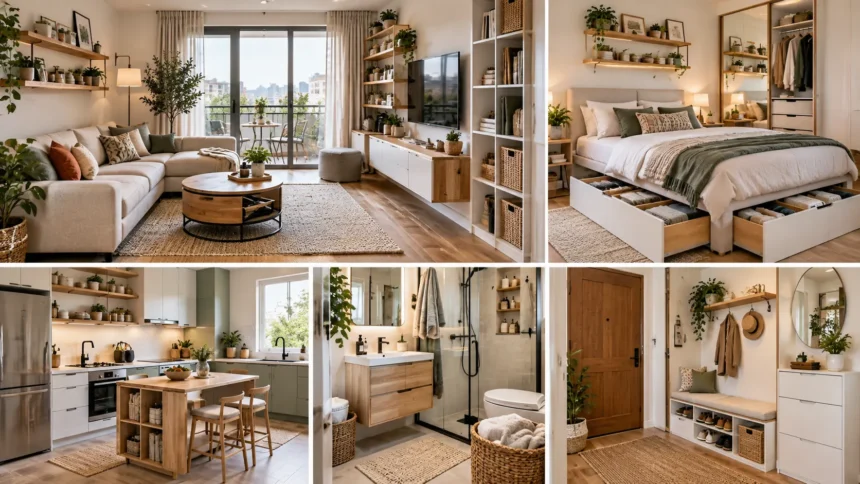
Living in a small home does not mean you have to feel surrounded by clutter or constantly struggle for storage. The challenge is usually not the size of the home itself, but how effectively each area is used. With thoughtful organization, even compact spaces can feel open, functional, and comfortable without sacrificing the belongings you genuinely need.
The best small-home organization ideas focus on making every corner work harder. Vertical storage, multipurpose furniture, hidden compartments, streamlined routines, and careful decluttering can all help you use limited square footage more efficiently. The goal is to create storage without making rooms feel crowded, heavy, or difficult to move through.
A well-organized small home should support your daily routine rather than force you to live around storage containers. By choosing practical systems and keeping frequently used items accessible, you can create a space that feels bigger and easier to maintain. These ideas can help you organize a small home without losing valuable living space.
Declutter Before Adding More Storage
The first step in organizing a small home is deciding what truly needs to stay. Limited space becomes much easier to manage when you remove broken, duplicated, outdated, or rarely used belongings. Decluttering also helps you avoid buying extra furniture or containers for possessions that no longer serve a useful purpose.
Work through your home one category or small area at a time. Clothing, kitchen tools, paperwork, toiletries, books, and decorative items are good places to begin. Ask whether each object supports your current lifestyle, and consider donating, selling, recycling, or discarding things that take up space without providing meaningful value.
Avoid aiming for extreme minimalism unless that genuinely suits you. The goal is not to own as little as possible, but to keep the amount of belongings appropriate for the space available. When storage areas have some breathing room, everyday items become easier to find, use, and return to their proper places.
Use Vertical Space Instead of Floor Space
When floor space is limited, walls become one of the most valuable organizational resources in the home. Floating shelves, wall-mounted cabinets, pegboards, and hooks can provide storage without reducing walking areas. Using vertical space is especially useful in kitchens, bathrooms, entryways, bedrooms, and small home offices.
Tall bookcases and shelving units can also increase storage capacity without using much more floor area than shorter furniture. Place frequently used items on lower shelves and reserve higher levels for seasonal or less frequently needed belongings. This keeps essentials easy to reach while still taking advantage of the full height of the room.
Be careful not to cover every wall with heavy storage. Too many shelves and cabinets can make a small room feel visually crowded even if the floor remains clear. Use vertical storage strategically and leave some open wall space so the room still feels balanced, bright, and comfortable.
Choose Furniture That Serves More Than One Purpose
Multipurpose furniture is especially valuable in a small home because one piece can solve several problems at once. Storage ottomans, beds with drawers, coffee tables with compartments, and benches with hidden storage can reduce clutter without requiring additional cabinets or shelves. This makes each piece of furniture work harder.
A dining table might also function as a workspace, while a sleeper sofa can provide both seating and occasional guest accommodation. In a bedroom, a storage bench can hold blankets while also creating a place to sit. Choosing furniture based on multiple daily needs can significantly reduce the number of separate pieces required.
Prioritize furniture that is easy to use rather than simply offering the maximum amount of storage. Hidden compartments should open without moving several objects, and folding pieces should be simple enough to use regularly. If a multipurpose item feels inconvenient, it may eventually become another source of clutter rather than a solution.
Make Use of Space Under the Bed
The area under the bed is often one of the largest unused storage spaces in a small home. Low-profile boxes can hold seasonal clothing, extra bedding, shoes, bags, or rarely used accessories. Using this hidden area can free up valuable closet and drawer space without adding another piece of furniture.
Choose containers that fit the available height and can slide in and out easily. Clear boxes make contents visible, while labeled fabric containers can create a cleaner appearance. Avoid filling the area with random belongings because unorganized under-bed storage can quickly become a place where forgotten items accumulate.
If you are replacing bedroom furniture, consider a bed with built-in drawers or a lift-up storage base. These designs can provide significant hidden capacity while using exactly the same floor area as a standard bed. They are particularly useful in small bedrooms where wardrobes and dressers already occupy limited wall space.
Organize Closets From Top to Bottom
A small closet needs to use every available section efficiently. Instead of relying on one hanging rail and a single shelf, divide the closet into zones for hanging clothes, folded items, shoes, accessories, and seasonal storage. Adding shelves or organizers can help prevent valuable vertical space from being wasted.
Use higher shelves for luggage, seasonal clothing, extra bedding, or items you only need occasionally. Keep everyday clothing and frequently used accessories at comfortable heights where they can be reached without moving other belongings. Shoe racks, hanging organizers, and small baskets can make lower areas more practical.
Leave enough space between items so the closet remains easy to use. Overfilled wardrobes may technically hold more belongings, but they often make clothing difficult to see and return. Regularly reviewing what you own helps prevent the closet from becoming so crowded that organization stops working.
Use Doors for Hidden Storage
Doors provide useful storage opportunities without occupying additional floor space. Over-the-door organizers can hold shoes, cleaning supplies, toiletries, accessories, children’s items, or pantry products depending on the room. The back of a closet or bathroom door is particularly useful in homes where cabinets are limited.
Hooks can also make better use of doors without requiring large organizers. They can hold robes, handbags, hats, reusable shopping bags, or lightweight household tools. Using the back of a door keeps these items accessible while preventing them from covering chairs, countertops, or the floor.
Make sure door storage does not interfere with movement or prevent the door from closing properly. Avoid hanging very heavy items unless the system is designed to support them. The goal is to gain practical storage without making the space awkward or damaging doors and hinges.
Keep Countertops as Clear as Possible
Countertops can make a small home feel crowded very quickly because they are highly visible. Kitchen counters, bathroom vanities, desks, and side tables often become storage areas for objects that lack a clear home. Reducing surface clutter can make even a compact room feel more open and organized.
Keep only frequently used items on countertops. In the kitchen, that might include a coffee maker or fruit bowl, while bathroom counters may only need a few daily essentials. Less frequently used appliances, toiletries, and accessories should be stored in cabinets, drawers, or wall-mounted systems whenever possible.
Clear surfaces also make cleaning faster and easier. When you do not need to move several objects before wiping a counter or table, daily maintenance requires less effort. This simple habit can improve both the appearance and functionality of a small home without changing the physical size of the room.
Create Zones in Open or Shared Spaces
Small homes often require one room to support several activities. A living area may also function as a dining room, workspace, play area, or exercise space. Creating clear zones helps each activity have a defined place without requiring walls or additional rooms.
Furniture placement can naturally separate these zones. A rug may define the seating area, while a compact desk against one wall creates a work zone. Baskets, shelves, or low cabinets can also create subtle boundaries while providing useful storage for the activities that happen nearby.
Keep each zone focused on its main purpose so belongings do not spread across the entire room. Office supplies should remain near the desk, toys near the play area, and dining items near the table. Clear zones make multipurpose rooms easier to use and help reduce visual confusion.
Use Small Containers Inside Drawers and Cabinets
Large drawers and deep cabinets often waste space because small objects become mixed together. Adding compact bins, trays, or dividers creates clear sections that allow you to store more efficiently. This approach works well for kitchen utensils, bathroom products, office supplies, clothing accessories, and household tools.
Group similar items together and give each category a defined area. A kitchen drawer might have separate sections for cutlery, cooking tools, and measuring accessories. Bathroom cabinets can divide skincare, grooming products, dental supplies, and backups so products remain easy to see and retrieve.
Avoid using too many tiny compartments that make the system complicated. Choose container sizes that match the belongings you actually own. Simple organization is easier to maintain, and leaving a little unused space makes it easier to add or remove items without rearranging the entire drawer.
Use Wall Hooks in High-Traffic Areas
Wall hooks provide simple storage without taking up floor space. They are especially useful near entrances, in bathrooms, inside closets, and in children’s rooms. Jackets, bags, hats, towels, keys, and frequently used accessories can remain visible and accessible instead of ending up on chairs or floors.
Place hooks where people naturally need them. A hook beside the door can hold keys or a reusable shopping bag, while lower hooks can help children store backpacks and jackets independently. When storage matches everyday movement, family members are more likely to use it consistently.
Do not overload hooks with too many items. Several crowded hooks can create visual clutter even if the floor remains clear. Keep only regularly used belongings within easy reach and rotate seasonal items when necessary so the system remains functional instead of becoming another permanent storage pile.
Make the Kitchen Work Harder
Small kitchens require thoughtful organization because cookware, food, appliances, and utensils must fit into limited cabinets. Shelf risers can create extra levels inside cupboards, while stackable containers help use vertical pantry space. Pull-out baskets and rotating organizers can improve access to deep shelves and corners.
Store items close to where they are used. Keep cookware near the stove, dishes near the dining area, and food preparation tools near the main workspace. Organizing by routine reduces unnecessary movement and makes the kitchen feel more efficient even when physical space is limited.
Be selective about appliances and tools that remain in a small kitchen. Large equipment that is rarely used can occupy valuable cabinet or countertop space. Keeping only the tools that support your normal cooking habits can create more breathing room and make the kitchen easier to clean and navigate.
Create a Functional Entryway Without Bulky Furniture
Even a very small entryway needs a system for shoes, keys, bags, and outerwear. Instead of using large cabinets or benches, choose compact solutions such as wall hooks, narrow shelves, slim shoe racks, or mounted key organizers. These options provide useful storage without blocking movement near the door.
Keep the entryway focused on items that are used regularly. Seasonal coats, extra footwear, and rarely used bags can be stored elsewhere until they are needed. This prevents the area from becoming overloaded and makes it easier to enter and leave the home without navigating around piles of belongings.
A small tray or wall-mounted shelf can handle keys, wallets, sunglasses, and other everyday essentials. Keeping these items together also reduces the time spent searching for them. In a compact home, efficient organization often comes from creating small, targeted storage points rather than adding large pieces of furniture.
Store Seasonal Items Out of Prime Space
Frequently used storage areas should be reserved for belongings you need regularly. Seasonal clothing, holiday decorations, travel accessories, and specialty equipment do not need to occupy the most convenient shelves or drawers throughout the year. Moving them elsewhere can free valuable space for everyday items.
High shelves, under-bed containers, storage benches, and less accessible closet areas are good locations for seasonal belongings. Label containers clearly so you can find what you need without opening several boxes. Keeping seasonal items grouped together also makes switching them in and out much easier.
Review seasonal belongings when you rotate them. If something was not used during the previous season and no longer fits your needs, consider removing it. This habit prevents rarely used possessions from permanently taking up storage space in a home where every cabinet and shelf matters.
Use Light Visual Organization
Organization in a small home is not only about storage capacity; visual balance matters too. Too many containers, furniture pieces, patterns, and objects can make a compact room feel even smaller. Keeping visible organization simple can create a calmer appearance without reducing functionality.
Closed storage works well for items that create visual clutter, while open shelving is better for a limited number of attractive or frequently used objects. Matching or coordinated baskets can create consistency, but you do not need to purchase an entirely new set of organizers. The goal is visual simplicity rather than perfection.
Leave open areas wherever practical, including parts of shelves, countertops, and floors. Empty space gives the eye somewhere to rest and makes rooms feel less crowded. A small home can still contain plenty of useful belongings when storage is intentional and visible surfaces are not overloaded.
Build Simple Daily Organization Habits
Even the best small-space storage system can become cluttered if daily habits do not support it. Spend a few minutes returning belongings after use, clearing surfaces, and resetting high-traffic areas. Short routines are especially important in small homes because even a small amount of clutter can quickly become noticeable.
Try to follow a one-touch approach whenever possible. Instead of dropping mail, clothing, or household items somewhere temporarily, place them directly in their proper location. These small actions reduce the number of unfinished tasks and prevent temporary piles from becoming permanent features of the room.
A quick evening reset can keep the entire home manageable. Put away stray items, prepare for the next day, and clear the main surfaces before going to bed. Ten minutes of consistent maintenance often requires much less effort than allowing clutter to build until the home needs another major organizing session.
Conclusion
Learning how to organize a small home without losing space comes down to using every area thoughtfully. Vertical storage, multipurpose furniture, hidden compartments, under-bed containers, and efficient closets can create additional capacity without crowding the floor. The right solutions help your home feel more functional rather than simply more full.
Decluttering is just as important as finding new storage. A small home works best when the number of belongings matches the space available and frequently used items remain easy to reach. Removing unnecessary possessions often creates more useful space than adding another cabinet, basket, or shelving unit.
Most importantly, build organization around your everyday habits. Storage should be simple enough to use consistently and flexible enough to change as your needs evolve. When every part of the home has a clear purpose, even a compact living space can feel comfortable, calm, and surprisingly spacious.
FAQs
How can I organize a small home with very little storage?
Use walls, doors, under-bed areas, and multipurpose furniture to create storage without using extra floor space. Decluttering first can also free valuable room inside existing closets and cabinets.
What furniture is best for a small home?
Choose multipurpose pieces such as storage ottomans, beds with drawers, foldable tables, and benches with compartments. Furniture that performs two or more functions reduces the need for additional pieces.
How can I make a small room look less cluttered?
Keep visible surfaces clear, use closed storage for small items, and avoid overcrowding shelves. Leaving some open wall, floor, and countertop space can make the room feel noticeably larger.
Should I use open shelves in a small home?
Yes, but use them selectively. Open shelves are useful for frequently used or attractive items, while closed cabinets and baskets are better for belongings that could create visual clutter.
How do I keep a small home organized every day?
Return items immediately after use, clear surfaces regularly, and complete a short evening reset. Simple daily habits prevent small amounts of clutter from quickly overwhelming limited living space.