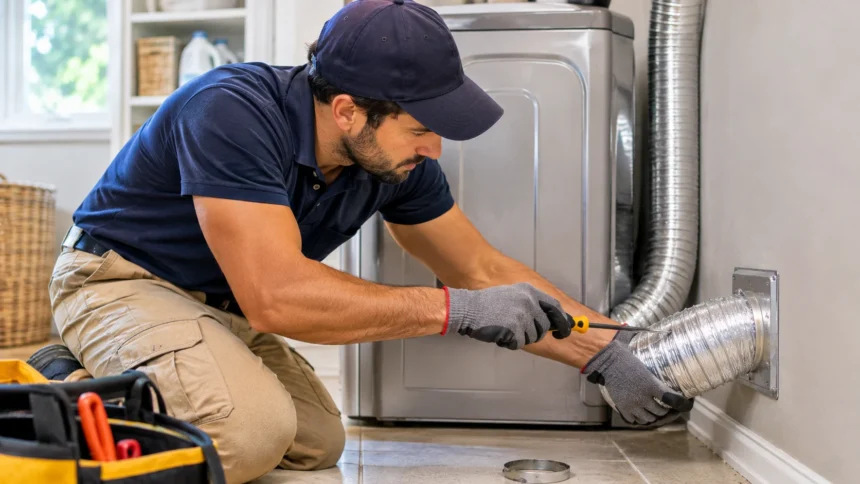
Dryer vent line installation is an important part of setting up a safe and efficient laundry system. A properly installed vent carries hot, moist air and lint from your dryer to the outside of your home. However, poor installation can cause restricted airflow, longer drying times, moisture problems, and potential fire hazards. Understanding the correct materials, routing requirements, and installation mistakes can help prevent expensive repairs.
Many homeowners focus on choosing the right washing machine and dryer but overlook the importance of dryer ventilation. The vent line affects how efficiently the appliance operates and how safely it removes heated air. Small installation problems, such as crushed ducts or excessive bends, can gradually create significant issues. Even a powerful dryer may perform poorly when its ventilation system is incorrectly designed.
Whether you are replacing an old vent or planning a laundry room installation, careful preparation is essential. You need to understand duct materials, vent placement, airflow requirements, and maintenance responsibilities. This guide explains the important details of dryer vent line installation, including common mistakes and practical safety considerations. It also highlights situations where hiring a qualified professional is the safest option.
What Is Dryer Vent Line Installation?
Dryer vent line installation involves connecting a clothes dryer to an outdoor exhaust termination using suitable ductwork. The system allows heated, moisture-filled air and lint to leave the building during operation. Most conventional vented dryers require this connection to function properly. Without adequate ventilation, moisture and lint can accumulate, creating safety and performance concerns.
A typical dryer vent system includes the appliance exhaust outlet, a transition duct, an exhaust duct, and an exterior vent hood. Each component must be compatible with the dryer and installed according to applicable requirements. The duct route should allow air to move with minimal unnecessary resistance. Poor connections or unsuitable materials can reduce the effectiveness of the entire ventilation system.
Proper installation involves more than simply attaching a flexible hose behind the dryer. The exhaust path, duct diameter, termination location, and connection methods all matter. Building codes and manufacturer instructions may specify particular requirements. Understanding these factors helps homeowners recognize why professional planning and appropriate materials are important for a reliable dryer ventilation system.
Why Proper Dryer Vent Installation Matters
A properly installed dryer vent helps remove moisture and heated air efficiently. When the exhaust path remains clear, the dryer can operate closer to its intended performance. Restricted airflow may increase drying times and cause the appliance to work harder. Over time, this can contribute to unnecessary energy consumption and additional wear on dryer components.
Safety is another major reason to pay attention to dryer ventilation. Lint is combustible, and deposits inside the exhaust system can create fire hazards, particularly when airflow becomes restricted. Damaged ducts, poor connections, and inappropriate materials may increase these risks. Proper installation and regular cleaning help reduce dangerous lint accumulation.
Incorrect ventilation can also affect the surrounding home. Moisture released into enclosed spaces may contribute to condensation, dampness, and mold growth. Exhausting a conventional dryer into an attic, crawl space, garage, or indoor room is generally unsafe and often prohibited. Directing the exhaust outdoors through an approved termination helps protect the building and maintain appropriate indoor conditions.
Choosing the Right Dryer Vent Duct Material
Choosing suitable duct material is an important part of dryer vent line installation. Smooth-wall metal ducting is commonly recommended for permanent exhaust runs because it offers good airflow and durability. Rigid metal ducts also provide a smoother interior surface than many flexible alternatives. The exact material must meet the appliance manufacturer’s instructions and applicable building requirements.
Flexible transition ducts may be permitted for connecting the dryer to the fixed exhaust duct. However, they should be specifically listed for dryer use and installed only where allowed. Thin plastic ducting and unsuitable foil-style materials can present serious safety concerns. Not every product marketed as a ventilation hose is appropriate for a clothes dryer.
Metal ductwork should also be compatible with the required diameter and connection fittings. Most residential vented dryers use a nominal four-inch exhaust connection, but manufacturer specifications must be checked. Using inappropriate reducers or mismatched fittings can restrict airflow. Selecting approved materials from the beginning helps avoid repeated repairs and potential replacement costs.
Planning the Best Dryer Vent Route
The dryer vent route determines how efficiently exhaust air travels from the appliance to the outside. A shorter and more direct route generally produces less airflow resistance. Excessively long duct runs and unnecessary turns can reduce performance. Planning the route before installation helps identify potential obstacles and avoid complicated connections.
Each bend in the exhaust duct creates additional resistance to airflow. Therefore, the allowable length of a vent system depends partly on the number and type of elbows. Manufacturer instructions and local codes establish applicable limits. Some dryer models permit longer equivalent duct runs than others, making it important to review the exact appliance specifications.
The route should also provide reasonable access for inspection and cleaning. Concealed ducts can be difficult to maintain if they include unnecessary turns or inaccessible connections. Avoid routing exhaust through locations where heat, moisture, or construction obstacles could create problems. When the safest route is unclear, a qualified installer can evaluate the available options.
Understanding Dryer Vent Length and Diameter Requirements
Dryer vent length is an important factor because longer exhaust paths create greater resistance to airflow. A duct that exceeds the approved equivalent length may prevent the dryer from exhausting properly. This can increase drying times and contribute to lint accumulation. The allowable length depends on the dryer model, fittings, termination design, and applicable codes.
Many conventional residential dryers use four-inch-diameter exhaust ductwork. However, the manufacturer’s installation manual should always determine the appropriate size. Reducing the duct diameter can restrict airflow and interfere with appliance performance. Oversized or improvised connections may also create problems when they do not match the approved ventilation design.
The maximum permitted length is not always the same as the actual measured distance. Elbows and certain fittings may require equivalent-length deductions because they add airflow resistance. Local building requirements can also affect the calculation. Rather than relying on a universal duct length, installers should follow the specific dryer instructions and applicable code provisions.
How Dryer Vent Line Installation Should Be Handled
A safe installation begins with reviewing the dryer’s installation instructions and assessing the intended exhaust route. The installer must confirm that the duct materials, wall or roof penetrations, and termination components are appropriate. Existing ventilation systems should also be inspected before reuse. A damaged or heavily contaminated duct may require cleaning or replacement.
Permanent exhaust duct sections need properly fitted connections that maintain a clear interior airflow path. Fasteners that project into the duct can trap lint and create obstructions. Approved connection and sealing methods should be used according to applicable requirements. The short transition duct behind the appliance must also remain accessible and protected from crushing.
Once the system is installed, the completed ventilation path should be checked for restrictions, disconnected joints, and improper termination. Professional installers may use airflow measurements or other diagnostic methods when necessary. Gas dryers require additional attention because unsafe exhaust arrangements can create carbon monoxide hazards. If the work involves gas connections, electrical modifications, or structural openings, qualified professionals should handle those tasks.
Common Dryer Vent Installation Mistakes to Avoid
One common mistake is using an unsuitable flexible hose for the entire exhaust run. Some flexible materials can sag, become crushed, or collect lint more readily than smooth metal ducts. Plastic ducting is especially concerning because it is not suitable for conventional heated dryer exhaust. Choosing the correct materials helps reduce these avoidable problems.
Another mistake involves routing the dryer exhaust into an enclosed part of the home. An attic, crawl space, or garage is not an appropriate termination for a conventional vented dryer. Moisture and lint can accumulate in these spaces and contribute to property damage. The exhaust system should terminate outdoors using an approved exterior vent assembly.
Poor duct connections and excessive bends are also frequent installation problems. Loose joints may allow lint and moisture to escape, while sharp turns can restrict airflow. Pushing the dryer too close to the wall may crush its transition duct. Checking clearances and connection quality can help prevent these issues before they affect appliance performance.
Selecting the Right Outdoor Dryer Vent Location
The outdoor termination is an essential part of a properly designed dryer ventilation system. It should allow exhaust air and moisture to leave the building without creating unnecessary restrictions. The location must comply with applicable clearances and manufacturer requirements. Poor placement can contribute to moisture damage, blocked airflow, or exhaust entering nearby openings.
An exterior dryer vent hood generally includes a backdraft damper that closes when the appliance is not operating. This helps reduce unwanted air movement through the duct. The termination should not have a screen that traps lint and restricts airflow. Its design must also allow the damper to open freely during dryer operation.
Vent placement requires particular care near windows, doors, mechanical air intakes, and other building features. Snow accumulation, landscaping, and exterior obstacles may affect how the termination performs. Roof installations can introduce additional maintenance and weatherproofing concerns. A qualified professional can help choose a location that supports effective airflow and meets local requirements.
Dryer Vent Installation in Existing Homes
Installing a dryer vent in an existing home can be more complicated than working with new construction. Walls, floors, cabinets, and structural framing may limit the available routing options. Older homes may also have ventilation systems built with outdated materials. A careful assessment helps determine whether the existing duct can be reused safely.
An older dryer exhaust system may contain lint buildup, damaged joints, or excessive bends. Replacing the appliance does not automatically correct these underlying problems. Before connecting a new dryer, the ventilation path should be inspected for compatibility and condition. Repairs or replacement may be necessary when the existing arrangement does not meet current installation requirements.
Creating new openings through walls or roofs can involve structural, electrical, plumbing, and weatherproofing concerns. Incorrect penetrations may damage hidden services or allow water into the building. These risks make professional installation particularly valuable in complicated locations. Planning ahead can reduce unnecessary construction work and help prevent expensive problems after the laundry equipment is installed.
Signs Your Dryer Vent Line Is Installed Incorrectly
Longer drying times are among the most noticeable signs of a possible ventilation problem. Clothes may remain damp even after a normal drying cycle has finished. Restricted airflow can prevent the appliance from removing moisture efficiently. However, poor drying performance can also result from appliance problems, so the vent should be evaluated alongside other potential causes.
Excessive heat around the dryer may indicate inadequate exhaust airflow. You might also notice unusual humidity or a musty smell near the laundry area. Visible lint around duct joints can suggest leaks or disconnected sections. These symptoms should be investigated because they may indicate problems with ventilation safety or installation quality.
A dryer that repeatedly overheats or shuts off during operation requires prompt attention. Burning odors, smoke, or suspected gas or exhaust leaks should be treated as serious warning signs. Stop using the appliance and seek appropriate professional assistance. Do not continue operating a dryer that shows signs of unsafe ventilation while waiting for performance to improve.
Dryer Vent Maintenance After Installation
Regular maintenance helps keep a dryer ventilation system functioning properly after installation. Lint can accumulate inside exhaust ducts even when the dryer’s lint filter is cleaned frequently. Over time, this buildup may restrict airflow and increase fire risk. Periodic inspection and cleaning help identify problems before they become more serious.
The lint filter should be cleaned according to the appliance manufacturer’s instructions, typically before or after each load. The exterior termination should also be checked periodically for visible obstructions and proper damper movement. Exhaust duct cleaning frequency depends on use, duct configuration, and observed lint buildup. Professional cleaning may be appropriate for longer or difficult-to-access systems.
Maintenance should also include checking for damaged connections, crushed transition ducts, and signs of moisture leakage. Moving a dryer during cleaning or repairs can accidentally disturb its exhaust connection. After repositioning the appliance, confirm that the transition duct has not been compressed. Consistent attention to these details supports reliable drying performance and safer operation.
DIY vs. Professional Dryer Vent Installation
Some straightforward dryer vent connections may be manageable for homeowners familiar with appliance installation requirements. However, a safe installation still depends on correct materials, routing, sealing, and termination. Mistakes can create airflow restrictions or safety hazards that are not immediately visible. Understanding these risks is important before deciding whether to complete the work independently.
Professional installation is especially advisable when the project involves new wall or roof openings, concealed ductwork, complex routing, or gas-powered appliances. Qualified installers can assess the available space and verify compliance with relevant requirements. They can also identify existing ventilation defects. This expertise may prevent future repairs and reduce the likelihood of unsafe installation conditions.
The best decision depends on the complexity of the project and the homeowner’s experience. A simple replacement of an accessible, approved transition duct differs considerably from constructing an entirely new exhaust route. Never attempt unfamiliar gas, electrical, or structural work without qualified assistance. Choosing professional support when necessary is an important part of responsible home maintenance.
Dryer Vent Line Installation Costs and Budget Factors
Dryer vent installation costs vary according to the property layout, duct length, materials, and labor requirements. A straightforward connection to an existing compliant exhaust system generally involves less work than creating a completely new route. Complicated wall penetrations or difficult exterior access may increase expenses. Local labor rates and permit requirements can also influence the final price.
Additional costs may arise when old ductwork must be removed or replaced. Hidden damage, unsuitable materials, or inaccessible sections can make the project more complicated. Roof penetrations may require specialized weatherproofing work. Because these factors differ between homes, a site-specific estimate is more reliable than assuming every dryer vent installation has the same cost.
When comparing installation estimates, consider the complete scope rather than focusing only on the lowest price. Appropriate duct materials, exterior termination, secure connections, and proper testing should all be addressed. Ask whether necessary permits and repairs are included. A clear estimate helps reduce unexpected charges and ensures that important safety requirements are not overlooked.
How to Extend the Life of Your Dryer Vent System
The useful life of a dryer vent system depends on its materials, installation quality, and maintenance. Durable metal ductwork can remain functional for many years when properly installed and protected from damage. However, connections and transition ducts may require attention sooner. Regular inspection helps identify wear before it creates serious airflow problems.
Keeping the dryer correctly positioned can also protect the ventilation system. Excessive movement may loosen connections or crush the transition duct behind the appliance. Maintaining the manufacturer’s recommended clearances helps avoid these problems. It is also important to keep the exterior termination free from obstructions that interfere with normal exhaust airflow.
Avoid ignoring minor changes in dryer performance. Longer drying cycles, unexpected humidity, or visible lint leakage may indicate developing ventilation problems. Addressing these symptoms early can reduce the likelihood of additional damage. A combination of suitable materials, regular cleaning, and timely repairs helps maintain a dependable dryer exhaust system.
Conclusion
Dryer vent line installation plays an important role in appliance performance, home safety, and moisture control. A properly designed system removes heated air and lint through an approved outdoor exhaust route. Choosing suitable metal ductwork, minimizing unnecessary bends, and following manufacturer instructions help reduce installation problems. Poor routing and incorrect materials can create hazards and lead to costly repairs.
Planning the exhaust route carefully is essential, particularly in homes with limited space or existing ventilation defects. The correct duct diameter, allowable length, and exterior termination should be verified before installation. Regular inspections and cleaning are equally important after the work is completed. These practices help maintain efficient airflow and reduce preventable maintenance problems.
Ultimately, avoiding costly dryer vent mistakes requires attention to both installation quality and long-term care. Straightforward connections may be manageable in some situations, but complicated work is best handled by qualified professionals. Never compromise appliance safety to reduce installation expenses. A properly installed and maintained vent system supports dependable drying performance and helps protect your home.
Frequently Asked Questions (FAQs)
What is the best material for a dryer vent line?
Smooth-wall rigid metal ductwork is generally preferred for permanent dryer exhaust runs. Approved flexible metal transition ducts may be used where permitted, but unsuitable plastic and foil-style hoses should be avoided.
How long can a dryer vent line be?
The maximum permitted length depends on the dryer manufacturer’s instructions, duct fittings, and local building codes. Elbows create additional airflow resistance, so equivalent duct length matters more than straight-line distance alone.
Can a dryer vent exhaust into the attic or garage?
No, conventional vented dryer exhaust should terminate outdoors through an approved vent assembly. Exhausting into an attic, garage, or crawl space can create moisture problems, lint accumulation, and safety hazards.
How often should a dryer vent line be cleaned?
Cleaning frequency depends on dryer usage, duct layout, and lint accumulation. Inspect the system regularly and arrange cleaning when needed, especially if drying times increase or airflow becomes restricted.
Is professional dryer vent installation worth it?
Professional installation is often worthwhile for complex routes, concealed ductwork, new exterior openings, or gas dryers. Qualified installers can address safety requirements, material compatibility, and proper exhaust termination.