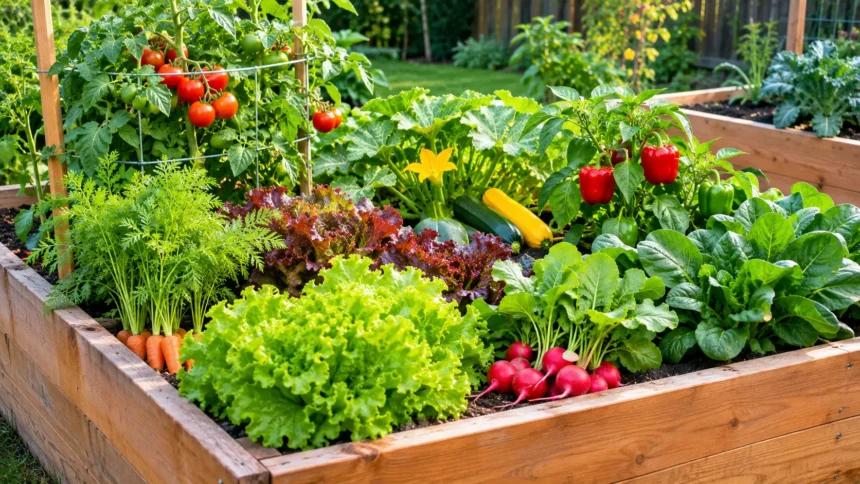
Growing fresh vegetables at home becomes easier when you choose the right plants for your garden space. Raised beds offer better control over soil quality, drainage, and planting arrangements, making them suitable for many popular vegetables. Whether you have a small backyard or a spacious garden, raised beds can help you grow productive crops.
The best vegetables for raised bed gardening include tomatoes, lettuce, carrots, spinach, radishes, peppers, cucumbers, and bush beans. These plants grow well when provided with suitable soil, sunlight, water, and spacing. Understanding their growing requirements can help you plan a healthy vegetable garden and enjoy fresh harvests throughout the growing season.
Why Raised Bed Gardening Is Ideal for Growing Vegetables
Raised bed gardening involves growing plants in soil contained within a structure positioned above the surrounding ground. These beds allow gardeners to manage soil composition, improve drainage, and organize crops efficiently. They are particularly useful in areas with compacted soil, poor drainage, or limited growing space where traditional garden beds may be difficult to maintain.
Another advantage is that raised beds can make planting, watering, and harvesting more convenient. Gardeners can reach vegetables from the sides without stepping directly onto the growing soil. This reduces compaction and helps maintain a loose soil structure that supports healthy root development, although bed height and accessibility depend on the design.
Raised beds also warm relatively quickly during suitable spring conditions, which may help certain crops establish earlier. However, they can dry out faster than traditional garden soil, especially during hot weather. Choosing vegetables that match your climate, available sunlight, and maintenance routine is essential for successful raised bed gardening.
Tomatoes: A Popular Choice for Raised Garden Beds
Tomatoes are among the best vegetables for raised bed gardening because they benefit from loose, fertile, well-drained soil. They thrive in sunny locations and generally need at least six to eight hours of direct sunlight daily. Their extensive root systems develop well when the bed provides sufficient soil depth and consistent moisture.
Compact determinate tomato varieties are useful for smaller raised beds because their growth is more manageable. Indeterminate varieties can also grow successfully, but they require sturdy supports and more vertical space. Installing cages or trellises early helps keep branches organized and reduces the chance of fruit resting against damp soil.
Tomatoes need regular watering, especially during flowering and fruit development. Uneven moisture can contribute to problems such as fruit cracking and blossom-end rot. Add compost before planting, use suitable fertilizer when needed, and provide enough spacing for airflow to support healthy growth and a productive harvest.
Lettuce: One of the Easiest Raised Bed Vegetables
Lettuce is an excellent vegetable for beginners because it grows quickly and requires relatively little space. Its shallow roots make it suitable for many raised beds, including those with limited soil depth. Loose-leaf varieties are especially convenient because gardeners can harvest outer leaves while allowing the center of the plant to continue growing.
This cool-season crop performs best in mild temperatures and may struggle during intense summer heat. In warmer climates, partial afternoon shade can help reduce heat stress and delay bolting. Planting small amounts at regular intervals during suitable weather provides a more continuous supply of fresh salad greens.
Lettuce grows well in fertile soil that stays evenly moist without becoming waterlogged. Avoid overcrowding because poor airflow can encourage disease and reduce leaf quality. Raised beds make it easier to arrange different lettuce varieties together, creating an attractive and practical growing area for fresh household salads.
Carrots: Perfect Root Vegetables for Raised Beds
Carrots grow particularly well in raised beds filled with deep, loose soil that allows roots to develop without obstruction. Heavy clay, compacted soil, and stones can cause roots to become misshapen. A properly prepared raised bed makes it easier to create the conditions needed for straighter, healthier carrots.
Choose carrot varieties according to the available soil depth and your preferred harvest size. Shorter varieties can perform well in shallower beds, while longer types need more unobstructed growing space. Sow seeds directly into the soil because transplanting carrot seedlings can disturb their developing roots and affect growth.
Keep the soil consistently moist during germination, which may take longer than many other vegetable seeds. Thin seedlings according to the variety’s recommended spacing to prevent overcrowding. Avoid excessive nitrogen fertilizer because it may encourage leafy growth at the expense of well-developed roots.
Spinach: A Nutritious Cool-Season Vegetable
Spinach is one of the most practical vegetables to grow in raised beds during cool weather. It produces tender green leaves and can fit comfortably into small garden spaces. Its relatively shallow root system makes it suitable for planting alongside other compact crops when enough room is provided.
Spinach generally performs best during spring and autumn in temperate climates, although planting seasons vary by location. High temperatures and long daylight hours can encourage plants to bolt, making leaves less desirable for harvesting. Choosing suitable seasonal varieties and providing protection from excessive heat can improve results.
Grow spinach in fertile, well-drained soil with consistent moisture. Harvest individual outer leaves when they reach a useful size, or cut mature plants according to your preferred method. Succession planting during favorable weather helps maintain fresh greens without requiring a large raised bed.
Radishes: Fast-Growing Vegetables for Small Spaces
Radishes are among the fastest-growing vegetables for raised garden beds, with some varieties ready for harvest in approximately three to five weeks. Their short growing period makes them useful for gardeners who want quick results. They also fit well between slower-growing crops when spacing and sunlight are sufficient.
These root vegetables prefer loose soil and cool growing conditions. Excessive heat, inconsistent moisture, or overcrowding can affect root quality and encourage premature flowering. Sow radish seeds directly into prepared soil and thin seedlings when necessary to allow enough space for their roots to develop.
Radishes are particularly useful for succession planting because new seeds can be sown at intervals throughout favorable growing periods. Harvest roots when they reach the recommended size rather than leaving them in the soil too long. This approach helps maintain good texture and makes efficient use of limited planting space.
Bell Peppers: Colorful Vegetables for Sunny Raised Beds
Bell peppers are warm-season vegetables that grow well in raised beds with fertile, well-drained soil. They need plenty of sunlight and consistently warm conditions to establish and produce fruit. Raised beds can provide a convenient growing environment, particularly when gardeners can manage soil moisture and plant nutrition carefully.
Pepper plants usually require less vertical space than large indeterminate tomato plants, making many varieties suitable for compact garden layouts. However, they still need adequate spacing for airflow and healthy development. Some plants may benefit from small stakes or cages when branches become heavy with developing peppers.
Maintain even soil moisture and avoid allowing plants to experience repeated periods of severe dryness. Mulching can help conserve water and reduce temperature fluctuations around the roots. Harvest peppers when they reach the desired size and color, remembering that many varieties change color as they mature.
Cucumbers: Great for Vertical Raised Bed Gardening
Cucumbers are productive warm-season vegetables that can grow successfully in raised beds with adequate sunlight and moisture. Vining varieties spread widely when grown along the ground, but vertical supports can reduce their footprint. This makes cucumbers an attractive option for gardeners working with limited planting space.
Installing a trellis allows cucumber vines to climb while keeping developing fruits away from the soil. Vertical growing can improve access for harvesting and make the bed easier to manage. Choose a sturdy structure and position it carefully so taller plants do not shade smaller vegetables unnecessarily.
Cucumbers need regular watering, particularly when flowering and producing fruit. Moisture stress can reduce productivity and affect fruit quality. Harvest cucumbers frequently at the appropriate size for their variety, as leaving mature fruits on the vine may slow continued production.
Bush Beans: Productive Vegetables for Compact Beds
Bush beans are excellent choices for raised bed vegetable gardens because they remain relatively compact and generally do not require tall climbing supports. They produce edible pods over a comparatively concentrated harvesting period. Their manageable growth habit makes them useful for gardeners who want productive crops without complicated structures.
Beans grow best in warm soil with good drainage and sufficient sunlight. Sow seeds directly after the danger of frost has passed and the soil has warmed appropriately. Avoid excessive nitrogen fertilizer because beans can form beneficial relationships with soil bacteria that help supply nitrogen under suitable conditions.
Harvest bean pods regularly while they are tender and before seeds become overly developed. Planting additional rows at suitable intervals can extend the harvesting period. Although bush beans are relatively straightforward to grow, they still need proper spacing, consistent moisture, and protection from damaging pests.
Kale: A Hardy Vegetable for Raised Bed Gardens
Kale is a leafy vegetable that performs well in raised beds during cool growing conditions. Its sturdy leaves and relatively long harvesting period make it practical for home gardeners. Many varieties tolerate light frost, and cool weather can improve the flavor of some types.
Kale plants can become fairly large, so gardeners should provide enough space for mature leaves to develop. Smaller plants can be harvested for tender greens, while established plants produce larger leaves over time. Removing older outer leaves encourages continued harvesting without immediately ending the plant’s productive life.
Use fertile soil that drains well while retaining sufficient moisture for steady growth. Keep an eye out for common brassica pests, including caterpillars and aphids. Lightweight insect netting and regular plant inspections can help manage problems before they affect the quality of harvested leaves.
Beets: Easy Root Crops for Raised Beds
Beets are useful vegetables for raised bed gardening because both their roots and leaves are edible. They grow well in loose soil with reliable moisture and can fit into relatively compact spaces. Their colorful roots also add variety to homegrown meals and garden harvests.
Beet seeds are usually sown directly into the growing bed because the plants develop edible roots below the soil surface. Many beet seed clusters produce multiple seedlings, so thinning may be necessary. Providing suitable spacing allows the roots to expand without excessive competition for water and nutrients.
Beets generally prefer cooler growing conditions and can be planted during suitable spring or autumn periods. Keep the soil evenly moist to support steady development and reduce stress. Harvest roots at a size appropriate for the variety, and use healthy leaves as cooking greens if desired.
Zucchini: A Productive Vegetable for Larger Raised Beds
Zucchini can produce abundant harvests in raised beds, but its mature plants require considerable room. Even compact bush varieties develop broad leaves that may shade nearby vegetables. For this reason, zucchini is best suited to larger beds or carefully planned layouts that allow sufficient space for plant growth.
These warm-season vegetables thrive in sunny locations with fertile, well-drained soil. Consistent watering supports flowering and fruit development, particularly during hot weather. Avoid wetting leaves unnecessarily when irrigating, and maintain good airflow to help limit problems associated with damp foliage.
Zucchini fruits often grow rapidly once plants begin producing. Check plants frequently and harvest fruits at the recommended size for their variety. Regular harvesting can encourage continued production and prevent oversized fruits from remaining on the plant longer than necessary.
Onions and Green Onions for Raised Beds
Onions are useful crops for raised beds because they can be arranged in organized rows and grown in well-prepared soil. Bulb onions require appropriate spacing to develop properly, while green onions can be grown more closely together. Both options work well in gardens where efficient use of space is important.
Successful bulb formation depends partly on choosing onion varieties suited to your region’s day length. Short-day, intermediate-day, and long-day onions respond differently to seasonal daylight conditions. Selecting the wrong variety for your location can reduce bulb development even when watering and soil conditions are otherwise suitable.
Onions prefer loose, fertile soil with good drainage and relatively consistent moisture during active growth. Avoid severe overcrowding, which can restrict bulb size. Green onions can often be harvested earlier, making them a convenient choice for gardeners who want a faster and more flexible crop.
How to Choose the Best Vegetables for Your Raised Bed
Choosing the best vegetables for raised bed gardening begins with evaluating available sunlight, growing space, and local weather conditions. Tomatoes, peppers, and cucumbers generally need strong sunlight and warm temperatures. Lettuce, spinach, and radishes often perform better during cooler periods, making seasonal planning especially important.
Consider how much space each vegetable will need at maturity rather than judging only by seedling size. Large plants such as zucchini can quickly crowd smaller crops, while climbing vegetables may require trellises. Combining plants with different growth habits can improve space efficiency when their water, light, and nutrient requirements are compatible.
Your household’s food preferences should also guide planting decisions. Growing vegetables you regularly enjoy can make gardening more rewarding and reduce wasted harvests. Beginners may benefit from starting with a few manageable crops before expanding into vegetables that require more space, specialized care, or longer growing seasons.
Preparing the Best Soil for Raised Bed Vegetables
Healthy soil is essential for producing strong vegetables in raised beds. A suitable growing mixture should provide drainage, moisture retention, nutrients, and enough air for root development. Many gardeners combine quality topsoil with finished compost and other appropriate organic materials, adjusting the mixture according to the crops being grown.
Avoid filling raised beds entirely with unfinished compost or materials that may settle excessively as they decompose. Use soil suited to raised bed growing rather than relying on an arbitrary mixture. Where possible, a soil test can help identify nutrient levels and pH conditions before adding fertilizers or soil amendments.
Organic mulch can help protect the soil surface, reduce moisture loss, and limit weed growth. Add nutrients according to plant needs rather than applying large amounts of fertilizer without evidence of deficiency. Maintaining healthy soil structure supports root development and helps vegetables tolerate ordinary changes in growing conditions.
How Much Sunlight Do Raised Bed Vegetables Need?
Sunlight is one of the most important factors affecting vegetable growth and productivity. Many fruiting vegetables, including tomatoes, peppers, and cucumbers, perform best with at least six to eight hours of direct sunlight. Insufficient light may reduce flowering, fruit development, and overall plant vigor.
Leafy vegetables such as lettuce and spinach can often tolerate somewhat less direct sunlight, especially in warmer climates. However, too much shade can still limit growth and reduce harvest quality. Consider seasonal changes in sun exposure because nearby buildings, fences, and trees may cast different shadows throughout the year.
Before positioning a raised bed, observe how sunlight moves across your garden during the day. Place taller crops or trellises where they will not unnecessarily shade shorter plants. In very hot climates, temporary afternoon shade may benefit certain cool-season vegetables, even when other crops need stronger sunlight.
Watering and Fertilizing Raised Bed Vegetables
Raised beds often drain efficiently, but this also means they may lose moisture more quickly during warm or windy weather. Check soil moisture regularly rather than following a fixed watering schedule without considering conditions. Water deeply enough to reach the root zone while avoiding prolonged waterlogging that can interfere with healthy root function.
Drip irrigation and soaker hoses can deliver water directly to the soil while reducing unnecessary wetting of foliage. Mulching also helps conserve moisture and moderate soil temperatures. Young seedlings may need more frequent attention because their roots have not yet developed deeply enough to access moisture farther below the surface.
Fertilizer requirements depend on soil fertility, crop type, and the stage of growth. Leafy vegetables and fruiting crops may have different nutritional needs, so use soil test results and product instructions when available. Excessive fertilizer can harm plants and create nutrient imbalances, making careful application more useful than simply adding larger amounts.
Raised Bed Plant Spacing and Companion Planting
Proper spacing helps vegetables receive enough sunlight, water, nutrients, and airflow. Crowded plants may compete for resources and create conditions that favor some diseases. Follow the mature spacing recommendations for each crop rather than assuming every vegetable can be planted closely simply because it grows in a raised bed.
Intensive planting methods can be useful when gardeners understand the mature size and growing requirements of their crops. Fast-growing radishes, for example, may be harvested before nearby slower-growing vegetables require additional space. Vertical supports can also free up surface area, but climbing crops still need sufficient root room.
Companion planting is often used to organize different crops together, although claims about specific plant combinations are not always supported by strong evidence. Focus first on compatible growing conditions and practical spacing. Good airflow, healthy soil, crop rotation where feasible, and regular maintenance usually provide more reliable benefits than depending on particular plant pairings.
Common Raised Bed Gardening Mistakes to Avoid
One frequent mistake is planting too many vegetables in a small raised bed. Seedlings may initially appear widely spaced, but mature plants can quickly compete for room. Overcrowding makes harvesting difficult and can reduce airflow, sunlight exposure, and access to nutrients, especially for crops with large leaves or extensive roots.
Another common problem is inconsistent watering. Raised beds can dry out quickly, particularly when constructed with materials exposed to strong sunlight. Allowing plants to become severely dry and then repeatedly saturating the soil can create stress, so aim for moisture conditions appropriate for each vegetable and its stage of development.
Gardeners should also avoid ignoring seasonal requirements when selecting vegetables. Planting cool-season crops during extreme heat or warm-season crops before suitable temperatures arrive can produce disappointing results. Matching crops to local conditions, monitoring pests, and maintaining soil fertility can prevent many avoidable problems throughout the growing season.
Conclusion
The best vegetables for raised bed gardening include tomatoes, lettuce, carrots, spinach, radishes, peppers, cucumbers, bush beans, and several other productive crops. Each vegetable has different requirements for sunlight, spacing, temperature, and moisture. Choosing plants that match your garden conditions helps create a more manageable and rewarding growing experience.
Successful raised bed gardening also depends on good soil preparation, appropriate watering, and thoughtful planting arrangements. Combining compact vegetables with carefully supported climbing crops can help make efficient use of limited space. Regular maintenance and seasonal planning support healthier plants while reducing avoidable problems throughout the growing season.
Whether you are beginning your first vegetable garden or improving an existing one, raised beds offer a flexible way to grow fresh produce. Start with vegetables your household enjoys and gradually expand as your experience develops. With suitable crops and consistent care, a raised bed can provide enjoyable gardening opportunities and satisfying homegrown harvests.
Frequently Asked Questions
What are the easiest vegetables to grow in raised beds?
Lettuce, radishes, spinach, bush beans, and green onions are relatively easy vegetables for beginners. They need suitable sunlight, healthy soil, and regular watering but generally require less complicated support than large climbing crops.
How deep should a raised bed be for vegetables?
Many vegetables grow well in raised beds around 12 inches deep when the underlying soil is accessible. Carrots and other deep-rooted crops may need greater unobstructed depth, particularly over hard surfaces.
Can you grow tomatoes and cucumbers in the same raised bed?
Yes, tomatoes and cucumbers can share a raised bed when there is sufficient space, sunlight, and nutrition. Provide appropriate supports and arrange plants to reduce overcrowding and excessive shading.
What vegetables grow fastest in raised garden beds?
Radishes, baby lettuce, arugula, and some other leafy greens can provide relatively quick harvests. Growth rates vary with temperature, variety, sunlight, and soil conditions, so check the seed packet for expected maturity.
How often should raised bed vegetables be watered?
Watering frequency depends on weather, soil composition, plant size, and crop requirements. Check moisture regularly and water when needed to maintain suitable conditions, paying particular attention during hot weather and early seedling growth.