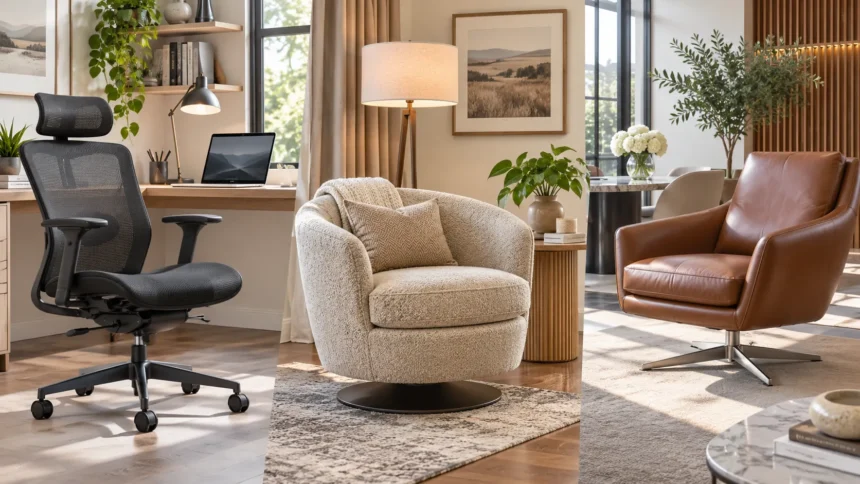
A comfortable chair can make a noticeable difference in how you work, relax, and use your living space. However, choosing the right seating can be challenging when different designs, materials, and features are available. Traditional chairs provide a fixed seating position, while swivel chairs allow you to turn without moving the entire chair. This simple feature makes them useful in many homes and workplaces.
A swivel chair is a type of seating furniture designed to rotate around a central base. Some models offer a full 360-degree rotation, while others provide limited movement depending on their construction. These chairs are available in different styles, including office chairs, lounge chairs, dining chairs, and accent chairs.
This practical guide explains what a swivel chair is, how it works, and which types are available. You will also learn about common uses, materials, comfort features, maintenance requirements, and important buying tips to help you choose suitable seating.
What Is a Swivel Chair?
A swivel chair is a chair with a rotating base that allows the seat to turn without moving its supporting structure. The rotating mechanism is usually positioned between the seat and the base. This design allows users to change their facing direction more easily than with traditional fixed chairs.
Swivel chairs are available in several shapes, sizes, and designs. Some feature padded seats and high backrests, while others have compact frames and simple upholstery. Certain models also include wheels, adjustable height, reclining features, or armrests to support different activities and seating preferences.
The main advantage of a swivel chair is its ability to provide flexible movement while seated. It can make reaching nearby items, participating in conversations, or changing viewing angles more convenient. However, the overall comfort and usefulness depend on the chair’s construction, dimensions, and intended purpose.
How Does a Swivel Chair Work?
A swivel chair works through a rotating connection between the seat and its supporting base. Many models use bearings or other mechanical components that allow the upper portion to turn smoothly. The exact mechanism varies depending on whether the chair is designed for an office, living room, or dining area.
When someone turns their body or applies gentle pressure, the chair rotates around its central axis. Some chairs can turn a complete circle, while others have built-in limits. The rotating mechanism remains supported by the base, allowing movement without requiring the entire chair to slide across the floor.
Some swivel chairs include additional features such as adjustable height, tilt mechanisms, or reclining backrests. These functions operate separately from the basic rotating system. Understanding the available adjustments helps users choose a chair that supports their needs without paying for features they are unlikely to use.
Different Types of Swivel Chairs
Swivel chairs come in several categories, each designed for different seating environments. Common types include office swivel chairs, lounge chairs, accent chairs, dining chairs, and swivel recliners. Although they share a rotating function, their comfort features, materials, and construction can differ significantly.
Office swivel chairs often include adjustable seat height, supportive backrests, and wheels. Lounge and accent chairs usually emphasize comfortable cushioning and decorative appearance. Dining swivel chairs provide convenient movement around tables, while swivel recliners combine rotation with the ability to lean backward into a more relaxed position.
Choosing the right type depends on how frequently the chair will be used and where it will be placed. A decorative accent chair may not provide the adjustments needed for extended desk work. Similarly, an office chair may not complement a living room’s overall furniture arrangement.
Office Swivel Chairs for Workspaces
Office swivel chairs are designed to support activities performed at desks and computer workstations. Their rotating seats allow users to reach nearby equipment without repeatedly repositioning the entire chair. Many models also include adjustable height, back support, and armrests to accommodate different working arrangements.
Ergonomic office chairs may offer additional features such as adjustable lumbar support, seat depth, and tilt tension. These adjustments can help users find comfortable positions for different tasks. However, an adjustable chair should still be combined with a suitable desk height, monitor position, and regular movement breaks.
When choosing an office swivel chair, prioritize comfort, stable construction, and adjustments that suit the intended user. A chair that looks attractive may not provide appropriate support during long working sessions. Testing the chair when possible can help identify whether its dimensions and movement features feel comfortable.
Swivel Accent Chairs for Living Rooms
Swivel accent chairs combine decorative furniture design with practical rotating movement. They are commonly used in living rooms, sitting areas, and reading corners. Their ability to turn makes it easier to face different parts of a room without moving the entire chair.
These chairs are available in several styles, including rounded barrel chairs, upholstered lounge designs, and modern low-profile models. Fabric, leather, and textured upholstery provide different visual effects. Choosing a color that complements existing furniture can help the chair become part of a coordinated interior arrangement.
A swivel accent chair can also serve as a focal point when placed beside a sofa or near a window. Its rotating function allows flexible seating during conversations or relaxation. Consider the chair’s overall dimensions and turning clearance before selecting one for a smaller room.
Swivel Recliner Chairs for Relaxation
Swivel recliner chairs combine a rotating seat with an adjustable reclining mechanism. This design allows users to turn toward different areas while also changing their sitting position. Many models feature cushioned backrests, armrests, and supportive seats intended for comfortable relaxation.
Some swivel recliners include footrests or rocking functions, depending on their construction. These features may make the chair suitable for reading, watching television, or resting. However, each additional mechanism increases the importance of checking available space and following the manufacturer’s operating instructions.
Reclining chairs often require more room than standard swivel chairs because the backrest or footrest extends during use. Measure the clearance behind and in front of the chair before purchasing. A stable base, comfortable cushioning, and suitable weight capacity should remain important considerations.
Swivel Dining Chairs for Dining Spaces
Swivel dining chairs provide a rotating seat that makes sitting down, turning, and standing up more convenient in certain dining arrangements. They are available in upholstered and non-upholstered designs, with different seat heights and frame materials. Their appearance can range from traditional wooden furniture to modern metal-framed seating.
Some dining swivel chairs feature an automatic return mechanism that brings the seat back toward its original position after use. This feature can help maintain a coordinated appearance around the table. However, not every swivel dining chair includes it, so checking product specifications is important.
When choosing dining chairs, measure the table height and available space between seats. Armrests should fit comfortably beneath the table when appropriate. Consider easy-to-clean materials because dining furniture is regularly exposed to food spills and everyday use.
Swivel Chairs for Bedrooms and Reading Corners
A swivel chair can create a comfortable seating area in a bedroom without requiring a large furniture arrangement. It may be placed near a window, beside a bookshelf, or in an unused corner. This provides an additional place for reading, relaxing, or completing simple daily activities.
Compact swivel lounge chairs are often suitable for bedrooms because they offer comfortable seating without excessive furniture bulk. A small side table and reading lamp can complete the arrangement. Choose upholstery and colors that complement the bedroom’s existing decor for a coordinated appearance.
Placement is especially important when using swivel chairs in smaller rooms. Leave enough space for the chair to rotate without hitting walls, bedside tables, or other furniture. A properly positioned chair can improve room functionality while preserving comfortable walking areas.
Benefits of Using a Swivel Chair
One major benefit of a swivel chair is flexible movement. Users can change their facing direction without lifting or dragging the chair. This is particularly convenient in office environments, shared living spaces, and rooms where activities occur in several directions.
Swivel chairs can also support more versatile furniture arrangements. A chair positioned between a television and conversation area can turn toward either location when needed. This flexibility may reduce the need to rearrange furniture whenever people use the room for different purposes.
Another advantage is the variety of available designs. Swivel chairs range from simple desk seating to upholstered lounge furniture, making them suitable for different decorating styles. However, comfort and durability depend on construction quality rather than the rotating feature alone.
Best Materials for Swivel Chairs
Swivel chairs are manufactured using materials such as wood, metal, plastic, fabric, and leather. The combination of materials influences the chair’s appearance, durability, maintenance needs, and price. Selecting appropriate materials helps ensure that the chair suits its intended environment and daily use.
Metal bases are common because they can provide sturdy support for rotating mechanisms. Wooden components may introduce a warmer decorative appearance, particularly in traditional furniture designs. Upholstered seats can provide cushioning, while molded plastic designs may be easier to clean in certain settings.
Fabric choices also influence comfort and upkeep. Polyester blends, woven textiles, genuine leather, and synthetic leather each have different cleaning requirements and wear characteristics. Consider sunlight exposure, household pets, spills, and expected use before selecting a material that fits your lifestyle.
How to Choose the Right Swivel Chair Size
Choosing the correct swivel chair size begins with measuring the available floor space. Record the chair’s intended location and note nearby furniture, doors, and walking areas. A chair that fits physically within a room may still be inconvenient if it cannot rotate comfortably.
Seat dimensions also matter because different chairs offer different depths, widths, and heights. The seat should support a comfortable sitting position without making it difficult to place your feet appropriately. For desk chairs, adjustable height may be particularly useful when matching the chair to a workstation.
Remember to consider the chair’s complete rotating footprint rather than only its base dimensions. Wide armrests, extended backrests, and reclining components can require additional clearance. Checking manufacturer measurements before purchasing can help avoid a chair that overwhelms the available space.
Important Features to Look for in a Swivel Chair
A smooth rotating mechanism is one of the most important features to evaluate. The chair should turn comfortably without unusual resistance, instability, or excessive noise. Its base should remain stable during normal use, and all moving components should function according to the manufacturer’s instructions.
Seat cushioning and back support also influence comfort. Some users prefer firm support, while others enjoy softer upholstery for relaxation. Armrests, adjustable seat height, and reclining functions may provide additional convenience depending on whether the chair is intended for work or leisure.
Check the manufacturer’s weight capacity, warranty, and assembly instructions before buying. A higher price does not automatically indicate better comfort or construction. Comparing practical features, materials, and customer support can help you identify a chair suited to your expected use.
Swivel Chair vs. Regular Chair: Key Differences
The main difference between a swivel chair and a regular fixed chair is the ability to rotate while seated. Swivel chairs include a mechanism that allows the seat to turn, while standard chairs usually remain facing one direction. This creates different advantages depending on the room and activity.
Swivel chairs can provide greater convenience when reaching nearby objects or interacting with people in different directions. Fixed chairs may offer simpler construction with fewer moving components. Both designs can be comfortable, although comfort depends on seat dimensions, cushioning, and back support.
Maintenance requirements can also differ because swivel chairs contain mechanical components that may experience wear over time. Fixed chairs generally have fewer rotating parts to inspect. Choosing between them depends on how much movement flexibility you need and whether the additional mechanism provides useful everyday benefits.
Are Swivel Chairs Good for Your Back?
A swivel chair can support comfortable sitting when its dimensions and adjustments match the user’s needs. However, the rotating function alone does not make a chair ergonomic. Backrest design, seat depth, lumbar support, and workstation arrangement are more important for maintaining comfortable posture.
For office use, an adjustable swivel chair may allow users to maintain a suitable seating position while working. Feet should be supported, and the chair should allow comfortable movement without unnecessary pressure. Regular breaks are still important because remaining seated for extended periods can contribute to stiffness.
People with ongoing back pain should consider individual comfort requirements and seek professional advice when necessary. A chair that works well for one person may not suit another. Testing different adjustments and avoiding prolonged static positions can help support everyday comfort.
How Much Does a Swivel Chair Cost?
Swivel chair prices vary considerably depending on design, materials, brand, and additional features. Basic office chairs are generally more affordable than premium ergonomic models or upholstered swivel recliners. Decorative accent chairs may also cost more when they use specialized fabrics, solid frames, or complex construction.
When comparing prices, consider how often the chair will be used. A chair intended for daily work should provide reliable comfort and suitable adjustments. A decorative chair used occasionally may require fewer features, allowing greater flexibility in material and design choices.
Delivery costs, assembly requirements, warranty coverage, and potential maintenance expenses can also affect overall value. Choosing the cheapest option may not always be economical when durability matters. A practical buying decision balances comfort, construction quality, available features, and your intended budget.
How to Clean and Maintain a Swivel Chair
Regular cleaning helps keep a swivel chair attractive and comfortable. Remove dust and surface debris using cleaning methods appropriate for the upholstery. Fabric chairs may require gentle vacuuming, while leather and synthetic materials should be cleaned according to the manufacturer’s recommendations.
The rotating base should also be inspected periodically for loose fasteners, unusual noises, or movement problems. Follow manufacturer instructions when tightening components or performing maintenance. Avoid applying random lubricants because some products may damage materials or interfere with the mechanism.
Protect the chair from unnecessary moisture and conditions that could damage its materials. If the chair uses wheels, remove trapped debris when appropriate. Consistent cleaning and simple inspections can help extend its useful life and identify problems before they become more serious.
Common Mistakes When Buying a Swivel Chair
One common mistake is choosing a swivel chair based entirely on appearance. A decorative chair may look attractive but provide insufficient support for the intended activity. Checking seat height, backrest design, and cushioning helps determine whether the chair will remain comfortable during regular use.
Another mistake involves ignoring the amount of room required for rotation. A large swivel chair may fit beside a sofa but strike nearby furniture when turned. Measuring the full movement area before purchasing helps prevent inconvenient placement and potential damage to surrounding objects.
Overlooking assembly quality, weight capacity, and warranty information can also create problems. A rotating chair depends on reliable mechanical components and stable construction. Comparing specifications and examining reviews for consistent reports about durability may help identify a more suitable option.
How to Style a Swivel Chair in Your Home
Styling a swivel chair begins with identifying the role it will play in the room. A lounge chair may serve as a focal point, while a compact model can provide additional seating without drawing much attention. Choose colors and materials that complement the surrounding furniture.
Neutral upholstery is a versatile option because it works with different decorating styles and color combinations. Beige, gray, cream, and brown swivel chairs can coordinate with wooden furniture and patterned accessories. A colorful accent chair can also introduce contrast when the rest of the room uses understated colors.
Consider adding a side table, suitable lighting, or a rug to define the seating area. However, leave enough space for the chair’s rotating movement. A balanced arrangement allows the chair to remain visually attractive while preserving its practical function.
Conclusion
A swivel chair is a versatile seating option that combines comfort with the convenience of rotating movement. Different designs are available for offices, living rooms, bedrooms, dining spaces, and relaxation areas. Understanding the main types helps you identify a chair suited to your activities and available space.
Choosing the right swivel chair involves considering seat dimensions, construction materials, back support, and practical features. Smooth rotation, stable construction, and suitable upholstery contribute to everyday comfort. Measuring carefully and reviewing manufacturer specifications can also help prevent common purchasing mistakes.
The best swivel chair is one that supports your needs while complementing your surroundings. Whether you prefer a simple office model, a decorative accent chair, or a reclining design, thoughtful selection makes a noticeable difference. With appropriate care and maintenance, a well-chosen swivel chair can remain a useful part of your home or workspace.
Frequently Asked Questions (FAQs)
What is a swivel chair used for?
A swivel chair allows users to rotate while seated without moving the entire chair. It is commonly used in offices, living rooms, dining areas, and bedrooms for convenient, flexible seating.
Are swivel chairs comfortable for everyday use?
Yes, swivel chairs can be comfortable for daily use when they provide suitable cushioning, back support, and seat dimensions. Comfort depends on the specific design and how well it matches your needs.
What is the difference between a swivel chair and an office chair?
A swivel chair describes seating with a rotating mechanism. An office chair is designed for desk work and may include swivel movement, adjustable height, lumbar support, and wheels.
Can swivel chairs damage floors?
Some swivel chairs may scratch or mark flooring if their bases, feet, or wheels are unsuitable for the surface. Appropriate floor protectors and regular cleaning can help reduce potential damage.
How do I choose the best swivel chair?
Consider the intended use, available space, seat dimensions, back support, materials, and weight capacity. Choose a stable design with comfortable movement and features that support your everyday activities.