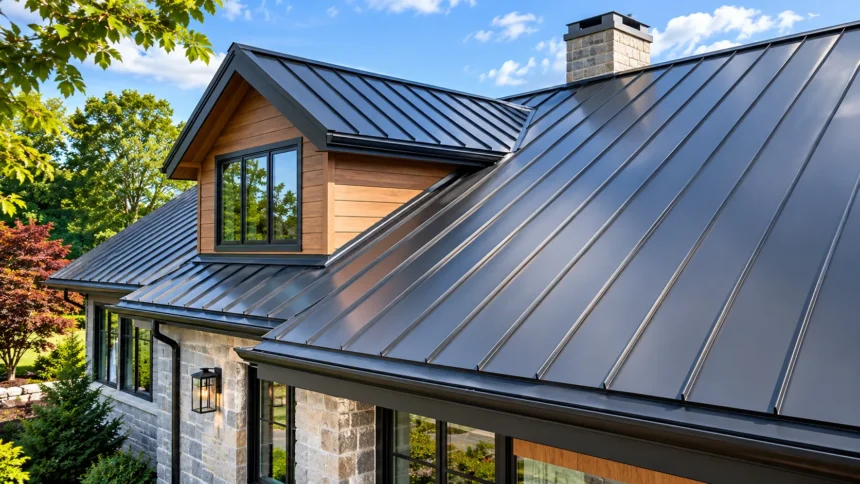
What Is a Standing Seam Roof?
A standing seam roof is a metal roofing system made of long panels connected by raised vertical seams. These seams join neighboring panels while concealing most of the fasteners underneath the roofing surface. This design creates a clean appearance and helps protect the building from rain, snow, moisture, and other outdoor weather conditions.
Unlike traditional metal roofing systems with exposed screws, standing seam metal roofing uses concealed fastening methods. This reduces the number of exposed connection points where water could potentially enter the roof. When properly designed and professionally installed, the system can provide dependable weather protection while requiring relatively little maintenance over its service life.
Standing seam roofing is popular among homeowners and commercial property owners because of its durability and modern appearance. It is available in different materials, colors, panel widths, and seam designs to suit various architectural styles. However, understanding installation requirements and potential expenses is important before investing in this type of roofing system.
How Does a Standing Seam Roof Work?
Standing seam roofing panels connect through raised edges that form continuous joints across the roof surface. These raised seams help keep panel connections above the main path of flowing rainwater. Properly designed joints, flashing, and drainage details work together to reduce the likelihood of moisture entering the building through vulnerable roofing areas.
Many standing seam systems use concealed clips that secure the metal panels to the supporting roof structure. Certain clip designs allow the panels to expand and contract as outdoor temperatures change throughout the year. This flexibility helps reduce unnecessary stress on roofing materials and supports long-term performance under changing environmental conditions.
The roofing system also depends on additional components, including underlayment, flashing, ventilation, and appropriate structural support. These elements contribute to moisture management and overall protection against outdoor conditions. A standing seam roof performs best when all components work together according to manufacturer requirements rather than relying solely on the strength of metal panels.
Different Types of Standing Seam Roofs
Snap-lock standing seam roofing features panels with specially designed edges that connect through an interlocking mechanism. These systems are commonly used on residential buildings with suitable roof slopes and structural conditions. Their relatively straightforward installation requirements can help reduce labor expenses compared with more complex metal roofing systems in appropriate applications.
Mechanically seamed roofing uses panel edges that are joined with specialized seaming equipment during professional installation. Depending on the system design, the resulting connections may provide enhanced resistance to water penetration under demanding conditions. These systems are often considered for commercial buildings, lower-slope roofs, and properties requiring specific weather protection capabilities.
Nail-strip standing seam roofing uses an integrated fastening flange rather than separate concealed clips in certain panel designs. It can provide a more affordable alternative for some residential roofing projects when compatible with the building. However, differences in thermal movement, panel length restrictions, and performance requirements should be evaluated before selecting this option.
Best Materials for Standing Seam Metal Roofing
Steel is one of the most commonly used materials for standing seam metal roofing because of its strength and versatility. Protective coatings help improve resistance to corrosion and outdoor exposure under suitable environmental conditions. Steel panels are available in various thicknesses and finishes, offering homeowners several options for balancing durability, appearance, and overall roofing expenses.
Aluminum roofing is lightweight and naturally resistant to many forms of corrosion, making it suitable for certain coastal environments. It can perform well in areas where salt exposure creates challenges for other roofing materials. However, aluminum may cost more than comparable steel products, and its performance depends on material thickness and system design.
Copper and zinc are premium roofing materials valued for their distinctive appearance and potential longevity. Both develop natural surface changes over time that contribute to their unique architectural character. Although these materials can provide excellent long-term performance, their higher purchasing and installation costs may make them less practical for homeowners with limited renovation budgets.
Standing Seam Roof Cost and What Affects It
The cost of a standing seam roof depends on material selection, property size, roof complexity, and local labor rates. Premium metal panels and specialized installation requirements generally make this system more expensive upfront than traditional asphalt shingles. However, the total investment can vary considerably depending on the condition of the existing roofing structure.
Material thickness, protective coatings, panel profiles, and color finishes can also influence the final roofing price. Higher-quality materials may offer improved performance in demanding environments, but they typically require a larger initial investment. Homeowners should compare complete roofing specifications rather than selecting products based only on the lowest advertised price per square foot.
Additional expenses may include removing existing roofing materials, repairing damaged decking, replacing flashing, and improving ventilation. Disposal charges, permits, transportation, and specialized equipment may also increase project costs. Requesting a detailed written estimate helps homeowners understand what is included and identify potential expenses before the roofing installation begins.
Hidden Standing Seam Roofing Costs to Watch For
Damaged roof decking is one of the most common unexpected expenses during a roofing replacement project. Moisture exposure, previous leaks, and structural deterioration may remain hidden underneath existing roofing materials. If these problems are discovered during professional removal, additional repairs may be necessary before the new metal roofing system can be installed.
Complex roof features can also increase installation expenses beyond the initial cost of metal panels. Chimneys, skylights, valleys, dormers, and multiple roof sections often require customized flashing and additional labor. These areas must be properly designed to manage water movement, making their installation quality particularly important for preventing expensive moisture-related problems later.
Other overlooked expenses may involve snow retention systems, gutter adjustments, ventilation improvements, and additional insulation where necessary. Some roofing projects may also require building permits or upgrades to meet applicable local requirements. Discussing these possibilities with a qualified roofing contractor beforehand helps homeowners create a more realistic budget and avoid unexpected financial pressure.
Advantages of Installing a Standing Seam Roof
One of the main benefits of standing seam metal roofing is its potential for a long service life. Quality materials combined with professional installation can provide reliable protection for several decades under suitable conditions. This durability may reduce the frequency of roof replacements compared with certain conventional roofing materials that deteriorate more quickly.
Concealed fasteners provide another important advantage because fewer fastening points are directly exposed to changing weather conditions. This design reduces some maintenance concerns associated with exposed screws and deteriorating washers. Although no roofing system is completely free from leaks, properly installed standing seam panels can provide dependable moisture resistance and long-term structural protection.
Standing seam roofing can also contribute to energy efficiency when combined with suitable insulation, ventilation, and reflective surface finishes. Certain metal roofing colors and coatings reflect more sunlight, helping reduce unwanted heat absorption during warmer months. Actual energy savings depend on the local climate, building design, existing insulation, and specific roofing products selected.
Disadvantages of Standing Seam Metal Roofing
The higher initial installation cost is one of the biggest disadvantages of standing seam roofing for many homeowners. Specialized materials, equipment, and experienced labor can make the overall project more expensive than conventional roofing alternatives. Property owners should consider both immediate expenses and expected long-term performance when deciding whether the investment is worthwhile.
Metal roofing panels may develop visible surface waviness known as oil canning under certain conditions. This appearance can result from material characteristics, manufacturing stresses, installation conditions, or temperature-related movement. Oil canning is generally considered an aesthetic concern, although a qualified roofing professional should assess unusual panel distortion to rule out underlying problems.
Repairs and modifications can sometimes be more complicated because standing seam systems use interconnected panels and specialized fastening methods. Replacing a damaged section may require work on surrounding roofing components depending on the system design. Finding experienced contractors and compatible replacement materials can also influence future repair costs and the convenience of ongoing maintenance.
Standing Seam Roof Installation Mistakes to Avoid
Choosing roofing panels that are unsuitable for the building’s slope can lead to significant performance problems. Different standing seam systems have specific minimum slope requirements based on their seam design and installation specifications. A qualified contractor should confirm that the selected roofing system is appropriate for the property and its expected weather exposure.
Improper flashing around roof penetrations and transitions is another concern that can contribute to moisture damage. Areas surrounding chimneys, vents, skylights, and roof intersections require carefully designed protection against water entry. Poorly executed flashing can undermine the performance of otherwise high-quality metal panels and lead to expensive repairs inside the building.
Ignoring the natural expansion and contraction of metal roofing materials may also create problems over time. Temperature changes cause metal panels to move, and fastening systems must accommodate that movement according to product requirements. Hiring an experienced standing seam roofing contractor helps reduce installation errors that could result in panel damage or premature deterioration.
How Long Does a Standing Seam Roof Last?
A properly installed standing seam metal roof can often provide approximately 40 to 70 years of service, depending on material quality and environmental conditions. Some premium roofing materials may last even longer when appropriately maintained. However, these estimates are not guaranteed because every property experiences different weather exposure, maintenance practices, and structural conditions.
Local environmental factors can significantly influence the expected lifespan of metal roofing materials. Coastal salt exposure, industrial pollutants, extreme temperatures, and frequent severe weather may increase the demands placed on the roofing system. Selecting materials and protective finishes suitable for the local environment can help reduce premature corrosion and other forms of deterioration.
The quality of installation is equally important when determining how long a standing seam roof will remain functional. Incorrect fastening, inadequate ventilation, and poorly designed drainage details can reduce the service life of even premium materials. Periodic professional inspections help identify developing problems before they cause significant damage or require extensive roofing repairs.
How to Maintain a Standing Seam Roof
Standing seam metal roofing generally requires less routine maintenance than many traditional roofing systems, but regular attention remains important. Homeowners should arrange periodic professional inspections to assess panel conditions, flashing, drainage systems, and visible signs of deterioration. Identifying small issues early can help prevent moisture damage and reduce the likelihood of expensive future repairs.
Leaves, branches, and other debris can accumulate in gutters, roof valleys, and drainage areas over time. These materials may interfere with proper water movement and contribute to prolonged moisture exposure around roofing components. Professional roof maintenance and gutter cleaning help maintain effective drainage without exposing homeowners to unnecessary risks associated with accessing elevated roofing surfaces.
Homeowners should also arrange additional inspections after severe storms or other events that may damage roofing materials. Falling branches, hail, and strong winds can affect panels, flashing, or supporting components depending on the circumstances. Prompt professional assessment helps determine whether repairs are necessary and protects the roofing system from further deterioration caused by unnoticed damage.
How to Choose the Right Standing Seam Roofing Contractor
Selecting a contractor with specific experience in standing seam metal roofing can make a significant difference in installation quality. This roofing system requires knowledge of panel connections, concealed fastening methods, flashing details, and thermal movement. Reviewing previous projects and professional qualifications helps homeowners evaluate whether a contractor has suitable experience for their roofing requirements.
A reliable contractor should provide a detailed written estimate that clearly explains materials, labor, preparation work, and additional project expenses. Homeowners should also request information about panel specifications, expected installation timelines, and possible costs associated with unexpected repairs. Comparing multiple detailed estimates can help identify differences in service quality rather than simply comparing total prices.
Understanding warranty coverage is another important consideration before signing a roofing contract. Material warranties, paint finish warranties, and workmanship guarantees may cover different issues and include specific exclusions or maintenance requirements. Asking questions about coverage, claim procedures, and contractor responsibilities helps homeowners make informed decisions and avoid misunderstandings after the installation is complete.
Conclusion
A standing seam roof offers a durable, attractive, and potentially long-lasting solution for residential and commercial properties. Its concealed fasteners and raised panel connections provide practical advantages over certain conventional roofing systems. However, selecting appropriate materials and understanding installation requirements are essential for achieving dependable performance and maximizing the value of the investment.
Unexpected roofing expenses often arise from hidden structural damage, complex installation details, unsuitable materials, or incomplete project estimates. Homeowners can reduce these risks by arranging professional assessments and requesting clear information about all expected costs. Comparing roofing systems carefully also helps ensure that the selected option matches the property’s condition, climate, and budget.
Investing in quality materials, experienced installation, and regular professional maintenance can help extend the lifespan of standing seam metal roofing. Although the upfront expense may be higher, long-term durability can make it a worthwhile choice for many properties. Careful planning remains the best way to avoid costly surprises and protect your roofing investment.
Frequently Asked Questions (FAQs)
Is a standing seam roof worth the money?
A standing seam roof can be worthwhile because of its durability, concealed fasteners, and relatively low maintenance requirements. Its overall value depends on installation quality, material selection, and long-term ownership plans.
What is the biggest disadvantage of standing seam roofing?
The biggest disadvantage is generally its higher upfront cost. Specialized materials, experienced labor, and complex installation requirements can make standing seam roofing more expensive than traditional asphalt shingles or exposed-fastener metal roofs.
Can a standing seam roof leak?
Yes, standing seam roofs can develop leaks due to improper installation, damaged flashing, unsuitable panel systems, or severe weather. Professional installation and periodic inspections help reduce the risk of water penetration.
Is a standing seam roof noisy during rain?
A properly designed standing seam roof with suitable decking, insulation, and underlayment is not necessarily louder than conventional roofing. Indoor noise levels depend largely on the complete roof assembly and building construction.
How often should a standing seam roof be inspected?
A standing seam roof should generally receive a professional inspection at least annually and after significant weather events. Regular inspections help identify damaged components, drainage problems, and developing maintenance concerns.