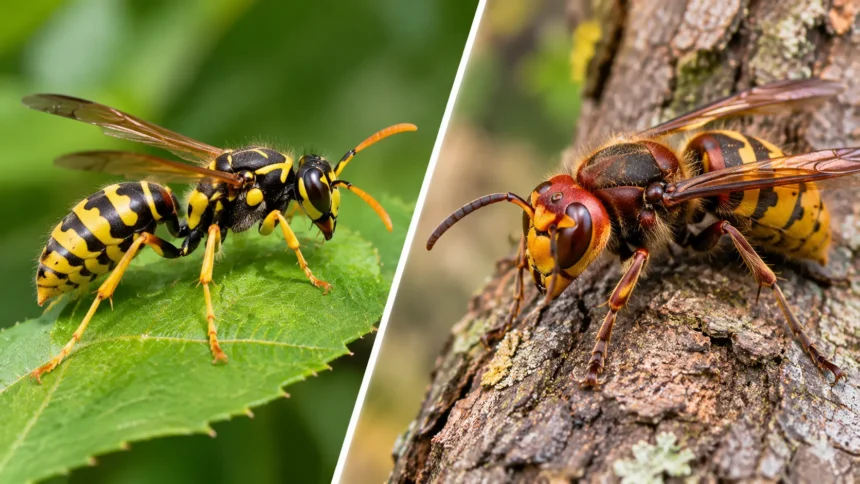
Seeing a large flying insect around your garden can be alarming, especially when you cannot tell whether it is a wasp or a hornet. Both insects may have noticeable stripes, narrow waists, and the ability to sting. However, they differ in several important ways, including their size, nesting habits, and appearance. Understanding the differences between wasps and hornets helps you recognize these insects and respond safely.
Many people use the words wasp and hornet interchangeably, but they do not mean exactly the same thing. Hornets belong to the broader wasp family, meaning all true hornets are wasps, but not all wasps are hornets. This distinction is important when comparing their physical characteristics and behavior.
Whether you have noticed a nest near your home or simply want to identify insects in your garden, knowing their differences can be useful. This guide explains wasp vs hornet identification, behavior, habitats, nesting patterns, stings, ecological benefits, and practical safety precautions.
What Is a Wasp?
A wasp is an insect belonging to a diverse group within the order Hymenoptera, which also includes bees and ants. Wasps occur in many shapes, sizes, and colors depending on their species. Some live in organized colonies, while others spend most of their lives alone. Their habits and appearance vary considerably across different families.
Common social wasps include yellowjackets and paper wasps, which are frequently encountered around gardens and buildings. Many have slender bodies, distinctive markings, and narrow waists between their body segments. Some species construct paper-like nests, while others use underground cavities. Their nesting behavior depends on the species and environmental conditions.
Wasps play important roles in natural ecosystems by hunting insects, pollinating flowers, and participating in food webs. Certain species help control populations of caterpillars and other garden pests. Although some wasps can sting defensively, they do not spend their time actively seeking people to attack. Understanding their behavior helps prevent unnecessary fear.
What Is a Hornet?
A hornet is a type of social wasp belonging to the genus Vespa. True hornets are generally larger and more robust than many commonly encountered yellowjackets. They have distinctive body markings and strong jaws that help them capture prey and process nesting materials. However, appearance varies among different hornet species.
Hornets usually establish colonies containing a queen and workers. Their nests are constructed from chewed wood fibers mixed with saliva, creating a paper-like material. Depending on the species, nests may be located in trees, building cavities, or underground spaces. Colonies develop during the active season and follow species-specific life cycles.
One important source of confusion is the name bald-faced hornet. Despite its common name, this North American insect belongs to the genus Dolichovespula rather than the true hornet genus. It is actually a type of yellowjacket. This example shows why common insect names do not always reflect scientific classification.
Wasp vs Hornet: Main Differences at a Glance
Wasps and hornets share many characteristics because hornets belong to the wasp family Vespidae. However, people usually compare hornets with familiar social wasps such as yellowjackets and paper wasps. True hornets generally have larger, sturdier bodies. Many common paper wasps appear more slender and have relatively long legs.
Color patterns also differ between species, although they are not reliable enough for identification on their own. Some hornets display reddish-brown, yellow, or dark markings. Yellowjackets often have strongly contrasting black-and-yellow patterns. Paper wasps may be brown, reddish, or yellow-marked depending on the species.
Nesting habits and defensive behavior provide additional clues. Hornets often build enclosed paper nests, while many paper wasps construct exposed, umbrella-shaped combs. Yellowjackets may also build enclosed nests, making confusion possible. Accurate identification requires considering several features rather than relying on a single difference.
| Feature | Common Wasps | True Hornets |
|---|---|---|
| Classification | Broad group of insects | Social wasps in genus Vespa |
| Size | Varies greatly by species | Often larger than familiar social wasps |
| Body shape | Often slender, depending on species | Usually robust |
| Colors | Yellow, black, brown, red, and others | Yellow, brown, reddish, or dark markings |
| Nests | Open or enclosed, depending on species | Usually enclosed paper nests |
| Diet | Insects, nectar, and other foods | Insects and carbohydrate-rich foods |
| Sting | Many species can sting | Females can sting |
| Social behavior | Solitary or social | Social colonies |
Differences in Body Size and Shape
Body size is one of the most noticeable differences when comparing common wasps and hornets. Many familiar paper wasps and yellowjackets are smaller than true hornets. However, the wasp group includes numerous large species, so size alone cannot determine identification. Individual size also varies among queens, workers, and species.
Hornets generally have sturdy bodies with relatively broad heads and strong thoraxes. Their appearance can seem heavier than that of many paper wasps. Paper wasps commonly have slender bodies and legs that appear long during flight. Yellowjackets have more compact bodies and may resemble smaller hornets.
Observing overall body proportions can provide useful identification clues. However, approaching an unfamiliar insect closely is unnecessary and potentially unsafe. Photographs taken from a safe distance may reveal important features. Reliable identification often requires considering the insect’s geographical location alongside its physical characteristics.
Wasp vs Hornet Color and Markings
Wasps display an impressive range of colors, including yellow, black, brown, red, orange, and metallic shades. Familiar yellowjackets often feature bold black-and-yellow markings. Paper wasps can appear reddish-brown with subtle yellow patterns. These differences reflect the diversity of wasp species rather than a single standard appearance.
True hornets also vary in color. European hornets commonly display reddish-brown markings on the head and thorax, with yellow-and-dark patterns on the abdomen. Northern giant hornets have prominent orange-yellow heads and dark abdominal bands. Other hornet species may have darker bodies or different combinations of markings.
Color alone is not enough to distinguish a wasp from a hornet. Lighting, viewing distance, and individual variation can make markings difficult to interpret. Several unrelated insects also mimic wasp-like colors. Combining color with body shape, size, location, and nesting behavior improves identification accuracy.
How Wasp and Hornet Nests Are Different
Many social wasps construct nests using plant fibers or weathered wood mixed with saliva. This creates a paper-like material that supports developing larvae. However, nest designs vary widely among different species. Some build enclosed structures, while others leave their combs exposed.
Paper wasps commonly construct open nests consisting of visible hexagonal cells attached to a supporting surface. These nests may hang beneath roof edges, branches, or sheltered structures. Hornets usually create enclosed nests with protective outer coverings. Their nest entrances and overall shapes vary by species.
Yellowjackets can also construct enclosed paper nests, sometimes inside walls or underground cavities. This means nest appearance alone may not distinguish a hornet colony from other social wasps. Never open or disturb an active nest to identify its occupants. Professional assistance is advisable when nests create safety concerns near frequently used areas.
Where Do Wasps and Hornets Live?
Wasps inhabit a wide variety of environments, including gardens, forests, grasslands, agricultural areas, and urban neighborhoods. Their habitats depend on food sources, nesting materials, climate, and species-specific requirements. Some live close to buildings, while others prefer relatively undisturbed natural areas. Their wide distribution makes wasps common in many regions.
True hornets are native primarily to regions of Europe and Asia, with some species occurring elsewhere. The European hornet has also become established in parts of North America. Hornets may nest in wooded areas, cavities, and structures that provide suitable shelter. Their distribution varies significantly between species.
Geographic location is especially useful when identifying unfamiliar insects. A hornet species found in one country may not occur naturally in another. Similarly, common names can differ between regions. Checking locally relevant identification information helps prevent confusion and unnecessary concern about species that are not present in your area.
Are Hornets More Aggressive Than Wasps?
Hornets are sometimes described as more aggressive than other wasps, but this is an oversimplification. Defensive behavior varies depending on the species, colony size, and situation. Many hornets spend most of their time searching for food or maintaining their colonies. They are most likely to respond defensively when they perceive a threat near their nest.
Yellowjackets can also become highly defensive when their colonies are disturbed. Some species are particularly noticeable around outdoor food and drinks. Paper wasps are often less defensive away from their nests, although they can still sting. Therefore, behavior cannot be predicted reliably from the words wasp or hornet alone.
The safest approach is to give both insects adequate space. Avoid swatting, trapping, or approaching active nests. Sudden movements near a colony may increase the chance of defensive behavior. Respecting nesting areas helps reduce unwanted encounters while allowing these insects to perform their ecological roles.
Wasp vs Hornet Sting: What Is the Difference?
Both female wasps and female hornets can deliver defensive stings using a specialized structure connected to venom glands. The sting may cause immediate pain, redness, and localized swelling. The intensity of discomfort depends on the species and individual response. Male wasps and hornets do not possess functional stingers.
Many social wasps and hornets can sting more than once because their stingers generally do not remain embedded in the skin. This differs from the typical defensive sting of a worker honey bee. However, the ability to sting repeatedly does not mean an insect will automatically do so. Defensive responses depend on the situation.
A hornet sting is not always more painful or dangerous than a wasp sting. Venom composition, the number of stings, and individual sensitivity influence the effects. People with serious insect-sting allergies may experience dangerous reactions. Any symptoms suggesting a severe allergic response require immediate medical attention.
Are Hornet Stings More Dangerous Than Wasp Stings?
The potential danger of a sting depends on several factors rather than the insect’s size alone. Most stings cause localized discomfort, redness, and swelling that gradually improve. However, reactions can vary significantly between individuals. Even a relatively small wasp can trigger a serious allergic reaction in a susceptible person.
Multiple stings may also require medical evaluation because they involve greater venom exposure. Children and individuals with certain health conditions may need particular attention. Large hornets can deliver substantial venom during a sting, but species differences are important. It is inaccurate to assume every hornet sting is automatically more dangerous.
Signs of a severe allergic reaction can include breathing difficulty, swelling of the tongue or throat, dizziness, or fainting. These symptoms require emergency medical care. People with a prescribed epinephrine auto-injector should follow their emergency action plan. Serious reactions should never be managed through home remedies alone.
What Do Wasps and Hornets Eat?
Wasps consume different foods depending on their species and life stage. Many social wasps capture insects to feed their developing larvae. Adults may consume nectar, fruit juices, and other sources of carbohydrates. This varied diet helps explain why certain wasps appear around gardens, flowering plants, and outdoor meals.
True hornets are active predators of numerous insects, including flies, caterpillars, and other wasps. Some species also hunt honey bees. Hornet workers collect protein-rich prey for developing larvae while obtaining energy from carbohydrate sources. Their feeding behavior changes with seasonal conditions and colony requirements.
Both groups contribute to natural food webs through predation and other feeding activities. They may help regulate populations of certain insects. However, some species can also create problems around beehives or food areas. Understanding their diet provides useful insight into their ecological importance and everyday behavior.
Do Wasps and Hornets Help Pollinate Flowers?
Wasps and hornets can contribute to pollination when visiting flowers for nectar. Pollen may attach to their bodies and move between blossoms during feeding. However, their effectiveness varies by species and flower type. They are generally less specialized for pollen collection than many bees.
Some plants have important relationships with particular wasp species. Fig wasps are a well-known example of insects involved in specialized pollination relationships. Other wasps visit flowers more generally while searching for food. These interactions demonstrate that wasps contribute to ecosystems in ways beyond hunting insects.
True hornets may also visit flowers and participate in incidental pollen transfer. However, their primary ecological roles often include predation and scavenging. Protecting natural habitats supports a wide range of beneficial insects. Unnecessary destruction of wasps and hornets can disrupt useful ecological relationships.
How Long Do Wasps and Hornets Live?
The lifespan of wasps depends on their species, role within the colony, and environmental conditions. Workers in seasonal social wasp colonies often live for several weeks, although the exact duration varies. Queens may survive considerably longer. Solitary wasps follow different life cycles.
True hornet colonies in temperate climates commonly follow an annual cycle. A fertilized queen survives the colder season and establishes a new colony when conditions become suitable. Workers develop as the colony expands. Toward the end of the season, new reproductive individuals are produced.
In many temperate species, most colony members die as colder weather arrives. Newly fertilized queens may survive in sheltered locations before establishing future nests. However, warmer climates can support different colony patterns. Lifespan and seasonal behavior should therefore be considered in relation to the particular species.
Wasp vs Hornet Queen: Key Differences
Both social wasps and true hornets organize their colonies around reproductive females commonly called queens. A queen typically begins a colony by establishing a nest and producing offspring. As workers develop, they take over many activities such as nest maintenance and food collection. The queen primarily continues egg production.
Hornet queens are generally larger than their workers, although the difference varies by species. Many yellowjacket queens are also noticeably larger than workers. Paper wasp queens may appear similar in size to other adult females. Consequently, body size does not always provide reliable evidence of an insect’s role.
Queens play an essential part in seasonal colony development. In many species, newly fertilized queens survive winter while the previous colony declines. They establish new nesting sites when environmental conditions become favorable. Understanding this life cycle helps explain why colony activity changes throughout the year.
Why Wasps and Hornets Come Near Houses
Wasps and hornets may approach homes because buildings provide shelter and access to useful resources. Roof overhangs, wall cavities, and other protected spaces can resemble suitable natural nesting locations. Gardens may also attract insects searching for prey or nectar. Their presence does not automatically indicate an established nest.
Outdoor food and sugary drinks can attract some social wasps, particularly yellowjackets. Ripe fruit, uncovered waste, and food scraps may provide additional feeding opportunities. Hornets may visit gardens while hunting other insects. Different species respond to different food sources.
A few insects passing through an outdoor area generally do not require intervention. However, repeated activity around a particular opening may indicate a nearby nesting site. Observe only from a safe distance. Avoid reaching into cavities or disturbing structures where insects may be present.
How to Identify a Wasp or Hornet Safely
Identifying an unfamiliar insect begins with observing it without approaching closely. Notice its general size, body shape, and visible color patterns. If possible, consider whether its legs appear long or whether its body looks relatively robust. These features may help distinguish common paper wasps from true hornets.
Geographic location is another important identification clue. Some hornets occur only in particular parts of the world. Comparing an insect with locally documented species can reduce confusion. Remember that large insects resembling hornets may actually belong to entirely different wasp groups.
A clear photograph taken without approaching or disturbing the insect can help with identification. Local wildlife specialists or qualified pest professionals may provide additional guidance when necessary. Never attempt to capture or provoke an insect for a closer look. Safety matters more than obtaining a perfect identification.
What to Do If You Find a Wasp or Hornet Nest
Finding a wasp or hornet nest near your home can be concerning, particularly when it is close to frequently used entrances or outdoor spaces. The safest immediate response is to keep a reasonable distance. Avoid touching, shaking, or blocking the nest. Social wasps may defend their colonies when disturbed.
Inform a responsible adult or property manager if a nest is located near children, pets, or busy household areas. A qualified pest management professional can assess the species, nest location, and potential risks. Not every nest requires removal. Colonies located away from regular human activity can often remain undisturbed.
Do not attempt to knock down, burn, flood, or open an active nest. These actions can provoke defensive behavior and create additional hazards. Professional assistance is particularly important when insects occupy wall cavities or difficult-to-reach locations. Safe management should prioritize people while avoiding unnecessary harm to beneficial wildlife.
How to Reduce Wasp and Hornet Encounters
Reducing unwanted encounters often begins with basic outdoor cleanliness. Keeping food covered and disposing of waste properly can make eating areas less attractive to scavenging wasps. Fallen fruit should also be managed when appropriate. These habits may reduce visits from certain species but cannot eliminate every encounter.
Maintaining buildings can help reduce opportunities for insects to enter unwanted spaces. Damaged screens, openings around windows, and accessible wall cavities may allow insects indoors. Suitable building maintenance can address these issues when no active nest is present. Never seal an opening that may contain an active colony without professional guidance.
Gardens naturally attract insects, including beneficial predators and pollinators. The goal should be reducing risky contact rather than eliminating all wasps and hornets. Keeping frequently used areas clean and remaining aware of nearby nests can help. A balanced approach supports both household safety and local ecosystems.
Common Myths About Wasps and Hornets
One common myth is that hornets and wasps belong to completely separate insect groups. In reality, true hornets are a type of social wasp. The broader wasp category includes many different species with varied characteristics. Understanding this classification helps explain their similarities.
Another misconception is that every hornet is extremely aggressive. Most hornets do not attack people without a reason. Defensive reactions are more likely when insects or their colonies feel threatened. Other social wasps may display similar defensive behavior.
Some people also believe that every wasp or hornet sting causes a serious medical emergency. Most single stings produce localized symptoms, although severe allergic reactions are possible. The response varies between individuals. Knowing the warning signs of an allergic emergency is more useful than assuming all stings have identical effects.
Why Wasps and Hornets Matter in Nature
Wasps and hornets contribute to ecosystems by interacting with other insects and plants. Many species hunt caterpillars, flies, and other small animals. These activities help regulate certain insect populations. Their ecological roles can be particularly important in gardens, forests, and agricultural environments.
Some species also assist pollination while visiting flowers. Others participate in scavenging by consuming available organic material. These behaviors contribute to broader food webs and natural processes. Their value extends beyond the situations in which people encounter them near homes.
Conserving beneficial insects requires understanding their behavior and avoiding unnecessary disturbance. A nest located far from human activity may present little practical concern. However, safety risks near busy areas still deserve attention. Responsible management recognizes both ecological importance and the need to prevent harmful encounters.
Conclusion
Understanding the differences between wasps and hornets makes identifying these insects easier. True hornets belong to the broader wasp family but often have larger, more robust bodies than familiar paper wasps and yellowjackets. Nesting habits, markings, and geographical distribution also provide useful identification clues. However, no single feature reliably distinguishes every species.
Both wasps and hornets contribute to natural ecosystems through insect predation and other activities. Their defensive behavior depends on species and circumstances, particularly the presence of nearby nests. Although most encounters are harmless, stings can cause discomfort and occasionally serious allergic reactions. Maintaining a safe distance helps reduce unnecessary risks.
The most practical approach is to observe unfamiliar insects without disturbing them. Understanding their appearance, habitat, and behavior can prevent confusion and unnecessary fear. When an active nest creates a safety concern, seek qualified professional assistance. Respecting these insects while taking sensible precautions supports a safer relationship with surrounding wildlife.
Frequently Asked Questions
Are Hornets Bigger Than Wasps?
True hornets are generally larger than many familiar social wasps, including common yellowjackets. However, some other wasp species can also be large, so size alone is not a reliable identification method.
Is a Hornet a Type of Wasp?
Yes, true hornets belong to the genus Vespa within the wasp family Vespidae. Therefore, all true hornets are wasps, but many wasp species are not hornets.
Which Is More Dangerous, a Wasp or a Hornet?
Both can deliver painful stings, and either may cause a severe allergic reaction. The danger depends on species, number of stings, and individual sensitivity rather than size alone.
How Can You Tell a Hornet Nest From a Wasp Nest?
True hornets usually construct enclosed paper nests, while many paper wasps build exposed combs. However, yellowjackets also construct enclosed nests, so nest appearance alone may not confirm identification.
Do Wasps and Hornets Die After Stinging?
Most wasps and hornets can sting more than once because their stingers generally remain intact. Unlike worker honey bees, they typically do not die as a direct result of stinging.