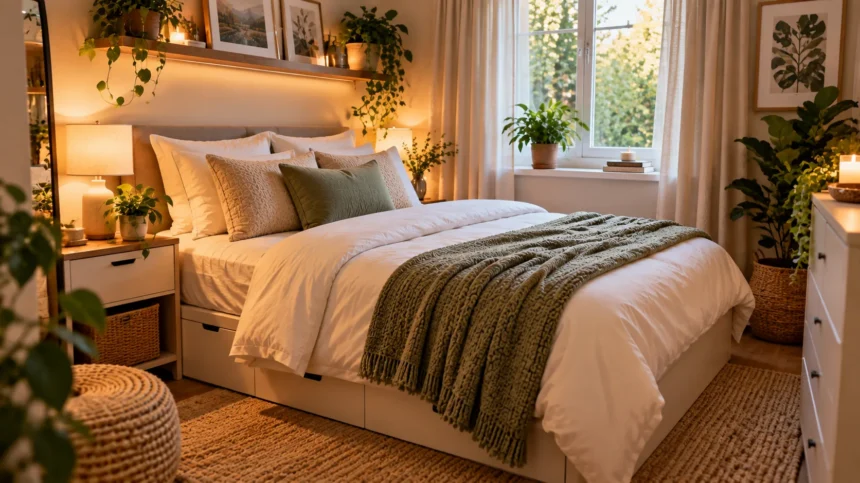
A small bedroom can feel cozy and inviting, but limited floor space can also make the room seem crowded when furniture, clothing, and everyday belongings begin to compete for space. The key to creating more comfort is not necessarily making the bedroom physically larger. It is about using the available space more thoughtfully.
Simple changes to furniture placement, storage, lighting, bedding, color, and organization can make even a compact bedroom feel easier to move through and more relaxing. Instead of filling every available corner, focus on what supports your daily routine. A comfortable small bedroom should feel functional, uncluttered, personal, and easy to maintain.
Start by Removing Unnecessary Clutter
Clutter becomes more noticeable in a small bedroom because there is less open space around it. Clothes on chairs, bags on the floor, crowded bedside tables, and unused decorations can quickly make the room feel smaller. Begin by removing anything that does not genuinely need to stay in the bedroom.
Go through clothing, accessories, books, paperwork, and decorative items one category at a time. Donate, relocate, or discard things you no longer use rather than trying to create storage for everything. Reducing the number of belongings in the room often creates more comfort than buying additional organizers.
Once you have decluttered, give every remaining item a practical place. Clothes should fit inside drawers or the wardrobe, while smaller belongings can be grouped in baskets or containers. A simple organization system helps prevent clutter from returning and keeps the bedroom feeling more open between deeper cleaning sessions.
Choose Furniture That Fits the Room
Oversized furniture can make a compact bedroom difficult to move around. A large bed frame, wide dresser, bulky chair, and multiple storage units may each be useful individually, but together they can consume valuable floor space. Choose furniture based on the dimensions of the room rather than appearance alone.
Measure available floor space before purchasing new furniture. Leave enough room to comfortably walk around the bed, open doors, access drawers, and reach storage areas. Furniture that fits properly can make the room feel more balanced because you are not constantly squeezing between pieces or moving objects to reach something.
Consider whether every piece of furniture serves an important purpose. A chair that simply collects clothing may not deserve valuable floor space, while a compact bedside table with drawers could provide both surface space and storage. In a small bedroom, useful multifunctional furniture usually works better than several single-purpose pieces.
Make Better Use of Vertical Space
When floor space is limited, walls provide valuable opportunities for storage. Shelves, wall-mounted organizers, hooks, and tall bookcases can help move belongings upward instead of spreading them across the room. Using vertical space keeps frequently used items accessible while preserving more open floor area.
Install shelves above a desk, dresser, or another suitable location rather than adding another cabinet. They can hold books, small baskets, decorative pieces, or items that do not need daily access. Keep the arrangement relatively simple so vertical storage adds functionality without making the walls feel crowded.
The back of a door can also provide useful storage. Hooks or a suitable over-door organizer may hold bags, lightweight accessories, or clothing without taking up floor space. Small changes like these can significantly increase storage capacity while helping the bedroom remain easier to navigate.
Use Under-Bed Storage Wisely
The area underneath the bed is one of the most useful storage spaces in a small bedroom. Instead of leaving it empty or allowing random objects to disappear underneath, use containers designed to fit the available height. This space works especially well for items that are not needed every day.
Store seasonal clothing, extra bedding, shoes, or travel accessories underneath the bed in clearly organized containers. Labeling boxes can save time when you need something later. Avoid filling the space with unrelated items, because hidden clutter can become just as difficult to manage as visible clutter.
If you are replacing your bed, consider a frame with built-in drawers or lift-up storage. These designs can reduce the need for additional cabinets or storage furniture. The goal is to make the bed perform more than one function without making the room look heavier or more complicated.
Keep the Bed Simple and Comfortable
The bed is usually the largest object in a small bedroom, so its appearance strongly influences how the whole room feels. Keep bedding comfortable but relatively simple. Soft sheets, supportive pillows, a suitable duvet, and one lightweight throw may provide all the comfort you need without creating unnecessary visual bulk.
Avoid covering the bed with numerous decorative pillows and blankets that need somewhere else to go every night. Extra layers can make a small room look crowded and create more work when making the bed. A simpler arrangement usually feels cleaner while remaining cozy enough for everyday use.
Choose bedding colors that coordinate with the rest of the room. Light neutrals, muted colors, or a limited palette can make the bed feel visually integrated instead of dominating the space. Texture can provide warmth and personality without requiring bold patterns across every layer.
Use Light and Color to Open Up the Space
Color cannot physically enlarge a bedroom, but it can influence how open or enclosed the room feels. Soft neutrals, light warm tones, muted greens, gentle blues, and similar shades can create a calm visual foundation. Using related colors across larger surfaces can make the bedroom feel more cohesive.
You do not have to avoid darker colors completely. A deeper accent behind the bed, darker cushions, or small decorative details can add personality without overwhelming the room. The important thing is to maintain enough visual balance so multiple strong colors are not competing throughout a limited space.
Natural daylight can also make a small bedroom feel more comfortable. Keep windows reasonably clear and use curtains that are easy to open during the day. When more light can move through the room, furniture and walls often feel less visually heavy, which helps the space seem more welcoming.
Create Layers of Comfortable Lighting
A single harsh ceiling light can make a compact bedroom feel flat and uncomfortable. Layering different sources of light gives you more control over the atmosphere. A ceiling fixture can provide general illumination, while a bedside lamp or wall-mounted light can create a softer setting during the evening.
Wall-mounted bedside lights are especially useful when surface space is limited. They provide practical lighting without requiring large lamps on small bedside tables. Clip-on lamps or compact fixtures can also work well when you want functional lighting but cannot spare additional furniture or surface area.
Pay attention to where light is needed most. Reading, getting dressed, organizing clothes, and relaxing may each benefit from different levels of brightness. Choosing lighting around your actual activities creates a more comfortable bedroom than simply making every corner equally bright.
Keep the Floor as Clear as Possible
Open floor space can dramatically improve how comfortable a small bedroom feels. Shoes, laundry baskets, bags, charging cables, and storage boxes can quickly turn pathways into obstacles. Keeping these items organized makes the room easier to navigate and creates a stronger sense of openness.
Use hooks, shelves, closets, and under-bed storage to move belongings away from the floor. If you use a laundry hamper, choose a narrow design that fits naturally into an unused corner. Small changes in where items are stored can free surprising amounts of usable space.
Cable management is another useful detail. Run charging cords neatly beside furniture or use clips to keep them from spreading across walkways. A clear floor does not only improve appearance; it also makes vacuuming and everyday cleaning faster because fewer objects need to be moved.
Keep the Bedside Area Minimal
A small bedside table can become overcrowded very quickly. Phones, books, cups, chargers, tissues, and miscellaneous objects can fill the surface until it becomes difficult to use. Limit the area to the few items you genuinely need in the evening or immediately after waking.
A lamp, book, water, and a small tray for essentials may be enough. Items that are used less frequently can be kept inside a drawer or elsewhere in the bedroom. This reduces visual clutter and makes the area around the bed feel calmer and more organized.
If there is not enough room for a traditional bedside table, consider a narrow shelf or wall-mounted option. Even a small surface can provide space for essentials without taking up significant floor area. Choosing furniture proportional to the room can improve both functionality and comfort.
Use Mirrors Without Overcrowding the Walls
Mirrors can make a small bedroom feel brighter by reflecting available light around the room. A full-length mirror near a suitable wall or wardrobe can also provide practical value without requiring much floor space. The effect works best when the mirror reflects an uncluttered area or natural light.
You do not need several mirrors to create a sense of openness. One well-positioned piece is usually enough. Too many reflective surfaces can make a small bedroom feel visually busy, particularly when they reflect shelves, clothing, or other areas containing several objects.
Consider mirrored wardrobe doors if you are already choosing built-in or freestanding storage. This can combine two functions without introducing another separate object into the room. As with other small-bedroom decisions, multifunctional features can help you gain usefulness without adding unnecessary furniture.
Keep Work and Entertainment Zones Controlled
A small bedroom often needs to serve more than one purpose, particularly in apartments or shared homes. You may need a desk for work, a television, exercise equipment, or a study area in the same room. Defining these functions clearly can prevent the bedroom from feeling chaotic.
If you have a desk, keep it compact and organize work supplies inside drawers or containers after you finish. Avoid allowing paperwork and laptops to spread onto the bed or bedside table. A tidy work zone takes up the same physical space but creates far less visual distraction.
Use the same approach with entertainment or hobby equipment. Store controllers, headphones, books, or craft supplies together rather than scattering them around the bedroom. Creating clear zones allows a multifunctional small room to remain comfortable without feeling like several different rooms have been squeezed into one.
Build a Short Daily Bedroom Reset
Small bedrooms can move from tidy to cluttered quickly because only a few misplaced items are needed to change how the room looks. A five- or ten-minute daily reset can prevent this buildup. Put away clothes, clear the floor, remove cups, and return belongings to their designated storage areas.
Making the bed can also help restore visual order. Because the bed occupies such a large proportion of the room, straightening it makes an immediate difference. Combine this with clearing the bedside area and opening curtains in the morning to make the room feel refreshed without doing a full cleaning session.
Keep the reset simple enough that you can repeat it regularly. Complicated organization routines are difficult to maintain when you are busy or tired. A few consistent habits can keep the bedroom comfortable far more effectively than waiting until clutter becomes overwhelming and requires an entire afternoon to organize.
Conclusion
Making a small bedroom feel more comfortable is largely about using limited space intentionally. Decluttering unnecessary belongings, choosing appropriately sized furniture, using vertical storage, and keeping the floor clear can create more room for everyday movement. These changes improve function without requiring the bedroom itself to become physically larger.
Comfort also comes from the atmosphere of the room. Thoughtful lighting, coordinated colors, comfortable bedding, natural light, and an organized bedside area can make a compact space feel calmer and more welcoming. Multifunctional furniture and hidden storage allow you to add practicality without creating additional visual clutter.
The best small-bedroom setup is one that matches the way you actually live. You do not need to follow complicated design rules or remove everything personal from the room. By combining smart storage with simple organization and comfortable details, you can create a bedroom that feels surprisingly spacious, peaceful, and enjoyable to use.
FAQs
How can I make a very small bedroom feel more comfortable?
Start by reducing clutter, choosing appropriately sized furniture, and keeping pathways clear. Use vertical and under-bed storage while adding comfortable bedding and soft lighting to make the space more functional and inviting.
What colors work best in a small bedroom?
Light neutrals, soft warm shades, muted blues, and gentle greens can create a calm, open feeling. Darker colors can still work as accents when balanced with lighter surfaces and good lighting.
How should I arrange furniture in a small bedroom?
Place the bed where it allows comfortable access to doors, storage, and walkways. Keep furniture against appropriate walls when useful and avoid filling every corner simply because some floor space remains available.
What furniture is best for a small bedroom?
Compact and multifunctional furniture usually works well. Consider a bed with storage, a narrow bedside table, wall-mounted shelves, or a small dresser that provides useful storage without consuming excessive floor space.
How can I keep a small bedroom from looking cluttered?
Give belongings specific storage locations, keep visible surfaces relatively clear, and perform a short daily reset. Regular decluttering also prevents closets, drawers, and storage containers from becoming overcrowded over time.