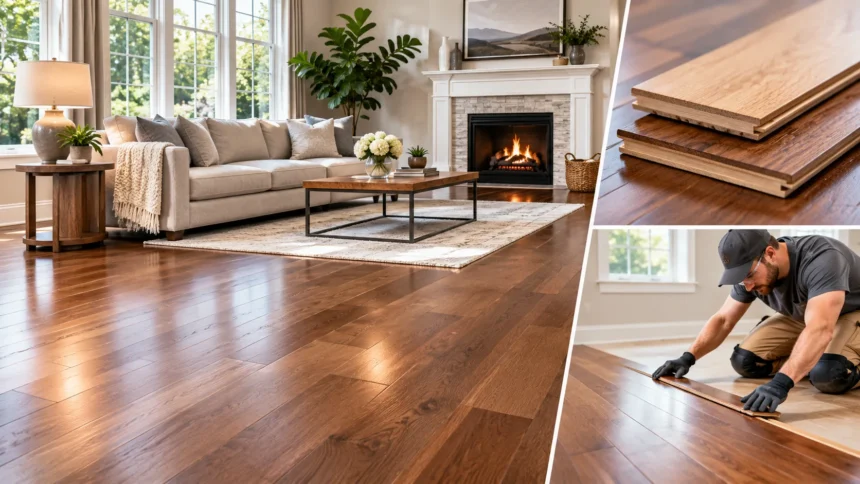
Choosing the right flooring can make a significant difference in your home’s appearance, comfort, and long-term maintenance needs. Hardwood flooring remains a popular option because of its natural beauty, durability, and timeless appeal. However, traditional hardwood installation can involve sanding, staining, and waiting for protective finishes to cure. Pre-finished hardwood flooring offers a convenient alternative by arriving with its surface coating already applied.
Pre-finished hardwood flooring is real wood flooring that has been sanded, stained, and sealed at the factory before installation. It offers several advantages, including faster installation, consistent finishing, and less disruption inside the home. However, its cost, repair requirements, and moisture sensitivity deserve consideration. This guide explains the pros and cons, installation expenses, maintenance needs, and important factors to consider before purchasing.
What Is Pre-Finished Hardwood Flooring?
Pre-finished hardwood flooring is a type of wood flooring that receives its protective surface finish during manufacturing. The boards arrive ready for installation without requiring additional sanding or staining inside the home. This makes the installation process more convenient than traditional unfinished hardwood. Homeowners can choose from various wood species, colors, textures, and plank sizes.
Manufacturers typically apply several protective coating layers under controlled factory conditions. Some products use ultraviolet-cured finishes containing aluminum oxide to improve abrasion resistance. These treatments help create a consistent surface appearance across the boards. However, the actual durability depends on the product’s construction, finish quality, and how the flooring is maintained.
Pre-finished flooring is available in both solid hardwood and engineered hardwood construction. Solid boards consist of one piece of wood, while engineered products contain a real-wood surface attached to supporting layers. Both can have factory-applied finishes. Understanding these differences is important because construction affects installation options, moisture performance, and future refinishing possibilities.
How Does Pre-Finished Hardwood Flooring Work?
Pre-finished hardwood flooring is manufactured through a process that prepares the boards before they reach the installation site. The wood is shaped, sanded, stained when required, and coated with protective finishes. Manufacturers cure the coatings under controlled conditions. This creates a finished surface that normally requires no additional coating after installation.
During installation, contractors prepare the subfloor and position the boards according to the manufacturer’s instructions. Depending on the product, installation may involve nails, staples, adhesive, or an approved floating system. Because the finish is already complete, contractors generally avoid the on-site sanding and coating stages. This can reduce installation-related disruption considerably.
Once the boards are properly installed, the floor is usually ready for normal walking without waiting for finish curing. However, furniture placement and other activities should follow product instructions. The flooring still needs suitable temperature and humidity conditions. Correct preparation and installation are essential because the factory finish cannot compensate for an unsuitable subfloor.
How Much Does Pre-Finished Hardwood Flooring Cost?
In 2026, pre-finished hardwood flooring commonly costs approximately $8 to $22 per square foot installed in the United States. This broad range covers materials and professional labor for many residential projects. Basic products may cost less, while premium wood species and complicated layouts can exceed the range. Local contractor prices also vary considerably.
For a 500-square-foot room, this estimate suggests a total installation cost of approximately $4,000 to $11,000. A larger 1,000-square-foot project could cost roughly $8,000 to $22,000. These amounts are preliminary budgeting examples rather than guaranteed quotes. Removing existing flooring, repairing subfloors, and installing decorative transitions can increase expenses.
Material prices depend on wood species, board construction, thickness, and finish quality. Professional labor costs reflect installation methods, room dimensions, and site conditions. Homeowners should request estimates that separate flooring materials from labor and additional work. Comparing complete proposals provides a more accurate picture than evaluating advertised material prices alone.
Factors That Affect Pre-Finished Hardwood Flooring Prices
Wood species is one of the main factors influencing pre-finished hardwood flooring costs. Common options such as oak may be more accessible than certain premium or imported hardwoods. Natural grain patterns, color variations, and product grades can also affect pricing. The final choice should balance appearance, durability, and available budget.
Board width and construction create additional cost differences. Wide planks may require more careful installation and suitable environmental conditions. Solid hardwood and engineered hardwood also have different manufacturing requirements. Premium factory finishes, unusual textures, and specialized surface treatments can increase the material price.
Installation conditions are equally important when calculating total expenses. Uneven subfloors, moisture problems, difficult room shapes, and existing flooring removal may require additional work. Stairs and detailed layouts often involve more labor than straightforward rooms. A professional inspection can help identify hidden costs before the installation begins.
Advantages of Pre-Finished Hardwood Flooring
One major advantage of pre-finished hardwood flooring is its convenient installation process. Because the boards already have protective coatings, contractors do not need to sand and finish the entire floor after installation. This can shorten the project and reduce disruption. Homeowners may also avoid the temporary restrictions associated with freshly applied floor finishes.
Factory finishing provides another important benefit. Manufacturers apply coatings in controlled environments, helping create consistent color and surface protection. Some products include durable wear-resistant finishes designed for everyday use. However, no coating makes hardwood completely resistant to scratches, dents, or moisture-related damage.
Pre-finished flooring also offers a wide selection of decorative options. Homeowners can choose smooth boards, textured surfaces, traditional oak finishes, or contemporary color variations. Many products provide a predictable finished appearance before installation. This makes it easier to compare samples and select flooring that complements existing furniture and interior design.
Disadvantages of Pre-Finished Hardwood Flooring
One disadvantage of pre-finished hardwood flooring is that the finished boards may have visible joints or beveled edges. These small grooves help accommodate minor differences between neighboring planks. However, some homeowners prefer the flatter appearance of a site-finished floor. Beveled edges may also collect dust and debris that require careful cleaning.
Another limitation involves repairing surface damage. Matching an older factory finish can be difficult because colors and product collections may change over time. A scratched or damaged board may require specialized repair or replacement. Professional refinishing can also be more complicated when the original coating is particularly abrasion-resistant.
Pre-finished hardwood remains vulnerable to moisture and environmental changes. Water exposure can damage wood and surrounding flooring components, even when the surface has a protective coating. Seasonal humidity changes may also cause expansion or contraction. Proper installation, indoor climate management, and regular maintenance remain necessary for long-term performance.
Pre-Finished vs Unfinished Hardwood Flooring
The main difference between pre-finished and unfinished hardwood flooring is when the protective coating is applied. Pre-finished boards arrive with factory-applied finishes, while unfinished boards are sanded and coated after installation. Both options can provide attractive real-wood surfaces. Their suitability depends on installation requirements, design preferences, and maintenance expectations.
Pre-finished flooring generally offers faster installation with less on-site finishing dust and odor. Unfinished hardwood allows contractors to stain and finish the floor after the boards are installed. This can create a more continuous surface appearance. However, site finishing requires additional labor and time for coatings to dry and cure.
Unfinished hardwood can also provide greater flexibility when matching existing floors or creating custom stain colors. Pre-finished products offer convenient factory-selected finishes with predictable results. Neither option is automatically better for every home. Homeowners should consider project schedules, appearance preferences, and the level of customization required.
Solid vs Engineered Pre-Finished Hardwood Flooring
Solid pre-finished hardwood consists of individual boards made from a single piece of wood. These boards are commonly installed over suitable wooden subfloors using approved fastening methods. Solid hardwood can often be sanded and refinished multiple times when sufficient material remains. However, it is sensitive to moisture changes and requires appropriate installation conditions.
Engineered pre-finished hardwood contains a real-wood wear layer supported by multiple underlying layers. This construction can offer improved dimensional stability in some environments. Certain engineered products are approved for installation over concrete or approved underlayment systems. However, installation suitability depends on the exact product and subfloor conditions.
The ability to refinish engineered hardwood depends largely on the thickness of its real-wood wear layer. Some products can be refinished, while thin-veneer options may have limited or no sanding potential. Solid hardwood often offers greater refinishing flexibility. Comparing construction details helps homeowners select flooring that suits their long-term plans.
Best Wood Species for Pre-Finished Hardwood Flooring
Oak is a common choice for pre-finished hardwood flooring because of its familiar grain patterns and broad availability. Red oak and white oak offer different color characteristics and appearances. Both are available in numerous finishes and plank styles. Their versatility makes them suitable for many traditional and contemporary interiors.
Maple is another popular hardwood known for its relatively subtle grain appearance. Hickory provides a more varied visual character and is commonly associated with durable flooring products. Walnut offers darker natural tones but is generally softer than some other domestic hardwood choices. Each species has different characteristics that influence appearance and resistance to dents.
When selecting a wood species, consider household activity, flooring location, and maintenance expectations. Wood hardness can influence dent resistance, but the protective finish also affects surface wear. No species is completely immune to damage. Choosing a suitable product involves comparing appearance, construction, finish quality, and practical performance.
Pre-Finished Hardwood Flooring Installation Process
Installing pre-finished hardwood flooring begins with evaluating the existing subfloor. Contractors check whether it is clean, structurally suitable, sufficiently flat, and within the manufacturer’s moisture requirements. Any necessary repairs should be completed before installation. Skipping preparation can lead to movement, uneven boards, or other problems after the flooring is installed.
Wood flooring may require conditioning or acclimation based on manufacturer instructions and site conditions. Installers also need to account for expansion space and the approved fastening or adhesive method. Proper layout planning helps reduce awkward board arrangements. These details influence both the finished appearance and long-term flooring performance.
After installation, contractors usually complete transitions, trim adjustments, and final cleaning. Unlike unfinished hardwood, factory-finished boards generally do not require additional sanding or coating. This reduces the waiting period before ordinary use. However, furniture movement, cleaning, and floor protection should still follow the manufacturer’s recommendations.
How Long Does Pre-Finished Hardwood Flooring Last?
Pre-finished hardwood flooring can provide several decades of service when the product is suitable for its environment and maintained correctly. However, there is no universal lifespan because flooring construction and household conditions vary. Solid hardwood may offer considerable long-term value when refinishing remains possible. Engineered flooring lifespan depends partly on wear-layer thickness.
Daily activity influences how quickly a floor develops visible wear. Heavy foot traffic, furniture movement, pet claws, and abrasive dirt can gradually affect the finish. Protective pads and regular cleaning may reduce unnecessary surface damage. Choosing a durable coating can help, but ordinary wear remains possible.
Moisture management also has a significant influence on flooring longevity. Excessive humidity, standing water, and plumbing leaks can damage hardwood even when the boards are pre-finished. Maintaining suitable indoor conditions helps reduce movement and deterioration. Periodic inspections allow homeowners to identify problems before they become more expensive.
How to Clean and Maintain Pre-Finished Hardwood Flooring
Routine cleaning helps preserve the appearance of pre-finished hardwood flooring. Sweeping or vacuuming with a suitable hard-floor attachment removes dust, grit, and small debris. These particles can gradually scratch the surface when repeatedly walked across. Regular cleaning is especially useful near entrances and heavily used areas.
When deeper cleaning is necessary, use products recommended by the flooring manufacturer. Excessive water, steam cleaning, and unsuitable chemical solutions may damage finishes or allow moisture to enter joints. A lightly damp cleaning method may be appropriate for certain products. Always follow the instructions for the specific floor rather than assuming every hardwood finish requires identical care.
Preventive maintenance also reduces avoidable damage. Furniture pads can help protect against scratches, while entrance mats may reduce tracked-in dirt. Spills should be cleaned promptly, and indoor humidity should remain within the recommended range. These practical habits help maintain the finish and support longer flooring life.
Is Pre-Finished Hardwood Flooring Worth the Cost?
Pre-finished hardwood flooring can be worth the investment for homeowners who prioritize natural wood, installation convenience, and attractive factory finishes. It can reduce the disruption associated with on-site sanding and coating. This may be particularly useful in occupied homes or renovation projects with limited schedules. However, product quality and installation expenses still matter.
Long-term value depends on more than the original purchase price. Maintenance requirements, repair possibilities, construction quality, and expected use should also influence the decision. Some products offer substantial refinishing potential, while others may eventually require replacement. Comparing these differences can help prevent disappointment after installation.
Hardwood flooring may also contribute to a home’s overall appeal, but a particular resale return cannot be guaranteed. Buyers have different preferences, and local housing markets influence property values. Choose flooring primarily because it meets your household’s practical and aesthetic needs. A well-planned installation provides more dependable value than relying on speculative resale benefits.
Conclusion
Pre-finished hardwood flooring offers a practical alternative to traditional site-finished wood floors. Its factory-applied coating can provide consistent results while reducing installation time and on-site finishing work. Homeowners can choose from different wood species, colors, textures, and board constructions. These advantages make it an appealing option for many residential renovations.
In the United States, pre-finished hardwood flooring commonly costs approximately $8 to $22 per square foot installed, although individual projects may fall outside this range. Wood species, plank construction, labor rates, and subfloor preparation influence the final expense. Maintenance and repair requirements should also be considered. Evaluating total ownership costs helps create realistic expectations.
The best flooring choice depends on budget, room conditions, preferred appearance, and long-term plans. Solid and engineered pre-finished hardwood offer different advantages, particularly regarding moisture stability and refinishing potential. Comparing samples and obtaining detailed installation estimates can support better decisions. With appropriate selection, professional installation, and regular care, pre-finished hardwood flooring can remain an attractive part of a home for many years.
Frequently Asked Questions (FAQs)
What Is Pre-Finished Hardwood Flooring?
Pre-finished hardwood flooring is real wood flooring that receives its stain and protective coating at the factory before installation. It generally does not require additional sanding or finishing after installation.
How Much Does Pre-Finished Hardwood Flooring Cost?
Pre-finished hardwood flooring commonly costs around $8 to $22 per square foot installed in the United States. Actual prices depend on wood species, flooring construction, local labor rates, and preparation requirements.
Is Pre-Finished Hardwood Better Than Unfinished Hardwood?
Pre-finished hardwood offers faster installation and consistent factory coatings. Unfinished hardwood allows more customization and can create a smoother appearance across board joints. The better choice depends on project requirements.
Can Pre-Finished Hardwood Floors Be Refinished?
Yes, many pre-finished hardwood floors can be refinished if sufficient wood remains. Solid hardwood generally offers more refinishing potential, while engineered flooring depends on the thickness of its real-wood wear layer.
What Are the Main Disadvantages of Pre-Finished Hardwood Flooring?
Common disadvantages include visible beveled edges, challenges matching repairs, and continued sensitivity to moisture. Some factory coatings can also make future refinishing more difficult than with conventional site-applied finishes.