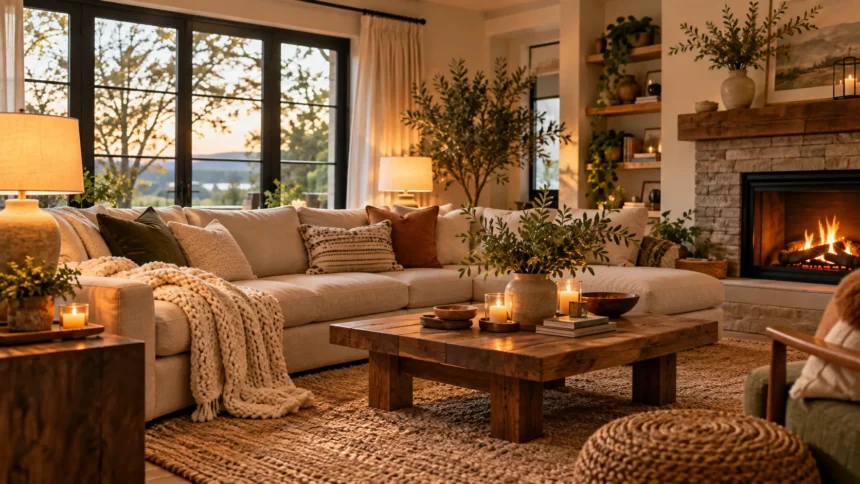
A cozy living room should feel comfortable enough for quiet evenings, casual conversations, reading, entertainment, and everyday relaxation. You do not need an expensive renovation or designer furniture to create that feeling. Thoughtful choices in lighting, seating, color, texture, organization, and personal décor can make even a simple living space feel warmer and more welcoming.
The best cozy living rooms balance comfort with practicality. They feel relaxed without becoming cluttered and stylish without making people afraid to actually use the furniture. By focusing on how the room supports your daily routine, you can create a space that encourages you to slow down, settle in, and genuinely enjoy spending time at home.
Start With a Comfortable Furniture Layout
Furniture arrangement has a major effect on how relaxing a living room feels. Instead of automatically placing every chair against a wall, think about how people actually use the space. Position sofas and chairs so conversation feels natural while leaving enough room for everyone to move around comfortably without squeezing between furniture.
Your layout should also reflect your everyday activities. If movie nights are important, arrange seating so the television is easy to see without dominating every other feature. If conversation and reading matter more, angle chairs toward each other and create smaller seating zones that encourage people to sit comfortably for longer periods.
Avoid adding more furniture simply because there is empty floor space. A room can feel less cozy when oversized or unnecessary pieces make movement difficult. Choose enough furniture to support your household and occasional guests while preserving clear pathways and some visual breathing room throughout the space.
Layer Your Lighting for a Softer Atmosphere
Lighting is one of the simplest ways to make a living room feel warmer. A single bright overhead fixture can be useful for general visibility, but it often creates a flat atmosphere when used alone. Combining several smaller light sources gives you more control and creates a softer environment for relaxing in the evening.
Floor lamps and table lamps work particularly well near sofas, reading chairs, and darker corners. They create pools of light instead of illuminating every surface equally. This layered effect makes a room feel more intimate while still providing enough brightness for reading, talking, or enjoying hobbies comfortably.
Consider how lighting changes throughout the day. Natural light can keep the room bright and energetic during the morning, while warmer lamps can create a calmer atmosphere at night. Dimmer switches can add even more flexibility, allowing you to adjust the room according to whether you are entertaining guests or winding down before bed.
Choose Warm and Calming Colors
Color can influence whether a living room feels calm, cold, energetic, or relaxing. Warm whites, soft beige, muted greens, gentle browns, dusty blues, and earthy tones often create an inviting foundation. You do not need to repaint the entire room if you already like your wall color.
Introduce warmer shades through cushions, rugs, artwork, curtains, and decorative accessories. These smaller elements are easier to change if your preferences shift later. Using several related colors rather than one exact shade can also create more depth and prevent the room from feeling overly coordinated or artificial.
Dark colors can work in cozy living rooms as well when used thoughtfully. Deep green, navy, charcoal, or warm brown may create an intimate feeling on one wall or through furniture. Balance darker elements with suitable lighting and lighter textures so the room still feels comfortable rather than heavy.
Add Soft Textures Throughout the Room
Texture is essential for creating a cozy atmosphere because it makes a space feel physically comfortable as well as visually interesting. Soft cushions, knitted throws, woven rugs, upholstered furniture, and fabric curtains can reduce the hard appearance created by walls, tables, flooring, and electronics.
Layer different materials rather than using the same texture everywhere. A smooth sofa can be softened with textured cushions, while a wooden coffee table can sit comfortably beside a thick rug. Combining cotton, linen, wool-like fabrics, woven materials, and natural wood creates a relaxed look without requiring excessive decoration.
Keep practicality in mind when choosing fabrics. Washable cushion covers and easy-care throws may be more useful than delicate materials in a busy household. Cozy design should encourage people to use the room freely, so choose textures that feel inviting without creating constant worries about stains or maintenance.
Use Rugs to Define and Warm the Space
A rug can immediately make a living room feel softer and more connected. It adds warmth underfoot, introduces texture, and visually anchors the furniture. In open-plan homes, a rug can also help define the living area without requiring physical walls or large room dividers.
Choose a rug that is appropriately sized for your furniture arrangement. A rug that is too small can make the seating area feel disconnected, while a larger one can visually bring sofas, chairs, and tables together. Ideally, at least the front legs of major seating pieces should comfortably sit on the rug.
Pattern and texture can add personality, but consider what already exists in the room. If your furniture and artwork contain several bold elements, a simpler rug may create balance. If the room is mostly neutral, a patterned or textured rug can become an easy way to add warmth and visual interest.
Bring Natural Elements Into the Living Room
Natural materials can make indoor spaces feel calmer and less formal. Wooden furniture, woven baskets, stone accessories, linen fabrics, and indoor plants all introduce organic textures. These elements work especially well when you want the room to feel relaxed rather than overly polished or showroom-like.
Plants are one of the easiest natural additions. A larger floor plant can soften an empty corner, while smaller plants can add color to shelves or tables. Choose varieties suited to your available light and lifestyle because healthy, manageable greenery is more inviting than plants that require constant attention.
Fresh flowers, dried branches, or seasonal greenery can also make the room feel cared for. You do not need elaborate arrangements to create an effect. A simple vase on a coffee table or sideboard can add enough natural color to refresh the space without making the room feel heavily decorated.
Make the Sofa and Seating More Inviting
The sofa is often the center of everyday relaxation, so comfort should come before appearance. Choose cushions that provide enough support and arrange them so people can actually sit without removing half the décor first. A living room should feel ready to use rather than staged for photographs.
Throws can add another layer of comfort, particularly during cooler evenings. Fold one loosely over the arm or back of the sofa so it remains easy to reach. Choosing a fabric that feels pleasant against the skin matters more than selecting something simply because it matches a particular design trend.
Additional seating can make the room more flexible. An armchair, pouf, or upholstered bench can provide another comfortable place to sit without overwhelming the space. Position extra seating according to how people gather rather than filling empty corners with furniture that rarely gets used.
Keep Clutter Under Control
A cozy living room does not need to be perfectly minimalist, but excessive clutter can make relaxation difficult. Too many objects on tables, floors, and shelves can create visual noise and make the room feel smaller. Keep the items you enjoy while giving practical belongings proper storage.
Baskets, closed cabinets, ottomans with storage, and drawers can hide everyday items such as chargers, remote controls, toys, magazines, and blankets. The goal is not to remove everything from sight. Instead, reduce the amount of visual distraction while keeping frequently used belongings close enough to remain convenient.
A short evening reset can help maintain the atmosphere. Straighten cushions, fold throws, return items to their places, and clear unnecessary objects from the coffee table. These small actions can make your living room feel calm again in only a few minutes without turning relaxation into another major household chore.
Add Personal Details That Make the Room Feel Like Yours
A relaxing living room should reflect the people who live there. Family photographs, favorite books, travel memories, artwork, handmade pieces, or objects connected to hobbies can make the space more personal. These elements create emotional warmth that cannot be achieved through furniture and color alone.
Display meaningful objects selectively rather than placing everything on every available surface. A few carefully chosen pieces usually feel more intentional and allow each item to stand out. Shelves can be especially useful because they provide space for books, photographs, plants, and decorative objects without creating clutter on seating areas.
Personal style matters more than following every interior trend. If a certain color, artwork style, or collection makes you comfortable, include it even if it is not currently fashionable. A cozy room should feel familiar and welcoming to you first, because you are the person who uses it most often.
Connect Coziness With an Overall Welcoming Home
Your living room will feel more relaxing when the rest of the home supports the same comfortable atmosphere. A tidy entryway, pleasant lighting, organized surfaces, and thoughtful details can create a smoother transition into the living space. Consistency makes the entire home feel more intentional and easier to enjoy.
Simple improvements throughout other rooms can complement your living room without requiring a matching design scheme. If you want broader inspiration, creating a fresh and inviting home often starts with manageable changes such as decluttering, refreshing fabrics, and improving natural light.
Avoid trying to redesign every room simultaneously. Focus first on the living room because it is often one of the most frequently used spaces. Once you have established the atmosphere you enjoy there, you can gradually apply similar ideas elsewhere using lighting, texture, organization, and personal details.
Create a Relaxation Routine Around the Space
A cozy living room becomes more valuable when you actually use it for relaxation. Create simple routines that encourage you to slow down, such as reading after dinner, enjoying tea in the evening, listening to music, or spending screen-free time with family. Small routines can help the room develop positive associations.
Consider reducing digital distractions during certain periods. Keeping phones away during conversations or turning off unnecessary notifications can make the space feel more peaceful. You do not need to remove technology entirely; the goal is to prevent it from controlling every quiet moment you spend in the room.
Think about what relaxation personally means to you. Some people enjoy movies, while others prefer books, hobbies, conversation, or quiet music. Design the living room around the activities you genuinely enjoy instead of copying a picture-perfect space that does not support your everyday lifestyle.
Refresh the Room With Seasonal Changes
Small seasonal updates can keep a living room feeling interesting throughout the year. You might introduce lighter fabrics during warmer months and thicker throws when temperatures drop. Changing only a few accessories can create a noticeable difference without requiring new furniture or major decorating expenses.
Seasonal colors can also provide an easy refresh. Soft greens and natural tones may feel appropriate during spring, while richer earthy shades can create warmth later in the year. You do not need to follow traditional seasonal palettes if another combination feels more suitable for your home.
Rotating décor can also reduce clutter because you do not need every decorative item displayed simultaneously. Store a few pieces and bring them back later when you want a change. Familiar objects can feel surprisingly fresh after spending several months out of sight, making seasonal updates both affordable and practical.
Conclusion
Creating a cozy living room for everyday relaxation is mainly about making the space comfortable, warm, and easy to use. Thoughtful furniture placement, layered lighting, soft textures, rugs, greenery, and practical storage can all contribute. You do not need expensive pieces or a complete renovation to make a noticeable difference.
Focus on how the room feels during your actual daily routine. Make seating comfortable, control clutter, add meaningful personal details, and create lighting that works at different times of day. A successful living room should encourage you to spend time there rather than requiring constant effort to keep it looking perfect.
Most importantly, allow the space to reflect your own idea of comfort. Trends can offer inspiration, but relaxation is personal. When your living room supports the activities, colors, textures, and routines that make you feel at ease, it naturally becomes a place you look forward to enjoying every day.
FAQs
What makes a living room feel cozy?
Soft textures, warm lighting, comfortable seating, natural materials, rugs, and personal details can all create a cozy atmosphere. Good organization also helps by reducing visual clutter and making the room easier to enjoy.
How can I make my living room cozy on a budget?
Rearrange furniture, add affordable cushions or throws, improve lighting, declutter surfaces, and use items you already own differently. Small changes can create warmth without replacing major furniture pieces.
What colors are best for a cozy living room?
Warm neutrals, earthy tones, muted greens, soft blues, and deeper accent shades can work well. The best palette depends on your natural light, furniture, and personal preferences.
How should I arrange furniture for relaxation?
Keep seating close enough for conversation while maintaining clear pathways. Arrange sofas and chairs around the activities you use the room for most, such as talking, reading, or watching television.
Can a small living room still feel cozy?
Yes. Smaller rooms can feel especially cozy when furniture is appropriately scaled, clutter is controlled, and lighting is layered. Avoid overcrowding the space and focus on comfortable, multifunctional pieces.