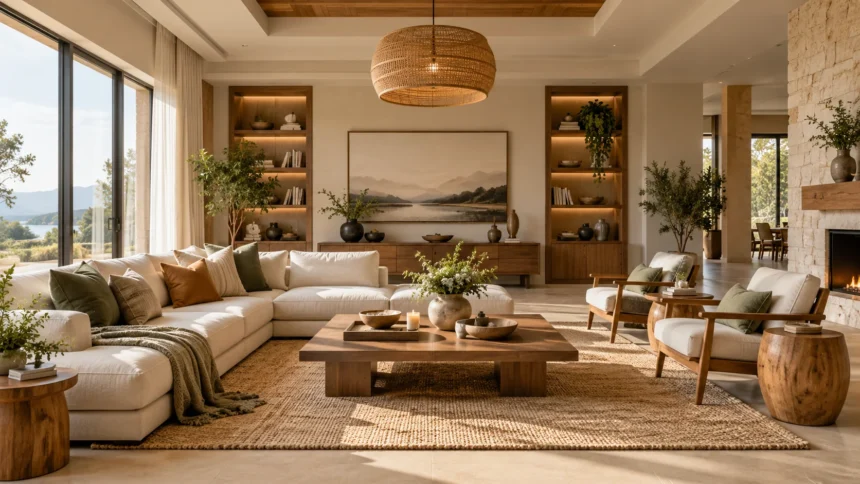
What Is a Feng Shui Living Room?
A Feng Shui living room combines thoughtful furniture placement, balanced colors, natural elements, and clear pathways to create a space that feels welcoming and comfortable. The goal is not simply to follow decorative rules, but to arrange the room so movement feels natural. When the layout feels open and intentional, the entire living area can appear calmer and more polished.
Traditional Feng Shui focuses on the flow of energy, often referred to as chi, through a space. In practical decorating terms, this usually means avoiding blocked pathways, excessive clutter, awkward furniture positions, and overwhelming visual combinations. A balanced room should feel easy to enter, comfortable to sit in, and visually connected from one area to another.
You can apply Feng Shui principles without sacrificing a contemporary designer look. Modern sofas, sculptural lighting, elegant coffee tables, textured fabrics, and statement artwork can all work beautifully within a balanced layout. The key is choosing pieces intentionally so the room feels coordinated rather than crowded with decorative objects that compete for attention.
Start With a Clear and Open Living Room Layout
Good Feng Shui begins with understanding how people naturally move through the living room. Walk from the entrance toward the main seating area and notice whether furniture interrupts your path. Chairs, tables, floor lamps, and decorative accessories should support movement rather than forcing people to squeeze around corners or navigate narrow passages.
Try to leave visual breathing room around the largest furniture pieces. A sofa pushed into an awkward position simply to fit more items can make the room feel smaller and less comfortable. Instead, prioritize a strong seating arrangement and allow surrounding pieces to support it without filling every available section of the floor.
The designer effect often comes from restraint rather than adding more furniture. One attractive coffee table, a balanced pair of chairs, and carefully selected accessories may look more sophisticated than a room filled with mismatched pieces. Before buying anything new, consider whether removing or repositioning existing furniture could improve the overall flow first.
Position the Sofa in a Commanding Position
The sofa is usually the visual and functional anchor of the living room, so its placement deserves careful consideration. In Feng Shui, a commanding position generally means being able to see the main entrance while seated without sitting directly in line with the doorway. This arrangement can make the seating area feel more comfortable and grounded.
Whenever possible, place the sofa against a solid wall or give it enough visual support so it does not appear to float awkwardly in an empty space. If your floor plan requires a floating sofa, a slim console table behind it can create structure. Add a lamp, decorative bowl, or subtle artwork nearby to make the arrangement feel intentional.
Avoid positioning the sofa where people constantly walk directly behind or through the main seating area if another arrangement is available. Heavy foot traffic can make the space feel less relaxing. A well-positioned sofa should create a clear focal area where conversation, relaxation, and entertaining can happen without disrupting movement through the rest of the room.
Choose Feng Shui Living Room Colors Carefully
Color has a powerful effect on the atmosphere of a living room. Soft neutrals such as warm white, cream, beige, taupe, and gentle gray can create a calm foundation while giving furniture and artwork room to stand out. These tones also make it easier to introduce stronger accent colors without creating a visually overwhelming interior.
Feng Shui traditionally connects colors with the five elements of wood, fire, earth, metal, and water. Greens and browns can represent wood, warm reds and oranges suggest fire, earthy beige tones connect with earth, while whites relate to metal and darker blues to water. You do not need to use every element equally to create balance.
Choose a palette that suits the natural light, furniture, and mood you want the room to create. A designer living room often uses two or three dominant tones with smaller accents rather than many unrelated colors. Repeating an accent shade through cushions, artwork, ceramics, or throws can create a cohesive look without making the decor feel overly coordinated.
Use Lighting to Create a Warm Atmosphere
Lighting can completely change how a Feng Shui living room feels throughout the day. Instead of relying only on one central ceiling fixture, create layers using floor lamps, table lamps, wall lights, or discreet accent lighting. Different light sources give you more control over the mood while making the room look more thoughtfully designed.
Natural daylight should also be used whenever possible. Avoid blocking windows with oversized furniture or unnecessarily heavy treatments that make the room feel darker. Sheer curtains, adjustable blinds, or layered window coverings can provide privacy while still allowing daylight to enter and create a brighter, more open atmosphere.
At night, harsh overhead lighting can make even a stylish room feel uninviting. Warm, softer lighting around seating areas creates greater visual comfort and highlights textures such as wood, fabric, stone, and artwork. Place lamps at different heights to distribute light more evenly instead of allowing one bright source to dominate the entire living room.
Balance Furniture Shapes and Sizes
A designer Feng Shui living room should feel balanced rather than perfectly symmetrical. Large pieces such as sofas and media units create visual weight, so smaller chairs, side tables, lamps, and decorative objects should help distribute that weight across the room. If every heavy item sits on one side, the space may feel visually uneven.
Mixing shapes can make the room feel softer and more interesting. If your sofa and media console have strong straight lines, consider adding a round coffee table, curved armchair, or circular side table. These softer forms can reduce the rigid feeling that sometimes develops when every piece of furniture has sharp rectangular edges.
Scale is equally important. A tiny rug beneath a large sectional can look disconnected, while an oversized coffee table may restrict movement. Measure your living room before purchasing major pieces and consider how they relate to one another. Furniture that fits the scale of the room usually creates a more expensive and professionally designed appearance.
Decorate With Mirrors, Art, and Meaningful Objects
Mirrors can make a living room feel larger and brighter when positioned carefully. Place them where they reflect an attractive part of the room, natural light, greenery, or artwork rather than clutter or an awkward corner. A well-chosen mirror can function like wall art while adding depth to smaller or darker living spaces.
Artwork should support the mood you want to create in the room. Choose pieces that feel positive, calming, inspiring, or personally meaningful rather than selecting artwork simply because it matches the sofa. One large statement piece can often look more refined than several unrelated small frames spread randomly across the walls.
Decorative accessories should be edited rather than accumulated. Books, candles, bowls, ceramics, photographs, and sculptural objects can add personality, but too many items may make surfaces feel cluttered. Group accessories intentionally and leave some empty space around them so each piece has room to stand out and contribute to the overall design.
Bring in Plants and Natural Materials
Plants can introduce freshness, texture, and organic shape into a living room. Healthy greenery can soften hard furniture lines and bring life to unused corners, shelves, or side tables. Choose plant sizes that fit the room, and avoid placing large plants where they block windows, doorways, or natural movement between seating areas.
Natural materials also work beautifully in a Feng Shui-inspired interior. Wood, linen, cotton, wool, stone, rattan, and ceramic surfaces add warmth and tactile variety without making the room feel excessively decorated. Combining a few different materials creates depth while maintaining the relaxed, grounded atmosphere associated with balanced interior design.
Choose natural elements based on your lifestyle as well as appearance. A delicate plant that constantly struggles in low light can become more frustrating than calming, while an easy-care option may suit the space better. Similarly, durable natural materials can be more practical for families, pets, and frequently used living rooms while still maintaining a sophisticated look.
Keep Clutter Under Control With Smart Storage
Clutter is one of the quickest ways to make a living room feel visually stressful and smaller than it really is. Remote controls, chargers, paperwork, toys, magazines, and everyday items can accumulate quickly on tables and sofas. Creating simple storage locations for frequently used objects makes it easier to keep the space organized without constantly cleaning.
Closed storage can be especially useful for maintaining a designer look. Media cabinets, baskets, drawers, storage benches, and attractive boxes allow practical items to remain accessible without being permanently visible. Open shelving can still work well, but it looks best when shelves contain a balanced mixture of useful objects, books, and decorative pieces.
Avoid turning organization into another source of visual clutter. Using dozens of small storage containers can sometimes make the room look busier rather than calmer. Choose a few storage solutions that match the furniture and keep surfaces relatively clear, allowing architectural features, artwork, lighting, and quality materials to become the focus instead.
Make a Small Feng Shui Living Room Feel Bigger
Small living rooms benefit greatly from careful Feng Shui-inspired planning because every piece of furniture influences movement. Begin with essential items and avoid automatically choosing smaller versions of everything. A properly scaled sofa with a few carefully selected pieces can look more luxurious than several tiny chairs and tables competing for limited space.
Use furniture with visible legs where appropriate because seeing more floor area can make the room feel lighter. Glass, reflective surfaces, pale fabrics, and strategically placed mirrors can also increase the sense of openness. Keep window areas relatively clear so natural light can travel deeper into the room without being blocked by tall cabinets or bulky furniture.
Create one strong focal point rather than several competing ones. This might be a fireplace, artwork, feature wall, attractive window view, or beautifully styled media unit. Orient furniture around that focal area while maintaining clear pathways, and use a consistent color palette to reduce visual fragmentation throughout the smaller living space.
Blend Style, Work, and Wellness Without Creating Clutter
Modern living rooms often need to perform several functions beyond relaxation. You may use part of the space for reading, occasional work, exercise, hobbies, or family activities. The key is creating defined zones so these functions coexist without making the living room feel like several unrelated rooms competing for the same floor area.
If your living room occasionally doubles as a work or wellness area, choose equipment that can be positioned without disrupting the main seating arrangement. Compact desks, foldable furniture, concealed storage, and even a well-placed treadmill desk can support a multifunctional lifestyle when the surrounding layout remains organized. Keep cords, equipment, and accessories visually controlled to preserve the room’s designer feel.
Try to return the room to its primary purpose when secondary activities are finished. Store exercise accessories, close laptops, organize work supplies, and clear temporary equipment whenever possible. This simple reset helps the living room feel restful again and prevents practical necessities from permanently dominating the atmosphere or weakening the overall interior design.
Common Feng Shui Living Room Mistakes to Avoid
Overcrowding is one of the most common mistakes in both Feng Shui and interior design. Too many chairs, tables, accessories, or large decorative pieces can restrict movement and create visual noise. If the room feels uncomfortable despite having attractive furniture, remove a few items and see whether additional breathing space improves the overall balance.
Another common mistake is arranging every piece of furniture strictly against the walls. While this may seem like the easiest way to maximize floor space, it can make larger rooms feel disconnected. Bringing some seating slightly inward and creating a defined conversation area can make the room feel more intimate, polished, and intentionally designed.
Finally, avoid following Feng Shui ideas so rigidly that the living room stops reflecting your personality or lifestyle. A beautiful room should still be practical for the people who use it every day. Use Feng Shui principles as guidance for balance, comfort, and flow while adapting them to your architecture, furniture preferences, family needs, and personal design style.
Conclusion
Creating a Feng Shui living room with a stylish designer look is mainly about balance, flow, and intentional choices. Start with a comfortable furniture layout, establish a clear focal point, and choose colors and materials that work together naturally. Removing unnecessary items can often improve the room just as much as purchasing new furniture or decor.
Layered lighting, healthy plants, meaningful artwork, balanced furniture shapes, and practical storage can make the living room feel both polished and welcoming. Focus on creating a space that is visually calm without becoming empty or impersonal. Small details such as sofa placement, clear pathways, and coordinated textures can have a surprisingly strong impact.
The most successful Feng Shui living room should support the way you actually live. Whether the space is used for entertaining, relaxing, working, exercising, or spending time with family, every element should have a purpose. Combine traditional balance principles with modern interior design, and you can create a living room that feels comfortable, organized, and effortlessly stylish.
FAQs
Where should a sofa be placed in a Feng Shui living room?
Place the sofa where you can comfortably see the main entrance without sitting directly in line with it. A solid wall behind the sofa can also help the seating area feel grounded.
What colors are best for a Feng Shui living room?
Warm neutrals, soft greens, earthy tones, gentle blues, and natural shades work well in many living rooms. Choose colors that suit the room’s light, furniture, and the atmosphere you want to create.
Are mirrors good Feng Shui in a living room?
Mirrors can work beautifully when they reflect natural light, plants, artwork, or an attractive part of the room. Avoid positioning them where they mainly reflect clutter or visually confusing areas.
How can I improve Feng Shui in a small living room?
Keep pathways clear, reduce unnecessary furniture, use smart storage, and create one strong focal point. Light colors, mirrors, visible floor space, and properly scaled furniture can also make the room feel larger.
What should I avoid in a Feng Shui living room?
Avoid excessive clutter, blocked entrances, awkward furniture arrangements, harsh lighting, and too many competing decorative elements. Aim for a balanced layout that supports comfortable movement, conversation, and everyday relaxation.