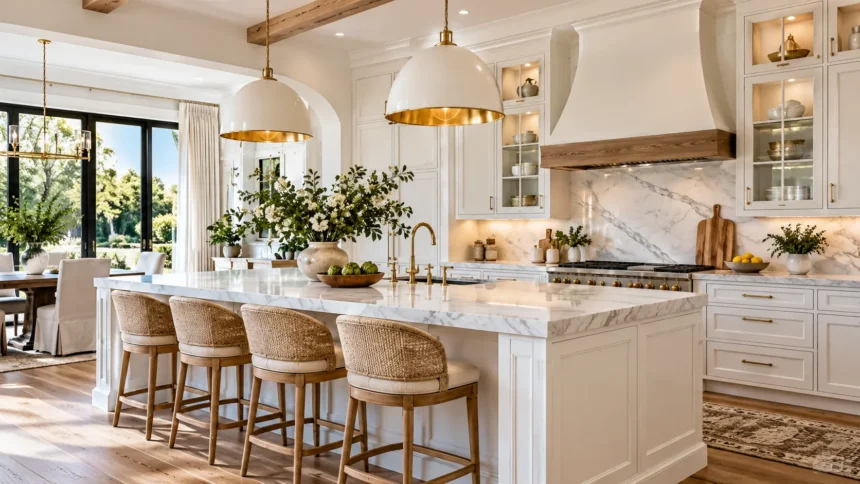
Why White Kitchens Continue to Feel Timeless
White kitchens remain popular because they create a bright, clean, and flexible foundation that works with many interior styles. From traditional farmhouse spaces to sleek contemporary rooms, white cabinetry can adapt easily to different finishes and decorative details. The neutral palette also reflects natural light effectively, helping even smaller kitchens feel more spacious, open, and comfortable throughout the day.
Another advantage of a white kitchen is how easily it can evolve with changing trends. Instead of replacing expensive cabinets, homeowners can refresh the space through hardware, lighting, stools, rugs, artwork, or countertop accessories. This flexibility makes white cabinetry particularly practical for people who enjoy updating their interiors without undertaking a complete kitchen renovation every few years.
White does not have to look cold or plain when it is layered thoughtfully. Warm wood, natural stone, textured tile, metallic fixtures, and soft fabrics can add depth while preserving the clean overall appearance. The most successful white kitchens usually combine multiple materials and tones rather than relying on one flat shade across every surface.
Choose the Right Shade of White for Your Kitchen
Not every white paint color looks the same once it is installed in a kitchen. Some whites have warm cream or beige undertones, while others lean toward cooler gray or blue notes. Lighting, flooring, countertops, and surrounding wall colors can all influence how a particular shade appears, so testing samples before making a final decision is always worthwhile.
Warm whites often work beautifully with natural wood, brass hardware, beige stone, and traditional interiors because they create a softer atmosphere. Cooler whites can complement stainless steel appliances, gray countertops, black accents, and modern architecture. Neither option is automatically better; the right choice depends on the materials already present and the mood you want to create.
Consider viewing paint samples during different times of day before committing to one shade. Morning sunlight may make a white look warmer, while artificial evening lighting can reveal undertones that were less noticeable earlier. Comparing several samples directly against cabinets, backsplash materials, and flooring can help you achieve a more coordinated and intentional result.
Pair White Cabinets With Warm Wood Accents
Wood is one of the easiest ways to prevent white kitchens from feeling overly sterile. Natural oak, walnut, maple, and reclaimed timber can introduce warmth through flooring, open shelves, bar stools, cutting boards, or kitchen islands. Even a small amount of visible grain can soften crisp white surfaces and make the room feel more comfortable and welcoming.
A wood kitchen island can create a strong focal point while adding contrast against surrounding white cabinetry. Lighter woods support Scandinavian and minimalist interiors, while deeper walnut tones can create a richer and more sophisticated appearance. Keeping the surrounding finishes relatively simple allows the natural texture of the wood to become an important decorative feature.
You can also introduce wooden details through smaller pieces if replacing major surfaces is not practical. Floating shelves, trays, bowls, stools, and framed artwork can achieve a similar warming effect without requiring construction. Repeating the same wood tone in two or three places helps the kitchen look cohesive rather than making individual accessories feel randomly added.
Use Statement Countertops to Add Character
Countertops have a major influence on the personality of white kitchens because they occupy a large visible surface. Marble, quartz, granite, porcelain, and other materials can introduce pattern and contrast without overwhelming the neutral cabinetry. A dramatic veined surface can become the main design feature, while subtle stone creates a calmer and more understated appearance.
White-on-white countertops can still provide depth when the surface includes gentle veining or texture. Quartz with soft gray movement works well in contemporary kitchens, while marble-inspired patterns can add elegance to traditional and transitional spaces. The key is choosing enough variation to prevent cabinets, counters, and backsplash materials from blending into one flat surface.
Darker countertops offer another stylish direction for homeowners who want stronger contrast. Black, charcoal, deep gray, or richly patterned stone can visually define white base cabinets and create a more dramatic atmosphere. Consider durability, stain resistance, maintenance, and everyday cooking habits alongside appearance so the countertop remains practical as well as attractive.
Make the Backsplash a Design Feature
A backsplash offers an ideal opportunity to introduce texture into an otherwise simple white kitchen. Classic subway tile remains versatile, but alternatives such as handmade ceramic tile, marble, zellige-inspired surfaces, and geometric patterns can create more personality. Even when the backsplash is white, differences in texture and finish can add depth that becomes especially noticeable under good lighting.
Glossy tiles reflect light and can make smaller kitchens appear brighter, while matte finishes create a softer and more relaxed look. Using contrasting grout can emphasize the shape of each tile, whereas matching grout produces a cleaner and more seamless appearance. Think about how much visual activity you want before deciding between bold pattern and subtle texture.
Extending backsplash material farther than expected can also create a designer effect. Consider carrying tile to the ceiling behind open shelving, around a range hood, or across an entire feature wall. This approach makes the material feel more architectural and intentional while keeping the overall palette consistent with the simplicity that makes white kitchens so appealing.
Upgrade White Kitchens With Stylish Hardware
Cabinet hardware may be small, but it can significantly influence the finished appearance of a white kitchen. Brass and brushed gold create warmth, matte black produces bold contrast, and polished chrome offers a crisp contemporary look. Because white cabinets act as a neutral backdrop, almost any metal finish can work when it is repeated consistently throughout the room.
Consider the shape of your handles as carefully as the finish. Slim bar pulls create a streamlined appearance, while knobs and cup pulls feel more traditional or farmhouse-inspired. Mixing knobs on doors with pulls on drawers can add subtle variety without making the cabinetry look inconsistent, especially when all hardware shares the same metal tone.
You do not necessarily need to match every metal in the kitchen perfectly. Thoughtfully mixing two finishes can make the room feel collected rather than overly coordinated. For example, brass cabinet handles can work alongside stainless appliances when another element, such as lighting or plumbing fixtures, helps connect the combination throughout the overall kitchen design.
Add Contrast With a White and Black Kitchen Palette
Black accents can give white kitchens definition and create a crisp, graphic look. Window frames, faucets, pendant lights, cabinet hardware, stools, or range hoods can introduce dark details without making the room feel heavy. Using black strategically allows the white cabinetry to remain dominant while giving the space a more structured and contemporary appearance.
The strongest black-and-white kitchens usually balance contrast carefully rather than dividing the room equally between both colors. A few repeated black elements can guide the eye around the space and create visual rhythm. Too much dark material may overpower a smaller kitchen, so adjust the amount according to room size, lighting, and the atmosphere you prefer.
Natural textures can soften a high-contrast color scheme when black and white begins to feel too sharp. Wood cutting boards, woven seating, plants, linen curtains, and warm flooring can introduce organic elements. These additions make the kitchen feel more approachable while preserving the dramatic contrast that gives a black-and-white interior its distinctive character.
Use Lighting to Make White Kitchens Feel Warmer
Lighting is especially important in white kitchens because bright surfaces can look very different depending on bulb temperature and fixture placement. Warm-white lighting generally creates a softer atmosphere, while cooler bulbs can make white cabinetry appear sharper. Layering several light sources gives you more control and prevents the room from depending entirely on one central ceiling fixture.
Pendant lights above an island offer both practical illumination and decorative impact. Glass shades can keep sightlines open, while metal, woven, or sculptural fixtures create stronger focal points. Choose a size that feels proportional to the island and leave enough spacing between fixtures so the arrangement looks balanced rather than crowded.
Under-cabinet lighting can also transform how countertops and backsplashes look in the evening. It provides useful task lighting while emphasizing stone veining, tile texture, and decorative details. Dimmers are another valuable addition because they let you move between bright food-preparation lighting and softer illumination when the kitchen is being used for casual dining or entertaining.
Bring Color Into a White Kitchen Without Overdoing It
A white kitchen provides an excellent background for small amounts of color because almost any accent shade can work against neutral cabinetry. Green, blue, terracotta, rust, and muted yellow are popular options that can introduce personality through stools, cookware, artwork, rugs, or accessories. These additions are easy to change if your preferred color palette evolves later.
Plants are another simple way to introduce natural color. Herbs near a sunny window, a larger plant in an unused corner, or small greenery on open shelves can break up long stretches of white surfaces. Green leaves work particularly well because they add life without competing heavily with cabinetry, stone, or other important kitchen finishes.
Think about adjacent rooms when selecting accent colors so transitions feel natural throughout your home. If your kitchen opens toward an outdoor entertaining area, repeating similar tones can create continuity. Exploring related patio decor ideas can help you carry colors, textures, and materials between indoor and outdoor gathering spaces more effectively.
Style Open Shelving Without Creating Clutter
Open shelving can make white kitchens feel lighter while providing convenient space for attractive everyday items. Wood shelves add warmth, while painted white shelves create a more seamless appearance. The most successful arrangements combine practical objects with a few decorative pieces rather than filling every available inch with dishes, containers, and accessories.
Start with items you actually use, such as glasses, bowls, plates, or mugs, and group similar pieces together. Leave small areas of empty space between groups so the display has visual breathing room. A plant, framed print, ceramic vase, or wooden board can then add personality without making the shelf feel like a crowded storage area.
Keeping the color palette relatively limited can help open shelving look organized. White dishes, clear glassware, wood accents, and one or two complementary colors usually create a calm effect. Because everything remains visible, regular editing is useful; removing unnecessary objects can often improve the overall appearance more effectively than adding another decorative item.
Make Small White Kitchens Feel Bigger
White kitchens are particularly effective in compact homes because light cabinetry can reduce visual heaviness. When cabinets blend gently with surrounding walls, boundaries become less obvious and the room may appear more open. Reflective backsplash materials, glossy surfaces, and well-positioned lighting can enhance this effect by moving additional light throughout the limited space.
Keep upper cabinetry visually simple if the kitchen feels crowded. Glass-front doors, open shelves, or fewer upper cabinets can create a lighter appearance, although each option should still provide enough practical storage. Taking cabinetry to the ceiling can also help by maximizing vertical space while eliminating dusty gaps above standard-height units.
Furniture and accessories should remain proportional to the available floor area. Slim stools, compact tables, narrow islands, and integrated appliances can preserve walking space without sacrificing essential functions. Keeping counters relatively clear further strengthens the spacious effect, making even a modest kitchen feel organized, efficient, and comfortable for everyday cooking.
Conclusion
White kitchens remain a strong design choice because they combine versatility, brightness, and timeless appeal. The neutral foundation can support farmhouse, traditional, Scandinavian, transitional, minimalist, or contemporary interiors depending on the materials surrounding it. Rather than treating white as a complete design, think of it as a flexible base for layering texture and personality.
Wood accents, statement stone, stylish hardware, textured backsplashes, thoughtful lighting, and controlled color can prevent a white kitchen from appearing flat. Each detail contributes something different while allowing the cabinetry to remain visually calm. The most polished spaces usually repeat finishes and materials carefully so the room feels connected rather than assembled from unrelated trends.
You do not need a complete renovation to make a noticeable difference. Updating cabinet handles, adding lighting, styling shelves, changing stools, or introducing natural materials can refresh an existing white kitchen considerably. Focus on practical improvements that suit your lifestyle, and you can create a bright, welcoming kitchen that continues to look beautiful for years.
FAQs
Are white kitchens still stylish?
Yes, white kitchens remain popular because their neutral foundation works with many decorating styles. Updating hardware, lighting, countertops, and accessories can keep the space current without replacing the cabinetry.
How do you make a white kitchen feel warm?
Introduce natural wood, warm metal finishes, textured fabrics, plants, and softer lighting. Using slightly creamy or warm white cabinetry instead of a stark cool white can also create a more inviting atmosphere.
What countertop looks best with white cabinets?
Quartz, marble, granite, and porcelain can all work beautifully with white cabinetry. Choose subtle light stone for a seamless look or darker surfaces with noticeable veining when you want stronger contrast.
What colors go well with a white kitchen?
Black, green, blue, beige, terracotta, natural wood, and warm metallic tones pair easily with white. Choose a limited accent palette and repeat those colors throughout the room for a cohesive appearance.
How do you keep an all-white kitchen from looking boring?
Layer different textures through tile, stone, wood, hardware, lighting, and fabrics. Small contrasts in finish and material create visual depth while allowing the kitchen to maintain its clean and bright character.