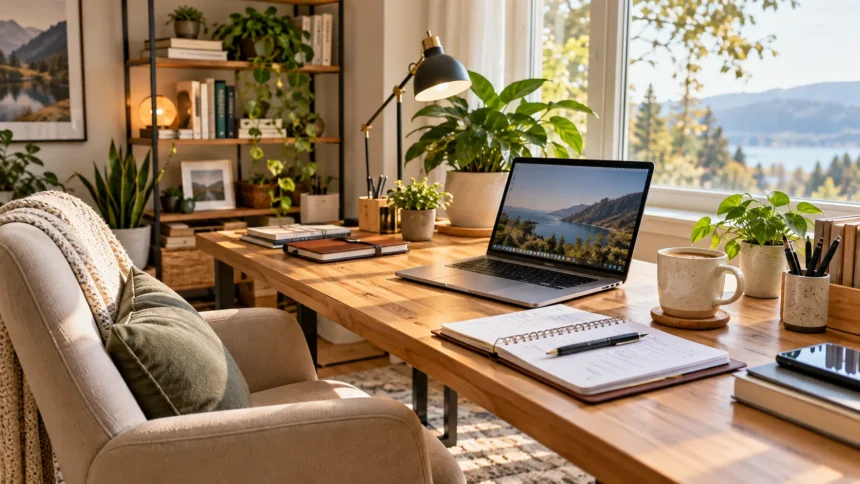
A productive home environment can make everyday tasks feel easier, whether you work remotely, study, manage a household, or simply want to use your time more intentionally. Your surroundings can influence concentration, motivation, energy, and how quickly you move between different responsibilities. Small environmental changes can often improve productivity without requiring a complete home renovation.
The goal is not to create a perfectly organized house where every minute is scheduled. A productive home should support focused work while still feeling comfortable and livable. By improving lighting, reducing distractions, organizing essential spaces, and creating simple routines, you can build an environment that helps you get more done with less unnecessary stress.
Create a Dedicated Workspace
Having a dedicated workspace helps your brain associate one area of the home with focused activity. This does not require a separate office; a small desk, quiet corner, or section of a dining room can work well. The important part is creating a space where work materials stay organized and distractions remain limited.
Choose a location with enough room for the equipment you use most often. Keep your laptop, notebook, charger, headphones, and other essential tools within easy reach. Avoid filling the surface with unrelated household items, because visual clutter can make it harder to begin focused work.
When the workday ends, create a small shutdown routine. Close your laptop, put papers away, and leave the workspace if possible. This physical transition can help separate productive time from relaxation and reduce the feeling that you should always be working simply because your office is inside your home.
Reduce Visual Clutter
Clutter can create unnecessary visual stimulation and make simple tasks more difficult. A crowded desk, overflowing kitchen counter, or disorganized living room can constantly remind you of unfinished chores. Reducing visible mess helps create calmer surroundings where attention can remain on the task you actually want to complete.
Start with the areas you use most frequently rather than trying to organize the entire house at once. Clear your desk, entryway, kitchen counters, and other high-traffic surfaces first. Give commonly used items specific storage locations so tidying does not require making a new decision every time.
You do not need to adopt an extremely minimalist lifestyle. The objective is simply to remove items that interfere with movement, concentration, or daily routines. Keeping useful belongings while reducing unnecessary visual noise can make your home feel more organized without making it look empty or impersonal.
Improve Lighting Throughout the Home
Good lighting can make work, reading, cooking, and household tasks more comfortable. Whenever possible, place work areas near windows so you can benefit from natural daylight. Opening curtains or blinds during the morning can also make rooms feel more energetic and welcoming.
Artificial lighting becomes especially important in darker rooms or during evening hours. Use task lighting near desks, kitchen preparation areas, and reading spaces so you are not relying entirely on one overhead light. Adequate lighting can reduce unnecessary eye strain and make detailed tasks easier to complete.
Think about how lighting should change throughout the day. Brighter environments can support daytime activity, while softer lighting in the evening can help signal that the active part of the day is ending. A simple transition in lighting can support both productivity and relaxation without requiring complicated smart-home systems.
Design Your Kitchen for Efficient Routines
The kitchen can strongly influence how efficiently your mornings, meal preparation, and household routines operate. Keep frequently used ingredients, cookware, and appliances in predictable locations. Clear preparation areas make cooking faster and reduce the amount of time spent moving items before you can begin.
A bright, organized kitchen can also make the room feel easier to use. Simple layouts and lighter surfaces often create a clean visual atmosphere, and exploring white kitchen ideas can provide inspiration if you are planning a future update. Function should still remain more important than appearance.
Consider preparing certain foods or household items in advance. Keeping breakfast ingredients together, organizing lunch containers, or planning several meals at once can reduce weekday decision-making. Small systems like these save time repeatedly rather than requiring you to solve the same organizational problem every day.
Control Digital Distractions
Phones, social media, notifications, and entertainment platforms can quickly interrupt focused work at home. Unlike a traditional office, your home may contain several devices designed primarily for relaxation. Creating boundaries around digital distractions can make concentrated work much easier.
Turn off nonessential notifications during focused periods and keep your phone slightly out of reach when completing demanding tasks. Even checking one message can lead to several minutes of unrelated browsing. Reducing the number of interruptions allows you to maintain attention for longer periods.
You can also separate devices or profiles according to purpose. Using a work browser profile, dedicated user account, or specific set of apps during work hours can create clearer boundaries. The fewer entertainment cues you see while working, the less mental effort you need to resist them.
Use Simple Home Organization Systems
Productive homes usually rely on systems rather than constant cleaning. Create predictable places for keys, mail, shoes, chargers, paperwork, and other frequently used items. When belongings consistently return to the same location, you waste less time searching for them during busy parts of the day.
Baskets, drawers, trays, labels, and shelving can make simple systems easier to maintain. Avoid overcomplicating storage with too many categories or containers. If putting something away requires several steps, family members may be less likely to follow the system consistently.
Review your systems occasionally as routines change. A storage location that worked last year may no longer fit how you use the room today. Productive organization should adapt to real behavior rather than forcing everyone to follow a setup that looks attractive but is inconvenient.
Create Zones for Different Activities
Dividing your home into activity zones can make it easier to move between work, exercise, meals, hobbies, and relaxation. Even in a small home, specific corners can serve different purposes. A chair may become a reading area, while another section of the room becomes a workout space.
Clear activity zones reduce setup time. If exercise equipment is already stored near an open area, starting a short workout becomes easier. Similarly, keeping work materials near your desk prevents you from collecting supplies from several rooms whenever you need to begin a task.
Zones also help create mental boundaries. Working from the same place where you normally sleep can make it harder to switch off at night. Assigning different activities to different spaces, when possible, helps your surroundings signal what type of behavior belongs there.
Make Comfort and Ergonomics a Priority
An uncomfortable environment can quickly reduce productivity because your attention shifts toward physical discomfort. Choose a chair and desk setup that allows you to work without constantly bending, twisting, or reaching. Position screens at a comfortable height and keep frequently used objects nearby.
Comfort does not require expensive ergonomic furniture. Small changes such as adjusting chair height, adding proper back support, raising a laptop screen, or using an external keyboard can improve a basic workspace. Test changes based on how your body feels during longer work sessions.
Movement is still important even with a comfortable setup. Stand up periodically, walk around the house, stretch gently, or complete a short household task. Changing position regularly can help prevent the stiffness that develops when any posture is maintained for several hours without interruption.
Build Consistent Morning and Evening Routines
Routines reduce the number of decisions you need to make at the beginning and end of each day. A simple morning routine might include opening curtains, preparing breakfast, reviewing priorities, and starting work at a consistent time. Repetition can make these actions feel automatic.
Evening routines are equally useful because they prepare the home for the following day. Clearing the kitchen, putting work materials away, preparing clothing, or writing tomorrow’s priorities can reduce morning stress. Spending ten minutes preparing at night may save much more time the next day.
Keep routines realistic rather than creating long lists that become impossible to maintain. A productive routine should simplify your life, not create another set of obligations. Start with two or three useful actions and add more only when the basic routine becomes easy to follow.
Add Natural Elements and Fresh Air
Natural elements can make indoor spaces feel calmer and more pleasant to spend time in. Houseplants, outdoor views, wooden textures, and natural materials can soften highly functional rooms. A workspace that feels comfortable is easier to return to consistently.
Fresh air can also improve how a room feels during long periods indoors. Open windows when weather and outdoor conditions allow, especially after cooking or cleaning. Good ventilation prevents work areas from feeling stale and can provide a useful mental reset during breaks.
Spending a few minutes outdoors can create an even stronger change of environment. A short walk, balcony break, or few minutes in the garden can separate one work session from another. These small breaks can help you return indoors with renewed attention.
Keep Frequently Used Items Easy to Access
Productivity improves when everyday tasks require fewer unnecessary steps. Store frequently used objects close to where you actually use them. For example, keep cleaning supplies near the rooms they serve and place work chargers beside the desk rather than in another part of the house.
This principle can also support healthy routines. Keeping water nearby encourages regular hydration, while visible exercise equipment can remind you to move. Small environmental cues can reduce the amount of motivation required to begin beneficial habits.
Items used less frequently can be stored farther away or in higher cabinets. This keeps prime storage locations available for everyday essentials. Organizing according to frequency of use creates a home that works around your routine instead of forcing you to constantly move through unnecessary steps.
Schedule Regular Reset Sessions
Even well-organized homes gradually become messy when life becomes busy. A short daily or weekly reset can prevent small problems from growing into major cleaning projects. Spend a few minutes returning items to their normal locations, clearing surfaces, and preparing key spaces for the next day.
A reset does not need to involve deep cleaning. Focus on restoring the basic environment that helps your routines work smoothly. Clear your workspace, organize the kitchen, collect loose items, and prepare anything needed for tomorrow’s schedule.
Consistency matters more than spending hours cleaning occasionally. Ten focused minutes each evening can maintain order better than waiting until clutter becomes overwhelming. A regularly reset home makes starting work, cooking, exercising, and relaxing easier because your environment is already prepared for the next activity.
Conclusion
Creating a more productive home environment is mostly about making everyday activities easier to begin and complete. Dedicated work areas, better lighting, reduced clutter, practical storage, and clear activity zones can remove unnecessary friction. Small environmental improvements often produce more sustainable results than trying to completely redesign your lifestyle.
Focus on the areas that repeatedly slow you down. If mornings feel chaotic, improve preparation the night before. If work feels distracting, simplify your workspace and reduce digital interruptions. Matching changes to real problems makes productivity improvements more useful and easier to maintain.
A productive home should still feel comfortable and enjoyable. The goal is not to turn every room into a workplace, but to create surroundings that support both focused activity and genuine rest. With simple systems and consistent routines, your home can help you use your time more intentionally every day.
FAQs
What makes a home environment productive?
A productive home supports focus, organization, comfort, and efficient routines. Clear workspaces, good lighting, reduced distractions, practical storage, and defined activity zones can all make everyday tasks easier to manage.
How can I be more productive when working from home?
Create a dedicated workspace, set regular working hours, limit phone notifications, plan important tasks in advance, and take short movement breaks. Clear boundaries between work and personal time can also help.
Does clutter really affect productivity?
Clutter can create visual distractions and make it harder to find what you need. Reducing unnecessary items and giving frequently used belongings consistent storage locations can simplify daily routines.
How can I make a small home more productive?
Use multifunctional furniture, vertical storage, compact work areas, and clearly defined zones. Keeping surfaces uncluttered and organizing items according to how often you use them can also maximize limited space.
What is the easiest productivity improvement to make at home?
Start by clearing and organizing the space you use most frequently. Removing unnecessary items and keeping essential tools within reach can immediately reduce distractions and make common tasks easier to begin.