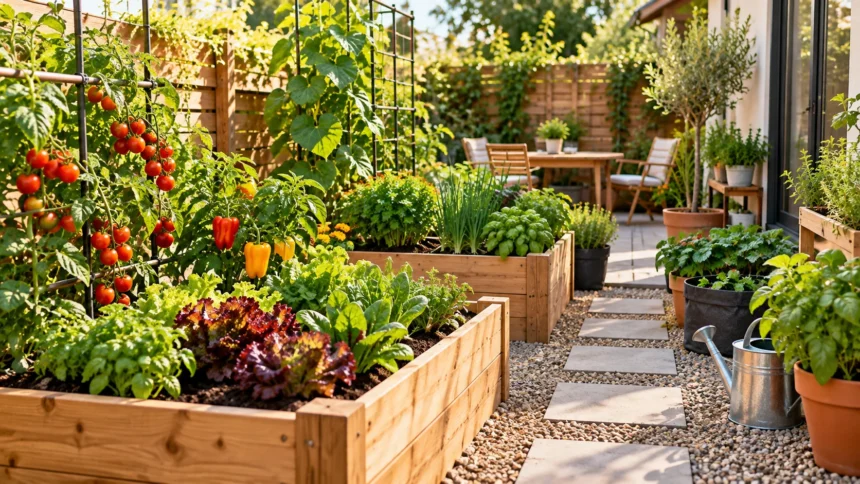
Creating a productive vegetable garden does not require a large yard. Even a small backyard can provide enough space for fresh herbs, leafy greens, tomatoes, peppers, beans, and other vegetables when the layout is planned carefully. The key is using every available area efficiently without making the garden feel crowded or difficult to maintain.
Small-space gardening works best when you combine smart planting methods with the right vegetable varieties. Raised beds, containers, vertical supports, hanging planters, and narrow garden strips can all help you grow more food in limited space. You can also improve results by choosing compact plants and crops that provide repeated harvests.
This guide covers practical vegetable garden ideas for small backyards, including raised beds, container gardens, vertical gardening, trellises, companion planting, and space-saving layouts. You will also learn how to choose vegetables, plan sunlight, water efficiently, and organize your garden for easier harvesting.
Start With a Simple Backyard Garden Plan
Before planting anything, look carefully at how much usable space you actually have. Measure patios, fences, walls, narrow borders, and open ground where vegetables could grow. Even areas that seem too small may work for containers, herbs, or climbing plants.
Pay attention to sunlight throughout the day because most vegetables need several hours of direct light. Tomatoes, peppers, cucumbers, and beans usually perform best in sunnier areas, while lettuce and some leafy greens can tolerate partial shade. Mapping sunny and shaded areas helps you place plants more effectively.
Think about access as well as planting space. Leave enough room to water, prune, inspect, and harvest your vegetables without stepping on the soil. A compact garden should feel organized and easy to move through rather than packed with plants in every available corner.
Use Raised Beds to Organize a Small Garden
Raised beds are one of the easiest ways to create an organized vegetable garden in a small backyard. They define growing areas clearly and allow you to improve the soil without digging up the entire yard. Narrow rectangular beds can fit along fences, patios, or walkways.
Keep raised beds narrow enough that you can comfortably reach the center from one or both sides. This prevents you from stepping inside the bed and compacting the soil. Long, narrow beds often work better than large square beds when space is limited.
Raised beds also make crop rotation and plant spacing easier to manage. You can dedicate one bed to leafy greens, another to root vegetables, and another to fruiting crops. Adding compost each season helps maintain soil quality and supports productive growth.
Create a Container Vegetable Garden
Containers are perfect for small backyards because they can be placed almost anywhere sunlight is available. Pots, grow bags, window boxes, and large planters can hold vegetables without requiring permanent garden beds. They are also easy to rearrange when conditions change.
Choose containers large enough for the mature size of each plant. Tomatoes and peppers need larger pots, while lettuce, radishes, herbs, and spring onions can grow in smaller containers. Every pot should have drainage holes to prevent water from collecting around the roots.
Container gardening also gives you greater control over soil quality. Use a high-quality potting mix rather than dense backyard soil. Because containers dry out faster than garden beds, check moisture regularly, especially during warm or windy weather.
Grow Vegetables Vertically
Vertical gardening can dramatically increase the amount of food you grow in a small backyard. Instead of allowing vines to spread across the ground, train them upward using trellises, cages, poles, or wire supports. This frees up valuable ground space for other crops.
Climbing beans, peas, cucumbers, and some squash varieties are excellent candidates for vertical growing. Tomatoes can also be supported with cages or stakes. Secure structures firmly so they can hold mature plants when they become heavier.
Vertical plants can also improve airflow and make harvesting easier. Fruits are often easier to see when they hang from a trellis rather than resting under leaves on the ground. Position taller structures where they will not unnecessarily shade smaller plants.
Use Fences as Growing Space
A backyard fence can become valuable growing space rather than simply marking the edge of your property. Attach trellises, plant climbing vegetables nearby, or install lightweight vertical planters where appropriate. This approach makes use of areas that might otherwise remain empty.
Peas and climbing beans work especially well against fences because they naturally grow upward. Cucumbers can also be trained along sturdy mesh or wire supports. Make sure the fence receives enough sunlight before choosing crops.
You can also place narrow containers along the base of the fence for herbs, lettuce, onions, or compact vegetables. Combining ground-level containers with vertical vines creates multiple growing layers without requiring additional backyard space.
Try Square-Foot Gardening
Square-foot gardening divides a raised bed into small sections, with each square dedicated to a specific crop. This method helps beginners manage spacing and makes it easier to grow several vegetables in a relatively compact area.
Different plants require different amounts of room within each section. Larger vegetables may need an entire square, while smaller crops such as radishes or carrots can be planted more closely. Planning spacing beforehand prevents overcrowding.
Square-foot gardening can also make succession planting easier. When one crop finishes, you can replace only that section with another vegetable. This allows the garden to remain productive throughout more of the growing season.
Choose Compact Vegetable Varieties
Some vegetable varieties are specifically bred for smaller spaces. Look for terms such as dwarf, patio, bush, compact, or container on seed packets and plant labels. These varieties usually take up less room while still producing useful harvests.
Bush beans, patio tomatoes, compact cucumbers, and smaller pepper plants can work well in limited gardens. Smaller varieties are also easier to support and manage. They can fit into containers or narrow beds that would not suit full-sized plants.
Choosing the right varieties is often more effective than trying to squeeze large plants into limited areas. If you are still deciding what to grow, this guide to easy vegetables to grow can help you identify beginner-friendly options that work well in simple home gardens.
Grow Leafy Greens in Small Spaces
Leafy greens are excellent for small backyards because they grow quickly and usually require less space than large fruiting plants. Lettuce, spinach, kale, arugula, and Swiss chard can all fit into containers or narrow beds.
Many leafy vegetables allow repeated harvesting. Instead of removing the whole plant, you can pick outer leaves and allow the center to keep producing. This makes a small planting area more productive over time.
Leafy greens can also tolerate some partial shade, making them useful for areas that do not receive full-day sun. Planting them beneath taller crops can sometimes work well as long as they still receive enough light and airflow.
Add Herbs Around the Vegetable Garden
Herbs take up relatively little space and can make a small backyard garden more productive. Basil, parsley, chives, cilantro, thyme, and mint can all be grown in containers or tucked into unused corners.
Place frequently used herbs near the kitchen door or patio so they are easy to harvest while cooking. This can make the garden feel more connected to everyday life. Small pots can also be moved to follow sunlight.
Be careful with vigorous herbs such as mint because they can spread quickly when planted directly in garden soil. Containers can keep them under control. Mixing herbs with vegetables also creates visual variety and makes the garden more interesting.
Use Hanging Planters
Hanging planters can turn overhead space into another growing area. They work particularly well on patios, pergolas, balconies, and sturdy hooks where floor space is limited.
Strawberries, herbs, small tomatoes, and some leafy greens can grow well in hanging containers. Choose lightweight pots and make sure the support can safely hold the planter after watering.
Hanging pots usually dry out faster than containers on the ground. Check them frequently and water when the potting mix begins to dry. Placing them within easy reach also makes maintenance and harvesting much simpler.
Plant Vegetables in Narrow Borders
Many small backyards have thin strips of soil beside fences, paths, or walls. These narrow borders can be surprisingly productive when planted with vegetables that do not spread too widely.
Spring onions, carrots, beets, lettuce, kale, and herbs work well in narrow areas. You can also plant climbing vegetables if there is a vertical support nearby. Plan taller plants toward the back so they do not block sunlight from shorter crops.
Narrow borders can blend food production into an existing landscape. Instead of creating a separate vegetable section, you can grow edible plants alongside ornamental areas. This approach works particularly well when backyard space is shared between gardening and recreation.
Use Companion Planting Carefully
Companion planting involves growing different crops near each other in ways that may improve space efficiency or garden management. For example, a tall crop can sometimes provide light afternoon shade for a leafy green planted nearby.
The most useful benefit in small gardens is often physical space management rather than complicated plant combinations. Pair upright plants with low-growing crops, or grow quick crops between slower-growing vegetables before they fill the space.
Avoid placing plants together simply because a chart claims they are ideal companions. Consider sunlight, water, root space, and mature plant size first. Practical spacing usually matters more than following rigid companion planting rules.
Practice Succession Planting
Succession planting helps you use the same small space more than once during a growing season. When one crop finishes, remove it and plant another vegetable in the same location.
Fast crops such as radishes, lettuce, spinach, and spring onions are especially useful for succession planting. You can sow small batches every few weeks rather than planting everything at once. This creates a steadier harvest.
Plan the timing based on your local growing season. A cool-weather crop might be followed by a warm-season vegetable and then another cool crop later. This keeps your limited garden space productive for more months.
Mix Fast and Slow-Growing Vegetables
You can improve space efficiency by combining vegetables that mature at different speeds. Fast-growing radishes or lettuce can be harvested before slower crops need the extra room.
For example, plant radishes between young tomato plants early in the season. By the time the tomatoes grow larger, the radishes may already be ready to harvest. This allows two crops to use the same area at different times.
Be careful not to overcrowd the bed. Temporary combinations work only when the fast-growing crop is harvested before the larger plant needs the space. Keep track of growth so one crop does not compete heavily with another.
Use Grow Bags for Flexible Planting
Grow bags are lightweight containers that work well in small backyards. They can be placed on patios, gravel areas, or other spots where building permanent beds is not practical.
Potatoes, tomatoes, peppers, carrots, and many herbs can grow successfully in grow bags. Choose the right size for the plant and fill the bag with a suitable growing mix. Larger vegetables need deeper and wider bags.
One major advantage is flexibility. You can move grow bags between seasons or rearrange the backyard when you need more open space. When not in use, many fabric bags can be folded and stored.
Create a Small Kitchen Garden
A kitchen garden is a compact growing area designed around foods you use regularly. Instead of planting large quantities, focus on vegetables and herbs you are likely to harvest often.
Place the garden close to the house if possible. Convenience makes it easier to water, inspect plants, and pick ingredients while cooking. Herbs, lettuce, tomatoes, peppers, spring onions, and leafy greens work especially well.
A small kitchen garden can be more useful than a larger garden filled with vegetables you rarely eat. Choose crops based on your normal meals. This keeps the garden practical and reduces waste.
Make Use of Patio Corners
Patio corners are often overlooked, but they can support several containers without taking away much usable space. Group pots of different heights to create a compact edible garden.
Use large containers for tomatoes or peppers and smaller pots for herbs and lettuce. A vertical trellis behind the containers can hold climbing beans or cucumbers. This creates several growing levels in one corner.
Leave enough space around containers for airflow and maintenance. Crowding every pot together can make watering difficult and create humid conditions around the leaves. A little organization makes the garden easier to manage.
Plan Efficient Watering
Small backyard gardens can still become time-consuming if watering is inefficient. Group plants with similar moisture needs so you can water them together without overwatering some crops.
Drip irrigation or soaker hoses can work well in raised beds and narrow garden areas. These systems deliver water near the soil rather than spraying leaves unnecessarily. They can also reduce the amount of time spent hand watering.
Containers require more frequent checking because they lose moisture faster. Mulching the soil surface can help reduce evaporation. Water deeply enough to reach the roots rather than giving plants only a quick surface spray.
Keep Paths and Access Simple
Every planting area should be easy to reach. You should not need to step over plants or walk through beds to harvest vegetables. Compact paths make routine care much easier.
Use gravel, stepping stones, mulch, or other simple materials to define walking areas. The path does not need to be wide, but it should be comfortable enough for watering cans, tools, and harvesting baskets.
Good access also helps you notice problems earlier. When plants are easy to reach, you are more likely to inspect leaves, remove damaged growth, pick mature vegetables, and respond to pest problems quickly.
Protect a Small Garden From Pests
Small gardens are easier to inspect than large ones, which can be an advantage for pest management. Check leaves frequently for holes, insects, eggs, and unusual discoloration.
Use physical barriers such as insect mesh, netting, or row covers when appropriate. Containers can sometimes be moved away from problem areas. Hand-picking visible pests may also be practical in a small garden.
Healthy plants are generally better able to handle minor pest pressure. Proper spacing, balanced watering, and good airflow help maintain plant strength. Avoid using treatments unnecessarily when simpler methods can solve the problem.
Keep the Garden Neat and Productive
Regular harvesting prevents mature vegetables from taking up space longer than necessary. Beans, cucumbers, zucchini, and leafy greens often produce more when picked frequently.
Remove dead leaves and finished plants so they do not clutter the garden. Once a crop has stopped producing, clear the area and prepare it for another planting when the season allows.
A tidy garden is also easier to monitor. You can quickly see which crops need water, support, pruning, or harvesting. Good organization makes a small backyard feel larger and more enjoyable to use.
Conclusion
A small backyard can support a surprisingly productive vegetable garden when the available space is used thoughtfully. Raised beds, containers, vertical supports, narrow borders, and hanging planters can all increase growing capacity without making the yard feel overcrowded.
Choose compact vegetables, plant crops in succession, and use vertical space whenever possible. Focus on vegetables you actually enjoy eating and match each plant with the sunlight, soil, and water it needs.
Start with a simple layout and improve it over time. As you learn which crops perform best in your backyard, you can adjust containers, supports, and planting schedules. Even a modest outdoor area can provide fresh vegetables throughout much of the growing season.
FAQs
What vegetables grow best in a small backyard?
Lettuce, radishes, beans, tomatoes, peppers, spinach, carrots, spring onions, and compact cucumbers work well. Choose bush, dwarf, or patio varieties when space is especially limited.
How do I maximize space in a small vegetable garden?
Use vertical trellises, raised beds, containers, succession planting, narrow borders, and compact crop varieties. Combining upright plants with smaller crops can also help use space more efficiently.
Can I grow vegetables without digging up my backyard?
Yes. Containers, grow bags, raised planters, and vertical systems allow you to grow many vegetables without creating traditional in-ground beds.
How much sunlight does a small vegetable garden need?
Most vegetables grow best with at least six hours of direct sunlight each day. Leafy greens can often tolerate some partial shade, while tomatoes and peppers usually prefer sunnier locations.
Are raised beds good for small backyards?
Yes. Raised beds help organize limited space, improve soil control, and make planting easier. Narrow beds are especially useful because you can reach plants without stepping on the soil.