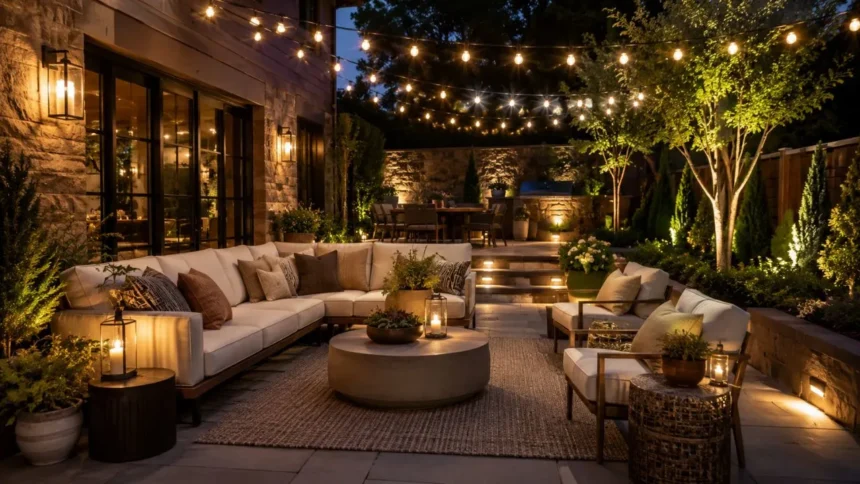
A well-lit outdoor living space can make your patio, deck, garden, or balcony more enjoyable after sunset. The right lighting supports relaxation, dining, entertaining, and safe movement without making the area feel overly bright. Instead of relying on one powerful fixture, combine several softer light sources. This creates a welcoming atmosphere while giving every part of the space a clear purpose.
Outdoor lighting should support the way you already use the area. A dining table needs enough light for meals, while a lounge corner benefits from warm and gentle illumination. Steps, pathways, cooking areas, and entrances require practical visibility for safety. Planning around these activities helps you avoid fixtures that look attractive but fail to improve the space.
The most effective outdoor lighting design uses ambient, task, and accent lighting together. Ambient lighting provides general brightness, task lighting supports specific activities, and accent lighting highlights plants or architectural features. Layering these three types creates greater depth and flexibility. It also allows the outdoor area to feel comfortable during both quiet evenings and larger gatherings.
You do not need a large garden or an expensive installation to achieve good results. String lights, outdoor wall lights, lanterns, solar fixtures, and low-voltage landscape lighting can all be used effectively. The key is choosing weather-resistant products and placing them thoughtfully. This guide explains how to light an outdoor living space in a practical, attractive, and comfortable way.
Begin With the Purpose of the Space
Before choosing fixtures, decide how you want to use your outdoor living space. Some homeowners need a comfortable dining area, while others want a peaceful place for conversation or reading. Your activities will determine the brightness, fixture type, and placement required. Lighting should improve the experience of the space rather than simply decorate its edges.
Divide the outdoor area into functional zones before creating your lighting plan. Common zones include dining, cooking, seating, pathways, entrances, planting beds, and steps. Each zone requires a different amount and direction of light. Identifying these areas early will make it easier to select fixtures that serve a clear purpose.
Consider how often the area is used and during which seasons. A patio used every evening may justify permanent wall lights and professionally installed landscape lighting. A balcony used occasionally may need only portable lanterns or rechargeable table lamps. Matching the lighting investment to your lifestyle prevents unnecessary spending and complicated maintenance.
It is also helpful to observe the space after sunset before making decisions. Notice where natural darkness creates safety problems and where nearby indoor lighting already provides support. Look for areas that feel empty, uncomfortable, or difficult to navigate. These observations will reveal where additional outdoor lights can create the greatest improvement.
Create a Layered Outdoor Lighting Plan
Layered lighting prevents an outdoor living space from feeling flat or harsh. One central light may provide visibility, but it rarely creates an attractive atmosphere. Several fixtures placed at different heights produce better visual balance. They also help define seating, dining, planting, and movement areas without flooding the entire garden with unnecessary brightness.
Ambient outdoor lighting provides the general glow needed to use the space comfortably. Wall sconces, pendant lights, string lights, and overhead fixtures can all provide this foundation. Choose a warm and controlled level of brightness rather than intense white illumination. The goal is to make the area usable while preserving the relaxed feeling of the evening.
Task lighting supports activities that require clearer visibility. Outdoor kitchens, barbecue areas, dining tables, stairs, and reading chairs may all need focused light. Position task fixtures so they illuminate the working surface without shining directly into people’s eyes. This improves comfort while reducing shadows that can make practical activities more difficult.
Accent lighting adds depth and draws attention to attractive features. Uplights can highlight trees, while small spotlights can reveal textured walls, sculptures, or water features. Use accent lighting selectively so each feature remains noticeable. When everything is highlighted equally, the garden can lose its natural contrast and become visually confusing.
Choose the Right Colour Temperature
Colour temperature strongly influences the atmosphere of outdoor lighting. Warm light usually creates a softer and more welcoming environment for patios, decks, and seating areas. It also complements timber, brick, stone, and natural planting. Cooler light may appear brighter, but it can make a relaxing outdoor space feel clinical or uncomfortable.
For dining and conversation areas, select warm white bulbs that create an intimate glow. This type of light is flattering to faces and works well with candles, lanterns, and fire features. It also allows the outdoor area to feel connected with warmly lit indoor rooms. Consistent colour temperature creates a smoother transition between inside and outside.
Functional areas may need slightly clearer lighting, especially around cooking surfaces or entrances. However, the difference should not be so strong that one zone looks disconnected from the rest. Choose bulbs with similar tones whenever possible. A coordinated lighting colour helps multiple fixtures feel like part of one planned outdoor design.
Avoid mixing several unrelated light colours across a small space. Warm string lights, cool wall lights, and blue-toned pathway fixtures can produce an unbalanced appearance. Check bulb packaging and replacement options before purchasing fixtures. Maintaining a consistent colour temperature will keep the outdoor living area calm, polished, and visually connected.
Light Outdoor Dining Areas Properly
An outdoor dining table needs enough light for people to see food and one another comfortably. However, overly bright lighting can remove the relaxed atmosphere that makes outdoor dining enjoyable. A pendant, overhead fixture, or group of string lights can provide balanced illumination. Position the source above the table rather than behind seated guests.
Pergolas and covered patios make it easier to install outdoor pendant lights. Choose a fixture designed for exterior use and position it at a comfortable height. It should illuminate the table without blocking views or creating glare. A dimmable option offers greater flexibility for family meals, celebrations, and quieter evening conversations.
When overhead installation is not possible, use portable table lamps or rechargeable lanterns. These can be placed in the centre of the table or on nearby surfaces. Select designs with shaded or diffused light to reduce glare. Several smaller lamps often create a more attractive dining atmosphere than one very bright portable fixture.
Candles can add warmth, but they should support rather than replace practical lighting. Wind-resistant holders or enclosed lanterns can make them easier to use outdoors. Keep open flames away from fabric, plants, and crowded table settings. Battery-operated candles offer a safer alternative when children, pets, or strong winds are present.
Make Seating Areas Feel Comfortable
Outdoor seating areas should feel warm, intimate, and easy to use after dark. Place lighting near sofas, chairs, and side tables rather than illuminating the whole garden from above. Wall lights, floor lanterns, table lamps, and string lights can create a soft boundary around the seating zone. This makes the area feel more like an outdoor room.
The light source should sit above or beside eye level whenever possible. Bright fixtures placed directly in front of seating can cause discomfort and make conversation less enjoyable. Shaded lamps and downward-facing wall lights help control glare. They provide useful illumination while keeping the background of the garden naturally darker.
Use several low-level lights to create depth around a lounge area. A lantern beside a sofa, a wall light near the door, and gentle tree lighting can work together effectively. The fixtures do not need to match exactly, but their finishes and light colour should feel related. This creates a collected yet organised appearance.
Soft furnishings can also influence how outdoor lighting feels. Pale cushions and table surfaces reflect more light, while dark materials absorb it. If the seating area contains deep colours, you may need slightly stronger or more numerous fixtures. Test the space in the evening and adjust the lighting according to real use.
Use String Lights Without Overcrowding the Space
String lights are a popular choice because they add warmth and atmosphere with relatively little effort. They work well over patios, balconies, dining areas, and pergolas. Their gentle glow can define the outdoor room without requiring strong overhead lighting. Careful placement is important, however, because excessive strings can make the space feel busy.
Hang string lights in a clear pattern rather than attaching them randomly. Straight parallel lines create a modern appearance, while a zigzag arrangement feels more casual and festive. Lights can also be placed around the edge of a pergola or railing. Choose the arrangement that best suits the shape and style of the space.
Make sure attachment points are strong enough to support the cable safely. Avoid placing unnecessary tension on trees, fences, or lightweight structures. Outdoor-rated guide wires can provide additional support across larger distances. Cables should remain high enough to prevent people from touching them or walking into low sections.
Choose bulbs that provide a warm glow instead of excessive brightness. Large decorative bulbs can create a strong visual feature, while smaller bulbs produce a subtler effect. Consider replaceable bulbs when you want easier long-term maintenance. Always confirm that the string lights and connections are suitable for permanent or temporary outdoor use.
Improve Safety With Pathway and Step Lighting
Pathway lighting helps people move safely between the house, patio, gate, and garden. Fixtures should reveal changes in direction, uneven surfaces, and potential obstacles without creating a brightly lit runway. Low-level lights placed at regular but not perfectly rigid intervals often look more natural. The light should fall onto the walking surface rather than into people’s eyes.
Steps require particular attention because changes in height can be difficult to see at night. Recessed step lights, small wall fixtures, or lights installed beneath handrails can improve visibility. Position them so each edge becomes clear without producing strong shadows. Consistent lighting is especially important when several steps appear close together.
Deck lighting can be integrated into posts, railings, and stair risers. These fixtures support safety while preserving the clean appearance of the structure. Avoid installing lights where they can easily be kicked, covered, or damaged. A low and controlled output is usually enough to show boundaries and changes in level.
Entrances and gates should also be clearly visible after dark. Wall lights, post lights, or motion-activated fixtures can make these areas easier to approach. Make sure locks, handles, and house numbers can be seen when needed. Good entrance lighting improves convenience while helping the outdoor area feel more secure and welcoming.
Highlight Plants and Garden Features
Landscape lighting can reveal the shape and texture of plants after sunset. Trees, ornamental grasses, hedges, and architectural planting can become attractive evening features. Uplighting from the ground creates drama, while downlighting produces a softer and more natural effect. The technique should match the size and character of the selected plant.
Large trees can be lit from one or two carefully chosen directions. A single uplight may create bold shadows, while multiple lights reveal more of the canopy. Avoid aiming high-powered fixtures towards neighbouring properties or bedroom windows. Controlled beams help the tree stand out without producing unnecessary glare or light pollution.
Smaller plants usually need gentler lighting. Low-level spotlights can highlight foliage, while hidden lights can create a soft glow behind planting beds. Leave some areas dark to maintain depth and natural contrast. Lighting every plant equally can flatten the garden and remove the sense of mystery that makes evening landscapes appealing.
Water features, sculptures, textured walls, and decorative screens can also become focal points. Position lights at an angle to reveal shape and surface detail. Test the effect from the main seating area before fixing the final position. Accent lighting should improve the view people actually experience rather than only looking attractive from close range.
Select Suitable Outdoor Wall Lights
Outdoor wall lights can provide ambient, task, and security lighting around the home. They are commonly installed beside doors, near seating areas, and along covered patios. The style should complement the architecture without overpowering it. Traditional lanterns, modern cylinders, and simple downward-facing fixtures can all work when correctly scaled.
Fixture size matters because a wall light that looks large in a shop may appear small on an exterior wall. Consider the height and width of the door, wall, and surrounding windows. Using two matching lights can create symmetry around an entrance. A single larger fixture may work better where wall space is limited.
The direction of light affects both comfort and appearance. Downward-facing lights illuminate doors and walking surfaces without sending excessive brightness into the sky. Up-and-down fixtures can emphasise wall texture but may produce stronger visual effects. Choose a design that supports practical visibility while respecting nearby rooms and properties.
Wall lights should be designed for the conditions they will face. Covered areas and fully exposed walls may require different levels of weather protection. Check that fixtures, bulbs, cables, and connections are suitable for outdoor installation. Permanent electrical work should be completed or checked by a qualified professional when necessary.
Consider Solar and Low-Voltage Lighting
Solar lighting can be useful where electrical wiring is difficult or unnecessary. It works well for decorative borders, temporary arrangements, and lightly used pathways. Solar fixtures are easy to move and generally require little installation. Their performance, however, depends heavily on daylight exposure, battery quality, weather, and seasonal conditions.
Place solar panels where they can receive direct sunlight for a substantial part of the day. Shade from roofs, trees, fences, and plants can reduce charging performance. Avoid expecting small decorative solar lights to provide strong task lighting. They are usually more effective as gentle markers or accent lights than as the main source of illumination.
Low-voltage landscape lighting provides greater consistency and control for permanent garden designs. It can be used for paths, trees, walls, steps, and planting beds. Fixtures are connected through suitable outdoor cabling and a transformer. A planned system can provide reliable results while remaining easier to expand than many individual solar products.
The best choice depends on your budget, location, and expectations. Solar lights may suit renters or homeowners wanting a quick decorative update. Low-voltage lighting may be more appropriate for larger gardens and regularly used outdoor areas. In many spaces, combining permanent low-voltage fixtures with portable solar accents provides useful flexibility.
Use Energy-Efficient LED Lighting
LED bulbs are a practical choice for outdoor living spaces because they use less energy and usually last longer than older bulb types. They are available in many shapes, brightness levels, and colour temperatures. This makes it easier to create a consistent lighting scheme. LEDs also work well with wall lights, string lights, spotlights, and portable fixtures.
Brightness should be chosen according to the purpose of each fitting. A pathway marker needs less output than a cooking or entrance light. Selecting excessively bright bulbs can create glare and remove the atmosphere of the garden. Begin with lower levels and increase illumination only where practical visibility remains insufficient.
Dimmable LED fixtures provide greater control over outdoor lighting. Brighter settings may be useful during cooking or cleaning, while lower levels suit dining and conversation. Check that the bulb, fixture, switch, and dimmer are compatible. Incompatible components can result in flickering, limited adjustment, or poor performance.
Smart outdoor lighting can provide additional convenience through schedules, timers, and remote control. It may allow separate zones to be adjusted without visiting every fixture. However, smart features should support a good lighting plan rather than replace one. Fixture position, glare control, colour, and weather resistance remain more important than app-based controls.
Control Glare and Light Pollution
More lighting does not always create a better outdoor living space. Excessive brightness can make the garden uncomfortable, disturb neighbours, and reduce views of the night sky. Well-designed fixtures direct light only where it is useful. This improves visibility while preserving darkness in areas that do not need constant illumination.
Choose shielded or downward-facing fixtures whenever possible. These designs reduce light escaping upwards or sideways into nearby windows. Spotlights should be aimed carefully at their intended feature and checked from several viewpoints. Small adjustments can significantly reduce glare without weakening the overall design.
Timers, sensors, and separate lighting zones can prevent fixtures from remaining on unnecessarily. Path and accent lights may be turned off after the outdoor area is no longer in use. Motion sensors can support security near entrances without illuminating the entire property all night. Thoughtful control reduces energy use and unwanted brightness.
Consider wildlife when lighting gardens, especially around trees, hedges, ponds, and planting beds. Constant or intense illumination can change the natural darkness of these areas. Use the lowest useful brightness and avoid lighting every part of the landscape. A balance of gentle illumination and protected darkness creates a more responsible outdoor environment.
Choose Weather-Resistant Fixtures and Materials
Outdoor fixtures must withstand conditions that indoor lighting never experiences. Rain, moisture, dust, heat, cold, and direct sunlight can damage unsuitable products. Always choose fixtures specifically designed for exterior use. Decorative indoor lamps should not be moved outside unless the manufacturer clearly confirms that they are suitable.
The exact level of protection required depends on the fixture’s location. A light beneath a deep covered roof may face less direct moisture than one beside an open pathway. Fixtures installed near pools, fountains, or exposed ground require particular care. Product instructions should clearly explain suitable placement and environmental limitations.
Materials also affect long-term appearance. Powder-coated metal, stainless steel, brass, aluminium, and durable outdoor plastics each age differently. Coastal air, strong sunlight, and heavy rainfall can increase wear. Select finishes that suit local conditions and follow the recommended cleaning and maintenance instructions.
Cables, plugs, extension leads, and connectors must also be intended for outdoor use. Keep connections protected from standing water and avoid creating trip hazards. Permanent wiring should follow local electrical requirements and be handled by a qualified electrician. Safety should remain the priority even when the lighting project appears simple.
Avoid Common Outdoor Lighting Mistakes
One common mistake is using a single powerful light to illuminate the entire outdoor space. This creates harsh shadows, glare, and an uncomfortable atmosphere. It can also make surrounding areas appear even darker. Several lower-output fixtures usually provide better visibility, flexibility, and visual balance.
Another mistake is placing fixtures without considering the view from seating areas. A spotlight may highlight a tree beautifully while shining directly into someone’s eyes. Always test temporary positions before completing installation. Sit in the dining and lounge areas to check glare, shadows, and the overall visual effect.
Using too many decorative fixtures can make a small patio or balcony feel cluttered. String lights, lanterns, wall lights, candles, and solar stakes do not all need to appear together. Choose a limited number of lighting types and repeat them consistently. This creates a more organised and intentional outdoor design.
Neglecting maintenance can also reduce lighting performance over time. Dirt, fallen leaves, growing plants, and weather damage may block or weaken fixtures. Clean lenses, trim nearby planting, and check cables periodically. Regular care keeps the outdoor living space attractive, safe, and ready to use throughout the year.
Final Thoughts on Outdoor Living Space Lighting
Learning how to light an outdoor living space begins with understanding how the area is used. Dining, cooking, relaxing, walking, and entertaining all require different lighting solutions. A clear plan helps you place fixtures where they provide genuine value. It also prevents unnecessary brightness and decorative clutter.
Layering ambient, task, and accent lighting creates the most effective result. Warm wall lights, focused task fixtures, pathway lights, and gentle landscape accents can work together. Each layer should support the others without competing for attention. This creates depth while keeping the space comfortable and practical.
Outdoor lighting should also respond to weather, safety, energy use, and neighbouring properties. Choose exterior-rated products, control glare, and avoid leaving unnecessary lights on throughout the night. Permanent electrical installations should be completed safely. These decisions protect both the appearance and long-term usability of the space.
Begin with the most important areas and improve the design gradually. Light entrances, steps, seating, and dining zones before adding decorative accents. Test each fixture after dark and make adjustments based on real experience. A thoughtful lighting plan can turn an ordinary patio or garden into a welcoming outdoor room.
Frequently Asked Questions
What is the best lighting for an outdoor living space?
The best design combines ambient, task, and accent lighting. Use warm wall lights or string lights for atmosphere, focused fixtures for activities, and low-level lights for paths and features.
How bright should outdoor patio lighting be?
Patio lighting should be bright enough for safe movement and conversation without causing glare. Several low-output fixtures usually create a better result than one extremely bright light.
Are solar lights suitable for outdoor living areas?
Solar lights work well for decorative accents and lightly used pathways. Their brightness and operating time depend on direct sunlight, battery quality, weather, and seasonal daylight.
Where should outdoor string lights be placed?
String lights can be installed above dining tables, seating areas, balconies, or beneath pergolas. Arrange them in a clear pattern and use secure outdoor-rated supports and connections.
Should outdoor lights be warm or cool white?
Warm white is usually best for patios, decks, dining areas, and seating spaces because it feels comfortable and welcoming. Slightly clearer light may be useful near cooking areas and entrances.