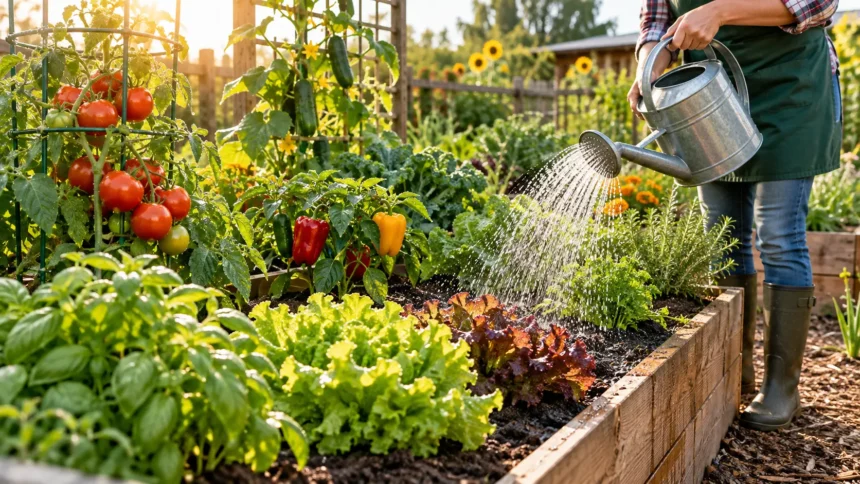
How Often Should You Water a Vegetable Garden?
Most vegetable gardens need regular, consistent watering, but there is no single schedule that works for every garden. Weather, soil type, crop variety, plant age, and growing conditions all affect how quickly the soil dries. Instead of watering automatically every day, check the soil and adjust your routine according to actual moisture levels.
In many cases, established vegetables do better with deeper, less frequent watering than with small amounts applied every day. Deep watering encourages roots to grow farther into the soil, where moisture remains available for longer periods. Shallow watering can keep roots near the surface and make plants more vulnerable when hot, dry weather arrives.
A useful starting point is to monitor the upper few inches of soil several times each week. If the soil feels dry below the surface, watering may be needed. During cool or rainy periods, you may water less often, while hot, windy, or very dry conditions can increase the frequency significantly.
How Much Water Does a Vegetable Garden Need?
Vegetables generally need enough water to keep the root zone consistently moist without leaving the soil permanently saturated. Many gardeners aim for roughly one inch of water per week under moderate conditions, including rainfall, although exact needs vary by crop and climate. Hot weather or sandy soil may increase the amount needed.
Rather than focusing only on the total amount, pay attention to how deeply the water penetrates the soil. A thorough watering session should moisten the root zone rather than only wetting the top layer. After watering, check the soil several inches down to see whether moisture has reached below the surface.
Water requirements also change as plants grow. Young seedlings have shallow roots and may need smaller amounts more frequently, while mature plants can often access moisture deeper in the soil. Large fruiting vegetables such as tomatoes, cucumbers, squash, and peppers may also require more consistent moisture during flowering and fruit production.
How Soil Type Affects Watering Frequency
Soil type plays a major role in determining how often your vegetable garden needs water. Sandy soil drains quickly and may dry out faster, while heavy clay soil holds moisture much longer. Loamy soil usually offers a better balance by retaining enough moisture while still allowing excess water to drain away.
Improving soil structure can make watering easier and more efficient. Organic matter helps sandy soil hold more water while also improving drainage and aeration in compacted soil. Understanding the characteristics of the best garden soil can help you create a growing environment that maintains moisture without becoming waterlogged.
Before creating a fixed watering schedule, observe how quickly your particular soil dries after irrigation or rainfall. If the surface is dry but the soil several inches below remains moist, watering can usually wait. This simple test is often more reliable than watering on a strict calendar regardless of soil conditions.
How Weather Changes Your Watering Schedule
Weather conditions can dramatically change how quickly moisture leaves the soil. Hot temperatures increase evaporation, while strong wind can dry both soil and plant leaves more quickly. During extended heat, vegetables may need water more frequently than they would during mild spring or autumn weather.
Rainfall should always be included when deciding whether to water. A garden that receives steady rain may not need additional irrigation for several days, while a short light shower might only wet the surface. Checking the soil after rainfall helps determine whether moisture actually reached the depth where vegetable roots are growing.
Humidity can also influence how quickly plants lose water through their leaves. Dry, sunny conditions usually create greater water demand than cool, humid weather. Adjusting your routine according to current conditions helps prevent both underwatering and overwatering, especially during rapidly changing seasonal weather.
Best Time of Day to Water a Vegetable Garden
Early morning is often the most practical time to water a vegetable garden. Temperatures are usually cooler, winds are often lighter, and less water is lost to evaporation. Plants also have access to moisture before the hottest part of the day, which can help them tolerate warm afternoon conditions.
Morning watering also gives leaves time to dry if they accidentally become wet. This can be useful because foliage that stays damp for long periods may create favorable conditions for certain plant diseases. Directing water toward the soil rather than spraying the leaves can further reduce unnecessary moisture on plant surfaces.
Evening watering can still be effective when morning watering is not possible. The main goal is to provide adequate moisture without leaving foliage excessively wet overnight. Midday watering is not automatically harmful, but more water can be lost through evaporation during very hot or windy conditions.
How Often to Water Newly Planted Vegetables
Newly planted seeds and seedlings usually require more frequent attention than established vegetable plants. Seeds need consistent surface moisture during germination because the upper soil layer dries relatively quickly. Allowing newly sown beds to dry completely can interrupt germination or damage delicate emerging roots.
Transplanted seedlings also need steady moisture while their roots become established in the surrounding soil. Depending on weather and soil conditions, they may need watering daily or every couple of days during the first stage of growth. The goal is to keep the root area evenly moist without making the soil constantly soggy.
As roots develop and plants become stronger, gradually reduce watering frequency while increasing the depth of each watering session. This encourages roots to explore a larger soil volume. Sudden changes should still be avoided, especially during hot weather when young plants can become stressed quickly if the soil dries too much.
How Often to Water Raised Vegetable Beds
Raised beds often drain faster than traditional in-ground gardens, particularly when they contain loose soil mixes. Because more of the soil is exposed above ground, heat and wind can also remove moisture more quickly. As a result, raised vegetable beds may need more frequent watering during warm, dry periods.
The exact schedule depends on bed depth, soil composition, mulch, plant density, and weather. Shallow raised beds usually dry faster than deeper ones because they contain less soil volume. Checking moisture below the surface is especially important because the top layer can appear dry while deeper roots still have sufficient water.
Adding compost and mulch can help raised beds retain moisture for longer periods. Drip irrigation or soaker hoses can also provide slow, targeted watering with less evaporation. These systems can be particularly useful when growing vegetables that need steady moisture throughout flowering, fruit formation, and periods of rapid growth.
Signs Your Vegetable Garden Needs Water
Wilting is one of the most obvious signs that a plant may need water, but it should not be your only guide. Plants can temporarily wilt during the hottest part of the afternoon even when the soil still contains enough moisture. If they recover once temperatures cool, additional watering may not always be necessary.
Dry soil is a more useful indicator. Push your finger or a small gardening tool several inches into the soil and check whether it feels dry below the surface. Soil that is dry and crumbly throughout the root zone usually indicates that watering is needed, especially when plants are actively growing.
Other signs of insufficient moisture can include slow growth, dry leaf edges, poor fruit development, or flowers dropping prematurely. Repeated cycles of severe dryness and heavy watering can also stress vegetables. Maintaining relatively consistent moisture is generally better than allowing the garden to become extremely dry between every watering session.
Signs You May Be Overwatering
Overwatering can be just as harmful as allowing vegetables to become too dry. Soil that remains constantly saturated contains less oxygen, making it difficult for roots to function normally. Plants may develop yellow leaves, weak growth, or a generally unhealthy appearance even though they are receiving plenty of water.
A persistent wet smell, standing water, or soil that feels muddy for several days can indicate drainage problems. Some plants may also wilt when their roots are waterlogged, which can be confusing because wilting is often associated with dryness. Always check soil moisture before assuming a wilted plant automatically needs more water.
Improving drainage and reducing watering frequency can help when soil stays wet for too long. Raised beds, organic matter, and better soil structure may also improve water movement. If only certain areas stay saturated, check whether irrigation is uneven or whether low spots are collecting more water than the rest of the garden.
Best Watering Methods for Vegetable Gardens
Drip irrigation is one of the most efficient ways to water vegetables because it delivers moisture directly to the soil near plant roots. Water is applied slowly, which reduces runoff and allows it to penetrate more deeply. Drip systems can also reduce the amount of water landing on leaves compared with overhead sprinklers.
Soaker hoses provide a similar advantage and are often easier for home gardeners to install. They release water gradually along the length of the hose and work well in rows or raised beds. Covering the hose with a light layer of mulch can reduce evaporation and keep moisture available for longer.
Hand watering can also work well for smaller gardens, especially when using a gentle flow directed at the base of each plant. The main disadvantage is inconsistency if some plants receive more water than others. Whatever method you choose, slow and thorough watering is usually more effective than quickly spraying the surface.
How Mulch Helps Reduce Watering Needs
Mulch helps vegetable garden soil retain moisture by reducing direct exposure to sunlight and wind. Organic materials such as straw, shredded leaves, or other suitable plant-based mulches can slow evaporation considerably. This can reduce how often the garden needs water during hot weather while creating more stable soil moisture conditions.
Mulch also moderates soil temperature. Cooler soil generally loses moisture more slowly than bare ground exposed to intense sun. By reducing temperature swings and surface drying, mulch can help vegetables maintain more consistent access to water, especially during midsummer when demand is highest.
Apply mulch after seedlings are established and the soil has warmed sufficiently for the crops being grown. Avoid piling thick mulch directly against plant stems because excessive moisture around the base can create problems. Check beneath the mulch before watering because the surface may appear dry while the soil underneath remains moist.
Watering Different Types of Vegetables
Leafy vegetables such as lettuce, spinach, and kale generally perform best with relatively consistent moisture. Their shallow root systems can make them sensitive to prolonged dry periods. Irregular watering may cause leaves to become tougher or encourage some crops to bolt earlier during warm conditions.
Root vegetables such as carrots, radishes, and beets also need steady moisture, especially while roots are developing. Extremely dry soil followed by heavy watering can sometimes affect root quality. Deep, evenly moist soil supports more uniform development than repeatedly allowing the root zone to become completely dry.
Fruiting vegetables such as tomatoes, cucumbers, squash, and peppers often need reliable moisture during flowering and fruit production. Large fluctuations in soil moisture can stress these plants and may contribute to growth problems. Consistent deep watering combined with mulch can help maintain more stable conditions throughout the productive part of the season.
How to Create a Better Watering Routine
Start by checking your garden regularly instead of relying only on a fixed schedule. Observe soil moisture, recent rainfall, temperatures, and how your vegetables look throughout the day. Over time, you will begin to recognize how quickly your particular garden dries under different weather conditions.
Water deeply enough to reach the root zone and then allow the upper portion of the soil to begin drying before watering again. This encourages more resilient root systems compared with frequent shallow sprinkling. The correct interval might be several days in one garden and much shorter in another.
Keep your routine flexible as the season changes. Young plants, mature crops, heat waves, rainfall, and different soil conditions all require adjustments. Good watering is less about following one universal rule and more about responding consistently to what the soil and plants are showing you.
Conclusion
How often you should water a vegetable garden depends on soil type, weather, plant age, crop variety, and how deeply each watering session reaches. Most vegetables prefer consistent moisture without permanently wet soil. Checking moisture below the surface is usually more reliable than following the same schedule every day.
Deep, less frequent watering is generally better for established vegetables than repeated shallow watering. Young seedlings may need more frequent attention, while raised beds and sandy soils often dry faster. Mulch, compost, drip irrigation, and thoughtful soil preparation can all help improve water efficiency and reduce unnecessary moisture loss.
The best watering routine is one that changes with your garden’s actual conditions. Monitor rainfall, temperatures, plant growth, and soil moisture throughout the season. By balancing adequate hydration with proper drainage, you can support stronger roots, healthier vegetables, and more productive crops without wasting water.
FAQs
Should I water my vegetable garden every day?
Not necessarily. Established vegetables often benefit from deeper, less frequent watering, while seedlings may need moisture more often. Check the soil below the surface before watering instead of automatically following a daily schedule.
How do I know when my vegetable garden needs water?
Check the soil several inches below the surface. If it feels dry throughout the root zone, watering is usually needed. Also watch for persistent wilting, dry leaf edges, and reduced plant growth.
Is morning or evening better for watering vegetables?
Morning is often ideal because temperatures are cooler and plants receive moisture before daytime heat. Evening watering is also possible, but try to avoid leaving foliage excessively wet throughout the night.
How long should I water my vegetable garden?
Water long enough for moisture to reach several inches into the root zone. The exact time depends on your irrigation method, water pressure, and soil type, so checking soil depth is more useful than timing alone.
Can too much water damage vegetable plants?
Yes. Constantly saturated soil can reduce oxygen around the roots and contribute to poor growth, yellowing, and root problems. Always check moisture and drainage before assuming plants need additional water.