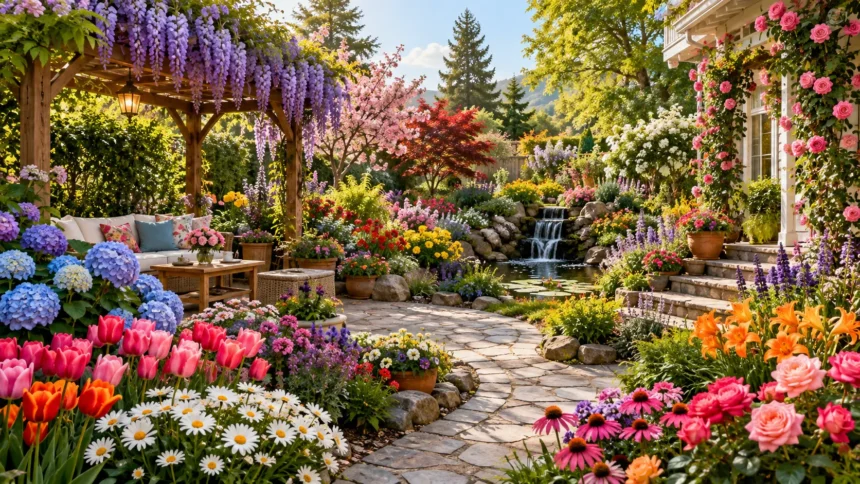
How to Keep a Garden Colorful Throughout the Year
Creating a colorful garden all year starts with choosing plants that bloom in different seasons rather than depending on one group of flowers. Spring bulbs, summer annuals, autumn perennials, and winter-flowering varieties can work together to keep beds interesting. The exact combination depends on your climate, sunlight, soil, and the amount of maintenance you want to provide.
A successful year-round flower garden also includes plants with different bloom lengths. Some flowers produce color for only a few weeks, while others continue blooming for months when properly cared for. Mixing short-season performers with long-blooming plants prevents the garden from looking empty once one major group finishes flowering and creates smoother transitions between seasons.
Foliage can also support color when fewer flowers are available. Evergreen leaves, silver foliage, burgundy plants, and ornamental grasses provide visual interest between blooming periods. When planning your beds, useful flower garden ideas can help you combine seasonal blooms, different heights, and complementary colors into a more balanced backyard display.
Tulips Bring Bright Color to Spring Gardens
Tulips are among the most recognizable spring flowers and are available in almost every color imaginable. Red, yellow, pink, purple, orange, white, and multicolored varieties make it easy to create dramatic combinations. Their clean shape works especially well when planted in groups, borders, containers, or mixed beds alongside other spring-flowering bulbs.
Tulip bulbs are generally planted during autumn so they can experience the cooler period needed before spring growth. Choose well-draining soil because bulbs may rot when they remain excessively wet. A sunny location encourages strong flowering, although some light shade can be suitable depending on your climate and the specific variety you choose.
Because different tulips flower at early, mid, and late points in spring, selecting several types can extend the display. Some varieties may return for multiple seasons, while others perform best during their first year. Combining tulips with daffodils, pansies, and early perennials keeps beds colorful before warmer-season flowers begin taking over.
Daffodils Provide Reliable Early-Season Color
Daffodils are dependable spring bulbs that produce cheerful yellow, white, orange, or cream-colored blooms. They often appear when the garden is still waking from winter, making them especially valuable for early-season interest. Many gardeners appreciate them because established bulbs can return year after year under suitable growing conditions with relatively little ongoing maintenance.
Plant daffodil bulbs in autumn in a sunny or partially shaded area with well-draining soil. After flowering, allow the leaves to remain until they naturally yellow because the foliage helps store energy for the following season. Cutting healthy green leaves too early may reduce the plant’s ability to produce strong blooms the next spring.
Daffodils look particularly effective when planted in natural-looking groups rather than isolated individual bulbs. They can be placed beneath deciduous trees, around pathways, or toward the front of mixed borders. Pairing early and late-flowering varieties helps extend their season and creates a smoother transition toward the colorful flowers that dominate late spring.
Pansies Add Color in Cool Weather
Pansies are useful when you want flowers during cooler months when many warm-season plants are inactive. Their blooms are available in purple, yellow, blue, orange, white, red, and numerous combinations. Compact growth makes them suitable for containers, borders, window boxes, and areas where you want concentrated color without large plants overwhelming the space.
These flowers generally perform best in cool conditions with moist but well-drained soil. In mild climates, they may provide color through autumn, winter, and spring depending on local temperatures. Areas with hotter summers usually treat pansies as seasonal plants because prolonged heat can reduce flowering and cause plants to become tired or leggy.
Deadheading old flowers can encourage additional blooms and maintain a neat appearance. Regular watering is important, particularly in containers that dry faster than garden beds. By using pansies between major warm-season displays, gardeners can reduce dull periods and maintain attractive color while waiting for spring bulbs or summer annuals to begin flowering.
Roses Create Long-Lasting Garden Color
Roses remain one of the most versatile choices for colorful gardens because modern varieties are available in a huge range of sizes, forms, and colors. Depending on the type and climate, repeat-flowering roses can bloom from spring through autumn. Shrub, climbing, miniature, and ground-cover roses offer options for beds, fences, containers, and larger landscape areas.
Most roses perform best with several hours of direct sunlight and soil that drains well while still retaining enough moisture for healthy growth. Regular watering around the root zone supports flowering during dry periods. Good spacing also allows air to move through the plants, helping leaves dry more quickly after rain or watering.
Maintenance needs vary between varieties, so beginners may prefer disease-resistant or lower-maintenance selections. Removing faded flowers can encourage repeat blooming in many types, while seasonal pruning helps maintain healthy shape and growth. A few carefully positioned roses can provide recurring color while also creating structure and height in a mixed flower garden.
Petunias Fill Summer Gardens With Continuous Blooms
Petunias are popular summer flowers because they produce large numbers of blooms in many colors and patterns. Pink, purple, red, white, yellow, and striped varieties can brighten containers, hanging baskets, borders, and window boxes. Trailing types work especially well when allowed to spill over raised beds or pots, creating a fuller and more relaxed garden appearance.
These flowers generally prefer full sun and regular watering, especially when planted in containers. Soil should drain properly because constantly waterlogged roots can cause problems. During hot weather, container-grown petunias may need more frequent moisture checks than plants growing directly in garden beds where the soil can hold water for longer.
Some varieties benefit from regular deadheading, while newer types may naturally shed old flowers. Light feeding during the growing season can support continued blooming when plants are producing flowers heavily. Petunias combine well with marigolds, geraniums, and ornamental foliage, allowing gardeners to create colorful summer displays that remain attractive for several months.
Zinnias Deliver Bold Color Through Summer
Zinnias are easy annual flowers that create strong summer color with relatively little effort. They are available in bright shades of red, orange, pink, purple, yellow, and white, with both single and double-flowered forms. Their upright growth makes them suitable for sunny beds, cutting gardens, mixed borders, and areas where a bold display is desired.
Zinnias grow best in full sun with good airflow and well-draining soil. Seeds can often be planted directly outdoors once warm weather arrives, making them convenient for gardeners who prefer not to start plants indoors. Water near the base when possible because constantly wet foliage may encourage leaf problems in humid conditions.
Regularly cutting or deadheading flowers can encourage new blooms throughout the growing season. Taller varieties also provide attractive stems for indoor arrangements, while compact zinnias work well near paths and borders. Their long blooming period means they can bridge the gap between early summer flowers and the first strong displays of autumn.
Marigolds Add Warm Color for Months
Marigolds bring rich shades of yellow, gold, orange, and reddish bronze to gardens throughout the warmer months. They are particularly useful for beginners because they grow quickly and tolerate a range of ordinary garden conditions. Compact varieties fit along borders and pathways, while taller types can add stronger blocks of color farther back in a bed.
Plant marigolds where they receive plenty of sunlight and use soil that drains reasonably well. Once established, many varieties tolerate occasional dry periods better than more delicate flowering plants. Avoid consistently saturated soil, and water young plants regularly until their roots develop enough to handle normal fluctuations in moisture.
Deadheading faded blooms can encourage continued flowering and prevent plants from looking untidy. Marigolds pair beautifully with blue, purple, and white flowers because their warm tones provide strong contrast. They also work well in vegetable gardens and mixed planting areas where gardeners want simple, reliable color without complicated maintenance.
Coneflowers Provide Summer and Autumn Interest
Coneflowers, also known as echinacea, are hardy perennials valued for their long flowering season and distinctive raised centers. Purple is the traditional color, but modern varieties also appear in pink, white, orange, yellow, and red tones. Their upright stems work well through the middle or back of sunny garden borders where they can add height.
Established coneflowers generally handle heat and periods of dryness relatively well. They prefer plenty of sunlight and soil that drains effectively rather than remaining constantly wet. Once mature, these plants usually need less frequent attention than many annual flowers, making them a practical option for gardeners seeking reliable seasonal color.
Removing some faded flowers can encourage additional blooming, while leaving several seed heads in place adds winter texture. The dried heads may also attract birds searching for seeds. Combining coneflowers with black-eyed Susans, ornamental grasses, and asters creates a layered display that carries summer color naturally into early autumn.
Chrysanthemums Bring Strong Autumn Color
Chrysanthemums, commonly called mums, are among the best-known flowers for autumn displays. They produce dense clusters of blooms in shades of yellow, orange, burgundy, purple, pink, red, and white. Their naturally late flowering season makes them valuable when summer annuals begin declining and the garden needs a fresh burst of color.
Mums generally prefer sunny locations and well-draining soil. Garden varieties can become established perennials in suitable climates when planted early enough to develop strong roots before winter. Decorative potted chrysanthemums sold during autumn can also provide instant seasonal color around entrances, patios, porches, and container arrangements.
Regular watering is especially important while plants are actively blooming because dry conditions can shorten their display. Pinching young growth earlier in the season can encourage bushier plants with more flowering stems, depending on the variety. Combined with asters and late ornamental grasses, chrysanthemums can keep beds looking colorful well into the cooler part of the year.
Asters Extend the Flowering Season Into Fall
Asters produce masses of daisy-like flowers when many summer plants are beginning to fade. Their blooms commonly appear in purple, blue, pink, or white and can create a soft transition from late summer into autumn. They are particularly effective in natural-looking borders where groups of plants can create broad areas of seasonal color.
These perennials generally grow well in sunny positions with reasonably well-draining soil. Some varieties become tall, while others remain compact enough for smaller garden beds. Choosing several different types can provide variation in height and bloom time, helping extend the overall display instead of producing all the flowers during one short period.
Asters look excellent beside yellow and orange autumn flowers because the contrasting colors intensify each other visually. They can also attract late-season pollinators when fewer other flowers are available. Once flowering ends, gardeners can either cut the stems back or leave some standing through winter to add texture to otherwise quiet beds.
Hellebores Offer Valuable Winter Flowers
Hellebores are particularly useful for year-round gardens because they can flower during winter or very early spring when relatively few plants are blooming. Their elegant flowers appear in white, cream, pink, purple, green, and darker shades. Many varieties are evergreen or semi-evergreen, meaning their foliage can also contribute visual interest beyond the flowering period.
Unlike many summer flowers, hellebores often prefer partial shade, making them useful beneath deciduous trees or along sheltered borders. They grow best in fertile, well-draining soil that does not remain waterlogged. Once established, plants can become dependable garden features that return each year without needing to be replanted seasonally.
Because hellebores bloom at a quiet time of year, even a small group can have a strong visual impact. Pair them with snowdrops, early daffodils, and evergreen foliage to create layered winter interest. Their presence ensures that a garden does not need to remain completely flowerless while waiting for the larger spring display.
How to Plan Flowers for Every Season
The easiest way to maintain color throughout the year is to divide your planting plan into seasons. Choose several reliable flowers for spring, summer, autumn, and winter rather than selecting everything based on how it looks at the garden center on one particular day. This approach prevents the entire garden from blooming beautifully once and then becoming empty.
Think about bloom timing as well as plant height and color. Early tulips can be followed by roses and petunias, which can then give way to asters and chrysanthemums before hellebores provide winter interest. Overlapping these flowering periods creates continuity so there is usually something beginning to bloom as another group starts fading.
Also leave room for experimentation because actual flowering times can vary with weather and climate. Keep simple notes about when each plant begins and finishes blooming in your garden. After one or two seasons, you can identify weak periods and add specific plants that fill those gaps, gradually creating a more dependable year-round display.
Conclusion
The best flowers for a colorful garden all year are those that complement one another across different seasons. Tulips, daffodils, pansies, roses, petunias, zinnias, marigolds, coneflowers, chrysanthemums, asters, and hellebores can collectively provide color from the coldest months through the height of summer and back into autumn.
Rather than relying on a single plant, build layers of annuals, perennials, bulbs, and winter-flowering varieties. Consider bloom times, height, sunlight, foliage, and color combinations before planting. This creates a garden that changes naturally with the seasons while still maintaining enough visual interest to avoid long empty periods.
A year-round flower garden usually improves over time as you learn what thrives in your particular conditions. Start with reliable varieties, observe when they bloom, and gradually fill seasonal gaps. With thoughtful planning and basic maintenance, you can enjoy a garden that provides fresh color and interest during every part of the year.
FAQs
What flowers bloom for most of the year?
Roses, petunias, and certain other repeat-flowering plants can bloom for extended periods in suitable climates. However, combining several seasonal flowers is usually more reliable than expecting one variety to provide year-round color.
What are the best flowers for winter color?
Hellebores, pansies, and certain cool-season flowers can provide winter interest depending on your climate. Evergreen foliage and ornamental grasses can also keep beds attractive during periods when relatively few plants are actively blooming.
Which flowers provide the longest summer color?
Petunias, zinnias, marigolds, and repeat-flowering roses can provide color for much of summer when growing conditions are suitable. Regular watering and deadheading may help extend flowering for many of these varieties.
How do I plan a garden with flowers in every season?
Choose plants according to their main flowering periods and overlap spring, summer, autumn, and winter varieties. Including bulbs, annuals, perennials, and evergreen foliage helps prevent major seasonal gaps in the display.
What flowers are easiest for a colorful garden?
Marigolds, zinnias, petunias, pansies, daffodils, and coneflowers are approachable choices for many gardeners. Select varieties suited to your climate, available sunlight, and soil conditions for the easiest ongoing maintenance.