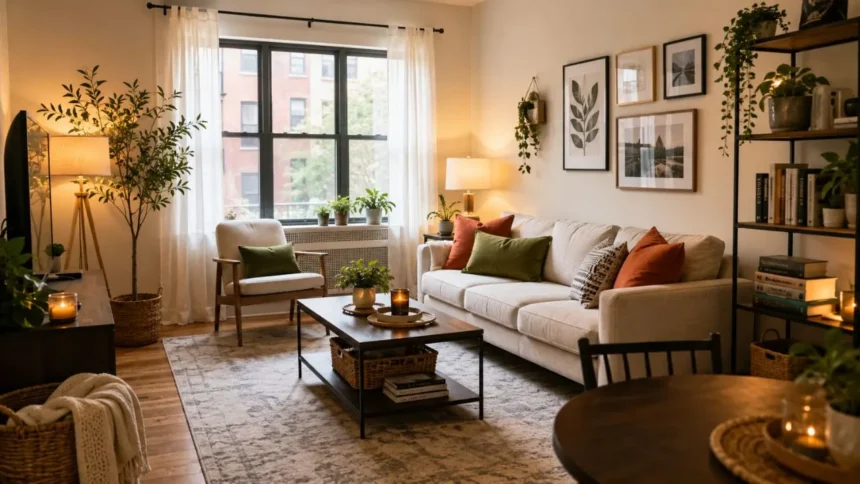
Decorating a rental apartment can feel restrictive when you cannot replace the flooring, repaint every wall or make permanent structural changes. However, a living room does not need major renovations to feel comfortable and personal. Thoughtful furniture placement, layered textiles and removable decorative features can completely change how the space looks and functions.
The best apartment living room decor ideas for renters focus on changes that are attractive, practical and easy to reverse. A large rug can hide an unwanted floor, curtains can soften basic windows and portable lighting can make the room feel warmer. These choices move with you, making them more valuable than expensive improvements left behind.
Small rental living rooms often perform several jobs at once. The same space may serve as a lounge, dining area, home office, reading corner and occasional guest room. Decorating successfully therefore involves more than choosing beautiful cushions; it requires a layout that supports daily activities without making the apartment feel crowded.
This guide explores renter-friendly wall decor, multifunctional furniture, storage solutions, lighting ideas and affordable styling techniques. It also explains how to protect the landlord’s property while creating a room that reflects your personality. Always review your rental agreement and request permission before making changes that may affect walls, fixtures or finishes.
Assess Your Rental Before Buying Decor
Begin by looking carefully at the room you already have. Measure the wall lengths, windows, doorways and available floor space before buying furniture. Record the position of electrical sockets, radiators and fixed features because they can influence where a sofa, television, desk or bookcase can be placed.
Notice which existing features you want to highlight and which ones you would prefer to disguise. Your apartment may have attractive natural light, high ceilings or an interesting window, but it might also have plain walls or outdated flooring. Decorating becomes easier when each choice solves a specific visual or functional problem.
Consider how you actually use the living room rather than copying a showroom arrangement. Someone who works from home needs different furniture from someone who regularly entertains friends. Make a short list of essential activities and give the most important ones enough space before adding purely decorative objects.
Check your rental agreement for rules about painting, drilling, hanging artwork and changing light fixtures. Even products marketed as removable can react differently to paint and plaster. Testing adhesives in a hidden area and obtaining written permission for significant changes can help prevent damage and move-out disagreements.
Create a Layout That Makes the Room Feel Larger
A successful small apartment living room layout begins with clear walking routes. Avoid placing large furniture where it blocks the entrance, balcony door or path to another room. Leaving visible floor space between important areas makes the apartment feel easier to navigate and less visually crowded.
Do not automatically push every item against the walls. In some rooms, moving the sofa slightly forward can create space for a narrow console, lamp or hidden storage behind it. A carefully placed sofa can also divide an open-plan apartment into separate living and dining zones without requiring a permanent partition.
Choose one clear focal point to guide the furniture arrangement. This could be a window, television, fireplace, large artwork or well-styled shelving unit. Position the main seating towards that feature, then add smaller pieces according to conversation, movement and comfort rather than forcing the room into perfect symmetry.
Use painter’s tape to mark furniture dimensions on the floor before placing an order. This simple step reveals whether a coffee table will restrict movement or whether a sofa is too deep for the room. Leave enough space to walk comfortably and open doors, drawers and storage compartments without moving other furniture.
Choose Furniture With a Light Visual Footprint
Furniture with visible legs allows more of the floor to remain visible, which can make a compact room feel less heavy. A raised sofa, slim armchair and open-legged side table usually appear lighter than bulky pieces that reach the floor. The furniture can still be comfortable without dominating the entire room.
Scale matters more than the number printed on a product description. An oversized sectional may provide plenty of seating but leave little room for storage or movement. A compact sofa paired with an occasional chair, stool or floor cushion can offer greater flexibility in a rental living room.
Look for rounded corners and slim profiles when pathways are narrow. A round coffee table is easier to move around than a large rectangular design with sharp edges. Nesting tables are another practical option because they can remain stacked during ordinary days and separate when guests need additional surfaces.
Avoid buying several small pieces simply because the apartment is small. Too many miniature items can create visual clutter and make the room feel temporary. One appropriately sized sofa, one useful table and a small number of supporting pieces generally produce a calmer and more intentional arrangement.
Invest in Multifunctional Furniture
Multifunctional furniture allows one item to perform several jobs, making it valuable in a small rental apartment. A storage ottoman can hold blankets, provide additional seating and serve as a coffee table with a tray. This reduces the number of separate items competing for limited floor space.
A sofa bed can turn the living room into an occasional guest area without requiring a permanent spare bedroom. Before purchasing one, check its measurements in both sofa and bed positions. Make sure there is enough space to unfold it without blocking the doorway or requiring the entire room to be rearranged.
Drop-leaf and extendable tables are useful when the living room also functions as a dining area. The surface can remain compact during the week and expand for meals, work or entertaining. Folding chairs can be stored behind a door, beneath a bed or inside a cupboard when they are not needed.
A narrow console can function as an entry table, display surface and small desk. Choose a design with drawers or shelving to gain additional storage. Furniture that remains useful in different rooms is also easier to take to a future home, reducing the risk of buying something that fits only one apartment.
Use an Area Rug to Transform the Floor
A large area rug is one of the most effective apartment living room decor ideas for renters. It can cover unattractive flooring, add softness and introduce colour without making a permanent change. A rug also reduces echo and helps a hard-surfaced rental feel warmer and more comfortable.
Choose a rug large enough to connect the main seating pieces. Ideally, the front legs of the sofa and chairs should rest on it, creating one unified conversation area. A very small rug floating beneath the coffee table can make the furniture appear disconnected and the room feel smaller.
Use the rug as the foundation of your colour palette. Select two or three shades from its pattern and repeat them through cushions, curtains, artwork and decorative accessories. This creates a coordinated appearance without requiring every item to match exactly.
Add a suitable rug pad underneath to reduce slipping and protect the floor. Confirm that the pad is compatible with the rental’s flooring, especially when dealing with vinyl, laminate or delicate wood. Natural rubber and certain backing materials can occasionally react with finishes, so checking product guidance is important.
Add Personality With Removable Wall Decor
Blank rental walls provide an opportunity to introduce personality through artwork, photographs, textiles and removable decorative features. A large framed print can have more impact than several small, unrelated pictures. Leaning oversized artwork on a console may also reduce the need to create holes.
Adhesive picture-hanging strips can support suitable lightweight frames when applied correctly. Follow the manufacturer’s preparation, weight and removal instructions rather than estimating what the strips can hold. Test the product on an inconspicuous area because recently painted, textured or delicate surfaces may respond differently.
A gallery wall can make a plain apartment feel personal, but plan the arrangement before attaching anything. Place the frames on the floor or make paper templates and tape them temporarily to the wall. Keeping consistent spacing between pieces helps mixed photographs and prints look like one intentional collection.
Fabric wall hangings, lightweight tapestries and removable decals provide alternatives to traditional framed art. They can cover a larger surface while adding colour and texture. Avoid attaching heavy items above a sofa or chair unless the hanging method is secure and approved for the wall material.
Try Removable Wallpaper Carefully
Peel-and-stick wallpaper can create an accent wall without the commitment of traditional wallpaper. It works particularly well behind a sofa, television console or open shelving unit. A subtle texture, stripe or botanical pattern can give a basic rental living room a clear focal point.
Despite the removable label, the product may not suit every surface. Adhesive can behave differently on matte paint, textured walls, damaged plaster or recently decorated surfaces. Order a sample and leave it in a hidden area for several days before covering an entire wall.
Apply removable wallpaper to a clean, dry and smooth surface according to the product instructions. Work slowly from the top, removing only a small amount of backing at a time. Having another person help can make it easier to keep long panels aligned and reduce bubbles or stretching.
Remove the wallpaper carefully before moving out, following the recommended technique rather than pulling it away quickly. Heat may help some products release, but it can also affect paint, so follow the manufacturer’s guidance. Keep a record of the product used in case you need removal instructions later.
Layer Lighting Instead of Relying on One Ceiling Light
Many rental apartments have a single ceiling fixture that provides functional but unflattering light. A comfortable living room usually benefits from several light sources positioned at different heights. Floor lamps, table lamps and small accent lights create depth while supporting reading, relaxing and entertaining.
Place a floor lamp beside the sofa or reading chair to create a practical activity zone. A table lamp on a sideboard can brighten a dark corner, while a small lamp on a shelf adds warmth. These portable options require no rewiring and can move with you to another apartment.
Choose bulbs with a comfortable colour temperature that suits the room. Warm white light generally creates a softer evening atmosphere than cool, blue-toned light. Using similar bulb temperatures throughout the living room helps the space feel coordinated rather than divided into differently coloured areas.
Plug-in wall lights can provide the look of fitted sconces without permanent electrical work. Their cords can be arranged neatly with removable cable clips or decorative cord covers. Before attaching clips, confirm that they are compatible with the wall and follow the product’s removal instructions.
Improve Basic Windows With Renter-Friendly Curtains
Curtains can soften a living room, improve privacy and make the windows appear larger. Hanging the curtain rod above the window and extending it beyond the frame can create the impression of greater height and width. This also allows more daylight to enter when the curtains are open.
Check whether your rental already has a suitable curtain rod or track before installing anything. Tension rods, compatible adhesive hooks and no-drill brackets may work in some rooms, but their weight limits vary. Lightweight curtains are generally safer when the support does not use screws.
Layer sheer curtains with heavier panels when you need both daylight and privacy. Sheers diffuse harsh light during the day, while thicker curtains create a more comfortable atmosphere in the evening. Thermal or lined curtains may also reduce draughts around older apartment windows.
Keep the landlord’s original blinds or window coverings safely stored if you remove them with permission. Label the hardware and take photographs so they can be reinstalled correctly before moving. This simple organisation prevents lost parts and makes it easier to return the apartment to its original condition.
Build a Flexible Renter-Friendly Colour Scheme
You can create a strong colour scheme without painting the walls. Begin with a neutral foundation through the sofa, rug and larger curtains, then introduce richer colours through cushions, artwork and smaller furnishings. These portable layers are easy to replace when your preferences change.
Warm neutrals such as cream, oatmeal, taupe and soft brown can make a plain apartment feel more welcoming. Add olive green, terracotta, burgundy or deep blue when you want greater depth. Repeating one accent shade in several areas creates balance without filling the room with unrelated colours.
When the landlord permits painting, choose a shade that complements the flooring and fixed features. Ask whether the wall must be returned to its original colour and confirm the approved finish. Keep the paint name and code so that any marks can be touched up consistently.
Paint is not the only way to introduce a bold colour. A statement chair, large artwork or colourful curtain can have a similar visual impact. Using one strong feature rather than many competing accents gives a small apartment living room personality while maintaining a calm appearance.
Add Depth Through Texture
Texture gives a rental living room character even when the walls and flooring are basic. Combine smooth, woven, soft and natural surfaces to prevent a neutral palette from looking flat. Linen curtains, wool cushions, a knitted throw and a wooden table can create variety without adding many colours.
Use cushion covers rather than buying complete cushions whenever you want a seasonal update. Covers are easier to store, wash and replace, making them practical for renters with limited cupboards. Mixing two or three textures usually looks more considered than using several unrelated patterns.
A throw placed across the sofa can hide worn upholstery and introduce softness. Choose a generously sized, washable fabric that remains comfortable during daily use. A fitted sofa cover may be helpful when the rental is furnished and the existing sofa does not match your style.
Natural materials such as wood, cane, jute and cotton can soften modern apartment finishes. However, avoid using every texture in equal amounts. Select one or two dominant materials and repeat them through smaller pieces so the room feels layered rather than visually restless.
Maximise Storage Without Permanent Built-Ins
Closed storage is particularly valuable in a small living room because it hides items that create visual clutter. A low cabinet can hold electronics, paperwork, games and household supplies while also supporting a television or decorative display. Choose a freestanding unit that can move with you.
Use the height of the room when floor space is limited. A tall bookcase provides more storage than a wide, low shelf while occupying a smaller footprint. Secure tall furniture appropriately where permitted, especially in homes with children, pets or earthquake risk.
Baskets and decorative boxes make open shelving easier to manage. Group cables, remote controls, chargers and small items by category rather than leaving them visible. Repeating the same basket style creates a cleaner appearance, while labels make frequently used items easier to find.
Furniture can also create hidden storage. Use flat containers beneath a raised sofa, place spare blankets inside an ottoman and choose nesting tables that store together. The goal is not to fill every available gap but to give necessary possessions a clear location.
Style Open Shelves Without Creating Clutter
Open shelving can add storage and personality, but an overcrowded bookcase may make a small living room feel untidy. Leave some open space between groups of objects so each item remains visible. A mixture of books, storage boxes and decorative pieces creates both function and visual balance.
Arrange books vertically and horizontally to vary the shape of the display. A horizontal stack can support a small plant, photograph or decorative bowl. Keep heavy books on lower shelves to improve stability and prevent the upper part of the unit from appearing visually overloaded.
Use a limited colour palette across visible storage. Neutral boxes can hide less attractive items, while a few repeated accent colours connect the shelves with the rest of the room. There is no need to display every possession simply because shelf space is available.
Review the arrangement every few months and remove items that have become unnecessary. Open storage looks best when it is edited rather than filled to maximum capacity. Rotating artwork, photographs and decorative objects can refresh the apartment without requiring new purchases.
Use Mirrors to Improve Light and Openness
A mirror can reflect natural and artificial light, helping a compact apartment living room feel brighter. Position it where it will reflect a window, lamp, artwork or attractive part of the room. Avoid placing it where the main reflection will be clutter, a blank hallway or an exposed storage area.
One large mirror usually creates a calmer effect than several small mirrors scattered across the walls. A full-length design leaning securely against a wall can add height without requiring complex installation. Make sure it cannot slide or tip, particularly around children and pets.
Mirrored furniture can also reflect light, but too many shiny surfaces may make the room feel cold or visually busy. Balance the mirror with soft textiles, warm lighting and natural materials. This keeps the space comfortable while maintaining the sense of openness.
When hanging a mirror, use a method designed for its weight and the specific wall surface. Adhesive strips suitable for lightweight artwork may not support heavy glass. Request permission for secure fixings when necessary rather than risking injury or significant property damage.
Bring Life Into the Room With Plants
Houseplants introduce colour, shape and softness without changing the apartment permanently. A tall plant can fill an awkward corner, while a trailing plant adds interest to a shelf. Choose varieties according to the available light rather than selecting plants solely for their appearance.
Low-light rooms may suit plants such as snake plants, pothos or ZZ plants, although no living plant thrives without any light. Bright windows can support a wider range of choices. Observe how direct sunlight moves through the room before deciding where each plant should live.
Use plant stands to vary height and keep pots away from delicate flooring. Place waterproof saucers beneath containers and avoid overwatering. Moisture trapped beneath a pot can mark wood, laminate, carpets and painted window ledges, creating damage that may affect the deposit.
Artificial plants are a reasonable alternative in very dark rooms or for renters who travel frequently. Select a small number of realistic designs and keep them clean. Mixing one or two artificial plants with natural materials can create a fresh effect without turning the room into a maintenance project.
Create Separate Zones in an Open-Plan Apartment
An open-plan rental may need to accommodate relaxing, eating and working within one visible area. Use furniture placement to establish boundaries without blocking light. The back of a sofa can define the living zone, while a rug clearly marks the seating area.
A narrow console placed behind the sofa can strengthen the division between the lounge and dining space. It may also provide storage, lighting or a compact workspace. Keep the surface relatively uncluttered so the room maintains a sense of openness.
Freestanding screens, open bookcases and curtains can create greater separation when privacy is needed. Open shelving allows light to pass through while providing storage and display space. Ensure that any tall divider remains stable and does not block ventilation, heating or emergency routes.
Use colour and lighting to distinguish zones while keeping the overall palette connected. A desk lamp can identify the work corner, while a pendant-style floor lamp defines the seating area. Repeating the same wood tone or accent colour prevents the different functions from feeling like unrelated rooms.
Design a Small Work Area Within the Living Room
Choose the least disruptive corner for a home office, preferably near natural light and an electrical socket. A narrow desk, wall-leaning unit or compact console may provide enough room for a laptop. Avoid placing the desk where work equipment becomes the first thing you see while relaxing.
Use attractive storage to keep the workstation organised after working hours. A lidded box can hide chargers, notebooks and office supplies, while a small trolley allows equipment to be moved elsewhere. Visual separation helps the living room return to a restful function at the end of the day.
Select a chair that is supportive enough for your working hours but does not overwhelm the room. An adjustable office chair is usually better for full-time work than a decorative dining chair. Choose a simple design that coordinates with the living room rather than sacrificing comfort for appearance.
Good lighting is important for both concentration and the overall room atmosphere. Use a focused task lamp while working and switch to softer ambient lighting afterwards. A change in lighting can signal that the working day has ended even when the desk remains visible.
Decorate on a Realistic Renter’s Budget
Begin with the changes that will create the greatest effect. A large rug, better lighting and correctly arranged furniture may transform the room more than several small decorative purchases. Prioritising impact prevents the budget from disappearing into accessories that do not solve the room’s main problems.
Shop slowly rather than attempting to complete the apartment in one weekend. Living in the space reveals what you genuinely need and which areas remain inconvenient. Delayed purchasing also gives you time to compare prices, wait for sales and avoid furniture that does not fit.
Second-hand furniture can add character at a lower cost, particularly when searching for wooden tables, shelves and decorative objects. Check dimensions, stability, odour and signs of pests before bringing an item home. Upholstered furniture requires especially careful inspection and cleaning.
Refresh existing pieces with reversible changes. New cushion covers, removable furniture wrap, updated knobs and a washable sofa throw can change the appearance without replacing the entire item. Keep original hardware labelled and stored safely so it can be restored before moving out.
Make the Room Feel Personal Without Overfilling It
A rental begins to feel like home when it reflects the people living there. Display meaningful photographs, books, artwork and objects collected through travel or family life. Personal items usually create more character than filling every surface with generic trend-based accessories.
Choose a few larger pieces rather than many small decorations. A substantial lamp, artwork or vase creates a clearer focal point and is easier to arrange. Numerous tiny items can make a compact room feel cluttered and require more time to clean and pack.
Use negative space deliberately. An empty section of wall or clear portion of a table allows the decorated areas to stand out. A room does not need something in every corner to feel finished, especially when the available space is already limited.
Allow the apartment to develop gradually. Add pieces when they serve a purpose or genuinely appeal to you rather than following a strict checklist. A collected interior often feels more comfortable and individual than a room purchased as one complete matching set.
Common Rental Living Room Decorating Mistakes
Buying furniture without measuring is one of the most expensive decorating mistakes. A sofa may fit through the front door but still dominate the living room or block an important path. Measure the room, doorway, staircase and lift before committing to a large purchase.
Another mistake is choosing only small furniture. Several tiny tables, shelves and chairs can make the apartment look fragmented. A smaller number of correctly proportioned pieces usually creates more useful storage, better seating and a cleaner visual result.
Do not assume that every removable product is completely damage-free. Wall condition, paint type, humidity and removal technique can affect the outcome. Test products first, respect weight limits and avoid applying adhesives to delicate, recently painted or already damaged surfaces.
Finally, avoid decorating entirely for appearance while ignoring daily function. A beautiful coffee table that blocks movement or a stylish chair that is uncomfortable will quickly become frustrating. Successful apartment decor should make the room easier to use as well as more attractive.
Prepare Your Decor for an Easy Move-Out
Keep every original fixture, bracket, blind, handle and piece of hardware you remove with permission. Place small components in labelled bags and store them together. Photographs taken before and during removal can help you reinstall everything correctly when the tenancy ends.
Save product instructions for adhesive strips, temporary wallpaper and removable films. Correct removal technique is often different from ordinary pulling or scraping. Starting the process early gives you time to address residue or minor marks without rushing on moving day.
Inspect the walls, floors and furniture areas several weeks before leaving. Look for marks, loose adhesive, furniture impressions or accidental damage. Follow the landlord’s agreed process for repairs rather than attempting a quick fix that may make the problem more noticeable.
Clean and restore the room using the move-in condition report as a guide. Return landlord-owned furniture and fixtures to their original locations where required. A carefully planned renter-friendly decorating scheme should be enjoyable during the tenancy and straightforward to reverse afterwards.
Final Thoughts
Apartment living room decor ideas for renters do not need to involve permanent renovation. A better layout, appropriately scaled furniture, layered lighting and a large rug can significantly improve a basic room. These changes also remain useful when you move to another home.
Focus on flexible pieces that provide storage or support more than one activity. Ottomans, nesting tables, sofa beds and compact consoles can reduce clutter while helping the living room adapt. Furniture that works in several layouts offers better long-term value for renters.
Use removable wall decor, curtains, plants and textiles to express your style, but test products before applying them widely. Respect the rental agreement and request permission when a change may affect the property. Renter-friendly should mean reversible, carefully installed and safely removed.
Most importantly, decorate for your actual routines rather than an idealised photograph. Your living room should support relaxing, working, entertaining and everyday life in a way that feels comfortable. A thoughtful apartment can feel personal and complete even when the walls, flooring and fixtures do not belong to you.
Frequently Asked Questions
How Can I Decorate a Rental Living Room Without Damaging It?
Use rugs, freestanding storage, portable lamps, lightweight artwork and carefully tested adhesive products. Review your agreement and obtain permission before painting, drilling or changing fixtures.
How Do I Make a Small Apartment Living Room Look Bigger?
Keep pathways open, choose furniture with visible legs and use one large rug to connect the seating. Mirrors, layered lighting and fewer appropriately sized pieces can also create openness.
Can Renters Use Peel-and-Stick Wallpaper?
Many renters use removable wallpaper, but it may still affect certain paints or damaged walls. Test a sample in a hidden location and follow the installation and removal instructions carefully.
How Can I Hide an Unattractive Rental Floor?
Cover the main area with a sufficiently large rug and compatible rug pad. Choose a pattern or texture that coordinates with the sofa, curtains and existing flooring.
What Furniture Is Best for a Rental Apartment?
Portable, multifunctional furniture offers the greatest flexibility. Consider storage ottomans, nesting tables, compact sofas, freestanding bookcases and extendable tables that can work in future homes.