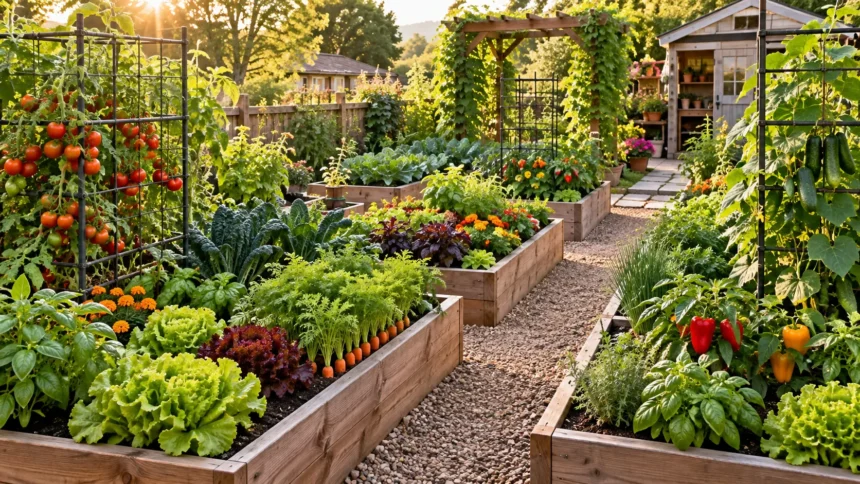
A productive vegetable garden is not only about choosing good seeds or adding fertile soil. The way you arrange your crops affects sunlight exposure, airflow, watering efficiency, plant spacing, pest management, and how easily you can harvest fresh produce. A thoughtful vegetable garden layout can help you make better use of available space while giving each plant the conditions it needs.
Whether you have a large backyard, a small raised bed, or a compact urban space, good planning can improve your results. The best layout depends on your garden size, sunlight, soil, crop choices, and how much time you can spend maintaining it. These vegetable garden layout ideas can help you create an organized and productive growing space.
Start With Sunlight and Garden Orientation
Most common vegetables grow best when they receive several hours of direct sunlight each day. Before creating planting rows or installing raised beds, observe how sunlight moves across your garden from morning to evening. Buildings, fences, trees, and other structures can create shade that changes throughout the day and affects which crops will perform well.
Position sun-loving vegetables such as tomatoes, peppers, cucumbers, squash, and beans in the brightest parts of the garden. Leafy greens and certain herbs can often tolerate somewhat less direct sunlight, making partially shaded areas useful rather than wasted. Matching crops with available light helps prevent weak growth and poor yields.
Garden orientation also influences how one crop shades another. In many locations, placing taller plants toward the side of the garden that minimizes shading can help shorter crops receive more light. Consider mature plant height before planting so climbing vines, corn, trellised beans, or large tomato plants do not unintentionally block smaller vegetables.
Use Traditional Rows for Larger Vegetable Gardens
Traditional row gardening remains one of the simplest vegetable garden layouts for larger spaces. Crops are planted in long, straight rows with pathways between them, making it easy to access plants for watering, weeding, harvesting, and inspection. This arrangement works particularly well when you grow larger quantities of the same vegetables.
Rows can also simplify planting schedules because similar crops can be grouped together. For example, you might dedicate one row to carrots, another to beans, and another to peppers. Keeping varieties organized makes it easier to monitor growth, identify problems, and remember where particular crops were planted.
The main disadvantage is that wide pathways can use valuable growing space. To make row gardening more efficient, avoid creating paths wider than necessary for comfortable access. You can also use mulch between rows to suppress weeds, conserve soil moisture, and reduce the amount of bare ground requiring regular maintenance.
Try Raised Beds for Better Organization
Raised beds are one of the most popular vegetable garden layout ideas because they create clearly defined growing areas. Soil can be improved specifically within each bed, while pathways remain separate from planting zones. This prevents frequent foot traffic from compacting the soil around vegetable roots and makes garden maintenance more manageable.
Beds should be narrow enough that you can comfortably reach the center without stepping inside them. This allows you to plant more intensively while still accessing vegetables for pruning, harvesting, and pest inspection. Long beds can be divided into smaller planting sections to keep different crops organized throughout the growing season.
Raised beds also allow greater control over drainage and soil composition. They can be especially useful where native soil is rocky, compacted, or difficult to improve. However, raised beds may dry faster during warm weather, so regular moisture checks and an efficient watering system can become important for maintaining healthy vegetable growth.
Use Square-Foot Gardening in Small Spaces
Square-foot gardening divides a raised bed into small, manageable sections, with each square used for a specific crop. Instead of planting vegetables in long traditional rows, plants are spaced according to their mature size. This method can maximize production in compact spaces while creating a garden that is easy to plan and visually organized.
Smaller plants such as radishes, carrots, lettuce, and certain herbs can fit several plants within one section. Larger crops such as tomatoes, peppers, or zucchini require considerably more room. Following realistic spacing requirements prevents overcrowding while still using the available growing area efficiently.
Square-foot layouts also make succession planting easier. When one crop finishes producing, you can remove it and immediately plant another vegetable in the same section. This approach keeps empty soil to a minimum and can help gardeners produce several rounds of crops from a relatively small growing area.
Create Wide Beds With Narrow Walking Paths
Wide planting beds offer a practical compromise between traditional rows and raised-bed gardening. Instead of planting a single crop in one narrow row, several rows or staggered plantings can fit within the same bed. Narrow pathways separate each growing area and provide access without requiring excessive unused space.
The bed should remain narrow enough to reach plants from either side. If you must step inside the growing area regularly, soil compaction can become a problem around plant roots. Designing beds around comfortable reaching distance makes gardening easier and helps preserve loose, well-aerated soil.
Permanent pathways can be covered with wood chips, straw, gravel, or other suitable materials. Keeping pathways clearly defined reduces weeds and prevents confusion about where people should walk. Over time, this layout can make the vegetable garden more efficient because growing areas remain protected while pathways handle all regular foot traffic.
Plan Tall Crops and Vertical Growing Areas Carefully
Vertical gardening allows you to produce more food without using additional ground space. Cucumbers, pole beans, peas, indeterminate tomatoes, and some squash varieties can grow on trellises, cages, or other supports. Training plants upward also makes harvesting easier and can improve airflow around leaves and stems.
Place vertical supports where they will not heavily shade shorter vegetables. A tall trellis positioned directly in front of sun-loving crops can significantly reduce their available light. Think about both the current height of young plants and the size they will reach later in the season before deciding where structures should go.
Vertical gardening can also reduce fruit contact with wet soil, which may make harvesting cleaner and easier. Strong supports are important because mature vines can become surprisingly heavy. Install trellises before plants grow large so you do not damage established roots while trying to add supports later.
Group Vegetables by Watering Needs
Grouping crops with similar watering requirements can make garden maintenance much easier. Vegetables that prefer consistently moist soil can share one section, while plants with different moisture needs can be placed elsewhere. This reduces the chance of overwatering one crop simply because another nearby plant requires more frequent irrigation.
Garden layout also affects how efficiently water reaches plant roots. Drip irrigation or soaker hoses can be positioned along vegetable rows or raised beds to deliver moisture directly to the soil. Keeping watering zones organized helps reduce water waste and makes it easier to adjust irrigation as temperatures and plant needs change.
Understanding garden watering is especially important when planning beds with different crops. Soil type, weather, plant maturity, and rainfall all affect how often vegetables need moisture. Designing your layout around practical watering zones can make consistent irrigation much easier throughout the season.
Consider Companion Planting Without Overcomplicating It
Companion planting involves growing different plants near one another because their growth habits may work well together. Tall vegetables can sometimes provide light afternoon shade for heat-sensitive leafy greens, while flowers planted near vegetables can attract pollinators and beneficial insects. The main goal should be creating compatible growing conditions rather than following complicated planting rules.
Spacing still matters when combining crops. Even plants described as good companions can compete for sunlight, nutrients, moisture, and root space when planted too closely. Always consider the mature size of each vegetable and provide enough room for air to circulate between plants.
You can also combine crops with different growth rates. Fast-growing radishes or leafy greens may be harvested before slower vegetables need the additional space. This allows gardeners to use empty areas temporarily while avoiding long-term overcrowding as larger crops become established later in the season.
Design the Layout for Easy Garden Access
An efficient vegetable garden should be easy to move through. Paths should provide access to every bed without forcing you to step over vegetables or squeeze between mature plants. Comfortable access makes routine tasks such as watering, harvesting, pruning, weeding, and checking for pests much faster and less frustrating.
Consider how you will carry tools, compost, watering equipment, or harvest baskets through the garden. Main pathways may need to be slightly wider than smaller paths between beds. If wheelbarrow access is important, design at least one route that provides enough space for easy movement from the garden entrance to major growing areas.
Accessibility becomes even more important as plants reach full size. A path that looks generous when seedlings are tiny may feel crowded once squash leaves, tomato branches, and cucumber vines spread outward. Leave realistic clearance around vigorous vegetables so regular garden maintenance remains convenient throughout the growing season.
Use Succession Planting to Keep Beds Productive
Succession planting means replacing one harvested crop with another instead of leaving the space empty. Fast-growing vegetables such as radishes, lettuce, spinach, and certain herbs can often be harvested early enough to make room for later crops. This technique can significantly improve productivity without requiring a larger garden.
Planning succession crops before the season begins helps avoid missed planting opportunities. Keep notes about expected harvest periods and identify vegetables that can follow one another successfully. Once an early crop finishes, prepare the soil lightly and plant the next crop while growing conditions are still suitable.
You can also stagger plantings of the same vegetable. Instead of sowing every lettuce or radish seed at once, plant smaller amounts at intervals. This creates a more continuous harvest and reduces the problem of having far more produce ready at one time than your household can reasonably use.
Rotate Crop Families From Year to Year
Crop rotation involves changing where related vegetables are planted from one growing season to the next. Tomatoes, peppers, potatoes, and eggplants belong to the same plant family, while broccoli, cabbage, kale, and cauliflower belong to another. Rotating these groups can help prevent the same soil-related problems from repeatedly building up in one area.
A simple garden map makes rotation much easier. Record where major crop families are planted each year so you can move them into different beds during the following season. Gardeners with only a few small beds may not achieve perfect rotation, but even changing locations when possible can improve long-term organization.
Rotation should be considered together with soil improvement rather than used as a substitute for healthy soil management. Compost, appropriate fertilizers, mulch, and good watering practices remain important. Keeping basic planting records helps you understand what grew successfully in each location and make more informed layout decisions in future seasons.
Match Your Layout to the Crops You Grow Most
The best vegetable garden layout depends on what your household actually enjoys eating. If tomatoes, peppers, salad greens, and herbs are your priorities, dedicate more accessible space to those plants. There is little benefit in filling half the garden with a crop your family rarely uses simply because it is easy to grow.
Consider how much space individual vegetables require before creating your planting plan. Zucchini and pumpkins can spread dramatically, while carrots, onions, and radishes require far less above-ground space. Giving vigorous crops sufficient room prevents them from overwhelming neighboring plants and helps you estimate how many plants will realistically fit.
Harvest frequency matters as well. Vegetables picked regularly, such as herbs, lettuce, beans, and tomatoes, are convenient near the front of the garden or close to the house. Crops that remain in place for most of the season can occupy less accessible sections without making everyday harvesting unnecessarily difficult.
Keep the Layout Flexible Throughout the Season
A garden plan provides useful direction, but conditions do not always develop exactly as expected. Some seeds may fail to germinate, certain plants may grow much larger than anticipated, or weather may affect planting schedules. Keeping some flexibility allows you to respond to changing conditions without feeling that the original layout must remain untouched.
Empty spaces can often be filled with quick-growing crops or herbs. If one plant struggles early in the season, another vegetable may be able to use the available area. Regular observation helps you notice unused space, overcrowding, shading problems, and irrigation issues before they significantly reduce productivity.
Take photos and simple notes throughout the growing season. Record which areas received the best sunlight, which crops became overcrowded, and which bed arrangements made harvesting easiest. These observations provide valuable information for improving next year’s vegetable garden layout instead of starting your planning process from scratch.
Conclusion
A thoughtful vegetable garden layout can improve harvests by making better use of sunlight, soil, water, and available growing space. Traditional rows, raised beds, square-foot gardening, vertical supports, and wide planting beds can all work well when matched to your garden size and crop selection.
Successful planning also involves looking beyond where individual plants will sit. Watering zones, pathways, mature plant height, succession planting, crop rotation, and harvest access all influence how convenient and productive the garden becomes. Designing these elements together can reduce maintenance while creating healthier growing conditions.
There is no single perfect layout for every vegetable garden. Start with a practical plan, observe how your plants perform, and adjust the arrangement from one season to the next. With thoughtful spacing and regular improvements, even a relatively small vegetable garden can provide an abundant and enjoyable harvest.
FAQs
What is the best layout for a vegetable garden?
The best layout depends on available space, sunlight, crop choices, and maintenance needs. Raised beds and wide planting beds work well for many gardens because they provide efficient growing space and easy plant access.
How should I arrange vegetables in my garden?
Arrange vegetables according to sunlight, mature size, spacing, and watering requirements. Keep taller crops from heavily shading shorter plants and place frequently harvested vegetables where they are easy to reach.
Should vegetable garden rows run in a certain direction?
Row direction can influence sunlight distribution, particularly when tall crops are involved. Rather than following one universal direction, observe your garden’s sunlight and arrange plants to minimize unwanted shading.
How much space should I leave between vegetable garden beds?
Leave enough pathway space to walk, kneel, carry tools, and harvest comfortably without stepping into growing areas. Main paths may need additional width if you regularly use a wheelbarrow or garden cart.
How can I get more vegetables from a small garden?
Use vertical supports, intensive but appropriate spacing, succession planting, and quick-growing crops. Raised beds and square-foot layouts can also help maximize productive growing area while keeping plants accessible.