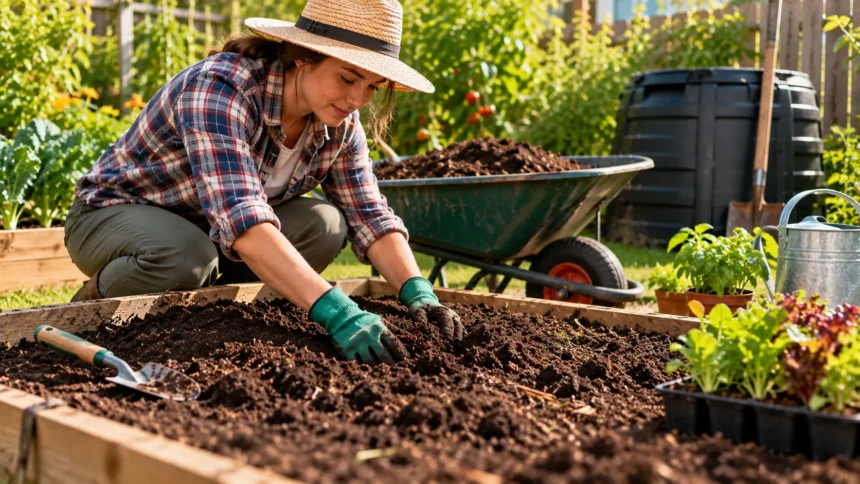
Preparing the soil properly is one of the most important steps when starting a vegetable garden. Healthy soil gives plant roots access to water, oxygen, and essential nutrients while supporting strong growth throughout the season. Even good-quality seeds or seedlings may struggle if the soil is compacted, poorly drained, or low in organic matter.
Vegetable garden soil does not need to be perfect, but it should have a balanced texture and enough fertility to support steady plant development. The right preparation can improve drainage, moisture retention, root growth, and nutrient availability. It can also reduce problems caused by weeds, hard ground, and uneven watering.
Good soil preparation begins before planting. Testing the soil, removing debris, adding compost, improving structure, and planning where crops will grow can all make a noticeable difference. This guide explains how to prepare soil for a vegetable garden step by step so you can create better growing conditions from the beginning.
Start by Choosing the Right Garden Location
The quality of your soil matters, but location is equally important. Most vegetables need several hours of direct sunlight each day, so choose an area that receives strong light for much of the growing season. A sunny location helps vegetables develop healthy leaves, flowers, and fruit while reducing weak, stretched growth.
The area should also have reasonable drainage. Avoid low spots where rainwater regularly collects because waterlogged soil can limit oxygen around plant roots. If your yard has naturally poor drainage, raised beds or amended soil may provide better growing conditions than planting directly in the ground.
Think about accessibility as well. A garden located near a water source is easier to maintain, especially during dry weather. If you are working with limited outdoor space, exploring practical vegetable garden ideas can help you plan beds efficiently without sacrificing useful growing area.
Clear the Area Before Preparing the Soil
Begin by removing weeds, grass, rocks, sticks, and other debris from the planting area. Existing vegetation can compete with vegetables for water, nutrients, and sunlight. Clearing the space also makes it easier to see the actual condition of the soil underneath.
Pull weeds carefully so you remove as much of the root system as possible. Some weeds can regrow quickly when roots remain in the soil. Avoid simply turning aggressive weeds into the garden bed unless you are confident they will not survive and spread again.
If the ground is covered with thick grass, you may need to remove the sod before improving the soil. Another option is to cover the area with cardboard or another suitable material well before planting to suppress growth. The method you choose depends on how much time you have before starting the garden.
Test Your Garden Soil
A soil test can provide useful information about pH and nutrient levels before you begin adding amendments. Without testing, gardeners sometimes add fertilizers or lime that the soil does not actually need. This can create nutrient imbalances rather than improving growing conditions.
Soil pH affects how easily plants can access nutrients. Many common vegetables prefer slightly acidic to neutral soil, although individual crops may have different preferences. A soil test can help you understand whether the existing pH is suitable or whether gradual adjustment may be helpful.
You can use a basic home test kit or send a sample to a local soil-testing service where available. More detailed testing may provide information about phosphorus, potassium, organic matter, and other characteristics. Use the results to guide soil improvement instead of applying products at random.
Check the Soil Texture and Structure
Garden soil is usually made from different proportions of sand, silt, clay, and organic matter. Sandy soil drains quickly but may struggle to hold moisture and nutrients. Clay-heavy soil can retain nutrients well but may become compacted and difficult for roots to penetrate.
A balanced soil structure should hold enough moisture for plants while still allowing excess water to drain away. Roots also need air spaces within the soil, so extremely dense ground can slow growth. Adding organic matter can help improve both sandy and clay-heavy soils over time.
You can learn a lot by simply handling the soil. Squeeze a damp handful and observe whether it falls apart easily, forms a loose ball, or becomes a dense sticky mass. This simple check can help you identify whether the soil needs more attention before planting.
Loosen Compacted Soil
Compacted soil makes it harder for vegetable roots to spread and can reduce both drainage and airflow. Before planting, loosen the upper layer of soil using a garden fork, broadfork, or similar tool. Work carefully so you improve structure without turning the soil into a fine powder.
In many garden beds, loosening the soil to around several inches deep is enough to create better root conditions. Deep-rooted vegetables may benefit from greater depth, particularly if the ground beneath the surface is very hard. Avoid working wet soil because it can become even more compacted after drying.
You do not always need to completely turn the soil over. Gentle loosening can preserve existing soil structure and reduce unnecessary disturbance. The goal is to create a workable growing zone where roots, water, and air can move more easily.
Add Organic Matter
Organic matter is one of the most useful additions for vegetable garden soil. Compost, well-rotted manure, leaf mold, and other decomposed materials can improve soil structure while contributing nutrients. They can also help soil retain moisture without becoming overly waterlogged.
Spread a layer of mature compost across the planting area and gently mix it into the upper soil if needed. In established beds, compost can also be added to the surface and allowed to integrate gradually. Avoid using unfinished compost because active decomposition can temporarily affect nutrient availability.
Adding organic matter should be an ongoing practice rather than a one-time fix. Soil quality changes as vegetables grow and nutrients are removed during harvest. Applying compost regularly helps maintain fertility and supports better soil texture from season to season.
Use Compost Correctly
Good compost should look dark, crumbly, and mostly broken down. It often has an earthy smell rather than the strong odor of fresh waste. Mature compost can provide a broad range of nutrients while improving how the soil handles both water and air.
You do not need to fill the entire garden bed with pure compost. Vegetables usually grow better in a balanced mixture of existing soil and organic matter. Adding too much of certain composts or manures can create excessive nutrient levels, so moderation is important.
If you make compost at home, use fully decomposed material in planting beds. Vegetable scraps, leaves, grass clippings, and other organic materials can eventually become valuable soil amendments. Keeping compost separate until it matures helps avoid attracting pests or interfering with young plants.
Improve Clay Soil
Clay soil contains very small particles that can pack tightly together. When wet, it may feel sticky and heavy, while dry clay can become hard and cracked. These conditions can make planting and root development more difficult.
Organic matter is one of the best long-term ways to improve clay-heavy garden soil. Compost helps create more stable soil aggregates, which can improve drainage and airflow. Repeated applications usually produce better results than trying to change the soil texture dramatically in one season.
Avoid working clay soil when it is very wet. Digging or walking on saturated clay can compress it further and create dense clumps. Wait until the soil is moist but workable before preparing beds or adding amendments.
Improve Sandy Soil
Sandy soil drains quickly because its particles are relatively large. This can be helpful during heavy rain, but it also means water and nutrients may move through the root zone too quickly. Vegetables growing in very sandy soil may require more frequent watering and feeding.
Adding compost and other organic matter can improve moisture retention. Organic material acts somewhat like a sponge, holding water and nutrients near plant roots for longer periods. Over time, repeated additions can make sandy soil more productive and easier to manage.
Mulching can also help sandy gardens maintain more consistent moisture. Once vegetables are established, a layer of organic mulch can slow evaporation from the soil surface. This may reduce watering frequency while helping protect the soil from temperature extremes.
Add Fertilizer Carefully
Vegetables need nutrients such as nitrogen, phosphorus, and potassium, but more fertilizer is not always better. Excessive fertilizer can damage roots, encourage weak growth, or create nutrient imbalances. Fertilizer choices should ideally be guided by soil conditions and crop needs.
Organic and conventional fertilizers can both supply nutrients when used appropriately. Compost may provide slow nutrient release, while other fertilizers can deliver more concentrated amounts. Always follow application instructions rather than guessing how much a garden bed needs.
Different vegetables also have different nutritional demands. Leafy greens may respond strongly to nitrogen, while fruiting crops need balanced nutrition throughout flowering and fruit development. Understanding what you are growing can help you avoid applying the same fertilizer strategy to every plant.
Adjust Soil pH When Necessary
Soil pH influences nutrient availability and plant performance. If the soil is too acidic or too alkaline, vegetables may have difficulty absorbing nutrients even when those nutrients are present. This is why pH adjustment should usually follow soil testing.
Materials such as garden lime are sometimes used to raise soil pH, while sulfur-based products may be used to lower it. These changes usually happen gradually rather than immediately. Applying large amounts without testing can create more problems than it solves.
If the soil pH is only slightly outside the ideal range, you may not need aggressive correction. Adding organic matter and improving overall soil health can often help create a better growing environment. Focus on gradual improvement rather than chasing a perfect number.
Create Raised Beds if Needed
Raised beds can be useful when native soil is extremely compacted, rocky, poorly drained, or difficult to improve. They allow you to create a controlled soil mix above the existing ground. This can make planting and maintenance easier, especially in smaller spaces.
A raised-bed mixture should drain well while still holding enough moisture for vegetables. Garden soil, compost, and other suitable organic materials are often combined to create a balanced growing medium. Avoid filling beds with only lightweight potting mix unless it is designed for that purpose.
Raised beds can also warm earlier in the season and make soil easier to access. However, they may dry out faster than in-ground beds during hot weather. Regular watering and mulch can help maintain more stable moisture levels.
Level and Shape the Garden Bed
Once the soil has been loosened and amended, smooth the surface with a rake. Remove remaining stones, roots, or large clumps that could interfere with planting. A fairly even surface makes it easier to sow seeds at consistent depths and water the bed evenly.
Avoid pressing the soil down heavily while leveling it. The goal is to create a loose but stable planting surface rather than compacting the bed again. Walking directly on prepared soil can undo some of your work, so create paths around or between growing areas where possible.
Slightly raised or shaped beds can also improve drainage in areas that receive heavy rain. Keep the layout practical enough that you can reach plants without stepping into the growing zone. Good bed design protects soil structure throughout the season.
Water the Soil Before Planting
Dry soil can be difficult for seeds and young roots to establish in. After preparing the bed, water it gently so moisture reaches below the surface. The soil should be evenly moist without becoming saturated or muddy.
Watering before planting also helps the soil settle naturally. This can reveal low areas, drainage problems, or places where additional material may be needed. If water sits on the surface for a long time, further soil improvement may be necessary.
Try to avoid planting into extremely wet soil. Wet ground can become compacted when handled and may stick heavily to tools. Wait until the bed feels moist and workable before sowing seeds or transplanting vegetables.
Use Mulch After Planting
Mulch is usually added after seedlings become established or around transplanted vegetables. Organic materials such as straw, shredded leaves, or other suitable mulch can reduce moisture loss and help suppress weeds. They also protect the soil surface from direct sun and heavy rain.
Keep mulch slightly away from the stems of young plants. Piling damp material directly against stems can create an environment where rot or pests become more likely. A thin, even layer is usually more useful than a deep pile pressed against the crop.
As organic mulch breaks down, it can gradually contribute additional organic matter to the soil. This creates a useful cycle where soil protection also supports long-term soil improvement. Replenish mulch when needed as the material decomposes during the season.
Maintain Soil Health Between Growing Seasons
Soil preparation does not end after the first planting. Every growing season removes nutrients and changes soil structure, so regular maintenance is important. Adding compost after harvest can help restore organic matter before the next crop is planted.
Crop rotation can also support soil health by changing which plants grow in each area. Different vegetable families use nutrients differently and may attract different pests or diseases. Rotating crops can reduce repeated pressure on the same section of the garden.
Avoid leaving soil completely bare for long periods when possible. Mulch, cover crops, or organic material can protect the surface from erosion and harsh weather. Consistent care between seasons makes future soil preparation easier and supports healthier vegetables over time.
Conclusion
Preparing soil for a vegetable garden creates the foundation for healthy roots and productive plants. Start by choosing a sunny, well-drained location, clearing the area, testing the soil, and checking its texture. These early steps help you understand what improvements are actually needed.
Adding compost and other organic matter can improve both sandy and clay-heavy soils while supporting fertility and moisture control. Loosen compacted ground carefully, use fertilizers only when necessary, and make pH adjustments based on reliable information. Good soil should feel workable, drain reasonably well, and hold enough moisture for plant roots.
Continue improving the soil after the garden is planted and harvested. Mulch, compost, crop rotation, and careful watering all contribute to long-term soil health. With consistent preparation and maintenance, your vegetable garden can become easier to manage and more productive each season.
FAQs
What is the best soil for a vegetable garden?
The best vegetable garden soil is loose, well-drained, rich in organic matter, and able to retain moisture. A balanced loamy texture is ideal, but most soils can be improved with compost.
How much compost should I add to vegetable garden soil?
The amount depends on existing soil quality, but a moderate surface layer is usually enough for routine improvement. Avoid adding excessive compost, especially when nutrient levels are already high.
Should I till soil before planting vegetables?
Tilling can help loosen severely compacted soil, but it is not always necessary. Gentle loosening with a garden fork may improve structure while causing less disturbance to the soil.
How do I know if my garden soil is good?
Healthy garden soil should drain reasonably well, hold some moisture, contain organic matter, and be easy for roots to penetrate. A soil test can provide more detailed information about pH and nutrients.
When should I prepare vegetable garden soil?
Prepare soil several weeks before planting when possible, especially if major amendments are needed. However, compost and minor improvements can also be added closer to planting when the soil is workable.