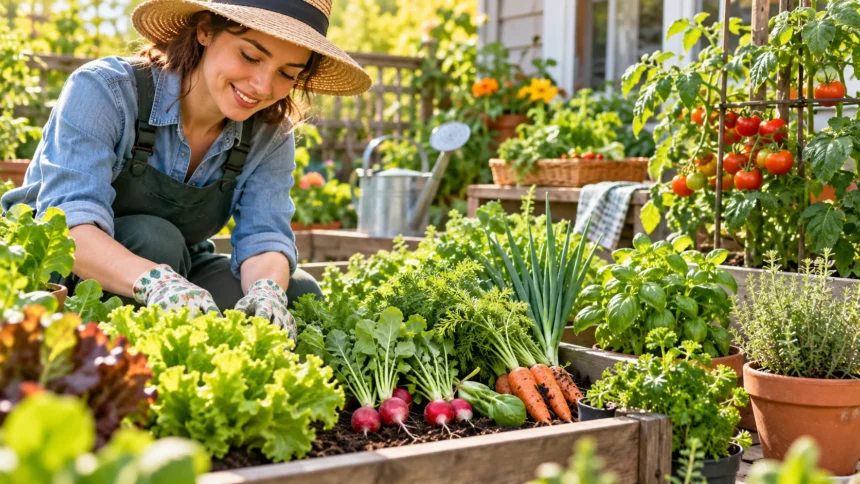
Growing your own vegetables can be one of the easiest ways to start gardening at home. You do not need a large backyard, advanced tools, or years of experience to get good results. Many beginner-friendly vegetables grow quickly, tolerate small mistakes, and can produce fresh food in containers, raised beds, or traditional garden soil.
The key is choosing vegetables that match your climate, available sunlight, and growing space. Some plants grow best in cooler temperatures, while others need warm weather and several hours of direct sun. Starting with forgiving crops can help you build confidence before moving on to more demanding plants.
This guide covers some of the easiest vegetables to grow for beginner gardeners, along with practical tips for soil preparation, watering, sunlight, harvesting, and common mistakes. Whether you are planting on a balcony or in a backyard, these simple crops can help make your first vegetable garden more successful.
Why Start With Easy-to-Grow Vegetables?
Beginner-friendly vegetables are usually more tolerant of small gardening mistakes. They can handle slight changes in watering, imperfect soil, or beginner-level planting techniques without immediately failing. This makes them ideal for learning basic gardening skills.
Starting with easier crops also helps you see results faster. When plants germinate quickly and begin producing leaves, roots, or vegetables within a short period, gardening becomes more rewarding. Early success can encourage you to continue improving your garden.
Simple vegetables also require less maintenance than demanding crops. You may not need complex pruning, special supports, or advanced pest-control methods. This allows you to focus on fundamentals such as sunlight, watering, soil quality, and regular harvesting.
Radishes
Radishes are one of the fastest vegetables beginners can grow. Many varieties mature in only a few weeks, making them ideal if you want quick results. They can be planted directly in the soil without starting seedlings indoors.
Choose loose, well-draining soil so the roots can develop properly. Sow the seeds in rows or containers and keep the soil evenly moist during germination. Avoid planting them too closely because overcrowding can reduce root size.
Radishes usually prefer cooler weather and can grow well in spring or fall. Harvest them while they are still young and firm because oversized radishes can become tough or overly strong in flavor. Frequent planting can provide multiple harvests throughout the season.
Lettuce
Lettuce is another excellent vegetable for beginner gardeners. It grows quickly, requires relatively little space, and can be harvested in several ways. Leaf lettuce is especially beginner-friendly because you can pick outer leaves while allowing the plant to continue growing.
Lettuce prefers cooler temperatures and may become bitter or bolt in very hot weather. Plant it where it receives morning sun and some afternoon shade if summers are warm. Containers can also make it easier to move the plants when temperatures change.
Keep the soil consistently moist but not waterlogged. Lettuce has shallow roots, so dry soil can quickly affect growth. Mulching around the plants can help hold moisture and reduce temperature fluctuations.
Spinach
Spinach is a fast-growing leafy vegetable that works well in cooler weather. It can be planted directly from seed and often germinates quickly when soil conditions are suitable. Beginners can grow it in raised beds, containers, or traditional garden plots.
Spinach prefers nutrient-rich soil that drains well. Keep the soil evenly moist because prolonged dryness can stress the plants and encourage them to produce flowers early. Thin seedlings once they begin growing so each plant has enough room.
Harvest the outer leaves while they are tender and leave the inner growth intact. This allows the plant to continue producing. Spinach is often most successful in spring and fall when temperatures remain mild.
Green Beans
Green beans are easy to grow and can produce a generous harvest with relatively little care. Bush varieties stay compact and are particularly useful for beginner gardeners or people with limited growing space.
Plant beans after the risk of cold weather has passed and the soil has warmed. They prefer full sun and well-draining soil. Avoid overwatering because consistently soggy soil can cause problems around the roots.
Harvest beans regularly once the pods become long and tender. Frequent picking encourages the plants to keep producing. Pole beans are another option, but they require a trellis or other support to climb.
Zucchini
Zucchini is known for producing large amounts of food from relatively few plants. It grows quickly in warm weather and can be a rewarding choice for beginners with enough garden space.
Give zucchini plenty of sunlight and room to spread. The plants develop large leaves, so crowding them can reduce airflow and make harvesting difficult. Water deeply around the base rather than frequently wetting the leaves.
Pick zucchini while the fruits are still medium-sized and tender. Allowing them to become extremely large can reduce quality and slow the production of new fruits. Regular harvesting often results in a longer and more productive season.
Cucumbers
Cucumbers grow quickly when temperatures are warm and sunlight is plentiful. They can be planted directly in garden soil or grown in containers, depending on the variety. Compact bush types are particularly useful for small spaces.
Vining cucumbers benefit from a trellis because vertical growth keeps the plants organized and makes harvesting easier. Good airflow can also help keep leaves healthier. Provide consistent moisture, especially when fruits begin developing.
Harvest cucumbers before they become oversized or yellow. Younger fruits usually have better texture and flavor. Checking the plants every day or two during peak production can help prevent cucumbers from growing beyond their ideal size.
Carrots
Carrots can be easy to grow when they are planted in loose, stone-free soil. They need enough depth for their roots to develop straight, which makes raised beds and deep containers useful for beginners.
Sow carrot seeds directly where you want them to grow because the seedlings do not like being transplanted. Keep the top layer of soil consistently moist during germination. Carrot seeds can take time to sprout, so patience is important.
Thin seedlings carefully once they begin growing. Crowded carrots may remain small or develop irregular shapes. Harvest time depends on the variety, but many carrots can be pulled once their shoulders reach a useful size.
Peas
Peas are a beginner-friendly crop for cooler seasons. They grow best when temperatures are mild and can be planted early in spring or during fall in suitable climates. Most varieties germinate reliably when the soil is moist but not waterlogged.
Climbing peas need a trellis, fence, or simple support. Providing support early makes it easier for the vines to grow upward. Dwarf varieties are available if you prefer a more compact plant.
Harvest pods regularly when they become full but are still tender. Frequent picking can encourage continued production. Peas may slow down as temperatures become hot, so timing is important for a strong harvest.
Cherry Tomatoes
Cherry tomatoes are generally easier for beginners than many larger tomato varieties. They grow vigorously, produce many fruits, and can perform well in large containers or garden beds with adequate sunlight.
Tomatoes need warm conditions and at least several hours of direct sun. Use fertile, well-draining soil and water deeply around the root zone. Consistent watering helps reduce stress and supports healthy fruit development.
Provide a cage, stake, or trellis as the plant grows. Cherry tomatoes can become surprisingly large and heavy with fruit. Harvest tomatoes once they develop their full color and come away from the plant easily.
Bell Peppers
Bell peppers can be a good beginner crop in warm climates or sunny summer gardens. They take longer to mature than radishes or lettuce, but once established, healthy plants can produce several peppers.
Plant peppers in warm soil and choose a location receiving plenty of sunlight. They prefer consistent moisture without standing water. A layer of mulch can help maintain soil moisture during hot weather.
You can harvest peppers while they are green or allow them to ripen into red, yellow, or orange depending on the variety. Fully ripened peppers often have a sweeter flavor. Use clean scissors or pruners to avoid damaging the plant.
Spring Onions
Spring onions are simple to grow and require very little space. They can be planted closely together, which makes them well suited to containers, windowsill planters, or small garden beds.
Plant seeds or young starts in loose soil and keep the area moderately moist. They do not require deep soil because their root systems are relatively small. Several hours of sunlight each day usually support healthy growth.
Harvest spring onions once the stems reach a useful size. You can pull the whole plant or trim some green leaves for cooking. Planting small batches every few weeks can provide a more continuous supply.
Beetroot
Beetroot is relatively easy to grow and provides both edible roots and leafy greens. It performs well in cooler temperatures and can be grown directly from seed.
Choose loose soil and avoid overcrowding. Beet seeds often produce several seedlings from one seed cluster, so thinning may be necessary. Keep the soil consistently moist to support smooth root development.
Harvest beets when the roots are small to medium-sized. Larger roots may become tougher depending on the variety. The leaves can also be harvested carefully while the roots continue developing.
Potatoes
Potatoes can be surprisingly easy to grow, even for beginners. They can be planted in garden beds, grow bags, large containers, or specially designed potato planters.
Start with seed potatoes rather than ordinary grocery-store potatoes when possible. Plant them in loose soil and gradually add more soil around the stems as the plants grow. This process helps protect developing tubers.
Once the plants flower and eventually begin to yellow, the potatoes may be approaching harvest time. Gently dig around the plants to avoid cutting the tubers. Container-grown potatoes can be especially enjoyable because harvesting becomes simple.
Kale
Kale is a hardy leafy vegetable that can tolerate cooler weather better than many other crops. It grows well in garden beds and containers and can continue producing leaves for an extended period.
Plant kale in fertile soil with consistent moisture. It grows best with several hours of sunlight, although some varieties tolerate partial shade. Regular harvesting encourages new leaves to develop.
Pick the outer leaves first and leave the central growing point untouched. Younger leaves are often more tender. Kale can continue producing through cool weather, making it useful when many summer vegetables have finished.
Choosing the Right Location for Your Vegetable Garden
Most vegetables need around six or more hours of direct sunlight each day. Observe your garden, balcony, or patio before planting to understand where sunlight remains longest. Leafy greens can often tolerate a little more shade than fruiting vegetables.
Choose an area that is easy to reach because convenience encourages regular watering and harvesting. A garden located far from the house may be forgotten more easily, especially during busy weeks. Containers near a kitchen or patio can be particularly practical.
Growing fresh ingredients close to your cooking space can also make home gardening feel more useful. If you enjoy connecting food-growing projects with home design, these white kitchen ideas offer inspiration for creating a bright, functional space where harvested produce can be prepared and enjoyed.
Prepare the Soil Before Planting
Healthy soil gives vegetables the nutrients and structure they need to grow. Garden soil should drain well while still holding enough moisture for plant roots. Heavy, compacted soil can make root growth difficult.
Adding compost can improve soil texture and provide organic matter. Mix it into the top layer before planting rather than simply placing a thick layer on the surface. Raised beds can also make soil improvement easier.
For containers, use a quality potting mix rather than ordinary garden soil. Potting mixes are designed to drain properly while remaining light enough for roots. Make sure every container has drainage holes.
Water Vegetables Correctly
Most beginner vegetables grow best with consistent moisture. Water deeply enough to reach the root zone rather than giving the surface a quick splash. Deeper watering encourages roots to grow downward.
The exact watering schedule depends on temperature, soil type, container size, and rainfall. Hot weather may require more frequent watering, while cool conditions reduce moisture loss. Check the soil with your finger rather than watering automatically.
Try to water near the base of the plants. Keeping foliage constantly wet can sometimes encourage disease. Morning watering is often convenient because plants have moisture available before the warmest part of the day.
Avoid Common Beginner Gardening Mistakes
One common mistake is planting too many vegetables at once. A smaller garden is easier to maintain and allows you to learn without becoming overwhelmed. Start with several reliable crops and expand later.
Overwatering is another frequent problem. Beginners sometimes assume more water always helps plants, but waterlogged soil can damage roots. Learn how your soil drains and adjust watering accordingly.
Crowding plants can also reduce growth. Seed packets usually provide recommended spacing because mature plants need room for leaves, roots, and airflow. Giving plants enough space often produces healthier vegetables.
Protect Your Vegetables From Pests
Inspect plants regularly so you notice pest problems early. Look at both the tops and undersides of leaves for holes, eggs, insects, or unusual damage. Small problems are usually easier to manage than widespread infestations.
Physical barriers can be useful for beginner gardens. Fine mesh, row covers, or simple netting may prevent certain pests from reaching plants. Keep barriers properly secured while allowing enough airflow.
Maintaining healthy plants also improves their ability to tolerate minor pest pressure. Good watering, suitable sunlight, proper spacing, and healthy soil create stronger plants. Avoid using unnecessary treatments when simple physical or cultural controls can solve the problem.
Harvest Vegetables at the Right Time
Regular harvesting often encourages continued production, especially with crops such as beans, zucchini, cucumbers, and leafy greens. Leaving mature vegetables on the plant too long may reduce quality or slow new growth.
Learn what each vegetable looks like when ready to harvest. Size alone is not always the best indicator because different varieties mature differently. Color, texture, firmness, and days since planting can all provide clues.
Check the garden frequently during peak growing periods. Vegetables can change quickly once they begin maturing. Frequent harvesting also gives you more opportunities to notice pests, watering problems, or unhealthy leaves.
Conclusion
Growing vegetables does not have to be complicated. Radishes, lettuce, spinach, beans, zucchini, cucumbers, carrots, peas, tomatoes, spring onions, and other beginner-friendly crops can provide rewarding results without requiring advanced gardening experience.
Start small and focus on the basics: choose a sunny location, prepare healthy soil, provide consistent water, and give each plant enough room. Observe your garden regularly because plants often show you when they need more water, space, support, or protection.
Every growing season teaches you something new. Some crops will perform better than others depending on your climate and space, so keep experimenting. With practice, a simple beginner garden can become a reliable source of fresh vegetables and an enjoyable part of your home.
FAQs
What are the easiest vegetables for beginners to grow?
Radishes, lettuce, green beans, zucchini, spring onions, spinach, and peas are among the easiest choices. They generally germinate reliably, require simple care, and can produce results relatively quickly.
What vegetables grow fastest?
Radishes and many leafy greens are among the fastest-growing vegetables. Some radish varieties can be harvested within a few weeks, while baby lettuce and spinach can also be picked relatively early.
Can beginners grow vegetables in containers?
Yes. Lettuce, radishes, spring onions, peppers, tomatoes, carrots, and many herbs grow well in containers. Choose sufficiently large pots, use quality potting mix, and ensure good drainage.
How much sunlight does a vegetable garden need?
Most vegetables prefer at least six hours of direct sunlight daily. Fruiting crops usually need more sun, while leafy vegetables such as lettuce and spinach can tolerate some partial shade.
How often should beginner gardeners water vegetables?
Watering frequency depends on weather, soil, and container size. Check the soil regularly and water when it begins drying near the surface, aiming for steady moisture without keeping roots constantly waterlogged.