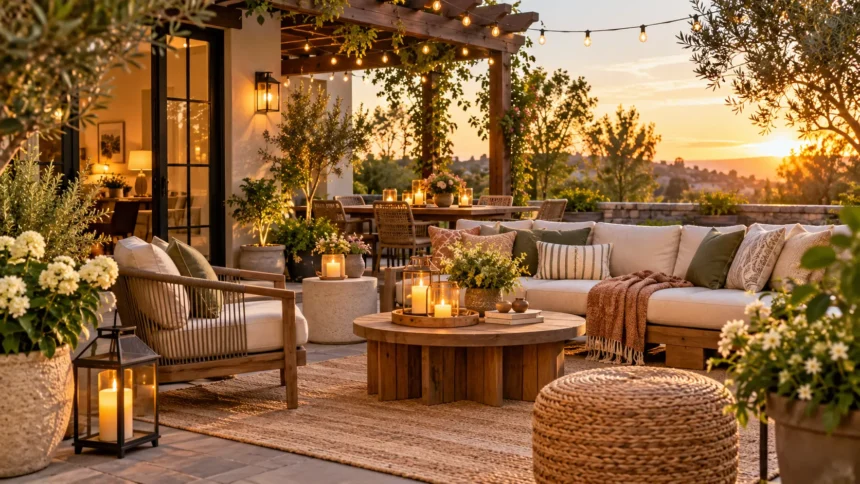
Create a Comfortable Patio Seating Area
A comfortable seating area is the foundation of most successful patio decor ideas. Start by choosing furniture that matches the size of your outdoor space and the way you plan to use it. A compact bistro set may suit a small balcony-style patio, while a sectional or conversation set works better for larger areas designed for entertaining guests.
Comfort matters just as much as appearance when selecting outdoor furniture. Add weather-resistant cushions, soft seat pads, and supportive pillows to make chairs and benches more inviting. Neutral furniture can create a timeless base, while colorful cushions and patterned fabrics allow you to introduce personality without committing to permanent design changes.
Arrange seating so people can easily talk, move around, and enjoy the surrounding view. Avoid pushing every piece directly against a wall unless the layout requires it. Grouping chairs around a coffee table, fire pit, or outdoor rug can make the patio feel more like a finished living room and less like an unused exterior space.
Add an Outdoor Rug for Instant Warmth
Outdoor rugs are one of the easiest ways to make a patio feel more polished and comfortable. They visually define seating or dining zones while adding color, texture, and softness beneath outdoor furniture. A rug can be especially effective on plain concrete, tile, or decking where the surface may otherwise feel cold or unfinished.
Choose a rug made from materials designed to handle moisture, sunlight, dirt, and regular outdoor use. Synthetic fibers are popular because they usually dry quickly and are easier to clean than indoor fabrics. Selecting a pattern with multiple tones can also help disguise minor marks while adding character to an otherwise neutral patio design.
Size is important when using rugs in outdoor spaces. Ideally, the front legs of your seating furniture should rest on the rug so the arrangement feels connected. If the rug is too small, the furniture may appear scattered, while a properly sized option creates a more intentional and visually balanced outdoor living area.
Use Outdoor Lighting to Set the Mood
Lighting can completely change how a patio looks and feels after sunset. String lights, lanterns, wall fixtures, solar lights, and rechargeable lamps can create layers of illumination without making the space overly bright. Warm lighting generally creates a relaxed atmosphere that works particularly well for evening meals, casual conversations, and quiet outdoor relaxation.
String lights are especially popular because they add charm while covering a relatively large area. Hang them overhead, along fences, beneath pergolas, or around railings depending on your patio layout. For smaller spaces, battery-powered lanterns or tabletop lamps can provide decorative light without requiring complicated installation or permanent electrical changes.
Lighting choices should also coordinate with the style of your home. Black metal fixtures suit modern and industrial spaces, while woven lanterns can complement relaxed or natural decor. If you are updating indoor and outdoor lighting together, these ceiling light ideas can help create a more consistent look throughout your home.
Bring in Plants and Greenery
Plants instantly make patios feel fresher, softer, and more connected to the surrounding landscape. Use a mixture of flowering plants, leafy greenery, herbs, and small shrubs to add different heights and textures. Containers make it easy to experiment because you can move plants around whenever you want to refresh the layout.
Large planters can anchor empty corners, while smaller pots work well on tables, steps, shelves, and railing edges. Combining different container sizes prevents the arrangement from feeling too uniform. Choose pots in similar colors or materials if you want a coordinated appearance, or mix finishes for a more relaxed and collected look.
Always consider the amount of sunlight your patio receives before selecting plants. Some species thrive in full sun, while others prefer partial shade or protection from intense afternoon heat. Matching plants to the actual growing conditions will help them remain healthier and reduce the amount of maintenance required throughout the season.
Decorate With Outdoor Cushions and Textiles
Textiles make outdoor furniture feel softer and more welcoming while allowing you to introduce seasonal colors easily. Cushions, throw pillows, lightweight blankets, and fabric poufs can bring indoor comfort to a patio without requiring major changes. They are especially useful when you want to refresh an existing furniture set on a limited decorating budget.
Choose fabrics specifically designed for outdoor conditions whenever possible. These materials are generally more resistant to moisture, fading, mildew, and frequent sunlight than ordinary indoor textiles. Removable cushion covers are also practical because they can be washed or replaced when the style begins to feel outdated.
Try combining solid colors with one or two patterns rather than using many competing prints. Stripes, botanical designs, geometric patterns, and subtle textures can all work beautifully when they share a similar color palette. Keeping the overall scheme coordinated helps the patio feel thoughtfully decorated instead of overly busy or mismatched.
Create a Stylish Outdoor Dining Space
An outdoor dining area can turn a basic patio into a practical extension of your home. Start with a table that comfortably fits your household while leaving enough space for chairs and walking paths. Round tables often work well in compact areas, while rectangular designs are practical for larger patios and frequent gatherings.
Decorate the table with simple accessories that can remain outside or be moved easily when necessary. A weather-resistant centerpiece, lantern, small planter, or decorative tray can make the dining space feel more complete. Avoid filling the tabletop with too many objects, since enough open surface should remain for food, drinks, and everyday use.
Shade can also improve the comfort of an outdoor dining zone. Patio umbrellas, pergolas, retractable awnings, and shade sails can protect diners from strong midday sun. Choose a solution that suits the scale of your space while coordinating with the colors and materials already used throughout your patio furniture and decor.
Use Wall Decor to Add Personality
Patio walls, fences, and exterior partitions provide valuable decorating space that is often overlooked. Outdoor artwork, mirrors, hanging planters, metal sculptures, and decorative panels can transform blank surfaces into interesting focal points. Vertical decor is particularly useful on small patios where floor space is limited and every square foot matters.
Outdoor mirrors can reflect light and greenery, helping compact spaces appear more open. Decorative screens can provide visual interest while also improving privacy from neighboring properties. If you prefer something natural, a wall-mounted trellis covered with climbing plants can create a living feature that becomes more attractive as it matures.
Select wall decor that can withstand the conditions in your particular outdoor environment. Moisture, direct sunlight, wind, and temperature changes can damage materials that are not designed for exterior use. Secure heavier decorations properly, especially in exposed areas where strong winds could loosen objects or create safety concerns.
Add Privacy Without Making the Patio Feel Closed
Privacy can make a patio more comfortable, especially in neighborhoods where homes are positioned close together. Outdoor curtains, wooden screens, lattice panels, tall planters, and climbing plants can reduce unwanted views without creating a completely enclosed atmosphere. The best option depends on your available space, budget, and desired level of coverage.
Tall plants are particularly useful because they provide privacy while adding greenery at the same time. Bamboo-like grasses, compact shrubs, and climbing vines can soften hard patio boundaries and make the area feel more natural. Containers allow you to adjust the layout easily if your privacy needs change during different seasons.
For a softer appearance, consider outdoor curtains attached to a pergola or covered patio structure. Light-colored fabric can move gently with the breeze and create a relaxed resort-inspired effect. Choose weather-resistant materials and secure the panels properly so they remain practical during windy conditions rather than constantly blowing across the seating area.
Decorate a Small Patio Without Clutter
Small patios can feel stylish and functional when furniture and accessories are chosen carefully. Instead of filling the floor with oversized pieces, use compact seating, folding furniture, nesting tables, or benches with built-in storage. Multifunctional items allow you to get more use from limited space without making the area feel cramped.
Vertical decorating is especially valuable in a compact patio design. Wall planters, hanging baskets, shelves, and tall narrow plant stands draw the eye upward while keeping the floor relatively open. Using fewer but larger decorative items can also create a cleaner appearance than arranging many small accessories throughout the space.
Keep the color palette simple to avoid visual clutter. Neutral furniture combined with two or three accent colors can make a small patio feel organized and cohesive. Repeating similar materials, such as wood, black metal, or woven textures, also helps create continuity and makes the entire area appear larger and more intentionally designed.
Choose a Patio Color Scheme That Feels Cohesive
A clear color palette can bring different patio decor elements together and make the space feel professionally styled. Start with one main neutral shade, such as beige, gray, white, black, or natural wood. Then introduce one or two accent colors through cushions, planters, rugs, flowers, and small decorative objects.
Natural greens, earthy terracotta tones, warm neutrals, and soft blues are popular because they blend easily with outdoor surroundings. Brighter colors such as yellow, coral, or turquoise can add energy when used in smaller amounts. The goal is not to make every item identical, but to create enough repetition that the overall design feels connected.
Consider the exterior colors of your home when choosing a patio palette. Siding, brick, stone, doors, and window trim already contribute to the visual background, so patio decor should work with them rather than compete. Selecting colors that complement existing architectural features can make the transition between indoor and outdoor spaces feel more natural.
Add Decorative Accessories Without Overdoing It
Accessories give a patio personality, but using too many can make the area difficult to maintain and visually crowded. Start with a few purposeful pieces such as lanterns, planters, trays, decorative bowls, sculptures, or outdoor candles. Leave enough empty space around each object so the design can breathe and important features remain noticeable.
Choose accessories that also provide practical value whenever possible. A decorative basket can store outdoor blankets, while a stylish tray can hold drinks and snacks. Attractive storage boxes can hide cushions or gardening supplies, allowing the space to stay organized without sacrificing the overall look of the patio.
Seasonal accessories are another easy way to refresh your outdoor space without replacing expensive furniture. Change pillow covers, flowers, table decor, or small accents as the weather shifts throughout the year. Keeping larger furniture neutral allows these affordable decorative updates to create a noticeably different appearance with relatively little effort.
Make the Patio Comfortable for Evening Use
Evening comfort is important if you want your patio to function beyond daytime hours. In addition to lighting, consider temperature, seating comfort, and protection from insects. Lightweight throws, outdoor heaters, ceiling fans, or portable fans can make the area more enjoyable depending on your local climate and typical evening conditions.
A fire feature can create warmth and become a natural gathering point when local regulations and available space allow it. Portable fire pits, built-in fireplaces, and gas fire tables are available in many styles. Always follow safety guidelines, provide adequate clearance, and choose a product appropriate for the size and construction of your outdoor area.
Keep frequently used evening items nearby so the patio remains convenient. A weather-resistant storage bench can hold blankets, cushions, or small accessories when they are not needed. Creating simple storage systems reduces repeated trips indoors and makes it easier to enjoy the outdoor space whenever you have time to relax.
Conclusion
The best patio decor ideas combine comfort, style, and practical everyday function. Comfortable seating, outdoor rugs, lighting, plants, textiles, and thoughtful accessories can transform even a basic patio into an inviting extension of your home. You do not need an enormous space or expensive furniture to create an outdoor area that feels finished.
Start by improving the features that will make the biggest difference to how you use the patio. Seating and shade may be the priority for one household, while lighting and an outdoor dining area may matter more for another. Decorating around your real lifestyle will usually produce a space that remains useful instead of simply looking attractive.
Small updates can also make a significant visual difference. Adding plants, changing cushions, introducing a rug, or installing warmer lighting can refresh the patio without a complete redesign. By choosing a consistent color palette and avoiding unnecessary clutter, you can create a beautiful outdoor space worth enjoying throughout the season.
FAQs
How can I decorate my patio on a budget?
Start with affordable changes such as cushions, plants, string lights, and a simple outdoor rug. Reusing existing furniture and adding a few coordinated accessories can dramatically improve the space without requiring major spending.
What should every patio have?
Most patios benefit from comfortable seating, adequate lighting, shade, and a small surface for drinks or food. Plants, textiles, and decorative accessories can then be added according to available space and personal style.
How do I make a small patio look bigger?
Use compact furniture, vertical planters, simple colors, and fewer decorative objects. Keeping clear walking paths and using furniture with open frames can also make a small outdoor area feel more spacious.
What colors work best for patio decor?
Neutral shades combined with natural greens, blues, terracotta, or warm earthy tones work well in many outdoor spaces. Choose colors that complement your home’s exterior for a more connected and polished appearance.
How can I make my patio look more expensive?
Use coordinated textiles, layered lighting, large planters, a well-sized outdoor rug, and a consistent color palette. Keeping the area uncluttered and maintaining furniture carefully can also create a more refined appearance.