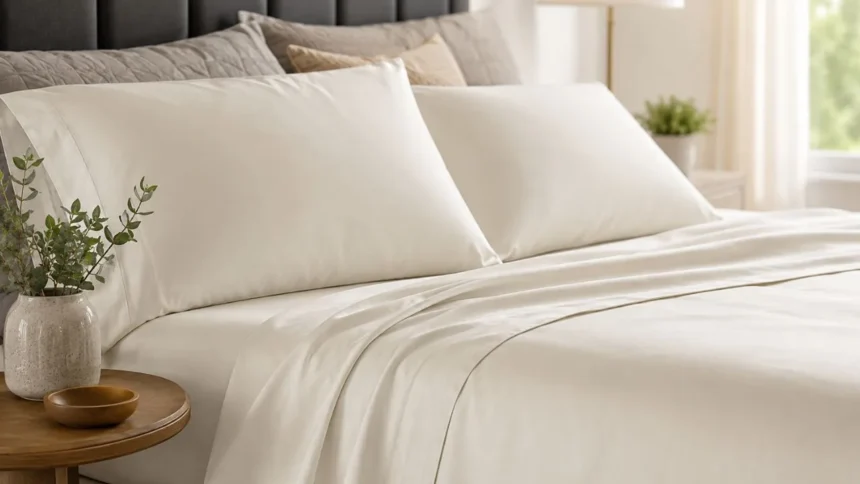
A good thread count for cotton sheets is generally between 200 and 500. Within this range, well-made sheets can provide a comfortable balance of softness, breathability and durability. However, the number alone does not determine whether a sheet set will feel luxurious or remain comfortable after repeated washing.
Thread count is often treated as the main measure of sheet quality, but this can be misleading. Cotton type, fibre length, yarn construction and weave usually have a greater effect on how the fabric feels. A high-quality 300-thread-count sheet can easily outperform a poorly made product advertised at 1,000 thread count.
The best number also depends on how you sleep. Hot sleepers may prefer lightweight cotton percale between 200 and 350 thread count, while people who enjoy a softer and warmer surface may choose cotton sateen between 300 and 500. Neither option is automatically better because they provide different sleeping experiences.
Understanding these differences can help you avoid paying extra for inflated marketing claims. This guide explains what cotton sheet thread count means, how it affects comfort and which range is best for different weaves, seasons, budgets and sleeping preferences.
What Does Thread Count Mean in Cotton Sheets?
Thread count measures how many horizontal and vertical threads are woven into one square inch of fabric. The horizontal yarns are called weft threads, while the vertical yarns are known as warp threads. These two figures are added together to create the advertised thread count.
For example, a fabric containing 150 horizontal threads and 150 vertical threads per square inch would usually be labelled as 300 thread count. A larger number generally indicates a denser fabric, but density does not always produce better comfort, softness or long-term performance.
Thread count is most useful when comparing sheets made from similar types of cotton and the same weave. A 300-thread-count percale sheet will feel very different from a 300-thread-count sateen sheet because the yarns are arranged differently. Looking only at the number ignores this important distinction.
The measurement can also be affected by how manufacturers count multi-ply yarn. Some brands count every strand within a twisted yarn separately, which can produce an impressive number without increasing the actual number of woven threads. This is why very high claims should be examined carefully.
What Thread Count Is Best for Cotton Sheets?
For everyday cotton sheets, a thread count between 200 and 400 is often the most practical choice. Sheets in this range can feel smooth and comfortable while allowing enough airflow for year-round use. Their quality will still depend on the cotton fibres and weaving process.
A count below 200 is not automatically poor, but the fabric may feel lighter, rougher or less substantial if inexpensive fibres are used. Some high-quality, lightweight percale sheets sit near the lower end of the range and remain comfortable because their yarns are strong and carefully woven.
Cotton sheets between 400 and 500 can also be excellent, especially when they use a sateen weave. They may feel smoother, denser and slightly warmer than lower-count percale. This makes them appealing to people who enjoy bedding with a silky surface and heavier drape.
Counts above 600 do not guarantee an improvement. At that point, manufacturers may be using multi-ply yarns or packing threads tightly into the fabric. The result can be heavier and less breathable without feeling noticeably softer than a well-made sheet in the moderate range.
Why a Higher Thread Count Is Not Always Better
A higher thread count can suggest greater fabric density, but density is only one aspect of sheet quality. If the cotton fibres are short, weak or uneven, increasing the number of threads will not necessarily create a smooth and durable sheet. Poor fibres can still pill, shed or become rough.
Extremely dense cotton sheets may also restrict airflow. This can make the fabric feel warm and heavy, particularly for people who experience night sweats or live in a hot climate. A lower, more breathable count may produce a more comfortable sleeping environment.
Some manufacturers create very high numbers by twisting two or three strands together and counting each strand separately. A fabric woven with 300 two-ply yarns may be promoted as 600 thread count. The number sounds more luxurious, but the sheet does not contain 600 individual woven yarns.
Instead of choosing the largest figure on the packaging, look for a realistic thread-count range supported by clear material information. Single-ply yarn, long-staple cotton and a suitable weave are usually stronger signs of quality than an unusually large number printed prominently on the label.
Best Thread Count for Cotton Percale Sheets
Cotton percale uses a simple one-thread-over, one-thread-under weave. This balanced construction creates a crisp, matte surface that feels similar to freshly laundered hotel bedding. Percale is known for its clean texture, breathability and ability to soften gradually with use.
A good thread count for cotton percale is usually between 200 and 350. This range maintains the open, lightweight quality that makes percale appealing to warm sleepers. Increasing the count too much can make the fabric denser and reduce its naturally cool feel.
A 200-thread-count percale sheet made from strong, long-staple cotton may feel better than a 400-thread-count version made from weaker fibres. The lower number allows airflow, while the better yarn creates a smoother finish and reduces the likelihood of pilling.
Percale may feel slightly firm when it is new, but good-quality cotton generally softens with repeated washing. People who enjoy crisp rather than silky bedding often prefer this gradual change. The fabric also tends to feel fresh and dry against the skin.
Best Thread Count for Cotton Sateen Sheets
Cotton sateen uses a weave that places more yarn across the surface of the fabric. This creates a smoother texture, subtle sheen and softer drape than percale. Sateen sheets often feel warmer and more luxurious immediately after they are removed from the packaging.
A suitable thread count for cotton sateen is commonly between 300 and 500. This range supports the smooth surface without making the fabric excessively thick. A well-made 400-thread-count sateen sheet can feel soft, substantial and comfortable throughout cooler seasons.
Because more yarn is exposed on the surface, sateen may be more likely to snag or pill than percale. Using long-staple cotton can reduce this risk because the yarns contain fewer loose fibre ends. Proper washing and lower drying temperatures can also help preserve the finish.
Sateen is a good option for sleepers who dislike crisp bedding and prefer a silky feel. However, it may hold more body heat than percale. Your decision should therefore consider both texture and sleeping temperature rather than thread count alone.
How Cotton Quality Affects Thread Count
The quality of cotton fibres has a major influence on the feel and durability of sheets. Longer fibres can be spun into smoother, finer yarns with fewer exposed ends. This produces fabric that is less likely to feel fuzzy, develop pills or lose its finish quickly.
Short-staple cotton contains shorter fibres that require more joins within the yarn. These joins can rise to the surface through friction and washing, making the fabric feel rougher over time. A high thread count cannot completely hide weaknesses in the original material.
Long-staple and extra-long-staple cotton sheets are often smoother and stronger at moderate thread counts. Pima cotton and some genuine Egyptian cotton products may use longer fibres, although the cotton name alone should not be treated as proof of quality.
When shopping, look for detailed information about cotton type, fibre length and yarn construction. A transparent product description that mentions single-ply, long-staple cotton is usually more informative than a package that promotes only an extremely high thread count.
What Is Single-Ply Cotton Yarn?
Single-ply yarn is made from one continuous strand of spun cotton fibres. When high-quality fibres are used, the yarn can be fine, strong and smooth. This allows manufacturers to create comfortable sheets without twisting several weaker strands together.
Single-ply construction can also improve breathability because the yarns are less bulky. A 300-thread-count single-ply cotton sheet may feel lighter and smoother than a 600-thread-count sheet made from thick, multi-ply yarn. This is especially important for warm sleepers.
Multi-ply yarn is produced by twisting two or more strands together. It can increase strength in some fabrics, but in bedding it is sometimes used to increase the advertised thread count. Each strand may be counted even though the yarn occupies only one woven position.
Product descriptions do not always clearly state the ply. When this information is missing, approach thread counts above 600 with caution. Moderate numbers combined with clear fibre and weave details are generally more trustworthy than dramatic claims with limited explanation.
The Best Cotton Sheet Thread Count for Hot Sleepers
Hot sleepers need sheets that allow body heat and moisture to escape. Cotton percale between 200 and 350 thread count is often one of the best options because its balanced weave promotes airflow. The fabric feels crisp and does not cling closely to the body.
Choosing the highest possible count may have the opposite effect. Densely woven cotton can trap warmth and feel heavy during the night. This may be uncomfortable in summer, in humid climates or for people who regularly experience night sweats.
The type of cotton also matters. Long-staple cotton can be woven into fine, breathable yarns that feel smooth without requiring excessive density. Lightweight fabric made from high-quality yarn often provides better cooling than thick sheets carrying a luxury label.
Hot sleepers should also consider the rest of their bedding. A breathable sheet cannot fully compensate for a heavy duvet, waterproof mattress cover or warm bedroom. Combining cotton percale with lighter layers usually produces the best cooling effect.
The Best Cotton Sheet Thread Count for Cold Sleepers
Cold sleepers may prefer cotton sheets with a denser weave and softer surface. Cotton sateen between 300 and 500 thread count is a popular choice because it tends to hold slightly more warmth than percale. Its smooth drape can also create a cosier sleeping environment.
A higher count is not the only way to stay warm. Flannel cotton sheets use a brushed surface that traps air and provides insulation. Their quality is often described by fabric weight rather than thread count, so the usual cotton sheet ranges are less relevant.
Layering can offer more flexibility than buying extremely dense sheets. A comfortable cotton sheet combined with a warmer blanket or duvet allows you to adjust the bed as temperatures change. This is useful in homes where the weather varies considerably between seasons.
People who sleep cold but still want breathability may choose a mid-range sateen rather than a very heavy product. A 350- or 400-thread-count sheet can provide softness and warmth without becoming unnecessarily thick or difficult to wash.
What Thread Count Feels Like Hotel Bedding?
Many hotels use cotton percale because it feels crisp, breathable and clean. Hotel sheets are not always made with extremely high thread counts. Counts between approximately 200 and 350 can provide the familiar smooth, fresh texture associated with professionally laundered bedding.
Durability is especially important for hotels because sheets are washed frequently. A moderate thread count made from strong cotton may survive repeated laundering better than a delicate high-count sateen. The weave and yarn quality matter more than creating the largest number.
Hotels may also use cotton-polyester blends because they dry quickly and resist wrinkling. These sheets can still feel crisp, but their thread count should not be compared directly with pure cotton products. Fibre content changes the texture, airflow and care requirements.
To recreate a hotel-style bed at home, choose cotton percale, wash it regularly and remove it from the dryer before deep creases develop. A moderate count with a smooth finish is more likely to deliver the desired result than an overly dense luxury sheet.
Is 200 Thread Count Good for Cotton Sheets?
A 200-thread-count cotton sheet can be a good choice when it is made with quality yarn and a balanced weave. This count is common in lightweight percale bedding because it allows airflow and produces a fresh, crisp feel.
At the lower end of the market, some 200-thread-count sheets may feel thin or coarse. This is usually related to weak cotton, thick yarn or poor finishing rather than the number itself. Reading the full material description can help distinguish better products.
For hot weather, guest rooms and people who prefer light bedding, 200 thread count may provide excellent value. It can also dry faster than dense fabric, making it practical for households that wash bedding frequently.
Do not reject a sheet simply because its count appears low. A reputable 200-thread-count percale made from long-staple cotton can feel smoother and last longer than a cheap 800-thread-count set using multi-ply yarn.
Is 300 Thread Count Good for Cotton Sheets?
A 300-thread-count cotton sheet is a strong all-round choice for many sleepers. It sits within the ideal range for both percale and lighter sateen weaves, depending on how the yarns are arranged. This makes it suitable for year-round use.
In percale, 300 thread count usually feels crisp, smooth and breathable. It has enough density to feel substantial without losing the airflow that warm sleepers value. The fabric may soften further after several washes.
In sateen, the same number can feel softer and more fluid because more yarn is exposed on the surface. It may not feel as heavy as a 500-thread-count sateen, making it useful for people who want softness without excessive warmth.
A 300-thread-count sheet made from single-ply, long-staple cotton often provides excellent comfort and value. For many households, it offers a better balance than more expensive products that rely on inflated numbers.
Is 400 Thread Count Good for Cotton Sheets?
A 400-thread-count cotton sheet can be an excellent choice, particularly when it uses sateen construction. It usually feels smooth, soft and slightly heavier than lower-count percale. This gives the bedding a more substantial and luxurious drape.
In a high-quality percale weave, 400 threads may create a dense yet comfortable sheet. However, some sleepers may find it warmer than a 250- or 300-thread-count percale. The exact feel depends on yarn thickness and fabric finishing.
Four hundred thread count is often high enough to deliver softness without entering the range where marketing claims become questionable. When paired with single-ply, long-staple cotton, it can offer good durability and a refined surface.
People who want cool, lightweight bedding may not need to go this high. Those who prefer a smoother and more enveloping feel may find it ideal. Personal comfort should guide the choice rather than assuming that 400 is automatically better than 300.
Is 600 Thread Count Too High?
A genuine 600-thread-count cotton sheet can be well made, but it is denser than most sleepers require. It may feel smooth and substantial, although it can also retain more body heat and take longer to wash and dry.
The number should be checked carefully because many 600-thread-count products use two-ply yarn. In these cases, the fabric may contain around 300 woven yarns, with each twisted strand counted separately. This does not necessarily make the sheet poor, but the label may exaggerate its density.
A high price does not guarantee that a 600-thread-count sheet will perform better than a 300- or 400-thread-count alternative. Fibre length, yarn strength and weave remain more important. Dense fabric made with weak cotton can still pill and wear unevenly.
Choose this range only when you genuinely prefer heavier bedding and the product clearly explains its construction. Hot sleepers and people living in warm climates will usually be more comfortable with a lower and more breathable count.
Are 800- and 1,000-Thread-Count Sheets Worth It?
Sheets advertised at 800 or 1,000 thread count often attract attention because the numbers suggest premium quality. However, creating that many true single-ply threads within one square inch is difficult. Many products reach these figures by counting multi-ply strands separately.
These sheets may feel dense, thick and heavy rather than light and luxurious. Some people enjoy that weight, but others find the fabric warm or slow to dry. A higher count can also place more stress on washing machines when the wet sheets become bulky.
Price should be considered carefully. Paying more for an inflated thread count does not guarantee better cotton, smoother fibres or stronger stitching. A well-made 300- or 400-thread-count set may remain comfortable for longer and provide better value.
Before buying, check whether the product uses single-ply yarn and names the cotton type. If the description focuses almost entirely on the large number, it may be relying on marketing rather than meaningful evidence of quality.
How Thread Count Affects Cotton Sheet Softness
Thread count can affect softness by changing the density and surface of the fabric. More threads may create a smoother feel when fine, high-quality yarns are used. However, thick or rough yarns can produce a dense sheet that still feels coarse.
The weave often makes a more noticeable difference. Cotton sateen feels smooth and silky because its structure places more yarn on the surface. Percale feels crisp and clean because it uses a balanced over-under construction.
Finishing treatments can also make new sheets feel unusually soft in the shop. Some of these treatments wash away, revealing the true texture of the cotton underneath. Natural softness created by long fibres tends to remain more consistent over time.
Many high-quality cotton sheets become softer after washing. Percale loses some of its initial firmness, while sateen develops a more relaxed drape. Proper care supports this process without requiring an extremely high thread count.
How Thread Count Affects Breathability
Breathability refers to how easily heat and moisture can move through the fabric. Lower and moderate thread-count cotton sheets usually allow more airflow because the yarns are not packed as tightly together.
Cotton percale is especially breathable because of its simple, balanced weave. A 250-thread-count percale sheet can feel cooler than a 500-thread-count sateen even when both are made from the same type of cotton.
Very dense sheets may limit airflow and trap heat close to the body. This does not make them unsuitable for everyone, but it can be uncomfortable for warm sleepers. Climate and bedroom temperature should be considered before choosing a heavy sheet.
Yarn thickness also influences breathability. Fine, strong yarns can produce smooth fabric without excessive bulk. A lower thread count made with good cotton may therefore feel both softer and cooler than a higher count using thick multi-ply strands.
How Thread Count Affects Durability
Durability depends on the strength of the fibres, yarn and weave rather than thread count alone. Moderate-count cotton sheets made with long fibres can withstand regular washing and friction without developing excessive pilling.
Very low-quality fabric may wear thin because the yarns are weak or loosely woven. However, an extremely high count does not automatically solve this problem. Weak cotton fibres can still break even when they are packed tightly together.
Percale is often valued for durability because its balanced weave distributes wear evenly. Sateen has more exposed yarn on the surface, which can make it more vulnerable to snagging, although quality fibres and careful washing can reduce this risk.
Stitching, elastic and hems should also be inspected when purchasing sheets. Strong fabric will not provide good long-term value if the fitted sheet loses its shape or the seams begin to separate after a few washes.
How to Choose Cotton Sheets Online
Begin by checking the fibre content carefully. Look for 100% cotton when you want the natural breathability and moisture absorption associated with cotton bedding. Blends may behave differently and should not be judged using exactly the same expectations.
Identify the weave before focusing on thread count. Choose percale for a crisp, cool feel or sateen for a smoother and warmer surface. This single decision may have a greater impact on comfort than choosing between 300 and 400 threads.
Look for details about fibre length, yarn ply and cotton origin. Transparent brands usually explain whether they use long-staple or extra-long-staple cotton. Be cautious when the description relies heavily on words such as luxury without providing technical information.
Review the washing instructions and return policy as well. Cotton sheets can feel different after laundering, and personal preferences vary. A practical return option reduces the risk of being left with bedding that feels too crisp, slippery, warm or heavy.
How to Care for Cotton Sheets
Wash cotton sheets according to the care label, using an appropriate amount of mild detergent. Excess detergent can remain in the fibres and make the fabric feel stiff. Overloading the machine may also prevent thorough washing and rinsing.
Use warm or cool water unless the manufacturer recommends another temperature. Very hot water can cause shrinkage, weaken fibres and fade colours. Lower temperatures are usually sufficient for regularly washed bedding that is not heavily soiled.
Dry sheets on a low or moderate setting and remove them promptly. Excessive heat can damage cotton fibres and fitted-sheet elastic. Line drying is another option when the weather and care instructions allow it.
Rotate between at least two sheet sets when possible. This gives each set time to rest between washes and reduces constant wear. Regular rotation can help cotton bedding maintain its shape, softness and overall appearance for longer.
Common Mistakes When Buying Cotton Sheets
One common mistake is assuming that the highest thread count must be the best. This can lead shoppers to purchase dense, multi-ply sheets that feel hot or heavy. A moderate number supported by quality cotton is usually a safer choice.
Another mistake is ignoring the weave. Percale and sateen can have similar thread counts but completely different textures. Buying based only on the number may result in sheets that feel too crisp or too silky for your preferences.
Shoppers may also rely on broad cotton labels without checking fibre quality. Terms such as premium cotton or luxury cotton do not provide enough information on their own. Long-staple, single-ply construction offers a more meaningful indication of quality.
Failing to consider bedroom temperature is equally important. A dense sateen sheet may feel comfortable in winter but unpleasant during a humid summer. Matching the fabric to your sleeping environment helps you get more value from the purchase.
Final Thoughts on Cotton Sheet Thread Count
A good thread count for cotton sheets is generally between 200 and 500. Percale usually performs best between 200 and 350, while sateen commonly feels comfortable between 300 and 500. These ranges provide several options without relying on extreme numbers.
Thread count should never be considered on its own. Cotton fibre length, yarn ply, weave and finishing all influence softness, airflow and durability. A lower number made with stronger materials can outperform a much higher count.
Hot sleepers will usually benefit from a breathable cotton percale, while cold sleepers may prefer the smoother and denser feel of sateen. Your ideal sheet should match your body temperature, climate and texture preferences.
Rather than buying the largest number available, choose transparent specifications and realistic construction. A well-made 300- or 400-thread-count cotton sheet can provide comfort, durability and excellent long-term value.
FAQs
Is 300 thread count good for cotton sheets?
Yes, 300 thread count is an excellent all-round choice. It can feel crisp and breathable in percale or smooth and lightweight in sateen, depending on the weave.
Is 500 thread count too high for cotton sheets?
No, 500 thread count can be comfortable, especially in cotton sateen. However, it may feel warmer and heavier than lower-count percale, so it may not suit hot sleepers.
What thread count is best for hot sleepers?
Cotton percale between 200 and 350 thread count is usually best for hot sleepers. Its lightweight, balanced weave allows more heat and moisture to escape.
Are 1,000-thread-count cotton sheets better?
Not necessarily. Many 1,000-thread-count sheets use multi-ply yarns to increase the advertised number, which can create heavier fabric without improving softness or durability.
What thread count do luxury hotels use?
Many hotels use durable cotton sheets between approximately 200 and 400 thread count. They often prioritise crisp percale, strong yarn and easy laundering over extremely high numbers.