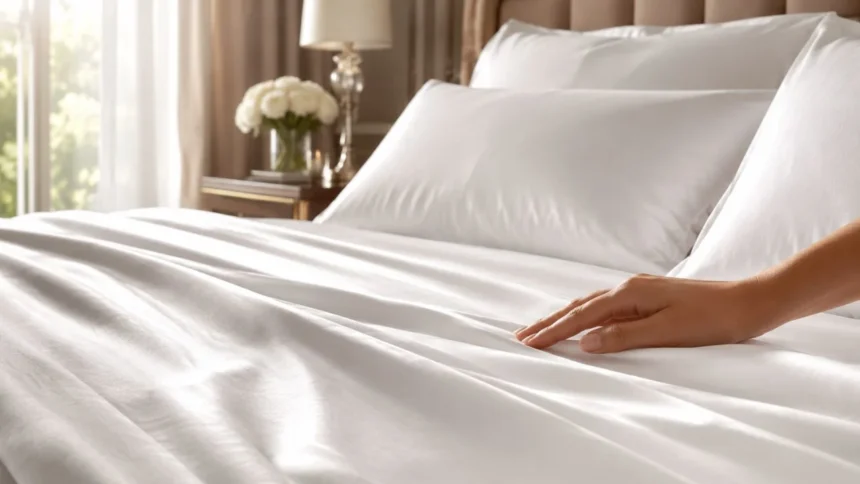
A good bed sheet thread count is usually between 200 and 500, but the ideal number depends on the material, weave and quality of the yarn. Thread count can help you compare some cotton sheets, yet it should never be the only factor you consider. A lower number made with excellent fibres can feel softer and last longer than a cheaply produced sheet advertising an extremely high count.
Many shoppers assume that a 1,000-thread-count sheet must be more luxurious than one labelled 300 thread count. In reality, manufacturers may increase the advertised number by using multi-ply yarns made from several thinner strands twisted together. This can produce a heavier sheet without necessarily improving softness, durability or breathability.
The best bed sheets combine a suitable thread count with high-quality fibres and a comfortable weave. Long-staple cotton, for example, can create smoother and stronger yarns because it contains longer fibres with fewer exposed ends. Percale and sateen weaves also feel different even when their thread counts are similar.
Understanding these details can help you avoid paying more for an impressive number that does not improve your sleep. This guide explains what thread count means, which ranges work for popular fabrics and how to choose sheets for warm weather, cold nights, sensitive skin and everyday use.
What Is Considered a Good Bed Sheet Thread Count?
For most cotton sheets, a thread count between 200 and 400 provides a useful balance of softness, breathability and durability. Sheets within this range can feel comfortable without becoming excessively dense or heavy. The final result still depends on the cotton quality, weave and manufacturing process.
Percale sheets often perform well between approximately 200 and 350 thread count. This crisp, breathable weave does not need an extremely high count to feel comfortable. In fact, packing too many threads into percale fabric may reduce the light and airy quality that makes it popular with warm sleepers.
Sateen sheets commonly fall between 300 and 500 thread count because their weave places more threads across the surface. This creates a smoother, silkier feel with a subtle sheen. A well-made 400-thread-count sateen sheet can feel more luxurious than a poorly constructed product claiming 800 or 1,000 threads.
The right range is therefore not one universal number. A good bed sheet thread count should support the qualities you want, such as coolness, softness, warmth or crispness. Material and weave should always be considered alongside the number printed on the packaging.
What Does Thread Count Actually Mean?
Thread count refers to the number of horizontal and vertical threads woven into one square inch of fabric. The horizontal threads are known as weft threads, while the vertical threads are called warp threads. Adding these numbers together produces the stated thread count.
For example, a fabric with 150 vertical threads and 150 horizontal threads per square inch may be described as 300 thread count. This measurement can provide some information about fabric density, but it does not automatically reveal the quality, thickness or length of the fibres.
Thread count is most useful when comparing sheets made from similar materials and constructions. Comparing a 250-thread-count cotton percale sheet with a 400-thread-count cotton sateen sheet is not completely straightforward because the two weaves are designed to produce different textures and levels of airflow.
The measurement becomes even less useful when comparing cotton with linen, silk or bamboo-derived fabrics. Each material has its own fibre structure and production method. A lower thread count in one fabric may deliver better comfort and durability than a much higher number in another.
Is a Higher Thread Count Always Better?
A higher thread count is not automatically better because manufacturers can reach large numbers in different ways. Some products use extremely fine single-ply threads, while others count each strand within a multi-ply yarn separately. Both sheets may show the same number while feeling completely different.
Very densely woven sheets can also trap more body heat. This may appeal to someone who wants warmer bedding, but it can be uncomfortable for hot sleepers or people living in humid climates. More threads can reduce airflow if the fabric becomes overly tight and heavy.
Excessively high thread counts may also create a misleading impression of luxury. Claims above 600 or 800 should be examined carefully, especially when the sheets are inexpensive. Producing a genuine, high-quality fabric at those densities requires excellent materials and careful manufacturing, which usually increases the price.
Rather than choosing the largest number available, look for a realistic thread count supported by good fibres and construction. A well-made 300-thread-count sheet can provide softness, breathability and long-term value without relying on exaggerated marketing claims.
What Is the Best Thread Count for Percale Sheets?
Percale is a plain weave in which one thread passes over and then under another. This balanced structure creates a matte finish with a clean, crisp feel. It is often compared with the fresh texture of a well-ironed hotel sheet.
A thread count between 200 and 350 is generally suitable for cotton percale sheets. This range allows the fabric to remain lightweight and breathable while still feeling smooth enough for regular use. Higher numbers are not necessarily required for good-quality percale.
Percale is particularly popular with hot sleepers because its open, balanced weave allows air to circulate. It can also work well in warm bedrooms and during summer. Fresh percale sheets may feel slightly firm at first but often soften gradually with washing.
Shoppers who enjoy cool, crisp bedding should focus on fibre quality rather than searching for the highest possible count. A 250-thread-count percale made from long-staple cotton may feel smoother and last longer than a denser sheet made with shorter, weaker fibres.
What Is the Best Thread Count for Sateen Sheets?
Sateen is woven so that more threads lie across the fabric surface. This construction creates a smoother texture and a slight sheen. The result feels softer and more fluid than percale, making sateen attractive to people who prefer cosy, silky bedding.
A good thread count for cotton sateen sheets is generally between 300 and 500. This range supports the fabric’s smooth surface without making it unnecessarily heavy. Sateen with a moderate thread count can drape comfortably over the body and feel warm during cooler nights.
Because sateen exposes more thread on the surface, it may be more vulnerable to snagging or pilling than a tightly balanced percale weave. Strong, long-staple fibres can reduce this risk by creating smoother yarns with fewer loose ends.
Sateen may not be the best option for everyone. People who sleep hot may find it warmer than percale, while those who dislike crisp sheets may prefer its softer finish. Choosing between the two should depend on texture and temperature preferences rather than thread count alone.
Why Fibre Quality Matters More Than Thread Count
The quality of the raw fibre strongly affects how a sheet feels and performs. Longer cotton fibres can be spun into smoother, finer and stronger yarns. Shorter fibres create more exposed ends, which may contribute to roughness, lint and pilling over time.
Long-staple and extra-long-staple cotton are often associated with better-quality bedding. These terms describe fibre length rather than a particular brand. Pima cotton and some Egyptian cotton products may contain long fibres, but the label should be supported by trustworthy sourcing and manufacturing information.
A high thread count made from weak, short fibres may initially feel dense but deteriorate more quickly. Washing and friction can loosen the exposed fibre ends, causing the surface to become fuzzy or uneven. A lower thread count made from strong yarn may remain smooth for much longer.
When comparing sheets, consider whether the product provides information about fibre length, cotton type and yarn construction. A realistic thread count paired with single-ply, long-staple cotton is usually a better sign than a large number with little explanation about the material.
Single-Ply and Multi-Ply Yarn Explained
A single-ply yarn is made from one continuous strand of spun fibre. When the fibres are strong and fine, single-ply yarn can create smooth, breathable sheets without unnecessary weight. Many high-quality cotton sheets use single-ply construction.
Multi-ply yarn is created by twisting two or more strands together. This method can add strength when the individual fibres are weak, but it can also be used to inflate the advertised thread count. A 300-thread fabric made with two-ply yarn may be marketed as 600 thread count.
This calculation does not necessarily mean the sheet contains twice as many woven yarns. Instead, each strand within the yarn may be counted separately. The finished fabric can feel thicker and heavier without delivering the softness or airflow shoppers expect from a premium sheet.
Look for product descriptions that clearly state whether the yarn is single-ply or multi-ply. When this information is unavailable, treat very high thread-count claims cautiously. A transparent description of the fibres and weave is often more valuable than an impressive number alone.
What Thread Count Is Best for Hot Sleepers?
Hot sleepers usually benefit from lightweight bedding that allows heat and moisture to escape. Cotton percale between 200 and 350 thread count is often a practical choice because its crisp weave promotes airflow. A lower but well-constructed count can feel cooler than dense luxury bedding.
Material also matters. Cotton absorbs moisture and generally feels breathable, while linen allows excellent airflow because of its naturally textured structure. Some bamboo-derived viscose sheets feel smooth and cool, although their comfort depends on fibre processing and fabric construction.
Avoid assuming that softness requires an extremely high thread count. Dense sheets can hold heat close to the body, especially when they use thick multi-ply yarns. A silky surface may feel cool when first touched but still trap warmth during the night.
Hot sleepers should consider weave, fabric weight and moisture management alongside thread count. Breathable bedding, lightweight duvets and a suitable room temperature can work together to create a cooler and more comfortable sleep environment.
What Thread Count Is Best for Cold Sleepers?
People who frequently feel cold may prefer a slightly denser sheet that holds more warmth around the body. Cotton sateen between 300 and 500 thread count can offer a smooth and cosy feel. Its weave generally provides less airflow than percale.
Thread count alone does not determine warmth, however. Flannel sheets are warm because the fabric surface is brushed to create soft fibres that hold air. They are usually described by fabric weight rather than relying mainly on thread count.
Cold sleepers may also benefit from layering their bedding. A breathable cotton sheet combined with a warmer duvet or blanket provides more flexibility than choosing an extremely dense bottom sheet. Layers can be removed or added as the room temperature changes.
Consider the season before buying one sheet set for year-round use. Crisp percale may feel refreshing during summer, while sateen or flannel may be more comfortable during winter. Owning different sheet types can provide better temperature control throughout the year.
Does Thread Count Matter for Linen Sheets?
Thread count is not the most useful way to judge linen sheets. Linen fibres are naturally thicker than many cotton fibres, so fewer threads are required to create a durable fabric. A linen sheet can therefore have a relatively low count while remaining strong and comfortable.
Many linen products are assessed by fabric weight, fibre quality and weave rather than a high thread count. The fabric often feels textured when new but becomes softer with repeated use and washing. High-quality linen can remain breathable while providing comfortable insulation.
A low number should not be interpreted as poor quality when shopping for linen. Trying to pack too many thick linen threads into the fabric could reduce the relaxed airflow and distinctive texture that people value. The comparison rules used for cotton do not directly apply.
Check whether the linen feels substantial without being excessively stiff or heavy. Look for strong stitching, transparent material information and suitable care instructions. These details provide a more reliable indication of quality than searching for a cotton-style thread-count range.
Does Thread Count Matter for Bamboo Sheets?
Sheets described as bamboo are usually made from fibres such as viscose, rayon or lyocell produced using bamboo as the original plant source. The finished fibre is processed before it is woven into fabric. Its feel depends heavily on the manufacturing method and weave.
Many bamboo-derived sheets have a smooth, soft surface and strong drape. Thread counts between approximately 250 and 400 are commonly marketed, but the number is not directly comparable with cotton because the fibres behave differently.
A very high count is not required for softness. Bamboo-derived viscose fibres can feel smooth even at moderate densities, while an overly tight weave may reduce airflow. Product quality, chemical processing, durability and care requirements should all be considered.
Look beyond broad claims such as natural, eco-friendly or luxury bamboo. Check the precise fibre name on the label and review how the fabric should be washed. Clear material information can help you judge whether the sheet meets your expectations for softness, breathability and responsible production.
How Thread Count Affects Softness and Comfort
Thread count can influence softness, but it is only one part of the fabric’s feel. Fibre length, yarn thickness, weave and finishing treatments can all change the texture. Two sheets with the same number may therefore feel noticeably different.
Sateen tends to feel smooth immediately because more thread lies across its surface. Percale feels crisper and may require several washes before becoming softer. Neither texture is automatically better; comfort depends on personal preference and sleeping temperature.
Some inexpensive sheets are treated with softening agents to create an appealing feel in the shop. That finish may fade after washing, revealing a rougher fabric underneath. Strong fibres provide more dependable softness because the quality is built into the yarn itself.
When possible, feel the fabric rather than judging it from the packaging. Online shoppers can review detailed material descriptions, construction information and return policies. The best sheet should feel comfortable after regular washing, not only when it is brand new.
How Thread Count Affects Durability
A moderate thread count made from strong fibres can provide excellent durability. The yarns need to withstand repeated movement, body weight, washing and drying. Fibre strength and fabric construction are therefore more important than density alone.
Very low-quality, loosely woven sheets may wear thin quickly, particularly in areas that experience frequent friction. However, increasing the thread count does not automatically solve this problem. Weak fibres can still break, pill and lose their smoothness.
Extremely dense sheets may also take longer to dry and experience more stress during washing. If the fabric is made from multi-ply yarn, it may feel bulky without offering better long-term performance. Following the care instructions can help reduce unnecessary wear.
Inspect stitching, hems and elastic when choosing a fitted sheet. Reinforced seams and well-finished edges can contribute to a longer lifespan. A sheet set is only as practical as its weakest component, regardless of the thread count printed on the label.
Common Thread Count Marketing Tricks
One common marketing tactic is displaying very high numbers without explaining the yarn construction. Multi-ply strands may be counted individually, creating claims of 800, 1,000 or even higher. The actual number of woven yarns can be considerably lower.
Another tactic is presenting thread count as the only sign of luxury. Packaging may use large numbers while providing little information about fibre length, weave or cotton quality. This encourages shoppers to compare figures instead of evaluating the whole product.
Some manufacturers also use broad terms such as Egyptian-style, hotel quality or luxury cotton without providing a clear definition. These descriptions may sound impressive but do not guarantee long-staple fibres, responsible sourcing or superior construction.
Treat unrealistic claims with caution, especially when the price seems unusually low. A genuinely premium material requires quality fibres and careful production. Transparent specifications and believable numbers are often better indicators than dramatic marketing language.
How to Choose Quality Bed Sheets Online
Start by reading the full material description rather than relying on the product title. Check whether the sheets are made from cotton, linen, polyester, viscose or a blend. Different fibres affect breathability, texture, care and durability.
Next, identify the weave. Percale usually feels crisp and cool, while sateen feels smoother and warmer. Jersey resembles a soft knitted T-shirt, and flannel is brushed for extra warmth. The weave may influence your comfort more than a small difference in thread count.
Look for information about single-ply yarn, long-staple cotton, fabric weight and independent material certifications where relevant. Clear, detailed specifications suggest that the manufacturer is not relying only on a high thread-count claim.
Review the return policy because comfort is personal. A sheet that receives positive reviews may still feel too crisp, slippery, warm or heavy for you. Being able to wash or test the bedding according to the retailer’s policy can reduce the risk of an unsuitable purchase.
Choosing the Right Sheets for Sensitive Skin
People with sensitive skin may benefit from smooth, breathable sheets that do not feel rough or trap excessive heat. High-quality cotton percale, cotton sateen and well-washed linen are popular options, depending on the preferred texture.
An extremely high thread count is not essential for comfort. A moderate count made from smooth, long fibres may create less surface fuzz than a dense sheet made from short fibres. Fewer loose fibre ends can help the fabric feel cleaner against the skin.
Consider the finishes used on the material. Dyes, wrinkle-resistant treatments and fragrances from laundry products may affect sensitive individuals. Washing new sheets before use can remove some manufacturing residue and loose fibres.
Skin discomfort can have many causes, so bedding changes may not solve every problem. Choose gentle laundry products, rinse thoroughly and follow appropriate medical advice when irritation persists. Comfortable sheets should support healthy sleep without creating additional friction or overheating.
How Washing Changes the Feel of Bed Sheets
Many natural-fibre sheets become softer after repeated washing. Percale gradually loses some of its initial stiffness, while linen develops a more relaxed and comfortable texture. This change is normal and can improve the sleeping experience.
Using too much detergent may leave residue that makes sheets feel stiff or greasy. Follow the detergent instructions and adjust the amount for the load size, water hardness and soil level. An additional rinse may help when residue is a recurring issue.
Very high drying temperatures can weaken fibres and shrink some materials. Lower heat or line drying may help protect the fabric, although care labels should always guide the method. Overloading the washing machine can also prevent thorough cleaning and rinsing.
Avoid judging a high-quality natural sheet only by its first-night feel. Some fabrics need several washes to reach their best texture. Proper care allows the fibres to soften gradually without relying on temporary chemical finishes.
Which Thread Count Offers the Best Value?
The best-value sheets are often found in the middle of the thread-count range. Cotton sheets between 200 and 500 can deliver excellent comfort when the fibres and construction are good. Paying more for a much higher number may not produce a noticeable improvement.
Value should be measured over the lifespan of the product rather than only by the purchase price. A strong sheet that remains smooth after years of washing may cost less per use than a cheaper set that pills, tears or loses its shape quickly.
Consider how often the sheets will be used. Everyday bedding needs durable stitching, easy care and a comfortable year-round feel. A guest-room set may be used less frequently, allowing price and appearance to carry more weight in the decision.
Avoid paying for a number that does not match your needs. Hot sleepers may prefer a breathable 250-thread-count percale, while someone seeking a silky feel may value a 400-thread-count sateen. The most worthwhile sheet is the one you enjoy sleeping on regularly.
Final Thoughts on Good Bed Sheet Thread Count
A good bed sheet thread count is generally between 200 and 500 for cotton, but the best number varies by weave. Percale often performs well between 200 and 350, while sateen commonly feels comfortable between 300 and 500.
Thread count should be treated as one helpful detail rather than a complete quality score. Fibre length, yarn construction, weave, finishing and stitching all influence how a sheet feels, breathes and wears over time.
Be cautious of extremely high numbers, particularly when the manufacturer does not explain whether the yarn is single-ply. Claims above 600 may rely on multi-ply counting or dense construction that adds weight without improving comfort.
Choose sheets according to your preferred texture and sleeping temperature. A realistic thread count paired with high-quality materials will usually provide better comfort and value than the largest number you can find.
FAQs
Is 200 thread count good for bed sheets?
Yes, 200 thread count can be good, particularly for breathable cotton percale. Fibre quality and construction determine whether the sheet feels smooth, strong and comfortable.
Is 400 thread count better than 200?
Not automatically. A 400-thread-count sateen may feel smoother and warmer, while a 200-thread-count percale may feel lighter and cooler. The better option depends on the weave and your preferences.
Is 1,000 thread count worth buying?
A 1,000-thread-count sheet is not necessarily better and may use multi-ply yarn to increase the advertised number. Check the fibre quality, ply, weave and fabric weight before paying extra.
What thread count do hotels use?
Hotels commonly use durable cotton sheets within a moderate thread-count range rather than choosing the highest possible number. Crisp percale is popular because it is breathable, washable and comfortable.
What thread count is best for summer?
Cotton percale between approximately 200 and 350 thread count is a strong summer option. Its lightweight, breathable weave can feel cooler than dense sateen or high-count sheets.