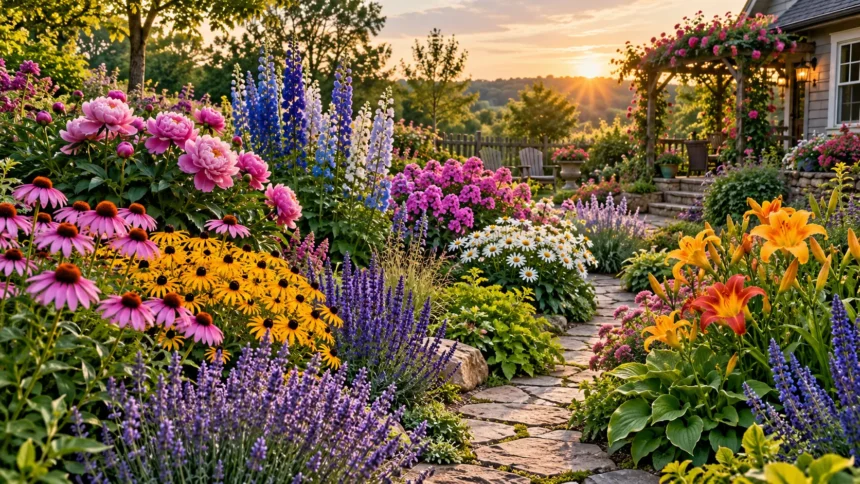
From cheerful coneflowers and colorful daylilies to fragrant lavender and elegant peonies, perennial flowering plants offer something for nearly every garden style. Some thrive in direct sunlight, while others prefer shady spaces and cooler conditions. Understanding their growing requirements, blooming seasons, and maintenance needs helps you build a garden that becomes more established and rewarding over time.
What Are Perennial Flowers and Why Should You Grow Them?
Perennial flowers are plants that live for more than two years and can return through multiple growing seasons. Unlike annual flowers, which generally complete their life cycle in one season, many herbaceous perennials grow again from their established root systems. Their aboveground growth may disappear during winter, but healthy plants can produce fresh leaves and flowers when favorable conditions return.
One of the biggest advantages of perennial plants is their ability to establish lasting garden structures. Once planted successfully, many varieties continue growing for several years with appropriate maintenance. Their expanding root systems can also improve soil stability, while flowering varieties provide seasonal food sources for bees, butterflies, and other beneficial pollinators.
However, perennial does not necessarily mean a plant will flower continuously throughout the year. Most varieties have specific blooming seasons influenced by temperature, sunlight, rainfall, and local growing conditions. Selecting different species with overlapping flowering periods allows gardeners to enjoy changing colors from early spring through autumn without relying entirely on seasonal annuals.
Coneflowers: Colorful and Drought-Tolerant Perennial Flowers
These hardy flowering perennials generally perform best in full sunlight and well-drained soil. Once established, many coneflower varieties tolerate relatively dry conditions, making them useful for gardens where frequent watering is difficult. They also adapt to different soil types, although excessive moisture around their roots can cause problems during prolonged wet weather.
Coneflowers typically bloom from summer into early autumn, depending on the variety and local climate. Removing faded flowers may encourage additional blooms, while leaving some seed heads provides food for birds during colder months. Their upright stems and colorful petals also make them excellent companions for ornamental grasses, black-eyed Susans, and other sun-loving garden plants.
Black-Eyed Susans and Coreopsis for Bright Summer Flowers
Black-eyed Susans are cheerful flowering plants recognized for their golden-yellow petals and dark central disks. Several Rudbeckia varieties grow as reliable perennials, providing bold summer color in sunny flower beds. Their familiar appearance works beautifully in informal gardens, wildlife-friendly landscapes, and mixed borders where bright flowers create a welcoming atmosphere.
Coreopsis, often called tickseed, is another excellent choice for gardeners seeking long-lasting yellow flowers. Many perennial varieties produce abundant daisy-shaped blooms throughout summer, particularly when planted in suitable conditions. These plants generally prefer full sun and freely draining soil, although specific water requirements and winter hardiness vary between different species and cultivars.
Both black-eyed Susans and coreopsis can attract beneficial pollinators while adding natural movement to garden displays. Removing spent flowers may extend blooming on certain varieties, while leaving mature seed heads can support visiting birds. Combining these plants with purple salvia or coneflowers creates attractive color contrasts and helps maintain visual interest during warmer growing months.
Daylilies: Easy-Care Flowers That Return Every Year
Daylilies are among the most adaptable perennial garden flowers, appreciated for their colorful blooms and graceful, arching leaves. Despite their name, they are not true lilies and belong to a different botanical group. Individual flowers usually last only one day, but established plants often produce numerous buds that open across several weeks.
These low-maintenance perennial flowers perform well in full sun, although many tolerate partial shade. They grow in different soil conditions but generally flower best when provided with adequate sunlight and moisture. Daylilies are available in yellow, orange, pink, red, and numerous blended shades, making them suitable for colorful borders and foundation plantings.
Different daylily varieties bloom at different times, allowing gardeners to create longer flowering displays by combining early and late selections. Some cultivars also rebloom under favorable conditions, producing additional flowers after their main season. Dividing overcrowded clumps periodically can maintain healthy growth and provide extra plants for other areas of the garden.
Peonies: Beautiful Perennial Flowers That Last for Decades
Most garden peonies prefer full sun, fertile soil, and good airflow around their leaves. They perform particularly well in climates with sufficient winter chilling, which helps support normal seasonal growth and flowering. Planting herbaceous peony crowns too deeply can reduce blooming, so following appropriate planting-depth recommendations is important for long-term success.
Although their main flowering period is relatively short, peonies remain attractive after their blossoms fade because of their dense green foliage. Their large blooms make excellent cut flowers and work beautifully in traditional cottage gardens. Gardeners in very warm regions should choose carefully because many peony varieties struggle without suitable winter temperatures.
Lavender and Perennial Salvia for Fragrance and Pollinators
Lavender is valued for its fragrant purple flowers, silvery foliage, and attractive appearance in sunny landscapes. English lavender is a perennial shrub in suitable climates, although survival depends on winter temperatures, drainage, and humidity. Its aromatic flowers make it popular near garden pathways, raised beds, and outdoor seating areas where people can enjoy the scent.
Perennial salvia offers another dependable option for gardeners who enjoy upright flower spikes in purple, blue, pink, or white. Many hardy salvia varieties bloom during late spring and summer, attracting bees and other pollinating insects. These plants generally thrive in sunny locations and benefit from well-drained soil that prevents excessive moisture around their roots.
Lavender and perennial salvia pair beautifully with ornamental grasses, roses, and yellow-flowering perennials. Cutting back spent salvia flower spikes can encourage additional blooming in some varieties, while lavender requires careful pruning to maintain its shape. Both plants work particularly well in borders designed around fragrance, texture, and wildlife-friendly planting combinations.
Bee Balm and Asters for a Pollinator-Friendly Garden
Bee balm, also known as Monarda, produces unusual flowers with colorful petals that create a distinctive appearance in summer gardens. Depending on the variety, blossoms may appear red, pink, purple, or white. These flowering perennials attract bees, butterflies, and hummingbirds in appropriate regions, making them valuable additions to gardens designed to support wildlife.
Bee balm generally grows best in sunny locations with reasonably moist soil and good air circulation. Some varieties can develop powdery mildew, particularly when plants become overcrowded or conditions favor the disease. Choosing resistant cultivars, providing adequate spacing, and watering appropriately can help maintain healthier foliage throughout the growing season.
Asters complement bee balm by providing colorful flowers later in the gardening year. Many perennial asters bloom during late summer and autumn, when some earlier flowers have already faded. Combining these plants creates a longer sequence of seasonal color while supporting pollinators that continue visiting gardens toward the end of the growing season.
Best Perennial Flowers for Shade and Partial Sun
Hellebores are another excellent option for shaded areas, producing distinctive flowers during winter or early spring in many climates. Their evergreen or semi-evergreen foliage provides additional structure when other herbaceous perennials are dormant. These plants prefer well-drained, humus-rich soil and often grow successfully beneath deciduous trees where seasonal sunlight changes naturally.
Hostas are primarily grown for their attractive foliage, but many varieties also produce lavender or white flowers during summer. Their broad leaves create beautiful contrast alongside astilbe and hellebores in shaded planting arrangements. When selecting shade-loving perennials, consider soil moisture carefully because different species may have significantly different watering requirements.
Garden Phlox and Shasta Daisies for Classic Flower Beds
Garden phlox is a traditional flowering perennial that produces rounded clusters of blossoms during summer. Its flowers commonly appear in shades of pink, purple, red, and white, often creating colorful displays above green foliage. Many varieties also release a pleasant fragrance, making garden phlox especially attractive near walkways, patios, and outdoor relaxation areas.
These flowering plants generally prefer full sun or light shade and soil that retains reasonable moisture without becoming waterlogged. Good airflow is important because some garden phlox varieties are susceptible to powdery mildew. Selecting resistant cultivars, avoiding overcrowding, and maintaining suitable growing conditions can reduce the likelihood of persistent foliage problems.
Shasta daisies provide a different appearance through their familiar white petals and bright yellow centers. They generally prefer sunny, well-drained locations and produce flowers during late spring or summer, depending on climate and cultivar. Combining white daisies with colorful phlox creates classic perennial flower beds that feel fresh, balanced, and welcoming.
Sedum, Yarrow, and Catmint for Low-Maintenance Gardens
Yarrow is another hardy perennial known for its flat-topped flower clusters and finely divided foliage. Many varieties tolerate relatively dry conditions once established and attract beneficial insects during their flowering season. Its flowers appear in yellow, white, pink, and other shades, making it useful for naturalistic landscapes and sunny mixed borders.
Catmint, commonly known by its botanical genus Nepeta, produces soft mounds of aromatic foliage and numerous small flowers. Many garden cultivars bloom for extended periods and create attractive edging along pathways or flower beds. Combining catmint with sedum and yarrow provides contrasting textures while creating a relatively manageable planting scheme for sunny locations.
How to Plant and Care for Perennial Flowers Successfully
Successful perennial gardening begins with selecting plants suited to your climate, soil conditions, and available sunlight. Checking local hardiness information can help determine which varieties are likely to survive winter temperatures in your region. Gardeners should also consider mature plant size and spacing because overcrowded perennials may experience competition, poor airflow, and reduced flowering.
Preparing garden soil properly gives perennial roots a better environment for long-term development. Remove persistent weeds, loosen compacted soil where appropriate, and incorporate organic matter when suitable for the selected plants. Newly planted perennials generally require more consistent watering while their roots establish, even when mature plants are described as drought-tolerant.
Routine maintenance includes monitoring soil moisture, removing unwanted weeds, and trimming damaged or diseased growth when necessary. Some perennial flowers benefit from deadheading, while others provide valuable seeds or winter structure when left undisturbed. Dividing established clumps when they become crowded can restore vigor, although not every perennial requires frequent division.
Conclusion
Perennial flowers that bloom year after year make it possible to create beautiful, colorful gardens without replacing every plant each season. From cheerful coneflowers and dependable daylilies to fragrant lavender and elegant peonies, there are many attractive choices for different landscapes. Selecting plants suited to your growing conditions is essential for encouraging healthy growth and repeat flowering.
A successful perennial garden becomes even more appealing when you combine plants with different blooming periods and growth habits. Spring-flowering hellebores, summer-blooming salvia, and autumn asters can provide changing colors throughout much of the growing season. Mixing heights, foliage textures, and flower shapes also helps create garden beds that remain visually interesting between blooming periods.
Although many perennials require less replanting than annual flowers, they still benefit from proper soil preparation, watering, and occasional maintenance. Understanding each plant’s sunlight, moisture, and climate requirements helps prevent avoidable growing problems. With thoughtful planning and suitable care, perennial flowering plants can become lasting features of an attractive, welcoming garden.
Frequently Asked Questions (FAQs)
What Are the Best Perennial Flowers That Come Back Every Year?
Popular perennial flowers include coneflowers, peonies, daylilies, black-eyed Susans, asters, and salvia. The best choices depend on local climate, available sunlight, soil conditions, and the amount of maintenance you prefer.
Which Perennial Flowers Bloom the Longest?
Certain varieties of catmint, coreopsis, salvia, and coneflowers can produce flowers over extended periods. Their flowering duration depends on cultivar, weather, growing conditions, and whether removing faded blossoms encourages additional blooms.
Do Perennial Flowers Need to Be Replanted Every Year?
No, established perennial flowers generally survive for multiple growing seasons without annual replanting. However, their lifespan depends on plant variety, climate suitability, winter conditions, and maintenance, and some varieties are shorter-lived than others.
What Perennial Flowers Grow Best in Full Sun?
Coneflowers, daylilies, coreopsis, yarrow, and many salvia varieties generally grow well in full sunlight. Lavender and flowering sedum are also suitable for sunny locations when soil drainage and climate conditions meet their needs.
Can Perennial Flowers Grow in Shady Gardens?
Yes, shade-tolerant flowering perennials include astilbe, hellebores, and many hosta varieties. Their light and moisture requirements vary, so selecting suitable plants for your particular shade conditions improves long-term growing success.