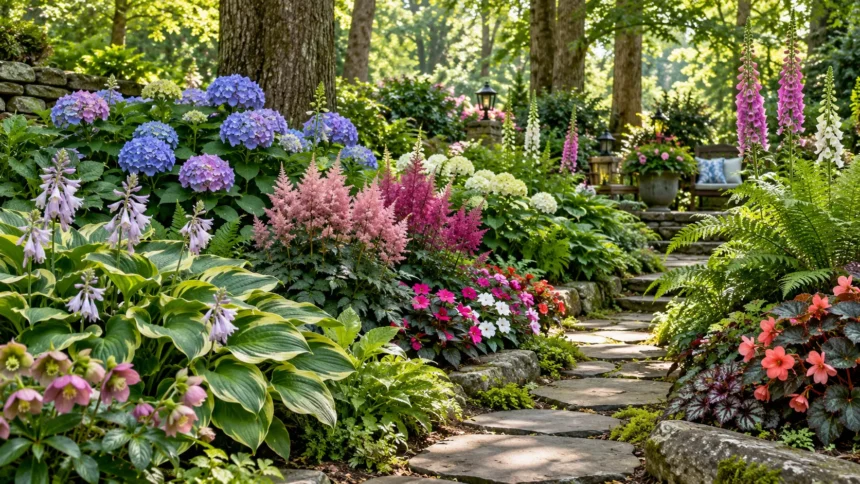
Creating a beautiful garden does not always require bright sunshine throughout the day. Many flowering plants grow well in shaded areas, bringing attractive colors, delicate blooms, and interesting textures to spaces beneath trees, beside fences, and around buildings. Choosing the best flowers for shade gardens can transform overlooked outdoor areas into welcoming landscapes filled with seasonal beauty.
Shade gardening requires understanding how much sunlight a particular area receives and selecting plants that suit those conditions. Some flowers thrive in partial shade, while others tolerate deeper shade with limited direct sunlight. With suitable soil, moisture, and plant combinations, gardeners can create colorful flower beds that remain attractive throughout different growing seasons.
1. Understand Different Types of Shade Before Choosing Flowers
Not every shady garden receives the same amount of sunlight, making it important to understand different shade conditions. Partial shade generally describes locations receiving around three to six hours of direct sunlight daily. Full shade receives less direct sunlight, while dappled shade occurs when sunlight filters through branches and leaves throughout the day.
Many flowering plants perform best in partial or dappled shade because they receive enough light to support healthy growth. Areas beneath large trees or beside tall buildings may experience deeper shade. Understanding these differences helps gardeners choose suitable plants rather than expecting every shade-tolerant flower to bloom equally well in all locations.
Before planting, observe your garden at different times of the day to understand its sunlight patterns. Morning sunshine is often gentler than strong afternoon sunlight, particularly in warmer climates. Recording these conditions allows you to select flowering plants that match the available light and reduces unnecessary maintenance problems later.
2. Impatiens: Colorful Flowers for Shady Garden Beds
Impatiens are among the most popular flowers for shade gardens because they produce colorful blooms in relatively low-light conditions. Their flowers appear in shades of pink, red, purple, orange, and white. Traditional impatiens are particularly useful for shaded borders, flower beds, and containers where many sun-loving annuals struggle to perform.
These plants generally prefer fertile, well-drained soil that remains consistently moist without becoming waterlogged. They grow well in partial shade, while many traditional varieties can tolerate considerable shade. New Guinea impatiens usually benefit from brighter conditions, making them suitable for locations receiving gentle morning sunlight and protection from intense afternoon heat.
Gardeners should maintain adequate spacing to encourage airflow and reduce disease problems. Some traditional impatiens varieties are vulnerable to downy mildew, so selecting resistant cultivars can be beneficial. With suitable watering and growing conditions, impatiens can provide continuous seasonal color and make shaded garden spaces feel more lively.
3. Begonias: Beautiful Blooms With Attractive Foliage
Begonias are versatile flowering plants that work well in many partially shaded garden settings. They produce attractive blooms in red, pink, orange, yellow, and white, depending on the variety. Their interesting leaf shapes and colors provide additional decorative value, making begonias useful even when individual plants are not producing many flowers.
Wax begonias are commonly grown in garden borders and containers, while tuberous begonias are valued for their larger, more decorative blooms. Many varieties prefer bright filtered light and protection from harsh afternoon sunshine. Because different types have different growing requirements, gardeners should choose varieties suited to their local climate and available sunlight.
Proper drainage is especially important because begonias can experience root problems when soil remains excessively wet. Watering should maintain suitable moisture without saturating the growing medium. Removing damaged leaves and maintaining airflow can help reduce fungal issues, allowing begonias to provide attractive seasonal displays in sheltered garden locations.
4. Astilbe: Feathery Flowers for Woodland Gardens
Astilbe is a popular flowering perennial known for its delicate, feathery flower plumes and attractive divided foliage. Its blooms appear in shades of pink, white, red, and purple, creating soft color combinations in shaded landscapes. Astilbe works particularly well in woodland gardens, shaded borders, and planting areas where soil moisture remains relatively consistent.
These plants generally prefer partial shade and fertile soil containing plenty of organic matter. They are especially useful in gardens where the soil stays evenly moist during the growing season. Although some varieties tolerate deeper shade, flowering may become less abundant when plants receive very little natural light throughout the day.
Astilbe requires attention during dry weather because insufficient moisture can cause leaves to develop brown edges. Adding organic mulch helps conserve soil moisture and moderate temperature changes. Mature plants may also benefit from occasional division, helping maintain healthy growth and allowing gardeners to expand their shaded flower beds naturally.
5. Hellebores: Early-Blooming Flowers for Shady Spaces
Hellebores are beautiful flowering perennials that bring color to gardens during late winter and early spring. Often called Lenten roses, these plants produce elegant flowers in white, pink, purple, green, and other subtle shades. Their evergreen or semi-evergreen foliage also provides lasting interest when many other flowering plants remain dormant.
Hellebores generally perform well in partial shade and can tolerate shaded woodland conditions when soil drainage is adequate. They prefer fertile, well-drained soil enriched with organic matter. Planting them beneath deciduous trees can be particularly effective because they receive additional light before surrounding branches develop their full summer foliage.
These perennials are relatively low-maintenance once established, although they may take time to develop into mature clumps. Removing damaged older leaves can improve their appearance and make emerging flowers easier to appreciate. Since hellebores contain substances that are harmful if ingested, gardeners should handle them carefully around children and pets.
6. Bleeding Hearts: Elegant Flowers for Partial Shade
Bleeding hearts are distinctive shade-loving perennials recognized for their delicate, heart-shaped flowers hanging from arching stems. Their blooms commonly appear in pink and white, creating an elegant display during spring. These plants are particularly attractive in woodland gardens, sheltered borders, and areas where taller trees provide protection from strong afternoon sunlight.
Traditional bleeding hearts, known botanically as Lamprocapnos spectabilis, generally prefer partial shade and organically rich, well-drained soil. They grow best when adequate moisture is available during their active growing season. Their soft foliage and unusual flowers complement ferns, hostas, and other shade-tolerant plants commonly used in woodland-style garden designs.
One important characteristic is that traditional bleeding hearts may become dormant during summer, especially in warmer conditions. Gardeners should plan surrounding plantings to fill the spaces left behind when foliage disappears. Combining bleeding hearts with later-growing perennials creates a more consistent garden appearance while allowing these beautiful spring flowers to return each year.
7. Lungwort: Spring Flowers With Decorative Spotted Leaves
Lungwort, commonly known by its botanical name Pulmonaria, is a shade-tolerant perennial valued for both its flowers and decorative foliage. Many varieties produce small pink, blue, or purple flowers during early spring. Their distinctive leaves often feature silver spots or markings, providing visual interest long after the main flowering period ends.
These plants are particularly suitable for partial shade and woodland-style garden beds with consistently moist, well-drained soil. Lungwort generally performs best in cooler growing conditions and appreciates protection from intense afternoon sunlight. Its relatively compact growth makes it useful along shaded pathways, beneath suitable shrubs, and near the front of flower borders.
Lungwort can develop powdery mildew when growing conditions are unfavorable, particularly where airflow is restricted. Providing appropriate spacing and watering the soil rather than repeatedly wetting leaves may help reduce problems. The combination of spring flowers and decorative foliage makes lungwort a useful choice for shaded gardens needing extended seasonal interest.
8. Columbines: Delicate Flowers for Dappled Shade
Columbines are charming flowering perennials recognized for their unusual blossoms and delicate, divided leaves. Their flowers appear in numerous colors, including blue, purple, yellow, pink, white, and red. Many varieties produce blooms during spring or early summer, creating attractive displays in cottage gardens, naturalistic landscapes, and partially shaded flower beds.
These plants often perform well in partial shade, especially where they receive morning sunshine and afternoon protection. They generally prefer well-drained soil and moderate moisture during active growth. Some columbine species are native to particular regions, making locally suitable varieties interesting choices for gardeners who want to support native planting schemes.
Columbines are often relatively short-lived perennials, but many varieties can reproduce through self-seeding when conditions are suitable. Their flowers may attract hummingbirds, bees, and other pollinators depending on the species. Allowing selected seed heads to mature can encourage future plants, although unwanted seedlings can be removed when necessary.
9. Woodland Phlox: Fragrant Flowers for Natural Gardens
Woodland phlox is a beautiful spring-flowering perennial that works particularly well in lightly shaded gardens. Known botanically as Phlox divaricata, this North American native produces clusters of delicate flowers in shades of lavender, blue, and pale purple. Its softly spreading growth creates attractive planting arrangements beneath trees and around woodland borders.
This plant generally prefers partial or dappled shade with fertile, well-drained soil containing organic matter. Consistent moisture during spring supports flowering, although established plants may tolerate some seasonal dryness. Woodland phlox is especially effective when planted in groups, allowing its small flowers to create a noticeable display across shaded garden areas.
The flowers can attract pollinators, including certain butterflies and bees, while contributing to the natural appearance of woodland landscapes. After flowering, gardeners can remove spent blooms or lightly trim plants to maintain a tidy shape. Providing adequate spacing and suitable soil conditions helps woodland phlox establish healthy growth and return in future seasons.
10. Toad Lilies: Unusual Flowers for Late-Season Color
Toad lilies are distinctive shade-loving perennials known for their small, orchid-like flowers with intricate spotted patterns. Their blooms often appear during late summer or autumn, providing color when many spring-flowering plants have finished. These unusual flowers make toad lilies an interesting addition to shaded borders and woodland gardens where subtle details can be appreciated.
Plants in the genus Tricyrtis generally prefer partial to full shade, depending on the species and local climate. They grow best in fertile, well-drained soil that retains adequate moisture. Their upright or arching stems can be positioned near pathways and seating areas, allowing visitors to appreciate the detailed appearance of individual flowers.
Toad lilies benefit from consistent moisture during dry periods and protection from excessive afternoon heat. Applying organic mulch can help regulate soil conditions and reduce moisture loss. Gardeners should select varieties suited to their local growing zone, particularly in regions experiencing very cold winters or prolonged summer heat.
11. Fuchsias and Wishbone Flowers for Shaded Containers
Fuchsias are attractive flowering plants recognized for their hanging, bell-shaped blooms in combinations of pink, purple, red, and white. Many varieties perform well in partial shade, particularly in climates with moderate summer temperatures. Their trailing growth makes them appealing for hanging baskets, decorative containers, and sheltered patios receiving filtered sunlight.
Wishbone flowers, commonly called Torenia, offer another colorful option for partially shaded containers and garden beds. Their small trumpet-shaped flowers appear in blue, purple, pink, and white combinations. These plants are often grown as annuals and can provide seasonal flowers in warm conditions when supplied with sufficient moisture and suitable growing soil.
Both flowering plants benefit from containers with adequate drainage and regular attention to moisture levels. Fuchsias often prefer cooler conditions than many warm-season annuals, while Torenia can perform well during warmer growing periods. Selecting plants according to local temperatures helps gardeners create attractive container arrangements without relying on direct afternoon sunlight.
12. Oakleaf Hydrangeas for Larger Shaded Garden Areas
Oakleaf hydrangeas are attractive flowering shrubs that provide larger decorative displays in gardens receiving partial shade. Known botanically as Hydrangea quercifolia, they produce clusters of white flowers that may gradually develop pinkish tones as they age. Their distinctive leaves also contribute seasonal interest, making these shrubs useful for landscape designs extending beyond small flower beds.
Oakleaf hydrangeas generally perform well in partial shade, particularly where they receive morning sunlight and afternoon protection. They prefer well-drained soil containing organic matter and benefit from regular moisture while becoming established. Although they tolerate some shade, deeply shaded conditions may reduce flowering and produce less vigorous overall growth.
These shrubs can provide visual interest through multiple seasons, including attractive autumn foliage and textured bark on mature plants. Their eventual size should be considered before planting because some varieties become relatively large. Choosing compact cultivars for smaller spaces can help maintain balanced garden layouts without requiring extensive pruning or repeated transplanting.
13. How to Design and Maintain a Beautiful Shade Garden
Creating an attractive shade garden involves combining flowering plants with different heights, textures, and blooming periods. Early-flowering hellebores and lungwort can provide spring interest, while impatiens and begonias contribute summer color. Late-blooming toad lilies add another seasonal layer, helping prevent shaded garden beds from appearing empty after early flowers fade.
Soil preparation is especially important because shaded areas beneath trees may experience competition for water and nutrients. Adding appropriate organic matter can improve soil structure, while mulch helps conserve moisture. However, gardeners should avoid piling mulch against tree trunks or plant crowns because excessive moisture around these areas may contribute to problems.
Regularly inspect plants for signs of inadequate light, excessive moisture, or poor airflow. Watering needs vary according to plant species, soil type, rainfall, and nearby tree roots. By selecting suitable combinations and adjusting care to local conditions, gardeners can maintain colorful, healthy flower beds that make shaded outdoor spaces more inviting.
Conclusion
Shade gardens offer wonderful opportunities to grow colorful flowers and create beautiful outdoor spaces without relying on constant sunshine. Plants such as impatiens, begonias, astilbe, hellebores, and bleeding hearts provide different flowering styles for various growing conditions. Combining suitable annuals, perennials, and flowering shrubs can create attractive landscapes with interesting textures and seasonal variety.
Choosing the best flowers for shade gardens requires understanding available sunlight, soil drainage, moisture levels, and regional growing conditions. Some plants tolerate deeper shade, while others produce more flowers when they receive filtered light or gentle morning sunshine. Matching each flower to its preferred environment helps support healthy growth and reduces unnecessary gardening difficulties.
With thoughtful planning and consistent maintenance, even overlooked shady corners can become beautiful garden features. Mixing early spring flowers with summer annuals and autumn-blooming perennials creates interest throughout the growing season. Whether you are designing a small shaded border or a larger woodland garden, the right flowering plants can bring lasting beauty to your landscape.
Frequently Asked Questions (FAQs)
1. What are the best flowers for full shade gardens?
Impatiens, certain begonias, hellebores, lungwort, and some toad lilies can tolerate substantial shade. However, most flowering plants still need some natural light, and blooming may decrease in extremely dark locations.
2. What flowers bloom all summer in the shade?
Traditional impatiens, suitable begonias, fuchsias, and wishbone flowers can provide extended summer color in appropriate shaded conditions. Flowering duration depends on climate, watering, available light, and the selected plant variety.
3. Can flowers grow in shade without direct sunlight?
Yes, many flowering plants can grow in bright indirect light or dappled shade. However, completely dark locations usually provide insufficient light for healthy flowering, so choosing appropriate plants remains essential.
4. What are the easiest shade flowers for beginners?
Impatiens, wax begonias, hellebores, and lungwort are practical options when their growing requirements match local conditions. Proper soil preparation, suitable watering, and correct sunlight exposure make ongoing care easier.
5. How do you make a shade garden more colorful?
Combine plants with different bloom times, flower colors, and foliage patterns. Using spring perennials, summer annuals, and late-season flowers helps maintain variety, while decorative leaves add interest between flowering periods.