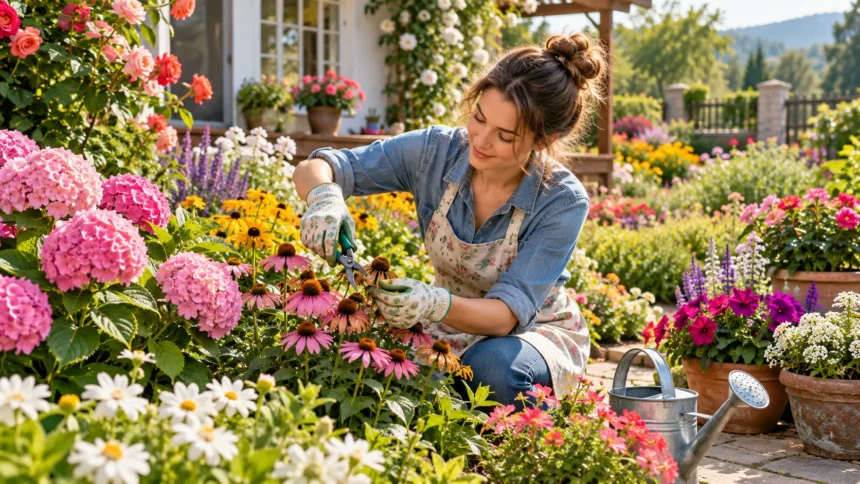
A garden filled with colorful flowers can make any outdoor space feel fresh, welcoming, and beautiful. However, many gardeners struggle to keep their flowers blooming throughout the growing season. Some plants produce flowers for only a short period, while others stop blooming because of improper watering, poor soil conditions, inadequate sunlight, or missed maintenance. Understanding what flowering plants need can help you enjoy a more colorful garden for longer.
Learning how to keep garden flowers blooming longer involves combining proper plant care with suitable growing conditions. Simple gardening habits such as removing faded flowers, watering consistently, providing balanced nutrients, and selecting the right location can make a noticeable difference. Different flowering plants have unique requirements, so successful garden maintenance begins with understanding their natural growth patterns.
Whether you grow flowers in garden beds, containers, hanging baskets, or raised planters, maintaining healthy plants is essential for encouraging continuous blooms. You do not need complicated equipment or expensive gardening products to improve flowering performance. This guide explores practical ways to extend blooming periods, prevent common gardening problems, and create a vibrant flower garden throughout the growing season.
1. Choose Flowers With Long Blooming Seasons
Selecting the right flowering plants is one of the most effective ways to enjoy blooms for an extended period. Some flowers naturally bloom for several weeks, while others continue producing new blossoms for much of the growing season. Understanding these differences helps gardeners choose plants that match their expectations and local climate.
Popular long-blooming flowers include zinnias, petunias, marigolds, cosmos, and certain varieties of salvias. Many of these plants produce additional flowers when growing conditions are suitable. However, bloom duration varies depending on the variety, temperature, sunlight, and overall plant health, so selecting locally adapted options is important.
Before purchasing seeds or plants, check their expected flowering periods and growing requirements. Combining varieties that bloom at different times can create a more continuous display of color. A thoughtfully planned garden provides visual interest even when individual plants naturally complete their flowering cycles.
2. Provide the Right Amount of Sunlight
Sunlight plays an important role in flower production because plants use light to produce the energy needed for growth. Many popular flowering annuals perform best in locations receiving at least six hours of direct sunlight daily. However, some flowers prefer partial shade and may struggle when exposed to intense afternoon heat.
Plants receiving insufficient light may produce healthy-looking leaves but relatively few flowers. Other plants may develop weak stems or grow toward brighter areas. Understanding each species’ sunlight requirements helps gardeners identify suitable planting locations and avoid unnecessary flowering problems.
Observe your garden throughout the day to determine which areas receive morning sun, afternoon sun, or consistent shade. Choose flowering plants suited to those conditions rather than forcing unsuitable varieties into difficult locations. Proper sunlight exposure supports stronger growth and helps plants produce blooms according to their natural potential.
3. Water Garden Flowers Consistently
Water is essential for healthy flowering because it supports nutrient transport, plant growth, and normal cellular functions. When flowering plants experience prolonged dryness, they may produce fewer blossoms or drop developing buds. Excessive watering can also create problems by reducing oxygen around the roots and encouraging certain diseases.
Most garden flowers benefit from watering that reaches the root zone rather than frequent light sprinkling. However, the ideal watering schedule depends on soil type, weather, plant species, and container size. Check soil moisture before watering and adjust the amount according to actual conditions instead of following a rigid schedule.
Watering near the base of plants can help direct moisture toward the roots while reducing unnecessary wetting of leaves. Early morning is often a convenient time because plants can use the moisture during warmer hours. Consistent, appropriate watering helps reduce stress and supports healthy flower development.
4. Improve Soil Quality for Better Flower Growth
Healthy soil provides the foundation for strong roots and reliable flower production. Garden flowers generally benefit from soil that contains suitable nutrients, drains appropriately, and supports healthy root development. Poor soil structure may restrict growth even when plants receive adequate sunlight and water.
Adding finished compost can improve soil structure and contribute organic matter to garden beds. In sandy soil, organic matter can improve moisture retention, while in heavy clay soil, it may support better soil structure over time. The appropriate amendments depend on existing soil conditions and plant requirements.
Testing soil can provide useful information about pH and nutrient availability before adding fertilizers or other amendments. Avoid assuming every garden requires the same products. Improving soil according to actual needs creates better growing conditions and supports the natural flowering potential of different plants.
5. Remove Faded Flowers Through Deadheading
Deadheading is the process of removing spent flowers from a plant after they begin fading. Many flowering species respond by directing more resources toward producing additional blossoms instead of developing seeds. This makes deadheading one of the most useful maintenance techniques for extending flowering in suitable plants.
Flowers such as petunias, marigolds, and many roses may benefit from regular removal of faded blooms, depending on the variety. Use clean pruning tools or your fingers when appropriate, and remove the spent flower according to the plant’s growth habit. Avoid damaging healthy buds or surrounding stems.
Not every flowering plant requires deadheading, and some naturally shed old flowers or bloom only once per season. Certain plants are also valued for their decorative seed heads or wildlife benefits. Understanding the particular variety helps determine whether deadheading will encourage more flowers or simply improve appearance.
6. Use Fertilizer According to Plant Needs
Flowering plants require essential nutrients to support roots, leaves, stems, and blossoms. Nitrogen, phosphorus, and potassium are important macronutrients, although plants also depend on several other minerals. Fertilizer can help when soil does not provide sufficient nutrients for healthy growth.
Using excessive fertilizer can cause problems instead of improving flowering. Too much nitrogen, for example, may encourage leafy growth in some plants without producing a corresponding increase in blossoms. Overfertilization can also damage roots or contribute to nutrient runoff into surrounding environments.
Choose fertilizer based on soil conditions and the requirements of the plants you are growing. Follow label instructions carefully and avoid applying more than recommended. Balanced nutrition supports healthy flowering, but fertilizer cannot compensate for poor sunlight, incorrect watering, or unsuitable growing conditions.
7. Prune Flowering Plants at the Right Time
Pruning helps manage plant shape, remove damaged growth, and encourage healthy development. For certain flowering plants, appropriate trimming can also stimulate new shoots that later produce blossoms. However, pruning at the wrong time may remove developing flower buds and reduce blooming.
Some shrubs produce flowers on stems formed during the previous growing season, while others bloom on new growth. This difference determines when pruning should occur. Understanding whether a plant flowers on old or new wood is especially important for hydrangeas, roses, and various ornamental shrubs.
Use clean, suitable pruning tools and remove damaged or unhealthy stems when necessary. Avoid severe pruning unless the plant’s growth habits and maintenance requirements support it. Thoughtful pruning encourages healthier structure and can improve flowering performance without disrupting the natural bloom cycle.
8. Protect Flowers From Extreme Temperatures
Temperature influences flowering because plants have preferred conditions for growth and reproduction. Excessive heat can cause some flowers to fade quickly, while cold temperatures may damage developing buds. Sudden changes in weather can also affect bloom duration and overall plant condition.
During hot periods, appropriate watering and suitable mulch can help maintain more stable root-zone conditions. Some shade-tolerant flowers may benefit from protection against intense afternoon sunlight. However, sun-loving plants should still receive the light they need for healthy flowering.
Cold-sensitive plants may require protection when unexpected frost is forecast. Suitable garden covers can help in certain conditions, provided they are used correctly. Choosing flowers adapted to your local climate remains one of the most reliable ways to reduce temperature-related problems.
9. Apply Mulch Around Flower Beds
Mulching helps maintain soil moisture and moderate temperature fluctuations around plant roots. Organic materials such as shredded leaves, bark, and suitable composted materials can be used in many flower beds. Mulch may also reduce weed growth, allowing flowering plants to experience less competition for resources.
Apply a suitable layer around plants while keeping material away from stems and crowns. Piling mulch directly against plant bases can trap excessive moisture and contribute to certain problems. The appropriate thickness depends on the material and local conditions, but excessive layers should generally be avoided.
Mulch is particularly helpful during warm weather when soil moisture can evaporate quickly. Organic materials may gradually break down and contribute to soil structure. Combined with appropriate watering, mulching can create more stable growing conditions that support healthy flowering throughout the season.
10. Control Weeds Around Flowering Plants
Weeds compete with garden flowers for sunlight, water, nutrients, and growing space. When unwanted plants become established, they may reduce the resources available to nearby flowers. Regular weed management can help maintain healthier garden beds and support more consistent flowering.
Remove weeds when they are small because their roots are usually easier to manage. Hand-pulling, appropriate cultivation, and mulching can reduce competition without requiring complicated treatments. Take care when working near shallow-rooted flowers to avoid disturbing desirable plants.
Identifying weeds correctly is important because some unfamiliar seedlings may actually be desirable flowers or beneficial native plants. Avoid unnecessary chemical applications, particularly around pollinators and sensitive plants. Consistent garden maintenance helps maintain a balanced growing environment while reducing preventable competition.
11. Watch for Pests and Plant Diseases
Pests and diseases can reduce flowering by damaging leaves, stems, roots, and developing buds. Common garden concerns include aphids, spider mites, powdery mildew, and certain fungal infections. Healthy plants may tolerate minor pest activity, but significant problems can interfere with normal growth.
Inspect flowering plants regularly for unusual discoloration, damaged leaves, or changes in growth. Early identification can help determine whether intervention is necessary. Proper spacing, appropriate watering, and removing severely affected plant material can reduce conditions that favor some diseases.
Not every insect found in a garden is harmful, and many species contribute to pollination or natural pest control. Identify the problem before choosing a treatment and use the least disruptive effective approach. Protecting beneficial organisms helps support a healthier garden ecosystem and reduces unnecessary pesticide use.
12. Give Flowers Enough Space to Grow
Proper spacing allows flowering plants to access sunlight, water, and nutrients without excessive competition. Crowded garden beds may restrict air movement and create conditions that encourage certain diseases. Plants with insufficient space can also become difficult to maintain as they mature.
When planting flowers, consider their expected mature height and width rather than their size at purchase. Seed packets and plant labels often provide recommended spacing information. Following these guidelines helps create balanced garden beds that remain manageable as the growing season progresses.
Spacing requirements vary between compact annuals, spreading perennials, and larger flowering shrubs. Some plants naturally grow close together, while others require more open space. Understanding the growth habits of each variety helps maintain healthy development and makes pruning, watering, and other maintenance activities easier.
13. Encourage Pollinators in Your Flower Garden
Pollinators such as bees, butterflies, and certain flies play important roles in plant reproduction and garden ecosystems. Many flowering plants depend on insects or other animals to transfer pollen. Creating a welcoming habitat can support biodiversity and improve the overall ecological value of your garden.
Planting a variety of flowers with different shapes, colors, and blooming periods can provide food resources across the growing season. Native flowering plants are often valuable because they support local pollinator communities. Providing suitable habitat and reducing unnecessary pesticide use can further improve garden conditions.
Pollination does not necessarily extend the blooming period of ornamental flowers, and some plants may redirect resources toward seed development afterward. However, supporting pollinators remains an important part of responsible gardening. A diverse garden can provide beautiful seasonal displays while contributing to local wildlife.
14. Choose Annuals and Perennials Wisely
Annuals and perennials have different growth patterns that influence when and how long they flower. Annual plants generally complete their life cycles within one growing season, while perennials survive for multiple years under suitable conditions. Understanding these differences helps gardeners plan longer-lasting displays.
Many annual flowers, including zinnias and marigolds, can bloom repeatedly when conditions are favorable. Perennials may produce flowers during particular seasonal windows, with some varieties offering additional blooming after suitable maintenance. Combining these groups can help maintain color as individual plants finish flowering.
Select varieties based on climate, sunlight, soil requirements, and expected bloom periods. A garden containing only plants with the same flowering season may look less colorful later in the year. Thoughtful plant selection creates a more balanced display without depending on constant replacement.
15. Plan a Succession of Seasonal Blooms
Succession planting involves organizing flowers so different varieties bloom at different times. This approach helps maintain garden color even when individual plants have relatively short flowering periods. Rather than expecting every flower to bloom continuously, gardeners can plan a sequence of seasonal displays.
For example, spring-flowering bulbs may provide early color before summer annuals reach their peak. Later-season perennials can continue the display as temperatures change. Exact timing depends on local climate and plant varieties, so a regional planting calendar can be helpful.
Keep simple records of when flowers begin and finish blooming each year. These observations can guide future plant selection and reveal gaps in seasonal color. Over time, succession planning can create a garden that remains visually interesting across a longer portion of the year.
16. Maintain Flowers Growing in Containers
Container flowers require slightly different care because their roots are limited to a smaller amount of growing medium. Pots can dry out faster than garden beds, particularly during hot or windy weather. Maintaining appropriate moisture is therefore important for healthy flowering.
Choose containers with suitable drainage openings and use a growing medium designed for container gardening. Different flowers have different root-space requirements, so avoid overcrowding. Check moisture regularly and adjust watering according to pot size, plant needs, and local weather conditions.
Container nutrients may become depleted or washed out over time, making appropriate feeding useful for some plants. Follow product recommendations rather than applying excessive fertilizer. Regular monitoring, deadheading when suitable, and careful placement can help container flowers remain healthy and attractive.
17. Avoid Common Flower Gardening Mistakes
One common gardening mistake is watering without checking soil moisture. Excessive watering can damage roots, while prolonged dryness may cause flowers to wilt or drop buds. Understanding actual soil conditions is more useful than following the same watering schedule throughout every season.
Another mistake involves using too much fertilizer in the hope of producing more flowers. Nutrient imbalances can encourage unwanted growth patterns or damage plants. Gardeners may also remove flower buds accidentally by pruning at the wrong time or applying inappropriate maintenance techniques.
Successful flowering depends on understanding the individual plant rather than using one method for every species. Read growing instructions and observe how flowers respond to their environment. Small adjustments based on plant needs can often improve results more effectively than introducing numerous products.
18. Adjust Flower Care Throughout the Growing Season
Flower maintenance should change as plants move through different stages of growth. Young plants may require particular attention to root establishment, while mature flowering plants need suitable moisture and nutrient availability. Seasonal changes also affect sunlight, temperature, and watering requirements.
During active blooming, monitor plant health and remove faded flowers when appropriate. As temperatures rise, check whether containers and exposed beds require more frequent watering. Later in the season, some plants may benefit from reduced feeding or different pruning practices depending on their growth cycle.
Keeping a simple gardening journal can help track flowering periods, weather conditions, and maintenance activities. These notes provide useful information when planning future seasons. Adapting care according to plant development helps maintain healthier flowers and reduces the risk of unnecessary maintenance.
19. Keep Your Garden Healthy After Flowers Fade
When flowers finish blooming, the plants may still require care to support future growth or seasonal recovery. Some perennials store energy in their roots and other structures for the following year. Removing all foliage immediately after flowering may interfere with this process.
For suitable plants, allow healthy leaves to remain until they naturally decline or until recommended seasonal pruning. Remove diseased or damaged material according to appropriate gardening practices. Some flowers may produce attractive seed heads that provide food or habitat for wildlife.
Post-bloom care depends on the species and local growing conditions. Annuals near the end of their life cycle require different attention from long-lived perennials or flowering shrubs. Understanding these distinctions helps gardeners prepare for future growth while maintaining a tidy and ecologically useful garden.
20. Build a Simple Flower Maintenance Routine
A consistent maintenance routine makes it easier to identify plant needs before problems become serious. Instead of spending long periods addressing neglected garden beds, gardeners can perform small checks throughout the week. These activities help maintain healthy plants while keeping gardening enjoyable.
Regular tasks may include checking soil moisture, inspecting leaves, removing weeds, and deadheading suitable flowers. More occasional activities might involve applying appropriate fertilizer, adjusting mulch, or pruning plants according to their growth habits. The ideal schedule depends on garden size, climate, and the types of flowers being grown.
A routine should remain flexible because plant needs can change quickly with weather and seasonal conditions. Focus on observing your garden rather than following a complicated checklist without considering actual conditions. Consistent attention and simple care practices can help flowers remain healthy and bloom according to their natural potential.
Conclusion
Keeping garden flowers blooming longer involves creating suitable growing conditions and maintaining consistent plant care throughout the season. Appropriate sunlight, watering, soil quality, and nutrition all contribute to healthy flowering. Deadheading suitable plants, pruning correctly, and preventing avoidable stress can also help support repeated blossoms.
Different flowers have different natural blooming periods, so no single gardening technique guarantees continuous flowers from every plant. Combining long-blooming annuals, seasonal perennials, and carefully selected varieties can help maintain garden color over time. Observing individual plant requirements is more effective than applying the same maintenance approach everywhere.
The best way to enjoy a colorful garden is to combine thoughtful planning with simple, practical habits. Check your plants regularly, adjust care according to weather conditions, and choose flowers suited to your local environment. With patience and consistent attention, your garden can provide beautiful blooms and an enjoyable outdoor space throughout the growing season.
FAQs
What is the best way to keep garden flowers blooming longer?
Provide suitable sunlight, consistent watering, healthy soil, and appropriate nutrients. Removing faded flowers from varieties that benefit from deadheading can also encourage additional blooms during the growing season.
Does deadheading help flowers bloom longer?
Yes, deadheading can encourage repeated flowering in many plant varieties by removing spent blossoms before seed development. However, some flowers do not require deadheading or naturally bloom only once.
What fertilizer helps flowers bloom longer?
The best fertilizer depends on soil conditions and plant requirements. A soil test can help identify nutrient needs, while avoiding excessive nitrogen may prevent overly leafy growth in some flowering plants.
How often should I water flowering plants?
Watering frequency depends on weather, soil type, plant species, and growing conditions. Check moisture around the root zone and water appropriately rather than relying on a fixed daily schedule.
Which garden flowers bloom for the longest time?
Zinnias, petunias, marigolds, cosmos, and several salvia varieties can provide extended seasonal flowering under suitable conditions. Actual bloom duration depends on climate, plant variety, and maintenance.