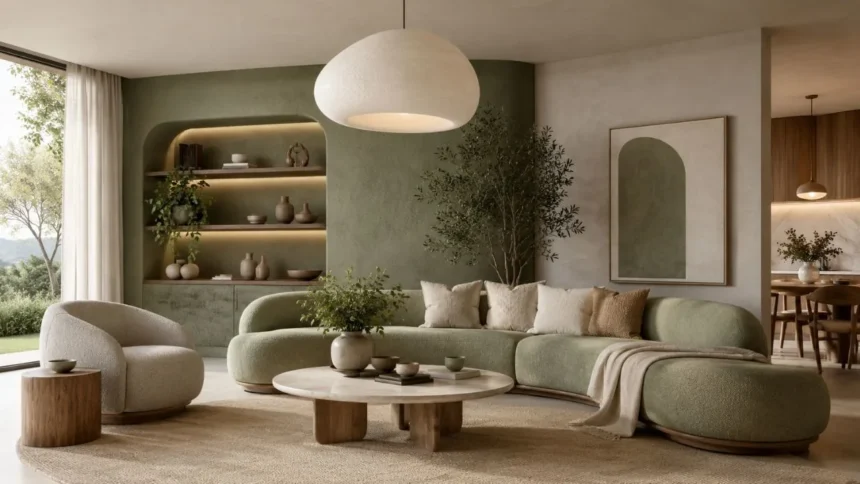
Sage green continues to hold a strong position in interior design because it feels calm, natural, and easy to live with. Its muted appearance adds colour without making a room feel overly bright or dramatic. In 2026, this shade is becoming warmer, more layered, and more expressive. Designers are using it to create interiors that feel stylish, comfortable, and connected to nature.
One reason sage green remains popular is its ability to work almost like a neutral. It can support modern, traditional, farmhouse, rustic, and organic interior styles without looking out of place. The colour also pairs beautifully with wood, stone, linen, clay, and woven materials. This versatility makes sage green suitable for nearly every room in the home.
The latest sage green interior design trends are moving away from perfectly matched rooms. Homeowners are now combining sage with vintage furniture, handmade accessories, deeper colours, and natural textures. This creates spaces that feel more personal and less like a showroom. The overall style is relaxed, layered, and full of character.
You do not need to renovate your entire home to introduce sage green successfully. A painted cabinet, new curtains, a feature wall, or a few decorative accessories can create a noticeable difference. The key is choosing the right shade and pairing it with suitable materials. This guide explains how to use sage green in a fresh and practical way throughout 2026.
Why Sage Green Remains Popular in 2026
Sage green remains popular because it brings softness and colour into a room without creating visual pressure. Its grey and earthy undertones make it much easier to decorate with than brighter greens. It can make an interior feel peaceful while still giving it a clear personality. This balance appeals to homeowners who want colour without sacrificing comfort.
The growing interest in nature-inspired interiors has also strengthened the popularity of sage green. Many people want their homes to feel calmer, healthier, and more connected to the outdoors. Sage reflects the colours of herbs, leaves, and quiet landscapes. This makes it especially effective in bedrooms, living rooms, kitchens, and relaxing home offices.
Another advantage is that sage green can adapt as interior trends change. It works with cream and beige, but it also looks attractive with brown, burgundy, olive, rust, and charcoal. Homeowners can update surrounding accessories without repainting the entire room. This flexibility gives sage green greater long-term value than many stronger trend colours.
In 2026, sage green is becoming less predictable and more sophisticated. Designers are moving away from basic sage-and-white rooms and introducing deeper tones, warm wood, aged metal, and textured fabrics. These additions give the colour greater visual depth and warmth. The result feels current while still remaining comfortable and timeless.
Warm Sage Green Shades Take Centre Stage
Warm sage green shades are becoming one of the most noticeable colour trends in 2026. These versions contain subtle olive, beige, or yellow undertones rather than strong blue or grey notes. They feel softer and more welcoming, especially in rooms that receive limited natural light. Their earthy appearance also works naturally with traditional and organic materials.
Warm sage is particularly useful in north-facing rooms where cool paint colours can appear dull. Pairing it with creamy white, natural oak, walnut, or terracotta helps create a comfortable atmosphere. The combination feels grounded without making the room appear dark. It also suits both modern and classic furniture styles.
Deeper sage shades are also being used on kitchen cabinets, doors, built-in storage, and feature walls. These colours provide more definition than pale green while remaining less intense than forest green. They work especially well in dining rooms, reading areas, and home offices. Their depth creates a cocooning effect that feels stylish and restful.
Before choosing a warm sage paint, always test several samples in the actual room. A colour may appear olive in the morning, grey in the afternoon, and warmer under artificial lighting. Place large samples beside flooring, furniture, and permanent finishes. This helps you select a shade that remains attractive throughout the day.
Sage Green Living Rooms Feel More Layered
Sage green living rooms in 2026 are becoming more layered and expressive. Instead of using the same green across every wall and accessory, designers are applying it more selectively. Sage may appear on the walls, sofa, curtains, or built-in shelving. Other colours and materials are then used to create contrast and personality.
A sage green sofa can become the calm centre of a living room without dominating the space. Pair it with cream cushions, brown throws, patterned chairs, and a natural wool rug. A wooden coffee table can introduce warmth and visible texture. These elements create balance while preventing the room from feeling overly coordinated.
Sage green walls also provide an attractive background for artwork and meaningful decorative objects. Wooden frames create a warm look, while black frames provide stronger contrast. Vintage landscapes, abstract prints, and handmade wall hangings all work well against muted green. The artwork should reflect your personality rather than simply matching the colour scheme.
Lighting plays an important role in how sage green appears in a living room. Warm table lamps, floor lamps, and wall lights can reveal the softer undertones of the colour. Using several light sources creates a more comfortable atmosphere than relying on one ceiling fixture. It also highlights furniture, textiles, and architectural details more effectively.
Sage Green Kitchens Become Warmer and Softer
Sage green kitchen cabinets remain a major interior design trend for 2026. However, the latest versions feel warmer, softer, and more lived in than earlier designs. Instead of pairing green cabinets only with bright white counters, designers are adding timber, natural stone, brass, and handmade details. This makes the kitchen feel more inviting and personal.
Two-tone cabinetry offers a practical way to introduce sage green without overwhelming the room. Sage can be used on lower cabinets while upper cabinets remain cream or natural wood. It can also appear on a kitchen island while the rest of the cabinetry stays neutral. This variation creates interest and prevents the space from looking heavy.
Hardware can change the entire appearance of sage green cabinets. Aged brass and bronze handles add warmth, while black hardware creates sharper contrast. Ceramic knobs can support a more relaxed farmhouse or cottage-inspired look. The chosen finish should connect naturally with taps, lighting, appliances, and nearby furniture.
Decorative details can help a sage kitchen feel less like a purely functional area. Framed artwork, linen curtains, wooden boards, ceramic bowls, and small lamps can soften the space. These additions introduce character without affecting practicality. They also help the kitchen feel connected to the living areas around it.
Sage Green Bedrooms Create Restful Retreats
Sage green is a natural choice for bedrooms because it creates a calm and restorative atmosphere. Its muted character does not demand attention, making it easier to relax at the end of the day. The colour also works well with soft lighting and natural fabrics. This gives the bedroom a peaceful appearance without making it feel plain.
Pale sage walls look especially attractive with cream, oatmeal, beige, and warm white bedding. Linen sheets, cotton covers, knitted throws, and textured cushions can create visual depth. A wooden bed frame or vintage bedside tables will introduce additional warmth. The result feels comfortable, natural, and balanced.
For a more dramatic bedroom, a deeper sage shade can be used across the walls and wardrobes. Painting trim and doors in a similar tone creates a colour-drenched effect. This approach makes the room feel more enclosed and restful. Light bedding and warm bedside lamps can prevent the scheme from becoming too dark.
Renters can introduce sage green without painting the walls. Bedding, curtains, rugs, cushions, and upholstered headboards can create the same calming effect. Repeating the colour in two or three areas will make the choice feel intentional. Avoid matching every item exactly, because slight variations create a more natural look.
Sage Green Bathrooms Feel Fresh and Organic
Sage green bathrooms combine freshness with a soft, natural appearance. The colour works well with ceramic, stone, wood, brass, and woven materials. It can give a basic bathroom more personality without requiring highly decorative features. Sage also creates a relaxing atmosphere that suits both large and small spaces.
Handcrafted-looking sage tiles are an attractive choice for showers and splashbacks. Their uneven surfaces reflect light differently, creating subtle changes in tone. This gives the wall movement and depth without adding another strong colour. Warm grout can make the overall finish feel softer and more connected.
Painting a bathroom vanity sage green is a more affordable way to update the room. Pair it with a timber mirror, aged brass handles, and warm white walls. Woven baskets and textured towels can continue the natural theme. These small changes can transform the space without requiring a complete renovation.
Small powder rooms can handle deeper sage green surprisingly well. Painting both the walls and ceiling creates a confident and immersive effect. A decorative mirror and warm wall lighting can add further character. Because the room is compact, stronger colour choices often feel intentional rather than overwhelming.
Sage Green and Warm Wood Create Natural Balance
Warm wood is one of the best materials to pair with sage green. Its visible grain adds movement, warmth, and an organic quality to the interior. Oak, walnut, chestnut, and teak can all work beautifully with muted green. The right choice depends on the sage shade and the amount of natural light.
Pale oak creates a light and relaxed look when combined with soft sage walls. This pairing works well in Scandinavian, minimalist, and organic modern interiors. Cream upholstery, woven baskets, and natural rugs can continue the airy feeling. Small black accents may be added to provide definition without making the room heavy.
Walnut and darker timber create a richer, more sophisticated appearance. These finishes work particularly well with medium and deep sage green shades. They can be introduced through tables, cabinets, picture frames, and shelving. The contrast makes sage appear more distinctive while preserving warmth.
Avoid using too many unrelated wood finishes in one small room. Several different tones can make the design appear confused and unplanned. Choose one dominant wood tone and use another only as a minor accent. This simple approach helps the sage green colour scheme feel more coordinated.
Brown, Burgundy and Rust Update Sage Green
Sage green is moving beyond predictable combinations with white and pale grey. In 2026, designers are pairing it with chocolate brown, burgundy, rust, and terracotta. These warmer colours add depth and prevent sage interiors from feeling washed out. They also create a welcoming palette that works throughout the year.
Chocolate brown furniture can make a sage green room appear more grounded. A leather chair, velvet sofa, wooden table, or dark lampshade can introduce this colour effectively. The richness of brown balances the softness of muted green. Cream textiles can then be added to keep the room feeling open.
Burgundy creates a stronger and more elegant contrast with sage green. It can be introduced through curtains, rugs, cushions, artwork, or an occasional chair. This pairing works especially well in dining rooms, home libraries, and formal living areas. Use burgundy in controlled amounts so it adds richness without dominating.
Rust and terracotta create a warmer and more relaxed decorating style. These shades can appear through pottery, patterned textiles, blankets, and wall art. They work naturally with sage, timber, linen, and woven accessories. Together, these materials create a room that feels earthy, comfortable, and thoughtfully connected.
Layered Green Palettes Add Greater Depth
Using several shades of green in one room can create a sophisticated and natural interior. Sage works well as the soft foundation of the palette. Olive, moss, eucalyptus, and forest green can then provide additional depth. The room feels connected without depending on exact colour matching.
Begin with sage green on the largest decorative surface in the room. This may be the walls, sofa, curtains, rug, or kitchen cabinets. Add medium olive tones through cushions, artwork, or smaller furniture pieces. Dark forest green can be used sparingly to create stronger contrast and definition.
The green shades do not need to share exactly the same undertone. Slight differences can make the room appear more collected and realistic. Wood, brass, linen, or stone can help connect the colours visually. Repeating these materials makes the overall scheme feel intentional.
Plants can support a layered green palette without becoming the main feature. Choose a few plants that suit the amount of natural light available. Vary their height and leaf shape to create gentle visual movement. Simple ceramic or woven planters will maintain the calm and organic appearance.
Textured Sage Green Surfaces Replace Flat Design
Texture is becoming increasingly important in sage green interiors. Muted colours can sometimes appear flat when used across smooth and empty surfaces. Textured finishes allow light and shadow to create subtle tonal changes. This gives the room greater depth without requiring additional bold colours.
Limewash-style walls offer a soft and naturally imperfect appearance. Their gentle variations create movement as the daylight changes. This finish works well in bedrooms, dining rooms, living spaces, and hallways. Simple furniture allows the wall texture to remain visible and effective.
Painted wall panelling provides another way to add character. Vertical panels can make low ceilings appear taller, while half-height panelling creates traditional detail. Sage panelling looks especially attractive with cream walls above it. This combination works well in bathrooms, bedrooms, hallways, and dining rooms.
Textiles can also introduce texture when changing the walls is not practical. Sage linen curtains, velvet cushions, wool rugs, and boucle chairs all create different effects. Each material changes how the colour feels within the room. Combining several textures creates interest while keeping the palette controlled.
Colour Drenching Gives Sage a Modern Look
Colour drenching involves using one colour across several architectural surfaces. Walls, doors, trim, shelves, and ceilings may all be painted in similar sage shades. This reduces visual interruptions and gives the room a more connected appearance. It can also make awkward architectural features feel more intentional.
Sage colour drenching works particularly well in bedrooms, offices, and narrow hallways. Built-in storage can be painted in the same colour as the surrounding walls. This allows large cupboards or shelves to blend into the room. The overall space feels calmer and less visually cluttered.
Different paint finishes can prevent a colour-drenched room from appearing flat. Matte paint may be used on walls, while satin or eggshell works on trim and cabinetry. The subtle change in sheen adds variation without introducing another colour. Textured fabrics and warm lighting can create further softness.
Always test the shade carefully before applying it across the entire room. Sage becomes more intense when used on several surfaces at once. Observe a large sample during the day and under artificial evening lighting. This can prevent the finished room from appearing unexpectedly dark or grey.
Vintage Pieces Make Sage Interiors More Personal
Vintage furniture helps prevent sage green rooms from feeling predictable or overly commercial. Older pieces introduce history, craftsmanship, and natural signs of use. Their imperfections contrast beautifully with newly painted walls and clean modern surfaces. This creates a more personal and collected interior.
A wooden chest, vintage leather chair, or traditional rug can become a strong feature against sage walls. Carved mirrors, old books, and framed landscapes also complement the colour. These pieces bring warmth and character without requiring a complicated design scheme. Choose items that are both useful and meaningful.
Handmade accessories can create a similar effect. Irregular pottery, woven baskets, printed cushions, and sculptural lamps add personality. Small variations in shape and finish make the room feel more natural. They also provide interest without disturbing the calm colour palette.
Avoid filling every available surface with decorative objects. Too many items can compete with the softness of the sage background. Leave empty space around important pieces so their details remain visible. A carefully edited collection usually feels more intentional than excessive decoration.
Sage Green Works Beautifully in Small Spaces
Sage green can make a small room feel calm, open, and visually connected. Its muted quality introduces colour without making the space feel crowded. Pale sage works especially well in small bedrooms, offices, and narrow hallways. It reflects more light than darker green while feeling warmer than grey.
Painting walls and trim in one sage shade can create greater visual continuity. Fewer colour changes allow the eye to move smoothly around the room. This can make doors, corners, and awkward features less noticeable. Light flooring and warm lighting will help maintain a sense of openness.
Mirrors can distribute natural light across sage green walls. Place them opposite or beside windows where they can reflect brightness effectively. Wooden, brass, or black frames can all work well. The mirror will brighten the room while also providing a decorative feature.
Furniture scale is especially important in a small sage green room. Large, bulky pieces can make even pale colours feel enclosed. Choose raised furniture that allows some of the floor to remain visible. This creates a lighter appearance while preserving the calming colour scheme.
How to Choose the Right Sage Green
Start by identifying whether the room receives warm or cool natural light. South-facing spaces can usually handle cooler and greyer sage shades. North-facing rooms often benefit from warmer tones with beige or olive undertones. Understanding the light direction will make colour selection easier.
Consider permanent finishes before choosing paint, furniture, or fabric colours. Flooring, counters, tiles, and large cabinets strongly influence nearby shades. A sage that suits warm oak may clash with blue-grey flooring. Always compare samples directly beside the materials that will remain unchanged.
Think about the atmosphere you want the room to create. Pale sage feels airy, calm, and suitable for informal spaces. Deep sage feels more dramatic, sophisticated, and cocooning. Your preferred mood should guide both the shade and the amount of colour used.
Never rely only on a small paint card or a digital image. Paint large sample boards and move them around the selected room. Check them during the morning, afternoon, evening, and under artificial lighting. This process reveals undertones before you commit to the final colour.
Sage Green Decorating Mistakes to Avoid
Using too much matching sage green can make a room feel themed. Green walls, curtains, rugs, furniture, and accessories may become visually repetitive. Select a few important areas where the colour will have the strongest impact. Balance them with warm neutrals, wood, patterns, and contrasting details.
Pairing sage only with bright white can create a cold appearance. This is especially noticeable in rooms with limited natural light. Choose cream, oatmeal, beige, or warm stone for a softer contrast. These warmer neutrals reveal the natural richness of muted sage green.
Ignoring undertones is another common decorating mistake. A blue-based sage may clash with strongly yellow or olive furnishings. The colours do not need to match exactly, but they should feel naturally connected. Shared materials such as wood, brass, or linen can help unite different tones.
Following design photographs too closely can also lead to disappointing results. Every room has different lighting, proportions, flooring, and furniture. Use trend images as inspiration rather than strict instructions. Adapt each idea to suit your own home, needs, and lifestyle.
Final Thoughts on Sage Green Interior Design
Sage green remains one of the most adaptable colours in interior design. It can appear modern, traditional, rustic, minimal, or quietly luxurious. Its final character depends on the colours and materials placed around it. This flexibility explains why sage continues to remain relevant in 2026.
The freshest interiors combine sage with warmth, texture, and personal details. Natural timber, brown accents, layered greens, and vintage furniture all work beautifully. Handmade ceramics and tactile fabrics add further depth. These elements make the room feel lived in rather than perfectly coordinated.
Start with one manageable feature when introducing sage into your home. Paint a cabinet, update the curtains, or add new cushions and bedding. Observe how the colour responds to your existing light and furniture. You can then expand the scheme with greater confidence.
The best sage green interior should support your everyday comfort. Trends can offer inspiration, but your own needs should guide the final decisions. Choose shades, furniture, and materials that suit how you actually live. A thoughtful design will remain attractive long after 2026 has passed.
Frequently Asked Questions
Is sage green still popular in 2026?
Yes, sage green remains popular because it feels calm, natural, and versatile. The latest interiors pair it with warm wood, brown, rust, burgundy, and textured materials.
What colours go best with sage green?
Sage green works well with cream, beige, brown, burgundy, rust, olive, and warm white. Natural timber, aged brass, and terracotta also complement it beautifully.
Can sage green make a small room look bigger?
Pale sage can make a small room feel calmer and more visually connected. Using the same shade on walls and trim can also reduce distracting colour breaks.
Is sage green suitable for kitchen cabinets?
Yes, sage green works beautifully on both modern and traditional kitchen cabinets. Pair it with timber, stone, brass hardware, and warm white surfaces.
What furniture looks best with sage green walls?
Oak, walnut, leather, rattan, cream upholstery, and vintage furniture work especially well. Choose warm materials that create contrast without overpowering the muted green.