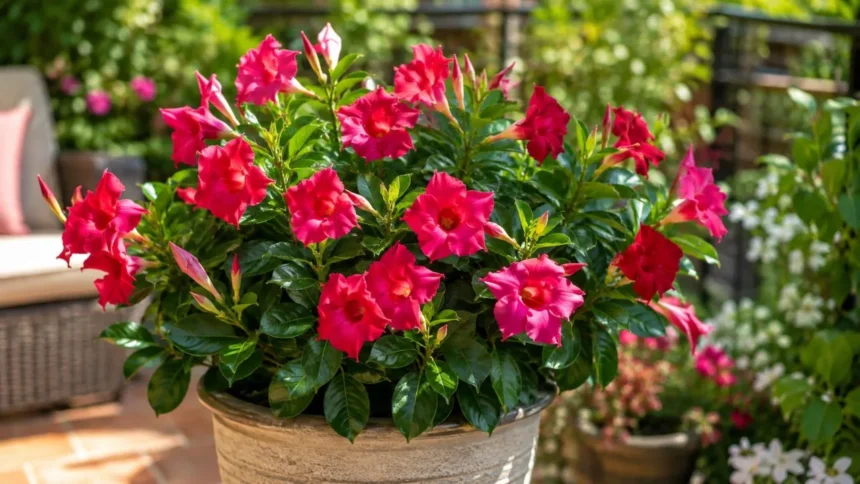
Rio Dipladenia: Complete Growing and Care Guide
Rio Dipladenia is a colourful tropical plant valued for its trumpet-shaped flowers, glossy foliage, and long blooming season. It adds a bright, polished appearance to patios, balconies, garden beds, and entrance containers. Unlike aggressive climbing vines, this compact plant usually maintains a manageable, bushy shape. Its easy-growing nature makes it suitable for both beginners and experienced gardeners.
The plant is commonly sold as Dipladenia, although it belongs to the broader Mandevilla group of flowering plants. Rio varieties are especially popular because they tolerate summer heat and continue blooming when many other plants begin to struggle. Their flowers commonly appear in red, pink, white, and other vibrant shades. Healthy plants may flower continuously from late spring until temperatures become too cold.
Growing Rio Dipladenia successfully depends on providing strong sunlight, fast-draining soil, careful watering, and protection from frost. The plant does not require constant attention, but it dislikes soggy roots and prolonged cold conditions. Once established, it can tolerate short dry periods better than excessive moisture. This balance makes it a reliable choice for warm and sunny outdoor spaces.
This guide explains how to grow and care for Rio Dipladenia throughout the year. You will learn about sunlight, watering, fertilizing, pruning, winter protection, pest control, and container selection. It also covers common growing problems and practical solutions that can restore healthy growth. With the right care, this tropical flowering plant can remain attractive for several seasons.
What Is a Rio Dipladenia Plant?
Rio Dipladenia is a compact tropical flowering plant developed for strong performance in containers and warm garden settings. It produces thick green leaves and funnel-shaped flowers that stand out clearly against the dark foliage. Most Rio plants grow outward in a rounded form instead of producing long, uncontrolled vines. Their tidy growth habit makes them easier to place in small spaces.
Although gardeners often treat Dipladenia and Mandevilla as separate plants, they are closely related and are frequently grouped under the Mandevilla name. Traditional Mandevilla plants usually develop longer climbing stems and benefit from a trellis. Dipladenia varieties tend to remain shorter, fuller, and more suitable for pots. However, some stems may still trail or climb slightly as the plant matures.
The Rio series is known for heat tolerance, strong colour, and a long flowering period. These characteristics help the plant perform well during hot summers when delicate flowers may wilt or stop blooming. Rio Dipladenia also handles short periods of dryness once its roots are established. Nevertheless, regular care produces fuller foliage and a greater number of flowers.
In frost-free climates, the plant can grow outdoors as a tender perennial and return year after year. In colder regions, gardeners usually treat it as an annual or move it indoors before winter. Container growing makes seasonal relocation easier and protects the roots from freezing temperatures. This flexibility has helped Rio Dipladenia become a popular patio and balcony plant.
Why Rio Dipladenia Is Popular With Gardeners
One of the greatest advantages of Rio Dipladenia is its exceptionally long blooming season. Under warm and sunny conditions, the plant can produce flowers from late spring through early autumn. New buds regularly replace older blooms, keeping the display fresh without complicated maintenance. This continuous colour is especially valuable in containers placed near entrances or outdoor seating areas.
The plant also has a naturally clean and compact appearance that works well in modern landscapes. Its glossy leaves remain attractive even between flowering cycles, providing reliable greenery throughout the growing season. Rio Dipladenia rarely becomes untidy when given occasional pruning. Gardeners can therefore enjoy a polished display without spending hours shaping the plant.
Another benefit is its ability to tolerate heat more effectively than many traditional bedding flowers. Strong summer temperatures often encourage active growth as long as the roots receive adequate moisture. The plant can handle occasional missed watering better than plants with thin, delicate foliage. However, prolonged drought may still reduce flowering and cause lower leaves to yellow.
Rio Dipladenia is also versatile enough for pots, window boxes, hanging baskets, and sunny garden beds. It can serve as a colourful centrepiece or be combined with lower-growing companion plants. Its tropical flowers create an attractive contrast beside ornamental grasses, foliage plants, and trailing annuals. This adaptability allows gardeners to use one plant in several different design styles.
The Best Sunlight for Rio Dipladenia
Rio Dipladenia grows and flowers best when it receives plenty of direct sunlight. A location providing at least six hours of sunlight each day usually supports strong flowering and compact growth. Morning sun is particularly beneficial because it dries moisture from the leaves without creating extreme heat stress. Plants receiving insufficient light may grow slowly and produce fewer flowers.
In moderately warm climates, full sun can help Rio Dipladenia reach its greatest blooming potential. The plant’s thick foliage and tropical background allow it to handle bright conditions better than many shade-loving ornamentals. However, plants growing in small containers may dry quickly during intense afternoon heat. Checking the soil regularly prevents unnecessary wilting during hot weather.
In extremely hot regions, some light afternoon shade may protect the plant from severe heat. This is especially useful when temperatures remain unusually high for several days or the plant sits near reflective walls. Bright shade during the hottest hours can reduce leaf scorching without greatly affecting flower production. The plant should still receive direct morning or early afternoon sunlight.
Indoor plants require the brightest window available, preferably one facing south or west. A sunny windowsill may provide enough light for survival, although winter flowering often becomes limited. Rotate the pot regularly so that every side receives balanced exposure. When natural light is weak, a suitable grow light can help prevent thin, stretched growth.
Choosing Soil and Containers for Healthy Growth
Rio Dipladenia needs loose, well-draining soil that allows excess water to move away from the roots. A quality potting mix designed for flowering container plants generally provides the right balance of drainage and moisture retention. Heavy garden soil should not be used alone inside pots because it compacts easily. Compacted soil can trap moisture and increase the risk of root rot.
Gardeners can improve drainage by adding perlite, fine pine bark, or another lightweight potting material. These ingredients create air spaces around the roots and prevent the mixture from remaining saturated. The soil should feel slightly moist after watering but never wet for several days. A mildly acidic to neutral growing medium generally supports healthy nutrient absorption.
The container must have drainage holes at the bottom, regardless of its decorative design. Water collecting inside a pot can damage roots even when the upper soil appears dry. Avoid allowing the container to remain in a saucer filled with water. Emptying excess water after irrigation protects the plant from fungal problems and oxygen-starved roots.
Choose a pot only slightly larger than the plant’s existing root system when repotting. An oversized container holds more unused moisture and may take too long to dry. Rio Dipladenia usually flowers well when its roots are comfortably contained rather than surrounded by excessive soil. Repotting every one or two years is normally sufficient for a healthy container plant.
How to Water Rio Dipladenia Correctly
Proper watering is one of the most important parts of Rio Dipladenia care. Water the plant thoroughly when the upper layer of soil feels dry to the touch. Continue watering until moisture begins flowing through the drainage holes at the bottom. This method moistens the entire root system instead of wetting only the soil surface.
Allow the upper one or two inches of soil to dry before watering again. The exact schedule will depend on temperature, sunlight, container size, wind, and the plant’s growth stage. Plants may need frequent watering during hot summer weather but much less during cool conditions. Checking the soil is more reliable than following a fixed weekly schedule.
Overwatering often causes yellow leaves, weak growth, wilting, or soft stems. These symptoms may appear similar to drought stress, which can lead gardeners to add even more water. Before watering a struggling plant, always feel the soil below the surface. Wet soil combined with wilting usually suggests damaged roots rather than a lack of moisture.
Rio Dipladenia can tolerate short dry periods after becoming established, but repeated severe wilting should be avoided. Long droughts may cause flower buds to fall and leaf edges to become brown. Water slowly and deeply when the plant appears dry rather than adding small amounts every day. Consistent moisture supports stronger flowering without keeping the roots permanently wet.
Fertilizing Rio Dipladenia for More Flowers
Regular feeding helps Rio Dipladenia produce fresh foliage and repeated flowers during its active growing season. A balanced liquid fertilizer for flowering plants can usually be applied every two to four weeks. Always follow the product instructions because fertilizer strengths vary significantly. Using more than the recommended amount will not make the plant bloom faster.
A fertilizer containing slightly more phosphorus or potassium may support flower development, although balanced nutrition remains important. Nitrogen encourages leafy growth, but excessive nitrogen can reduce flowering and produce long, soft stems. Choose a product intended for blooming container plants rather than a high-nitrogen lawn fertilizer. Healthy flowers depend on balanced roots, leaves, and nutrients.
Slow-release fertilizer can also be mixed into the soil at the beginning of the growing season. It gradually supplies nutrients as the plant is watered, reducing the need for frequent liquid feeding. Some gardeners combine slow-release fertilizer with occasional diluted liquid applications. Careful application prevents nutrient buildup that could damage the roots.
Reduce or stop fertilizing during autumn and winter when growth naturally slows. Feeding a resting plant may encourage weak growth that cannot be supported by limited winter light. Resume fertilizing when new leaves and stems appear in spring. Watering the plant before applying liquid fertilizer can also reduce the possibility of root burn.
Pruning and Training Rio Dipladenia
Rio Dipladenia generally maintains a compact form, but light pruning keeps the plant full and balanced. Pinching the tips of young stems encourages branching and creates more growing points for future flowers. Remove weak, damaged, or unusually long stems with clean pruning shears. Small shaping cuts can be made throughout the active growing season.
More substantial pruning is best performed in early spring before vigorous growth begins. Cut back overgrown stems while preserving enough healthy foliage to support recovery. Avoid removing most of the plant at once unless severe damage makes it necessary. Gradual pruning causes less stress and produces a more natural, rounded shape.
Deadheading is not always essential because many Rio Dipladenia plants naturally release fading flowers. However, removing old blooms can improve the plant’s appearance and prevent decaying petals from collecting on wet soil. Check the plant regularly for yellow leaves and damaged stems. Removing unhealthy material also improves air circulation around the remaining foliage.
Some Rio plants may develop longer stems that benefit from a small trellis or decorative support. Tie the stems loosely with soft plant ties instead of forcing them into position. Compact varieties can also be allowed to trail over the edge of a container. Training should complement the plant’s natural growth rather than restrict or damage it.
Temperature and Winter Care
Rio Dipladenia prefers warm conditions and grows most actively when temperatures remain comfortably above 60°F or 16°C. Summer heat is rarely a problem when the plant receives enough water and proper drainage. Cool nights may slow growth and reduce flower production. Frost, however, can quickly damage leaves, stems, and roots.
Gardeners in cold climates should move container-grown plants indoors before the first expected frost. Inspect the leaves and stems for insects before bringing the plant inside. Washing the foliage gently and isolating it from other houseplants can prevent pests from spreading. Choose a bright indoor location away from freezing drafts and heating vents.
Indoor Rio Dipladenia often enters a semi-dormant stage during winter because of reduced sunlight. Flowering may stop, some leaves may fall, and the plant may require less water. Allow more of the soil to dry between waterings while preventing the root ball from becoming completely dry. Do not expect vigorous summer growth under normal indoor conditions.
Move the plant outdoors gradually when warm weather returns and frost danger has passed. Begin with a shaded, protected location before exposing it to full sunlight. Sudden intense sun can burn leaves that developed under weaker indoor light. Increasing outdoor exposure over several days helps the plant adjust safely and resume active growth.
Common Pests and Diseases
Rio Dipladenia is relatively resistant to serious problems, but common sap-feeding insects may occasionally appear. Aphids, whiteflies, spider mites, and mealybugs can gather beneath leaves or around tender new growth. Their feeding may cause curled leaves, pale spots, sticky residue, or reduced vigour. Regular inspection allows gardeners to control small infestations before they spread.
A strong but gentle stream of water can remove many pests from the foliage. Insecticidal soap or horticultural oil may be used when insects continue returning. Cover both sides of the leaves and follow all label instructions carefully. Avoid applying treatments during extreme heat because wet or treated leaves may become damaged.
Root rot is the most common disease-related problem and usually develops in poorly drained, constantly wet soil. Affected plants may wilt, yellow, or stop growing even though the soil remains moist. Remove the plant from its container and inspect the roots if symptoms continue. Healthy roots appear firm, while rotting roots often look dark, soft, or damaged.
Leaf spots and fungal problems may develop when foliage remains wet and air movement is limited. Water near the base of the plant instead of repeatedly soaking the leaves. Provide enough space between plants to improve airflow and remove heavily affected foliage. Clean containers and pruning tools also reduce the movement of disease-causing organisms.
Common Rio Dipladenia Problems and Solutions
A Rio Dipladenia that produces leaves but few flowers may not be receiving enough sunlight. Move the container gradually to a brighter location where it can receive several hours of direct sun. Excessive nitrogen fertilizer can also encourage foliage instead of flowers. Pause feeding briefly or switch to a balanced fertilizer made for blooming plants.
Yellow leaves can develop from overwatering, poor drainage, cold temperatures, or natural ageing. A few older yellow leaves near the bottom are not usually a serious concern. Widespread yellowing requires checking the soil moisture and drainage holes immediately. Adjust watering before adding fertilizer, since damaged roots cannot absorb nutrients efficiently.
Brown, crispy leaf edges commonly indicate drought, hot drying winds, or fertilizer buildup. Water deeply when the soil becomes dry and make sure moisture reaches the complete root ball. If fertilizer salts are suspected, flush the pot with clean water and allow it to drain. Protecting the plant from extreme wind may also prevent repeated moisture loss.
Dropping flower buds can result from sudden temperature changes, relocation, drought, or excessive watering. Keep growing conditions as stable as possible while the plant is forming buds. Avoid repeatedly moving the container between strongly different environments. Once the plant adjusts and healthy roots are restored, normal flowering usually begins again.
Growing Rio Dipladenia in Pots and Garden Beds
Container growing is the easiest way to control soil quality, drainage, and winter protection. Place one plant in a decorative pot as a colourful patio feature or combine it with compatible companion plants. Select companions that also prefer sunlight and moderately dry soil. Plants requiring constantly wet conditions are not suitable partners for Dipladenia.
In mixed containers, Rio Dipladenia can act as the upright or central feature. Trailing flowers or foliage plants can soften the edges while leaving enough space for airflow. Avoid overcrowding the pot because competition for water and nutrients can reduce flowering. Each plant should have enough room to develop without being buried beneath neighbouring foliage.
Garden-bed planting works well in warm climates with well-draining soil and no risk of frost. Choose a sunny location where rainwater does not collect around the roots. Improving heavy clay soil with organic matter may help, although raised beds can provide more dependable drainage. Allow enough spacing for mature plants to remain well ventilated.
In regions with cold winters, gardeners may plant Rio Dipladenia in its nursery pot and sink the entire container into the ground. The pot can then be lifted before frost and moved indoors more easily. This technique combines the appearance of garden planting with the flexibility of container care. Check regularly that roots have not grown through the drainage holes.
Seasonal Rio Dipladenia Care
Spring is the best time to repot, prune, and prepare Rio Dipladenia for active growth. Remove dead stems, refresh tired potting soil, and begin watering more consistently as new leaves appear. Introduce fertilizer gradually rather than applying a strong dose immediately. Move overwintered plants outdoors only after cold conditions have safely passed.
During summer, focus on sunlight, consistent watering, and regular feeding. Inspect the plant weekly for insects, yellow leaves, and dry soil. Containers exposed to strong sun and wind may require more frequent watering than garden-grown plants. Removing damaged growth and lightly pinching long stems helps maintain an attractive shape.
Autumn care should prepare the plant for cooler temperatures and reduced growth. Stop heavy feeding and begin checking nighttime temperatures more closely. Bring container plants indoors before frost rather than waiting for visible cold damage. Clean the pot and inspect the foliage carefully before placing it near other indoor plants.
Winter is usually a resting period for Rio Dipladenia kept indoors. Place it in bright light, water sparingly, and avoid encouraging rapid growth with frequent fertilizer. Some leaf loss is normal when the plant adjusts to indoor conditions. Healthy roots and firm stems are more important than winter flowers during this period.
Is Rio Dipladenia Toxic?
Rio Dipladenia produces a milky sap that may irritate sensitive skin. Wearing gloves while pruning, repotting, or handling broken stems can reduce direct contact. Wash the skin with soap and water if sap is accidentally transferred. Avoid touching the eyes or face before cleaning your hands and gardening tools.
The plant should not be intentionally eaten by people or animals. Its sap and plant material may cause mouth irritation or digestive discomfort if consumed. Keep containers away from curious young children and pets that regularly chew plants. Placing the plant on a raised stand may provide additional protection indoors.
A pet brushing against healthy foliage is unlikely to experience the same exposure as an animal chewing damaged stems. However, individual reactions can vary, and suspected ingestion should be taken seriously. Remove any remaining plant material from the animal’s mouth without placing yourself at risk. Contact a veterinarian for advice if concerning symptoms appear.
Safe placement allows gardeners to enjoy Rio Dipladenia without unnecessary worry. Choose locations where pets cannot knock over the container or reach fallen plant material. Clean pruning debris promptly and keep gardening tools away from children. These simple precautions are suitable for many ornamental plants that produce irritating sap.
Final Thoughts on Growing Rio Dipladenia
Rio Dipladenia combines tropical colour with a manageable growth habit and relatively simple care requirements. Its glossy foliage, compact shape, and long-lasting flowers make it an excellent choice for sunny outdoor areas. The plant performs particularly well in pots where drainage and soil conditions can be controlled. It also adapts successfully to garden beds in warm climates.
The most important care principles are strong sunlight, well-draining soil, and controlled watering. Allowing the soil surface to dry slightly protects the roots from excessive moisture. Balanced fertilizer and occasional pruning encourage healthy growth throughout the blooming season. A suitable environment often matters more than constant maintenance.
Gardeners in cold regions can preserve their plants by moving them indoors before frost. Winter growth may slow, but the plant can recover when warmth and bright sunlight return. Gradual outdoor acclimation protects indoor-grown leaves from sun damage. This yearly routine may allow one Rio Dipladenia to provide colour for several seasons.
Whether displayed alone or combined with other heat-tolerant flowers, Rio Dipladenia creates a bold focal point. Its ability to handle warm weather makes it especially useful for summer patios and balconies. Monitor moisture, inspect for pests, and respond quickly when leaves begin changing. Consistent basic care will reward you with healthier growth and abundant flowers.
Frequently Asked Questions About Rio Dipladenia
Rio Dipladenia is generally straightforward to grow, but gardeners often have questions about flowering, winter survival, and daily care. Understanding the plant’s natural habits makes it easier to prevent common problems. Most difficulties are connected to sunlight, moisture, drainage, or temperature. Correcting these conditions usually improves the plant without complicated treatment.
Container size, local weather, and seasonal growth can affect how frequently the plant needs attention. A plant in a small sunny pot may dry much faster than one growing in a sheltered garden bed. This is why flexible care is more effective than a fixed schedule. Check the plant and soil before watering or fertilizing.
Flowering performance can also vary throughout the season. Temporary pauses may occur during extreme heat, relocation, repotting, or sudden weather changes. Healthy plants often resume blooming after they adjust to stable conditions. Consistent light and balanced nutrition support the strongest long-term display.
The following answers address common questions people ask when growing Rio Dipladenia. They cover lifespan, sunlight, watering, winter care, and flower production. Use them as quick guidance alongside the detailed care information above. Always adjust your routine according to the plant’s actual growing environment.
Does Rio Dipladenia Come Back Every Year?
Rio Dipladenia can return every year in warm, frost-free climates. In colder areas, it must be overwintered indoors because freezing temperatures can kill the plant.
Does Rio Dipladenia Need Full Sun?
Rio Dipladenia blooms best with at least six hours of direct sunlight. Light afternoon shade may be helpful in areas with extremely intense summer heat.
How Often Should I Water Rio Dipladenia?
Water when the upper one or two inches of soil feel dry. Soak the soil thoroughly, allow excess water to drain, and avoid keeping the roots continuously wet.
Can Rio Dipladenia Survive Winter Indoors?
Yes, container-grown plants can survive winter in a bright indoor location. Reduce watering, stop regular fertilizing, and protect the plant from cold drafts.
Why Is My Rio Dipladenia Not Flowering?
Insufficient sunlight, excess nitrogen, overwatering, or recent environmental changes may reduce flowering. Improve light exposure and maintain stable, well-drained growing conditions.