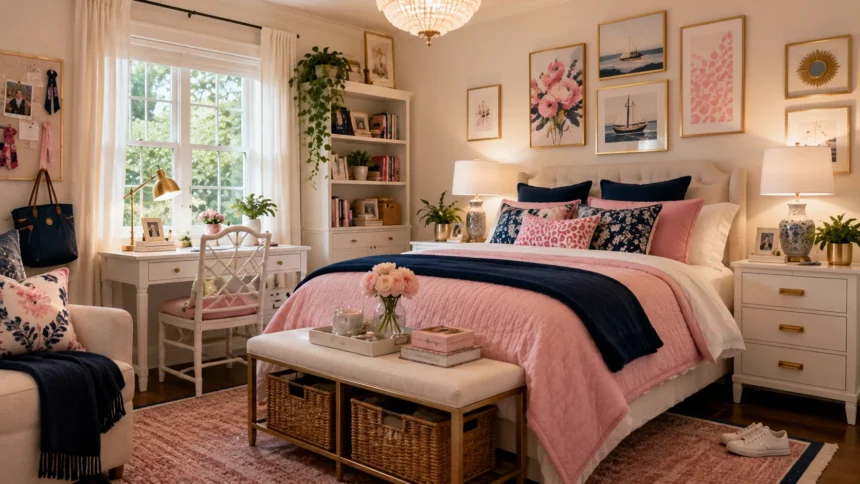
Preppy Room Ideas for a Stylish, Trendy Bedroom
Preppy room decor blends polished style with playful personality, creating bedrooms that feel organized, colorful, and effortlessly put together. The look often combines classic patterns, crisp bedding, cheerful color palettes, coastal influences, monograms, framed artwork, and carefully chosen accessories. Unlike a room that follows one strict decorating rule, a preppy bedroom can lean traditional, coastal, feminine, sporty, vintage-inspired, or modern depending on your taste. The key is balancing structure with personality so the space looks intentional without feeling overly formal. Whether you love navy and white, soft pink and green, or brighter combinations, there are plenty of ways to make the style your own. A few thoughtful changes can completely transform even a small or budget-friendly bedroom.
Modern preppy room ideas are also more flexible than the traditional country-club aesthetic people sometimes associate with the word “preppy.” Today’s bedrooms may include scalloped furniture, gingham bedding, striped rugs, woven storage baskets, vintage lamps, playful wall art, and soft pastel accents alongside contemporary pieces. Some rooms feel sophisticated and tailored, while others use bolder colors and youthful accessories for a trendier appearance. The best preppy spaces avoid filling every corner with matching decor and instead build layers slowly. Start with a coordinated color palette, invest in a comfortable bed, and add decorative details that reflect your interests. The following ideas will help you create a stylish preppy bedroom that feels current, comfortable, practical, and personal.
Start With a Classic Preppy Color Palette
Color is one of the easiest ways to establish a preppy bedroom aesthetic because this style is strongly associated with coordinated, recognizable combinations. Navy and crisp white remain classic choices because they create a clean foundation that works with stripes, plaids, and polished furniture. Pink and green offer a more playful alternative and can range from soft blush and sage to brighter bubblegum pink and emerald. Light blue, cream, coral, yellow, and lavender can also fit naturally into a preppy room when used thoughtfully. Instead of introducing every favorite shade at once, choose two primary colors and one or two supporting tones. A limited palette helps the room feel cohesive even when you mix several patterns and decorative styles.
For a softer preppy bedroom, consider using pastel shades as the foundation. Pale pink walls, light blue bedding, muted green accents, or creamy furniture can create a calm atmosphere without losing the cheerful character associated with preppy decor. Pastels work particularly well in small bedrooms because lighter colors tend to make the room feel more open and airy. You can then introduce stronger shades through pillows, lamps, artwork, or an accent chair. This approach also makes seasonal updates easier because smaller accessories can be changed without repainting the entire room. A few deeper navy, forest green, or burgundy elements can prevent a pastel room from feeling overly delicate. The contrast creates visual structure while allowing the softer tones to remain dominant.
If you prefer a more dramatic appearance, use saturated preppy colors against a neutral background. Deep navy walls can make white furniture and colorful artwork stand out beautifully, while dark green creates an elegant backdrop for brass accents and striped textiles. Bright pink, cobalt blue, and red can also work when they appear in controlled amounts rather than covering every surface. Consider keeping the ceiling, trim, or larger furniture pieces neutral so the room still feels balanced. Bold colors are especially effective on a single accent wall, upholstered headboard, or statement rug. The surrounding decor can repeat smaller touches of the same shade to create continuity. This technique gives the bedroom personality without making the entire design feel visually overwhelming.
Pattern and color should work together rather than compete for attention. If your bedding features a strong plaid or floral print, choose wall colors that support the pattern rather than introduce another equally powerful visual element. Likewise, a brightly painted wall may look better with more restrained bedding and accessories. Preppy rooms often combine multiple patterns successfully because the colors connect them. Navy stripes can sit comfortably beside green gingham when both are balanced by crisp white. Pink florals can work with a subtle check if the shades feel related. Before buying several decorative pieces, place fabric samples or product images together and check whether the colors feel harmonious. Building a palette intentionally saves money and reduces the chance that the finished room will look disconnected.
Neutral colors still have an important role in preppy bedroom decor because they provide breathing room between stronger decorative elements. White, cream, beige, and light gray can appear in walls, curtains, carpets, furniture, or bedding to keep the design from becoming too busy. A white duvet, for instance, creates a clean base for patterned pillows and a colorful throw blanket. Natural wood furniture can introduce warmth without adding another competing color. Neutral woven baskets and rugs also help soften rooms filled with polished furniture or graphic patterns. Think of neutrals as the background that allows more distinctive preppy features to stand out. When the foundation is calm, you can experiment with color, pattern, and accessories more confidently without making the bedroom feel cluttered.
Create a Polished Bed With Layered Bedding
The bed is usually the visual centerpiece of a bedroom, so it deserves special attention when creating a preppy space. Start with bedding that feels crisp, comfortable, and coordinated with the overall color palette. White sheets and a solid duvet provide a timeless foundation, while striped, gingham, floral, or plaid bedding can create a stronger decorative statement. Preppy styling often looks best when the bed feels carefully arranged without appearing too perfect to use. Choose fabrics that are pleasant against the skin rather than selecting them only for appearance. Cotton, linen blends, and other breathable materials can keep the bed comfortable throughout the year. A beautiful bedroom should still function as a relaxing place to sleep rather than becoming purely decorative.
Layering gives a preppy bed the polished look commonly seen in stylish bedroom inspiration. Begin with sleeping pillows, then add decorative shams or euro pillows that coordinate with the duvet or headboard. One or two smaller accent cushions can introduce pattern, texture, or a contrasting color without covering the entire bed. Finish with a folded throw or lightweight quilt across the lower portion of the mattress. The layers should appear intentional, but there is no need to stack an impractical number of pillows that must be moved every evening. Repeating colors from the room in the bedding helps connect everything visually. A navy throw, for example, can echo a navy lamp or framed print placed elsewhere in the room.
Patterns are especially effective in preppy bedding because they introduce recognizable style without requiring major furniture changes. Gingham creates a cheerful, slightly nostalgic feeling, while stripes tend to look crisp and tailored. Plaid can lean traditional, collegiate, or cozy depending on its scale and color combination. Florals add softness and can balance more structured patterns when the palette remains coordinated. You can also mix patterned pillowcases with a solid duvet or place a patterned quilt over simple bedding. The easiest way to combine prints is to vary their scale. Pair a wide stripe with a smaller check rather than using several similarly sized patterns that compete visually. Consistent colors will help the different motifs feel like part of one design.
A headboard can strengthen the preppy aesthetic and make the bed feel more complete. Upholstered headboards in solid fabric, stripes, gingham, or subtle prints provide softness while creating a clear focal point. A scalloped or curved headboard introduces a playful designer touch that works particularly well in feminine or pastel preppy bedrooms. Cane, rattan, and woven headboards can create a coastal-preppy mood, while dark wood gives the room a more traditional character. If buying a new headboard is not practical, a decorative wall treatment behind the bed can create a similar effect. Consider framed panels, wallpaper, painted arches, or carefully arranged artwork. The goal is to visually anchor the bed so it feels intentional rather than simply placed against an empty wall.
Keep everyday practicality in mind when styling the bed because a room becomes frustrating when its design requires constant maintenance. Choose decorative pillows you genuinely enjoy rather than adding them solely because they appear in inspiration photos. Washable bedding is especially useful for bedrooms used every day, and removable pillow covers make seasonal updates easier. Store an extra blanket nearby in a basket or bench so comfort does not have to interrupt the visual design. A neatly made bed can instantly make the whole bedroom look more polished even when the decor is fairly simple. Preppy style rewards organization and thoughtful presentation, so the bed does not need to be expensive to look sophisticated. Clean lines, coordinated colors, and a few well-chosen layers can create the effect successfully.
Mix Stripes, Gingham, Plaid, and Florals
Patterns give preppy bedrooms much of their recognizable personality, but successful mixing depends on balance. Stripes are perhaps the easiest starting point because they can feel coastal, collegiate, traditional, or modern depending on the colors and width. A navy-and-white striped rug can ground the room, while thinner stripes on pillowcases create a more understated look. Vertical stripes may make walls appear taller, whereas horizontal patterns can make a room feel broader. You do not need to cover large surfaces to benefit from the pattern. A striped lampshade, throw blanket, or upholstered stool may provide enough visual interest. Using one dominant pattern first makes it easier to decide how much additional print the room can comfortably handle.
Gingham and checks bring a cheerful, orderly quality that fits naturally into a preppy bedroom. Small-scale gingham can look delicate on bedding, curtains, or decorative pillows, while a larger check makes a stronger statement on a rug or accent chair. Blue and white gingham feels crisp and classic, whereas pink, green, or yellow versions can make the room more playful. Checks also pair well with florals because their geometric structure balances the softer shapes of botanical prints. If you use gingham prominently, keep surrounding patterns smaller or more subtle. Repeating one color across several fabrics helps unify the look. This allows the room to include plenty of personality without appearing like a random collection of unrelated prints.
Plaid can introduce a more traditional or collegiate mood into preppy decor. Navy, red, forest green, burgundy, and cream combinations work particularly well in bedrooms inspired by heritage or classic campus style. A plaid blanket folded across the bed can add warmth without dominating the room. Plaid upholstered furniture, curtains, or large rugs create a stronger look and should usually be balanced with simpler surrounding surfaces. The pattern also works well in fall and winter, making it useful for seasonal decorating. You can swap a light summer throw for a richer plaid blanket without redesigning the entire bedroom. Because plaid often contains several colors, it can also act as a palette guide for choosing lamps, artwork, pillows, and accessories.
Florals soften preppy bedrooms and prevent geometric patterns from making the space feel too rigid. Traditional botanical prints can create an elegant atmosphere, while smaller colorful flowers give the room a youthful and energetic personality. Floral wallpaper works beautifully behind a bed, especially when the remaining walls stay more neutral. If wallpaper feels too permanent, introduce the pattern through curtains, bedding, lampshades, framed fabric, or removable wallpaper. Pairing florals with stripes is particularly effective because the combination balances organic and structured forms. The colors do not need to match perfectly, but they should feel related. For example, a floral pillow containing light blue can sit comfortably against a blue striped duvet even when the patterns themselves are completely different.
The key to pattern mixing is leaving enough solid color between prints. A room filled with patterned walls, bedding, rugs, curtains, furniture, and artwork can quickly become visually exhausting. Choose one or two larger patterned surfaces and use smaller prints as supporting accents. Solid-colored furniture, sheets, walls, or rugs can provide the quiet areas needed to make the decorative patterns stand out. Scale also matters, so combine large florals with narrow stripes or small checks instead of using several oversized motifs together. Step back periodically while decorating and look at the entire room rather than evaluating each item individually. Preppy style should feel energetic and layered, but it still benefits from visual organization. Restraint often makes the patterns you do choose appear more intentional and sophisticated.
Add Preppy Wall Decor and a Stylish Gallery Wall
Wall decor is one of the best ways to personalize a preppy bedroom because it allows you to introduce color and character without taking up floor space. Framed prints can include coastal landscapes, fashion illustrations, botanical artwork, architectural sketches, typography, travel images, or vintage-inspired subjects. Choose themes that actually interest you rather than copying a gallery wall exactly from someone else’s room. Personal relevance prevents the space from feeling staged. Frames can match for a cleaner appearance or combine wood, white, black, and brass finishes for a collected look. Keeping one visual element consistent, such as frame color or artwork palette, helps mixed pieces feel connected. Even inexpensive prints can look elevated when they are thoughtfully arranged and properly framed.
A gallery wall works especially well above a desk, dresser, or bed where several smaller pieces can create one strong focal point. Begin by deciding the approximate outer dimensions of the arrangement before hanging anything. You can place frames on the floor first to experiment with spacing and composition. Symmetrical grids feel polished and formal, while irregular arrangements create a more relaxed collected-over-time appearance. Preppy bedrooms can support either style depending on the rest of the design. Include a mix of artwork sizes so the display does not become repetitive. One larger anchor piece can provide structure, while smaller prints fill the surrounding area. Maintaining consistent spacing between frames will make even an eclectic gallery feel intentionally designed.
Monograms are another classic preppy detail and can appear in wall art, bedding, storage, or small accessories. A framed initial or personalized print can make the room feel distinctive without requiring a large decorative statement. Monogrammed pillow covers or towels can create a more traditional effect, while modern typography keeps the idea contemporary. The key is moderation because repeating initials on every object can make the room look overly themed. Choose one or two personalized elements that feel meaningful. Vintage-style banners, pennants, or framed school-inspired graphics can provide a similar collegiate touch without using monograms. These pieces work particularly well in rooms that lean toward navy, burgundy, forest green, or other deeper preppy colors.
Wallpaper can function as wall decor while also establishing the room’s overall personality. Stripes, small florals, block prints, geometric designs, and subtle coastal motifs can all complement preppy interiors. Using wallpaper on one wall behind the bed provides impact without making the pattern overwhelming. Removable wallpaper is especially useful for renters or anyone who likes changing their room frequently. In smaller bedrooms, consider lighter colors and smaller-scale patterns to avoid visually shrinking the space. If the wallpaper itself is highly detailed, keep nearby artwork simple so the two elements do not compete. Alternatively, decorative molding or painted wall panels can provide structure without pattern. Preppy design often benefits from architectural details that make the room feel polished and thoughtfully finished.
Mirrors can complete wall decor while making a bedroom appear brighter and more spacious. Round brass mirrors add warmth and traditional charm, while scalloped or wavy frames introduce a trendier playful note. A large mirror near a window can reflect natural light throughout the room, which is particularly useful in smaller spaces. Decorative mirrors can also replace artwork where a gallery wall would feel too busy. When choosing wall pieces, consider practical elements such as hooks, bulletin boards, or small shelves as part of the overall design. A fabric-covered pinboard can display photographs, invitations, notes, and postcards while fitting naturally into the preppy aesthetic. Functional wall decor keeps surfaces organized while still adding personality, which is especially valuable in bedrooms where storage space is limited.
Use Furniture That Feels Classic but Fresh
Preppy bedroom furniture usually works best when it combines traditional shapes with clean, current styling. White-painted furniture creates a bright and versatile foundation, especially in rooms with colorful bedding or patterned walls. Natural wood adds warmth and can make the space feel more mature, while darker wood introduces a traditional library or collegiate quality. You do not need to purchase a matching bedroom set because carefully mixed pieces often create more character. A vintage-style dresser can sit comfortably beside a modern upholstered bed when their colors or hardware relate to one another. Focus on proportion and function before decorative details. Furniture that fits the room properly will always look more sophisticated than oversized pieces chosen only because they match a particular trend.
Nightstands are an opportunity to introduce both style and practical storage. A simple white bedside table can disappear quietly into a colorful room, while a painted blue or green piece can become an accent. Cane-front drawers, bamboo-inspired legs, and brass hardware can strengthen a coastal or classic preppy look. Choose a nightstand with enough surface area for a lamp, book, water glass, and any other items you genuinely use at night. Drawers or shelves help keep chargers and small objects from creating clutter. Matching nightstands create symmetry, but they are not essential. In a smaller room, one full nightstand paired with a compact wall shelf on the other side may provide better circulation without sacrificing the balanced appearance around the bed.
A dresser can become another decorative focal point rather than simply functioning as clothing storage. Changing ordinary knobs for brass, ceramic, or colorful hardware is an inexpensive way to give an existing dresser more personality. A lacquered or painted piece can introduce one of the room’s accent colors, while a wood dresser provides warmth against light walls. Style the top with a lamp, small tray, framed photo, or vase rather than filling every inch with accessories. Leaving open space makes the room appear calmer and keeps everyday surfaces easier to clean. A mirror above the dresser can add height and practicality. If storage is limited, select a taller dresser instead of a wider one so you gain capacity without consuming excessive floor area.
Seating can make a preppy bedroom feel more complete when space allows. A small upholstered chair in a stripe, gingham, solid velvet, or subtle floral pattern can create a comfortable reading corner. A bench at the foot of the bed provides a place to sit while also visually extending the bedding arrangement. Storage benches are particularly helpful because they can hold blankets, seasonal clothing, or extra pillows. In a small room, a compact stool or desk chair may serve multiple purposes without adding unnecessary furniture. Wicker and rattan seating can introduce coastal texture, while traditional upholstered shapes make the room feel more polished. Choose seating based on how you will actually use it rather than treating every empty corner as a space that must be filled.
Vintage and secondhand furniture can add personality to a preppy bedroom while keeping decorating costs manageable. Look for solid dressers, small desks, nightstands, mirrors, and benches with attractive proportions even if the finish is outdated. Paint, new hardware, or a simple refinishing project can give these pieces a completely different appearance. Older furniture often works particularly well with preppy style because traditional silhouettes naturally complement plaid, stripes, and classic color combinations. Mixing one vintage piece with newer furniture can make the room feel collected rather than purchased all at once. Before buying secondhand furniture, check its structural condition, measurements, and storage function carefully. A bargain is only useful if the item genuinely fits the room and serves an everyday purpose.
Finish the Look With Lighting and Accessories
Lighting has a major influence on how polished a preppy bedroom feels, yet it is often treated as an afterthought. Instead of relying entirely on one bright ceiling fixture, create layers using bedside lamps, desk lighting, and softer ambient sources. Ceramic lamps in white, blue, green, or patterned finishes work particularly well with this decorating style. Brass lamp bases provide a more traditional look, while scalloped shades or pleated fabric shades introduce playful detail. Matching bedside lamps create symmetry around the bed, but complementary designs can feel equally intentional. Warm, comfortable light generally creates a more inviting bedroom atmosphere than harsh overhead illumination. Always choose bulbs and fixtures that provide enough brightness for reading, dressing, studying, and other activities you perform regularly.
A statement ceiling fixture can add significant personality without consuming valuable surface space. Small chandeliers, lantern-style fixtures, woven pendants, or flush-mount lights with decorative details can complement different versions of the preppy aesthetic. Brass and glass designs lean traditional, while rattan fixtures create a lighter coastal feeling. Colorful or scalloped lighting can suit rooms with a more playful, trend-focused appearance. The fixture should remain proportionate to the room and ceiling height so it does not dominate the space. If replacing electrical fixtures requires wiring work, use appropriate professional installation rather than treating it as a purely decorative DIY task. Even when the ceiling light remains simple, attractive table lamps can still establish much of the room’s visual character.
Decorative accessories are where preppy bedrooms can become personal rather than simply coordinated. Trays, boxes, books, picture frames, candles, vases, and small decorative objects can repeat colors already used in the room. Choose pieces that relate to your interests, travels, hobbies, or memories whenever possible. A stack of favorite books adds more authenticity than books purchased only because their covers match the bedding. Similarly, framed photographs can soften a highly styled room and make it feel lived in. Avoid spreading tiny objects across every surface because clutter works against the polished side of preppy design. Grouping a few items on a tray creates a cleaner appearance. When every accessory has some visual or personal purpose, the finished space feels curated rather than crowded.
Textural accessories help prevent a preppy bedroom from looking flat. Woven baskets, cane furniture, wool rugs, quilted bedding, velvet cushions, linen curtains, and ceramic lamps all create contrast even when the color palette remains restrained. Natural textures work particularly well in coastal-preppy rooms because they balance crisp stripes and polished furniture. A jute or woven rug can introduce warmth beneath a white bed, while a plush patterned rug creates a softer and more luxurious effect. Texture is especially valuable in neutral bedrooms where the color differences are subtle. Rather than adding more decorative objects, consider adding a different material. A room with only smooth painted surfaces may feel unfinished, while several complementary textures make the design appear richer and more intentional.
Plants and flowers can provide the final layer of color and freshness. A small leafy plant on a desk, a larger floor plant near a window, or fresh flowers on a dresser can soften structured furniture and graphic patterns. Choose plants according to the actual amount of light the bedroom receives rather than selecting them only for appearance. If maintaining live plants is impractical, high-quality artificial greenery can provide a similar visual effect without regular care. Decorative branches or dried flowers can also fit beautifully in more traditional preppy rooms. The container matters as much as the plant, so consider ceramic, woven, brass, or colorful pots that coordinate with the palette. Natural elements prevent the room from feeling overly styled and bring a relaxed quality to an otherwise polished design.
Keep a Preppy Bedroom Organized and Clutter-Free
Organization is essential to preppy room decor because the aesthetic depends heavily on a sense of order. Even beautiful bedding and coordinated accessories can lose their impact when clothes, cables, books, and everyday items cover every surface. Begin by identifying what regularly creates clutter rather than purchasing storage containers immediately. Clothing may need better drawer organization, school materials may need dedicated desk storage, and beauty products may require trays or small organizers. Once you understand the problem, choose storage that fits both the items and the room. Decorative baskets, lidded boxes, under-bed containers, and drawer dividers can all work well. Good organization should make everyday habits easier rather than requiring complicated routines to maintain the room’s appearance.
Under-bed storage is particularly valuable in smaller preppy bedrooms because it uses space that might otherwise remain empty. Low containers can hold seasonal clothes, shoes, spare bedding, or items used only occasionally. A bed with built-in drawers offers an even cleaner solution when you are selecting new furniture. Use labeled containers so you can find things without pulling out every box. A bed skirt can conceal storage if the containers themselves are not decorative. However, avoid treating the entire area as a place to hide random clutter. Items stored under the bed should still be grouped intentionally. Keeping rarely used belongings organized makes it much easier to maintain clear surfaces elsewhere, allowing decorative details to become the visual focus.
Desk organization deserves special attention in bedrooms that double as study or work spaces. Keep frequently used supplies within reach while storing less common items in drawers, cabinets, or boxes. A small tray can organize pens and notebooks without making the desk feel crowded. Wall-mounted shelves or a bulletin board can move useful items off the desktop while adding decorative interest. Choose office accessories that coordinate with the room’s color palette if you want the work area to blend naturally into the design. Cable management also makes a surprisingly large difference because tangled chargers can quickly make a polished space look messy. Simple clips, cable boxes, or hidden power strips can reduce visual clutter. A clean desk helps the bedroom feel calmer even when it supports several daily activities.
Closet organization can influence the appearance of the entire room because overflowing storage often forces clothing and accessories onto visible surfaces. Group garments in a way that makes sense for your routine, whether by type, season, or frequency of use. Matching hangers create a more orderly appearance and can save space compared with bulky mismatched alternatives. Use upper shelves for less frequently needed items and add bins for smaller accessories. Hooks on doors or walls can provide convenient storage for bags, hats, or robes without requiring new furniture. Periodically remove items you no longer wear so the closet does not become increasingly difficult to manage. A functional closet reduces the temptation to use chairs, beds, or floors as temporary storage, which helps preserve the polished feel of a preppy bedroom.
Finally, build small maintenance habits into the room design. A laundry basket placed where clothes naturally accumulate is more useful than one hidden somewhere inconvenient. A small dish on the nightstand can prevent jewelry and loose objects from spreading across the surface. Make the bed regularly, return frequently used items to dedicated locations, and spend a few minutes each week resetting visible areas. Preppy style does not require a perfectly staged room at all times, but basic order allows the colors and patterns to shine. Storage should support real life rather than make the bedroom feel like a showroom. When organization is easy to maintain, the space remains stylish without demanding constant effort. That balance between appearance and practicality is what makes a well-designed bedroom comfortable over the long term.
Frequently Asked Questions About Preppy Room Ideas
What colors are best for a preppy bedroom?
Popular preppy bedroom colors include navy, white, pink, green, light blue, coral, cream, and yellow. You can use soft pastels for a relaxed look or deeper shades such as navy and forest green for a more traditional, sophisticated style.
How can I make my bedroom look preppy on a budget?
Start with inexpensive changes such as patterned pillow covers, framed prints, a striped throw, updated drawer hardware, and decorative storage baskets. Reusing existing furniture and adding paint or secondhand accessories can create a stylish preppy look without replacing everything.
What patterns work best in preppy room decor?
Stripes, gingham, plaid, checks, and florals are all popular choices for preppy bedrooms. Mixing two or three patterns works best when they share similar colors and vary in scale.
How do I make a preppy room look modern?
Combine classic preppy details with cleaner furniture, restrained accessories, contemporary lighting, and a simplified color palette. Using traditional patterns in unexpected places, such as a scalloped headboard or modern gallery wall, can also make the style feel current.
Can a small bedroom have a preppy aesthetic?
Yes, preppy decor works well in small bedrooms when you use lighter colors, multifunctional furniture, vertical storage, and carefully selected patterns. Keeping surfaces organized and limiting oversized decorative pieces will help the room feel stylish without becoming crowded.