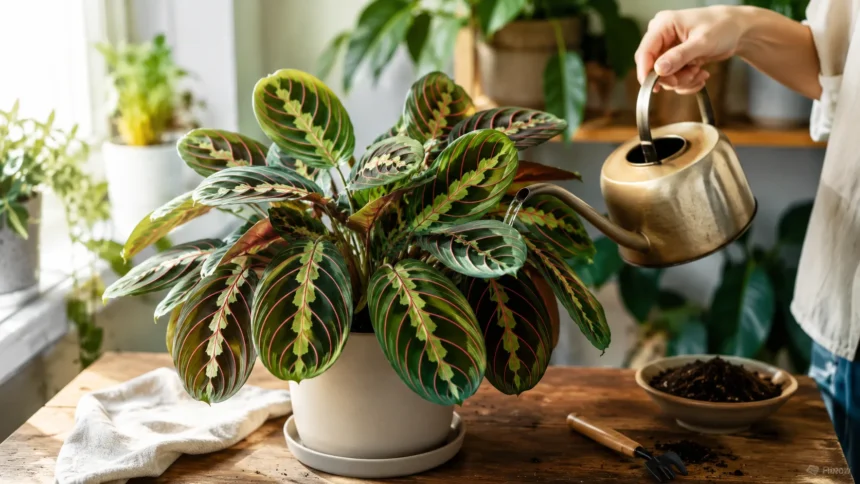
Prayer Plant Care: Light, Water & Growing Tips
The prayer plant is one of the most distinctive tropical houseplants you can grow indoors. Known botanically as Maranta leuconeura, it is famous for patterned leaves that may feature green, cream, red, or purple markings depending on the variety. Its common name comes from the way its leaves often rise upward in the evening, creating a folded appearance that resembles hands in prayer. Although the plant looks exotic, it can grow successfully indoors when its basic needs are understood. The most important factors are bright indirect light, evenly moist soil, warm temperatures, and relatively high humidity. Once those conditions are balanced, prayer plant care becomes much easier.
Prayer plants naturally grow close to the forest floor in tropical environments, which explains many of their indoor preferences. They are adapted to filtered light rather than intense direct sunshine, and they generally perform best when their potting mix stays lightly moist without becoming waterlogged. Dry indoor air can cause curling or crispy leaves, while excessive watering can encourage root problems. The plant also reacts quickly to changes in temperature, water quality, and light levels, which can make it appear more demanding than some beginner houseplants. However, its visible reactions can also be helpful because they provide clues about what needs adjustment. Learning to read those signals is a major part of successful prayer plant growing.
This guide explains prayer plant care, light requirements, watering needs, humidity, soil, temperature, fertilizer, propagation, and common growing problems. It also covers practical growing tips for keeping leaves colorful and preventing issues such as brown edges, yellow leaves, drooping, curling, or slow growth. Related houseplant-care terms such as indirect sunlight, tropical humidity, root rot, drainage, potting mix, and propagation are explained naturally throughout the article. Whether you have just purchased your first Maranta or are trying to revive an unhappy plant, the following sections provide a complete care framework. The goal is to help you create stable growing conditions rather than constantly reacting to individual symptoms.
What Is a Prayer Plant?
A prayer plant is a tropical perennial houseplant belonging to the Marantaceae family, with Maranta leuconeura being the species most commonly grown indoors. It is appreciated primarily for its decorative foliage rather than flowers. Leaves are typically oval and may display bold veins, contrasting blotches, or striped patterns depending on the cultivar. Popular varieties include red prayer plant, lemon lime prayer plant, and varieties with darker green or silvery markings. Mature plants usually remain relatively compact and spread outward rather than growing tall like many upright tropical plants. This low, spreading habit makes them suitable for shelves, tables, plant stands, and hanging containers where their patterned leaves can be seen clearly.
The name “prayer plant” refers to the daily movement of its foliage. Leaves may lie more horizontally during the day and rise upward during the evening or night. This movement is known as nyctinasty, a natural response influenced by changes in light and the plant’s internal rhythms. It does not necessarily mean that the plant needs water or is experiencing stress. New owners sometimes become concerned when the leaves change position throughout the day, but this movement is normal. In fact, the changing leaf angle is one of the most interesting characteristics of Maranta plants. Observing this daily motion can help distinguish normal behavior from symptoms such as persistent drooping or curling caused by care problems.
Prayer plants originate from tropical regions of the Americas, where they grow in warm, humid environments with filtered light. Their natural habitat helps explain why indoor plants dislike harsh midday sun, cold drafts, and very dry air. They generally appreciate stable temperatures and moisture conditions rather than dramatic changes. Because they grow beneath taller vegetation in nature, their leaves are adapted to lower-intensity light than many sun-loving plants. This does not mean they thrive in dark rooms, however. Too little light can weaken growth and reduce leaf color, while direct sun can scorch the foliage. Successful care depends on recreating the bright but protected conditions found beneath a tropical canopy.
Maranta is sometimes confused with Calathea, Stromanthe, and Ctenanthe because these plants belong to the same broader botanical family and share similar leaf movements. Garden centers may even use the term prayer plant loosely for several related species. Care requirements overlap significantly, especially regarding humidity, filtered light, and consistent moisture. However, true Maranta plants often have a more trailing or spreading growth habit and can be relatively easy to propagate through stem cuttings. Calatheas usually form leaves directly from the base and are commonly propagated by division instead. Knowing which plant you actually own can make propagation and pruning decisions easier.
Prayer plants are popular because they provide strong visual impact without requiring a large indoor growing space. Their colorful leaves can create an attractive focal point in offices, bedrooms, living rooms, or collections of tropical houseplants. They also respond visibly when conditions improve, producing fresh leaves and spreading stems during active growth. Although Marantas are sometimes labeled difficult, most problems result from inconsistent watering, dry air, unsuitable light, or poor drainage. Once these factors are stabilized, the plant can remain attractive for years. The key is not constant attention but consistency. A prayer plant generally performs better with a predictable routine than with frequent changes intended to correct every small imperfection.
Best Light for Prayer Plants
Bright, indirect light is usually the best light for a prayer plant. This means the plant receives plenty of daylight without intense direct sun striking the leaves for long periods. An east-facing window can work well because morning sunlight is usually gentler than afternoon exposure. A bright room with the plant positioned a short distance away from a south- or west-facing window may also provide suitable conditions. Sheer curtains can help soften stronger sunlight. The goal is to give the plant enough light to support healthy growth and vibrant leaf markings while avoiding the leaf scorch that can occur under harsh direct exposure.
Too much direct sunlight can fade or burn prayer plant foliage. Strong midday or afternoon rays may produce pale patches, dry spots, or crispy areas on the leaves. Red or purple markings can become less vivid when leaves are stressed by excessive light. If you notice bleaching or scorched sections on the side facing the window, move the plant farther back or filter the sunlight. Remember that light intensity changes during the year, so a location that works during winter may become too bright in summer. Observing how the leaves respond is more useful than relying only on the direction of the window.
Low light creates a different set of problems. A prayer plant can tolerate moderately low indoor light for a period, but it may grow slowly and produce smaller or less colorful leaves. Stems can also become more stretched as the plant reaches toward a stronger light source. Extremely dark conditions may increase the risk of overwatering because the soil dries more slowly when photosynthesis and growth are reduced. If the plant is several meters away from a window and rarely receives bright daylight, it may benefit from a brighter location. Indirect light should still be visibly bright enough to illuminate the leaves for much of the day.
Artificial grow lights can be useful when natural light is limited. LED grow lights provide a consistent source of illumination and can help maintain growth during dark winters or in rooms without suitable windows. Position the light according to the manufacturer’s recommendations because distance affects intensity. If the lamp is too far away, it may provide little benefit, while very intense lighting placed too close can stress foliage. A timer can create a regular daily schedule and prevent the light from running continuously. Prayer plants do not need twenty-four-hour light because periods of darkness are part of their natural growth cycle and leaf movement.
One simple way to judge lighting is by watching new growth over several weeks. Healthy plants in appropriate light usually produce leaves with strong patterning and compact growth during the active season. If leaves fade or scorch, reduce direct exposure. If the plant grows weakly or loses much of its pattern, increase indirect light gradually. Avoid moving a stressed prayer plant from deep shade directly into strong sun because sudden exposure can create additional damage. Small adjustments are generally safer. Consistent bright indirect light supports both leaf color and overall plant vigor, making it one of the most important foundations of successful prayer plant care.
How Often Should You Water a Prayer Plant?
Prayer plants generally prefer evenly moist soil, but they should not sit in constantly saturated potting mix. A practical approach is to water when the top layer of soil begins to feel slightly dry while the deeper mix still retains some moisture. The exact interval changes according to temperature, light, humidity, pot size, soil composition, and season. During warm periods of active growth, the plant may need water more frequently. In winter, slower growth and lower evaporation can increase the time between waterings. Rather than watering strictly every seven days, check the soil regularly and use its moisture level as the main guide.
When watering, apply enough moisture to wet the entire root zone rather than adding only a small amount to the surface. Water should eventually drain from the holes at the bottom of the pot, showing that the mix has been moistened evenly. Allow excess water to drain before returning the pot to a decorative cover or saucer. Leaving the roots standing in collected water can reduce oxygen around them and contribute to root rot. If your decorative planter does not have drainage holes, keep the prayer plant in a separate nursery pot inside it. This makes thorough watering and drainage much easier to manage.
Prayer plants can react strongly when they become too dry. Leaves may curl inward, droop, or develop dry edges, and the soil may pull away from the sides of the container. A mildly thirsty plant can often recover after a thorough watering, but repeated severe drying can weaken the root system and damage foliage permanently. At the same time, drooping does not always mean the plant needs water. Saturated soil can also cause wilting because damaged roots become unable to absorb moisture properly. Always check the potting mix before adding more water rather than treating every drooping leaf as proof that the plant is thirsty.
Water quality can influence prayer plant appearance, especially in areas with hard tap water or high levels of dissolved minerals. Some Marantas develop brown leaf tips when sensitive to mineral accumulation or certain substances in household water. Rainwater, filtered water, or another suitable low-mineral source may improve foliage if water quality appears to be contributing to browning. If you use tap water successfully and the plant remains healthy, there is usually no need to change your routine. Periodically allowing plenty of water to drain through the pot can also help reduce accumulated fertilizer salts in the soil.
Seasonal adjustments are important because plant water use is never completely fixed. In summer, warmer conditions and stronger light may cause the soil to dry more quickly. During winter, cooler temperatures and reduced light often slow moisture loss. Air conditioning and indoor heating can complicate this pattern by drying the air or altering room temperatures. Checking the soil before watering is therefore more reliable than using a calendar. Over time, you will learn how quickly your particular prayer plant dries in its location. The ideal watering routine keeps the root zone consistently comfortable without allowing long periods of either drought or waterlogging.
Humidity, Temperature, Soil, and Potting Needs
Prayer plants appreciate moderate to high humidity because they originate from tropical environments. Indoor humidity around 50 percent or higher often supports better leaf quality, although individual plants may adapt to somewhat lower levels. Dry air can contribute to brown tips, curling foliage, and leaves that look less vibrant. Humidity can be improved by grouping compatible plants together or using a room humidifier. Bathrooms and kitchens may also provide naturally higher humidity when enough light is available. Misting produces only temporary moisture and is usually less effective than maintaining stable room humidity. Consistent conditions are generally more beneficial than occasional bursts of moisture on the leaves.
Temperature should remain relatively warm and stable. Prayer plants usually perform best in typical comfortable indoor temperatures and dislike prolonged exposure to cold. Avoid placing them beside drafty winter windows, exterior doors, or air-conditioning vents where sudden temperature changes occur. Heat vents can also dry the foliage and soil quickly. A location that feels comfortable to people is often suitable, provided that nighttime temperatures do not drop sharply. Tropical plants can experience stress before visible cold damage becomes obvious. Stable warmth encourages continuous root activity and leaf development while reducing the environmental fluctuations that can make Maranta plants difficult to maintain.
A loose, moisture-retentive but well-draining potting mix is ideal. The goal is to hold enough moisture for the plant’s relatively fine roots without allowing the soil to remain heavy and waterlogged. A quality indoor potting mix can be improved with materials such as perlite, fine bark, or coco coir depending on its original texture. Extremely compact soil slows drainage and reduces oxygen around roots. On the other hand, a very coarse mix may dry too quickly for a plant that prefers consistent moisture. The best mix balances water retention with aeration. Commercial mixes designed for tropical foliage plants can provide a convenient starting point.
Drainage holes are essential because excess water must be able to leave the container. Decorative ceramic, plastic, or terracotta pots can all work as long as the moisture level is managed appropriately. Terracotta tends to lose water more quickly through its porous walls, which may require more frequent watering. Plastic and glazed ceramic pots usually retain moisture longer. Prayer plants do not need oversized containers because too much unused soil can remain wet for extended periods. Choose a pot only slightly larger than the existing root system when repotting. This gives roots space to expand without dramatically increasing the amount of moisture held around them.
Repotting is usually needed when roots become crowded, the potting mix breaks down, or the plant dries unusually quickly because roots occupy most of the container. Spring or early summer is often a convenient time because active growth helps the plant recover from disturbance. Move up only one pot size rather than placing a small root ball into a very large container. After repotting, return the plant to familiar light and temperature conditions and avoid excessive fertilizer while roots settle. Some temporary drooping can occur after disturbance. Maintaining stable moisture and humidity usually supports recovery better than repeatedly moving or adjusting the plant during this period.
Fertilizer, Pruning, and Propagation Tips
Prayer plants benefit from light feeding during periods of active growth, especially when they have been growing in the same potting mix for several months. A balanced houseplant fertilizer can be applied according to the product label, often at a diluted strength if the plant is sensitive. Excess fertilizer can cause salt accumulation that contributes to brown leaf tips or root stress. More fertilizer does not automatically produce faster growth. During winter or periods when the plant is growing very slowly, feeding can usually be reduced or paused. The goal is to replace nutrients gradually rather than forcing rapid growth through heavy fertilization.
Pruning helps maintain a fuller, more attractive plant. Marantas naturally spread and trail, so individual stems may become long or uneven over time. Cutting just above a leaf node can encourage branching and produce a bushier appearance. Remove badly damaged, yellow, or completely dry leaves with clean scissors or pruning shears. Cosmetic trimming does not harm the plant when performed carefully, but avoid removing large amounts of healthy foliage at once. The leaves produce energy through photosynthesis, so excessive pruning can slow recovery. Regular light trimming is usually enough to maintain shape and encourage new growth during spring and summer.
Prayer plants are relatively easy to propagate from stem cuttings because their stems contain nodes capable of producing roots. Choose a healthy stem and cut just below a node, ensuring the cutting includes at least a few leaves. The cutting can be rooted in water or placed directly into a moist propagation medium. If using water, keep the node submerged while the leaves remain above the surface. Replace or refresh the water periodically to keep conditions clean. Once several healthy roots develop, transfer the cutting into a small pot containing suitable soil. Maintaining warmth, humidity, and gentle indirect light can support the transition.
Propagation directly in soil can reduce the need to transfer delicate water-grown roots later. Dip the cut end into a moist, airy potting mix and keep the medium consistently damp while new roots form. A clear cover or propagation container can help maintain humidity, but airflow is still important to reduce fungal problems. New growth is one of the clearest signs that the cutting has established roots. Avoid strong direct sunlight during this stage because cuttings lose water more easily than established plants. Once active growth begins, gradually return the new plant to normal prayer plant care conditions and begin a regular watering routine.
Large, established prayer plants can sometimes also be divided during repotting when they contain naturally separable rooted sections. Gently remove the plant from its pot and examine the root system before pulling sections apart. Each division should have both healthy roots and enough stems or leaves to support continued growth. Pot the divisions separately and keep them evenly moist while they recover. Division creates larger new plants more quickly than stem cuttings but causes more root disturbance. Use this method only when the plant is healthy enough to tolerate handling. Propagation works best when performed during active growth rather than when the plant is already stressed by cold, pests, or poor conditions.
Common Prayer Plant Problems and Solutions
Brown leaf tips or edges are among the most common prayer plant problems. They can result from low humidity, inconsistent watering, fertilizer buildup, poor water quality, or combinations of these factors. Begin by checking the soil moisture and the plant’s location before changing several things at once. If the room is very dry, increasing humidity may help future leaves grow with cleaner edges. If fertilizer has been used heavily, reduce feeding and flush the potting mix with suitable water. Existing brown tissue will not turn green again, so judge improvement by new growth. Small brown tips are often cosmetic and do not necessarily mean the entire plant is unhealthy.
Yellow leaves can indicate several different issues. Older leaves naturally yellow and die as the plant replaces them, especially near the base. However, widespread yellowing combined with constantly wet soil can suggest overwatering or poor drainage. Check whether water is collecting inside a decorative pot and examine the roots if the soil remains wet for unusually long periods. Healthy roots are generally firm, while badly rotted roots may appear dark, soft, or unpleasant-smelling. If root rot is present, remove damaged material and repot into fresh, well-draining mix. Reducing watering frequency without improving drainage will not always solve the underlying issue.
Leaf curling usually indicates environmental stress but should be interpreted carefully. Prayer plant leaves naturally move and may change orientation throughout the day, which is different from tight persistent curling. Dry soil, low humidity, excessive light, or temperature stress can all cause leaves to curl inward. Check each condition systematically rather than assuming one cause. If the soil is dry, water thoroughly and observe whether the leaves improve. If the soil is moist, look at humidity and light exposure before adding more water. Persistent curling accompanied by spotting or visible insects should also prompt a pest inspection.
Spider mites and other common houseplant pests can occasionally affect prayer plants. Spider mites favor dry conditions and may produce fine webbing, pale stippling, or dull-looking leaves. Mealybugs and other sap-feeding pests can also appear on stems or leaf undersides. Isolate an affected plant from the rest of your collection while identifying and treating the problem. Washing foliage and using an appropriately labeled houseplant pest-control product can help depending on the pest. Follow the product directions carefully and repeat treatment if the pest lifecycle requires it. Improving overall growing conditions can also make the plant more resilient during recovery.
Slow growth or loss of color often points to insufficient light, low temperatures, poor nutrition, or seasonal dormancy. Prayer plants naturally grow more slowly during darker winter months, so reduced growth does not always signal a problem. If the plant remains weak during spring and summer, move it gradually into brighter indirect light and review the soil condition. A root-bound plant may need repotting, while an unfertilized plant in old soil may benefit from gentle feeding. Avoid trying to solve slow growth through heavy fertilizer because light and root health may be the true limitation. Healthy growth usually returns when the underlying environmental factor is corrected.
How to Keep a Prayer Plant Full and Healthy
A full prayer plant begins with suitable light. Bright indirect light encourages stronger, more compact growth, while very low light can produce long stems with larger spaces between leaves. Rotate the pot every week or two so different sides receive similar exposure and growth remains balanced. If one side constantly faces a window, the plant may gradually lean toward that light source. Rotation should be gentle because constantly moving the plant to completely different locations can create environmental stress. Combining stable conditions with occasional rotation gives the plant enough consistency while encouraging an even shape. Strong leaf color and regular new growth generally indicate that the light level is appropriate.
Pruning is another effective way to encourage a bushier appearance. When long stems are cut near nodes, the remaining plant can produce side shoots that fill empty areas. The removed sections can be propagated and planted back into the original pot once rooted, creating an even fuller display. This technique is particularly useful for older prayer plants that have become sparse or leggy. Pruning is best done during active growth so the plant can respond quickly. Use clean tools and avoid removing more foliage than necessary. Several small pruning sessions usually create better results than one extreme cutback.
Consistent watering supports steady foliage production. Prayer plants often lose lower leaves when repeatedly allowed to dry severely or when roots remain waterlogged. Maintaining a middle ground protects the root system and helps the plant invest energy in new leaves instead of constant recovery. Check the soil more often during hot weather and immediately after moving the plant to a brighter location because moisture needs can change. A plant with a larger root system may also dry more quickly than when it was newly purchased. Adjust the routine according to the plant’s actual behavior rather than assuming one watering schedule will remain suitable forever.
Humidity can influence how attractive new leaves look as they unfold. In very dry rooms, new growth may develop crispy edges or become distorted before it fully expands. A humidifier provides the most consistent way to increase room humidity when conditions are persistently dry. Grouping tropical plants may also create a slightly more humid local environment, although the effect is modest. Avoid placing foliage directly against cold windows in winter because condensation and low surface temperatures can damage leaves. Stable warmth combined with moderate humidity creates conditions that more closely resemble the plant’s natural tropical environment and supports smoother leaf development.
Finally, avoid overreacting to every damaged leaf. Prayer plants are living organisms, and even healthy specimens may develop occasional brown tips, yellow older leaves, or minor imperfections. Constantly changing light, water, fertilizer, soil, and location can create more stress than the original cosmetic issue. Look for patterns across several leaves and over several weeks before making major changes. New growth is often the best indicator of whether conditions have improved. If new leaves emerge healthy and the plant continues expanding, a few older damaged leaves are not a reason for concern. Consistency is one of the most effective long-term prayer plant growing tips.
Seasonal Prayer Plant Care
Spring is often the beginning of more active growth because daylight increases and indoor temperatures become more favorable. This is a useful time to inspect roots, refresh old soil, repot crowded plants, and begin light fertilization if needed. New leaves may appear more frequently as the plant receives stronger indirect light. Water consumption can also increase, so check the soil more regularly rather than continuing a winter watering schedule automatically. Spring is also an excellent time for pruning and propagation because fresh cuttings root more readily under warm, bright conditions. Make changes gradually so the plant can adapt without experiencing several major stresses at once.
Summer can provide ideal growing conditions as long as intense sunlight and heat are controlled. A prayer plant close to a bright window may require additional protection from strong afternoon sun during the hottest months. Warmer temperatures can dry the potting mix quickly, particularly in terracotta containers. Indoor air conditioning may reduce humidity even while outdoor humidity remains high. Check leaves for signs of dryness and monitor soil moisture more often. If moving the plant outdoors temporarily, place it only in a protected shaded location and bring it inside before temperatures fall. Direct outdoor sunlight can burn foliage much faster than typical indoor window light.
Autumn is a good time to begin reducing fertilizer as growth slows. Day length decreases, and the plant may use water more slowly than it did during summer. Continue providing bright indirect light, but move the pot slightly closer to a suitable window if the room becomes much darker. Check for pests before bringing in any plants that spent time outdoors because insects can spread through an indoor collection. Avoid repotting late in the season unless there is a clear problem such as severe root rot or a damaged container. Stable conditions generally help prayer plants transition more comfortably into winter.
Winter care focuses on avoiding overwatering, cold drafts, and excessively dry air. Heating systems can reduce indoor humidity significantly, making brown leaf edges more common. A humidifier may become especially useful during this period. At the same time, lower light means the potting mix may remain wet longer, so reduce watering frequency according to actual soil moisture. Avoid placing the plant beside radiators or directly against freezing window glass. Growth may slow considerably, and that is usually normal. The plant does not need heavy feeding when it is not actively producing substantial new foliage.
Seasonal care should remain flexible because indoor environments differ significantly. A plant under strong grow lights may continue growing actively through winter, while one relying entirely on natural daylight may slow down much more. Warm tropical climates may also create less seasonal variation than cooler regions with long winters. Instead of following rigid monthly rules, observe light, temperature, humidity, and soil drying speed. These environmental factors determine what the plant needs more accurately than the calendar. Prayer plants thrive when care responds to real growing conditions. Seasonal awareness simply helps you anticipate how those conditions are likely to change throughout the year.
Conclusion
Prayer plant care becomes much easier when you focus on stability rather than perfection. Maranta leuconeura prefers bright indirect light, consistently moist but well-drained soil, warm temperatures, and moderate to high humidity. These conditions reflect the plant’s tropical origins and help explain why direct sunlight, cold drafts, dry air, and saturated soil often create problems. The plant’s leaves may move noticeably between day and night, which is a normal characteristic rather than a sign of stress. Once you understand this natural behavior, it becomes easier to identify genuine issues such as persistent curling, yellowing, browning, or drooping.
Light is one of the most important factors because it affects growth, color, and water use. A prayer plant that receives too much direct sun can develop faded or scorched leaves, while one in very low light may become weak and lose some of its striking pattern. Bright filtered sunlight provides a useful balance. Grow lights can supplement natural light during winter or in darker homes. Adjust exposure gradually rather than suddenly moving a plant from shade into strong light. Healthy new leaves with good color and compact growth are among the clearest signs that the plant’s lighting conditions are working well.
Watering requires the same balanced approach. Prayer plants dislike severe drought but can also suffer when their roots remain saturated for long periods. Water thoroughly when the upper soil begins to dry, then allow excess moisture to leave through drainage holes. Adjust frequency according to season, temperature, light, and pot size instead of following a rigid schedule. If brown tips continue despite good watering habits, humidity, fertilizer buildup, or water quality may deserve attention. Checking several environmental factors is more reliable than assuming every leaf problem has one obvious cause.
Good soil, humidity, pruning, and occasional feeding support the plant after the basics are established. Use a light, well-draining potting mix that still retains enough moisture for tropical roots. Maintain comfortable warmth and avoid sudden temperature changes. Light pruning can create fuller growth, while stem cuttings provide an easy way to propagate new plants. Fertilize gently during active growth rather than trying to force rapid development. These relatively simple habits support stronger roots and healthier foliage over time. A prayer plant that receives consistent care usually becomes easier to manage as you learn how quickly its soil dries and how it responds to your home environment.
Ultimately, the best prayer plant growing tips are to provide filtered light, dependable moisture, adequate humidity, and enough patience to observe the plant before making changes. Marantas can communicate stress quickly through their foliage, but they can also recover well when the underlying problem is corrected. Do not expect every leaf to remain flawless throughout the plant’s life. Focus instead on healthy new growth and a stable overall appearance. With the right conditions, a prayer plant can remain an attractive indoor plant for years while continuously producing patterned leaves and its characteristic evening “praying” movement.
Frequently Asked Questions
How much light does a prayer plant need?
A prayer plant grows best in bright, indirect light. Avoid prolonged direct midday or afternoon sunlight because it can fade or scorch the patterned leaves.
How often should I water a prayer plant?
Water when the top layer of soil begins to feel slightly dry while the deeper mix remains lightly moist. The exact frequency changes with temperature, humidity, light, pot size, and season.
Why are my prayer plant leaves curling?
Persistent leaf curling can result from dry soil, low humidity, excessive sunlight, temperature stress, or occasionally pests. Check soil moisture and growing conditions before automatically adding more water.
Why does my prayer plant have brown tips?
Brown tips commonly develop because of low humidity, inconsistent watering, fertilizer salt buildup, or sensitivity to mineral-heavy water. Existing brown tissue will not recover, so judge improvements by the condition of new leaves.
Are prayer plants easy to propagate?
Yes, Maranta prayer plants can usually be propagated from stem cuttings containing a healthy node. Cuttings can root in water or a moist propagation mix before being transferred into a regular houseplant pot.