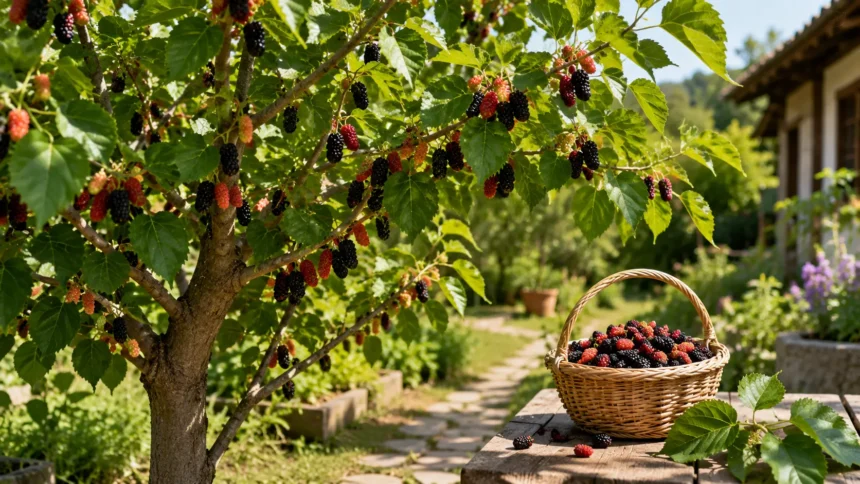
Mulberry Tree Guide: Growing, Care & Fruit Tips
Mulberry trees are fast-growing, productive fruit trees valued for their sweet berries, broad shade, wildlife appeal, and ability to tolerate conditions that challenge more demanding fruit trees. Once established, many mulberries require relatively little attention compared with peaches, apples, or other orchard crops that depend on regular spraying and intensive pruning. Their berries can be eaten fresh, cooked into preserves, dried, frozen, or added to desserts and drinks. The trees themselves can become substantial landscape features, so choosing the right variety and planting location is just as important as learning how to care for them. With adequate sunlight, reasonable soil drainage, and thoughtful pruning, a healthy mulberry can remain productive for many years.
Growing a mulberry tree successfully begins with understanding that not every mulberry behaves the same way. White mulberry, red mulberry, black mulberry, hybrids, compact cultivars, and weeping forms can differ in mature size, cold tolerance, fruit flavor, growth habit, and landscaping value. Some produce dark purple fruit, while others bear red, pink, nearly white, or mixed-colored berries, so fruit color does not always match the common species name. Mulberries can also be messy around patios and driveways because ripe berries fall readily and may stain hard surfaces. This guide explains how to choose, plant, water, feed, prune, harvest, troubleshoot, and maintain a mulberry tree while getting the best possible fruit crop.
What Is a Mulberry Tree?
Mulberries belong to the genus Morus and are deciduous trees or large shrubs known for producing clusters of small, juicy fruits that resemble elongated blackberries. Unlike blackberries, however, mulberries grow on woody trees rather than thorny canes. Their leaves can vary dramatically in shape, sometimes appearing unlobed on one branch and deeply lobed on another. Mature trees develop spreading crowns that can provide considerable summer shade before dropping their leaves in cooler seasons. Mulberries are grown both for edible fruit and ornamental purposes, while some varieties have historically been important because their leaves feed silkworms. Their combination of resilience, rapid growth, and productivity explains why they remain popular in many home gardens.
Three species are especially familiar to gardeners: white mulberry, red mulberry, and black mulberry. White mulberry, Morus alba, originated in Asia and has been cultivated extensively for silkworm production as well as fruit. Red mulberry, Morus rubra, is native to parts of North America and is valued for its fruit and ecological role. Black mulberry, Morus nigra, has a long history of cultivation and is particularly appreciated for deeply flavored, dark fruit. Numerous hybrids and named cultivars also exist, so identifying a tree by berry color alone can be misleading. A white mulberry can produce dark fruit, while berries from different species may overlap considerably in appearance.
Mulberry fruit develops from many tiny flowers that combine into what botanists call a multiple fruit. As the fruit matures, it generally becomes softer, sweeter, and easier to detach from the branch. Depending on the cultivar, ripe berries can taste mildly honeyed, richly sweet, tart-sweet, or intensely fruity. They are delicate compared with supermarket berries and can bruise quickly after harvesting, which is one reason fresh mulberries are more commonly enjoyed from home-grown trees than transported long distances commercially. Birds also recognize ripening fruit quickly and may become enthusiastic competitors during harvest season. A mature productive tree can nevertheless produce enough berries for wildlife and people when conditions are favorable.
Mulberry growth rate is often surprisingly fast when young trees receive good light and adequate moisture. Many cultivars can develop long shoots during a single growing season, especially in fertile soil. This rapid growth is useful when shade or quick establishment is desired, but it also means gardeners should think carefully about mature size before planting. Large mulberries can eventually spread wider than expected and may become difficult to maintain beside buildings, narrow paths, or small patios. Compact or dwarf selections are better choices where space is limited. Planning for mature canopy width reduces the temptation to control an oversized tree through constant severe pruning later.
Mulberries are generally considered relatively adaptable fruit trees, but adaptable does not mean indestructible. Young trees still need protection from drought, poor drainage, trunk damage, and careless pruning while their root systems establish. Local climate also matters because some species and cultivars handle winter cold or intense summer heat better than others. Gardeners should choose a mulberry suited to their region rather than purchasing solely according to berry color or advertised sweetness. It is also wise to check local recommendations before planting because certain mulberries can spread readily or naturalize in some areas. Matching the tree to the site creates a much easier long-term growing experience.
Best Types of Mulberry Trees to Grow
White mulberry is one of the most adaptable and widely distributed mulberry species. Despite its common name, its fruit can range from pale cream or pink to red, purple, or nearly black depending on the tree. Many white mulberry selections grow rapidly and tolerate heat, urban conditions, and a broad range of soils once established. Their flavor varies considerably, with some producing pleasantly sweet berries and others offering less complexity than high-quality fruit cultivars. Because the species can spread readily in certain climates, gardeners should determine whether it is recommended for their location before planting. Named fruiting cultivars are generally a better choice than an unknown seedling when dependable fruit quality is important.
Red mulberry is particularly interesting to gardeners who value native or regionally appropriate plants in parts of North America. It can develop into a handsome shade tree and usually bears dark fruit with a pleasant balance of sweetness and acidity. Red mulberry characteristics can overlap with those of white mulberry, especially where the two have hybridized, which sometimes makes identification difficult. In suitable environments, red mulberry supports wildlife while also providing edible berries for people. Gardeners interested in conservation should purchase from reputable nurseries that can provide reliable identification. Selecting appropriate local genetics can be more meaningful than simply buying a tree labeled “mulberry” without information about its background.
Black mulberry is famous for fruit quality and is often chosen by gardeners who prioritize flavor over maximum growth speed. The berries are typically dark, juicy, aromatic, and richly flavored when fully ripe. Black mulberry trees may grow more slowly and develop a broader, more gnarled form over time compared with some vigorous white mulberries. They can be highly productive once mature but should be matched carefully with local winter conditions because climate tolerance varies. The fruit is also particularly prone to staining paving, clothing, and outdoor furniture. For that reason, a black mulberry is usually better positioned over soil, lawn, mulch, or a harvest area rather than beside pale-colored patios.
Named mulberry cultivars can offer advantages that seedlings cannot reliably guarantee. A cultivar selected for large berries, excellent sweetness, extended harvest, compact growth, or improved climate tolerance gives the gardener a clearer idea of what the mature tree may provide. Seed-grown mulberries can vary because offspring do not necessarily reproduce the exact fruit quality or growth characteristics of the parent tree. Grafted or clonally propagated varieties are more predictable when a particular result is desired. Many fruiting cultivars can produce crops without requiring a second mulberry nearby, although reproductive behavior varies among species and selections. Checking the nursery description helps avoid assumptions about pollination requirements, mature size, and expected fruit production.
Gardeners who want the appearance of mulberry without abundant fallen fruit may encounter fruitless selections, while small-space growers can look for dwarf, compact, or weeping types. Fruitless trees remove much of the staining and cleanup associated with ripe berries, although they obviously provide no edible harvest. Compact fruiting cultivars are generally more suitable for courtyards, containers, or gardens where a full-sized canopy would become inconvenient. Weeping mulberries offer a distinctive ornamental form but may need structural training when young. The best mulberry tree is therefore not simply the sweetest variety available. It is the cultivar whose mature dimensions, fruit characteristics, climate tolerance, and maintenance requirements match the garden where it will actually live.
Where and How to Plant a Mulberry Tree
Full sun is usually the best location for a fruiting mulberry tree. Aim for a position that receives at least several hours of direct sunlight each day, with more sun generally supporting stronger growth and better fruit production. Mulberries can tolerate some partial shade, but heavily shaded trees may become less productive and develop thinner, less balanced growth. Good air movement is also useful because foliage that dries reasonably quickly after rain is less likely to remain continuously damp. At the same time, extremely exposed locations can be stressful for young trees in very windy climates. A bright, open position with enough room for the mature canopy usually provides the best starting point.
Soil should drain adequately because continuously waterlogged ground can deprive roots of oxygen and encourage decline. Mulberries tolerate a fairly broad range of soil textures once established, including conditions that would challenge more particular fruit trees. However, they grow best where roots can access moisture without sitting in saturated ground for extended periods. Heavy clay can often be improved more effectively through good site selection, surface organic matter, and appropriate planting technique than by creating a small pocket of drastically different soil. Very sandy ground may dry quickly and require more regular irrigation during establishment. Observing what happens to water after heavy rain provides useful information before planting.
Allow substantial space around a standard mulberry because mature trees can create broad crowns and extensive root systems. Avoid squeezing a vigorous tree directly beside a house, wall, drain field, swimming pool, or narrow paved area simply because the nursery plant looks small. Roots normally grow where moisture, oxygen, and soil conditions are favorable, and mature trees are easier to manage when they have adequate room from the beginning. Fallen berries are another important placement consideration because dark fruit can stain paving, vehicles, decks, and outdoor furniture. Planting over lawn, soil, or mulch usually makes cleanup less frustrating. A thoughtful site protects both the tree and surrounding property.
When planting a container-grown mulberry, dig a hole wider than the root ball but generally no deeper than necessary to keep the tree at approximately its previous soil level. Remove the container carefully and inspect roots that circle tightly around the outside. Gently loosening or correcting severe circling can encourage roots to grow outward into surrounding soil. Position the tree so the trunk flare is not buried deeply, then backfill with the excavated soil while eliminating large air pockets. Water thoroughly after planting to settle soil around the roots. Excessive fertilizer in the planting hole is unnecessary and can sometimes encourage problems rather than helping the young tree establish.
Mulching after planting helps conserve soil moisture, moderate temperature, and suppress weeds competing with the young mulberry. Spread an organic mulch such as wood chips over the root area while keeping it several inches away from direct contact with the trunk. Piling mulch against bark creates a constantly damp environment that can encourage decay and other problems. Newly planted trees may require staking only when they cannot remain stable on their own, and unnecessary tight staking can reduce natural trunk strengthening. Inspect the tree regularly during its first growing season instead of assuming planting completes the job. The first year is primarily about establishing a healthy root system capable of supporting future growth.
Watering, Feeding and Mulching Mulberry Trees
Consistent watering is particularly important during the establishment period after planting. Young roots occupy a limited volume of soil and cannot immediately access moisture from a large surrounding area. Water deeply enough to moisten the root zone and then allow the soil surface to begin drying before watering again rather than keeping the ground constantly soggy. Frequency depends on temperature, rainfall, soil texture, wind, and tree size, so a fixed calendar is less useful than checking actual soil moisture. Hot, dry weather may require more frequent irrigation than cool conditions. Deep watering encourages roots to explore downward and outward more effectively than repeated shallow sprinkling.
Established mulberry trees are often reasonably drought tolerant, but prolonged dryness can still affect fruit size, leaf condition, and overall vigor. Fruiting trees generally perform better when they receive adequate moisture during active growth and berry development. Severe drought followed by sudden heavy watering can also create stress rather than maintaining steady growth. The goal is not to keep soil wet at all times but to prevent repeated extreme drying where possible. A broad mulch layer helps stabilize moisture between irrigation events. During unusually dry seasons, even mature mulberries may benefit from occasional deep watering, especially on sandy soil or in locations where roots compete with nearby plants.
Mulberries growing in reasonably fertile garden soil may not need heavy annual feeding. Excess nitrogen can encourage long, vigorous shoots at the expense of a balanced structure and may make pruning more difficult. If growth appears weak despite adequate water and sunlight, evaluate soil conditions and overall tree health before automatically adding fertilizer. A soil test can provide useful information where nutrient deficiency is suspected. When feeding is appropriate, use a balanced approach rather than repeatedly applying high-nitrogen products intended mainly to force leafy growth. Fruit trees benefit most from nutrients supplied according to actual need rather than the assumption that more fertilizer always produces more fruit.
Organic mulch gradually contributes organic material to the soil surface while protecting roots from rapid moisture loss. Wood chips, shredded bark, or similar materials can be spread over a broad area beneath the canopy, particularly around young trees. A wider mulch ring also reduces competition from grass, which can consume substantial water and nutrients near developing roots. Keep mulch away from the trunk and refresh it as it decomposes rather than continuously building an excessively deep layer. Mulch should create conditions similar to a forest floor, not a mound climbing up the bark. Proper mulching is one of the simplest ways to reduce watering stress and protect soil structure.
Container-grown mulberries require more careful water and nutrient management because their roots cannot extend beyond the pot to locate additional resources. Potting mix dries much faster than garden soil during warm weather, especially when a tree has developed a large canopy. Check moisture frequently and water thoroughly until excess drains from the container rather than applying tiny amounts that wet only the surface. Container nutrients also wash out gradually, so measured feeding may be necessary during active growth. Avoid allowing the pot to stand continuously in water, because excellent drainage remains essential. Repotting or root management may eventually be required when the tree becomes crowded and water begins passing through too quickly.
How to Prune and Train a Mulberry Tree
Young mulberry trees benefit from early structural training because correcting small branches is easier than removing large limbs years later. The goal is to develop a stable framework with well-spaced major branches rather than allowing several weak stems to compete from one narrow point. Remove damaged, crossing, or poorly positioned growth while preserving enough healthy foliage to support establishment. Avoid excessive pruning simply to create an instant formal shape, because young trees need leaves to produce energy. A few thoughtful cuts each year usually create better structure than severe periodic reductions. Inspect branch angles and future spacing while shoots are still manageable instead of waiting until the canopy becomes crowded.
Mulberries are naturally vigorous, so pruning should generally focus on structure, safety, access, and size management rather than forcing the tree into an unnaturally small form. Remove dead, broken, diseased, or rubbing branches when necessary, and thin selected growth that causes serious congestion. Avoid routinely topping the canopy by cutting major limbs indiscriminately, because topping can produce weak clusters of fast regrowth and large wounds. If a full-sized mulberry is inappropriate for the available space, replacing it with a compact cultivar may ultimately be easier than fighting its natural growth every year. Correct plant selection remains one of the most effective forms of long-term pruning.
Timing matters because mulberries can release considerable sap from pruning cuts when active sap flow is strong. Major pruning is generally better handled during an appropriate dormant period for the local climate rather than during vigorous spring growth. However, exact timing can vary with region, species, and the type of pruning required. Dead or hazardous branches may need attention regardless of season when safety is involved. Gardeners should avoid removing large amounts of live canopy in one session unless there is a compelling reason. Gradual size management places less stress on the tree and reduces the amount of vigorous replacement growth that can follow severe pruning.
Fruit production should also influence pruning decisions. Mulberries can bear heavily on established wood and new growth depending on cultivar and growing conditions, so indiscriminately removing productive branches can reduce the next harvest. Light thinning can improve access and airflow while preserving enough fruiting wood. A tree planted primarily for berries does not need to look perfectly symmetrical if irregular branches are healthy and productive. Harvest accessibility may justify keeping the canopy somewhat lower where the cultivar and available space allow it. The aim is to balance manageable size with the natural growth pattern rather than pruning so aggressively that fruit production and tree health suffer.
Older mulberries sometimes develop large limbs that require professional assessment, especially when branches extend over buildings, roads, play areas, or electrical infrastructure. Large cuts can create substantial wounds, and climbing mature trees without proper equipment presents serious safety risks. An experienced arborist can evaluate weak unions, decay, storm damage, and the safest way to reduce hazardous growth. Home gardeners should limit themselves to pruning they can perform safely from the ground with appropriate tools. Clean cuts made at proper branch positions heal more effectively than random stubs. Good long-term mulberry care combines early training, moderate maintenance, correct timing, and professional help when the tree becomes too large for safe home pruning.
Mulberry Fruit Production, Pollination and Harvesting
Mulberry trees can begin producing fruit while relatively young, although the exact age depends on whether the tree was grown from seed, grafted, or propagated from a selected cultivar. Grafted or cloned fruiting varieties often produce sooner and more predictably than seedlings. A young tree may initially set only a modest crop before production increases as its canopy expands. Adequate sunlight, healthy growth, and suitable climate conditions support reliable fruiting. Excessive nitrogen can produce lush shoots without necessarily improving berry yield. Gardeners should therefore focus on balanced tree health rather than trying to force early production through heavy feeding. Patience usually results in better long-term performance.
Mulberry reproductive biology can be more complicated than the simple idea that every tree needs a male and female partner. Depending on species, cultivar, and individual tree, male and female flowers may occur on separate plants or reproductive patterns may differ. Many named fruiting cultivars sold for gardens are capable of setting fruit without requiring a second mulberry planted nearby. However, gardeners should verify the characteristics of the exact cultivar being purchased rather than relying on a universal rule. Fruitless selections obviously will not provide a berry crop even if another mulberry is nearby. Buying from a specialist fruit-tree nursery can prevent years of confusion about expected fruiting behavior.
The ripening season varies with climate and cultivar, and fruit on one tree may mature gradually rather than all at once. Berries typically become softer and sweeter as they reach full ripeness, and mature fruit often separates from the stem with very little resistance. Color can be a useful clue, but it is not reliable by itself because some cultivars remain pale when ripe while others become almost black. Taste and ease of separation are better indicators. Sampling a few berries over several days helps determine when the main crop is ready. Fruit allowed to ripen completely on the tree usually develops better flavor than berries harvested very early.
Hand-picking works well for small trees and selected branches, but mature mulberries can produce far more fruit than is practical to harvest individually. A traditional method involves spreading a clean sheet, tarp, or collection cloth beneath the canopy and gently shaking accessible branches so ripe berries fall. Only fully ripe fruit should release readily, while firmer berries remain attached for later harvesting. Handle the crop carefully because mulberries crush and stain easily. Harvesting in shallow containers prevents the weight of upper fruit from damaging berries beneath. Ripe fruit should be cooled relatively quickly after collection if it will not be eaten or processed immediately.
Fresh mulberries can be eaten directly after appropriate washing or incorporated into many recipes that normally use other berries. They work well in jams, syrups, pies, sauces, smoothies, baked goods, and fruit compotes. Freezing is one of the easiest ways to preserve a large harvest, especially when fruit production exceeds immediate household use. Berries can be spread individually on trays for initial freezing before being transferred to freezer containers to reduce clumping. Drying is another option where suitable equipment and food-safety practices are available. Because fresh mulberries are fragile and highly perishable, preparing a preservation plan before peak ripening helps prevent a productive tree from creating unnecessary waste.
Common Mulberry Tree Problems, Pests and Diseases
Mulberries are generally robust trees, but they can still experience problems when environmental conditions are unfavorable. Yellow leaves, premature leaf drop, weak growth, or dieback may result from waterlogged soil, severe drought, root damage, nutrient problems, or other stresses rather than a single specific disease. Start diagnosis by examining the growing environment before automatically applying pesticides or fertilizer. Check soil moisture, drainage, trunk condition, recent weather, and whether landscaping work has disturbed the roots. Several unrelated problems can create similar leaf symptoms. Treating the underlying stress is often more effective than addressing only the visible symptom, particularly when insects or fungal issues are secondary to declining tree health.
Sap-sucking insects such as scale insects, aphids, or similar pests may occasionally colonize mulberry foliage and stems. Light populations may cause little lasting harm to a healthy mature tree, while heavy infestations can contribute to leaf distortion, sticky honeydew, or reduced vigor. Natural predators frequently help keep these pests under control, so broad insecticide use is not always necessary. Inspect new growth, leaf undersides, and stems before deciding how serious the infestation is. Pruning heavily affected small branches or using an appropriately labeled low-impact treatment may be sufficient in some situations. Pest management should match the actual severity of the problem rather than reacting automatically to the presence of any insect.
Fungal leaf spots, powdery growth, cankers, and root-related diseases can occur depending on climate and growing conditions. Dense canopies and persistently wet foliage may encourage certain leaf problems, while poorly drained soil places roots under greater stress. Removing fallen diseased leaves when appropriate and maintaining reasonable airflow can reduce some recurring issues. Avoid watering foliage unnecessarily when irrigation can be directed toward the root zone instead. Major cankers, extensive dieback, or structural decay deserve closer evaluation because these problems can affect branch safety as well as appearance. Correct identification is important before treatment, especially when chemical control is being considered.
Birds are often the most noticeable competitors for mulberry fruit, and in many gardens they consume a substantial portion of the crop. Whether this is a problem depends on the gardener’s priorities because mulberries can be excellent wildlife trees. Netting can protect smaller trees, but it must be installed carefully so birds and other animals do not become trapped. On large trees, complete protection is often impractical, and harvesting frequently as berries ripen may be the simplest strategy. Some gardeners intentionally allow birds to take upper fruit while collecting berries from accessible lower branches. A highly productive mature mulberry can often support both wildlife and a useful household harvest.
One of the most common complaints about mulberry trees is not disease at all but mess. Ripe berries fall naturally, stain paving, attract insects, and can be tracked indoors on shoes. Birds eating dark fruit may also spread colorful droppings around nearby structures and vehicles. These issues are easiest to solve through planting location rather than constant cleanup. Avoid placing heavy-fruiting mulberries directly beside driveways, swimming pools, pale patios, outdoor dining areas, or parking spaces. If an existing tree is already in a difficult location, regular harvesting and surface protection may reduce the problem. Mulberry fruit is far easier to appreciate when the tree has enough space to drop berries harmlessly.
Long-Term Mulberry Care and Growing in Small Spaces
A mature mulberry planted in a suitable location may need surprisingly little routine care. Once roots are well established, watering can often be reduced except during extended drought, and heavy annual fertilization is rarely necessary in reasonably healthy soil. Maintenance mainly involves monitoring tree structure, removing damaged growth, managing fruit drop, and responding to unusual pest or disease symptoms. Mulch can continue protecting the root zone, particularly where lawn competition would otherwise be strong. Avoid repeatedly digging or compacting soil beneath the canopy because many absorbing roots occupy the upper soil layers. Maintaining healthy root conditions often contributes more to long-term tree health than frequent treatments applied to the branches.
Gardeners with limited space should look specifically for dwarf or naturally compact mulberry cultivars rather than expecting a standard tree to remain small indefinitely. A cultivar suited to containers or restricted gardens can provide fruit without creating a canopy that overwhelms neighboring plants. Even compact trees need adequate sunlight and root space, so placement still matters. Regular moderate pruning can maintain shape, but a tree should not depend on severe annual cutting merely to fit the site. Check the expected mature dimensions before purchasing because the word “small” can mean very different things among nurseries. Starting with appropriate genetics makes long-term size control much more realistic.
Container growing is possible for suitable mulberries when the pot provides enough root volume, drainage, and physical stability. Choose a sturdy container with unobstructed drainage holes and use a well-draining potting medium rather than dense garden soil alone. As the tree grows, larger containers may be required to prevent severe root crowding and rapid drying. Container trees usually need more frequent watering and regular nutritional management than trees planted in the ground. They can also become top-heavy when the canopy expands, particularly in windy locations. Periodic root pruning or repotting may eventually be needed to keep a long-lived container specimen manageable.
Winter care depends strongly on the cultivar, local climate, and whether the tree grows in a container or in open ground. Roots in containers experience greater temperature fluctuations because they lack the insulation provided by surrounding earth. In colder regions, pots may need protection or relocation to a sheltered position appropriate for the specific cultivar’s cold tolerance. Trees planted in the ground usually handle seasonal temperature changes more effectively once established when the species suits the climate. Late, tender growth can be more vulnerable to cold damage, which is another reason to avoid excessive nitrogen feeding late in the growing season. Climate-appropriate selection remains the most dependable form of winter protection.
A well-chosen mulberry can ultimately be one of the most rewarding low-maintenance edible trees in a home landscape. It can provide shade, wildlife habitat, attractive foliage, and generous amounts of fruit without requiring the intensive disease management associated with many orchard species. The biggest mistakes usually come from choosing an unsuitable variety, underestimating mature size, planting beside stain-sensitive surfaces, or pruning a naturally large tree too aggressively. Give the tree sunlight, drainage, establishment water, sensible nutrition, and enough room to develop. Harvest berries when they are fully ripe and address problems according to their actual cause rather than automatically reaching for treatments. With that approach, a mulberry tree can remain both productive and manageable for decades.
Frequently Asked Questions
How long does it take a mulberry tree to produce fruit?
Fruiting time depends on the cultivar and how the tree was propagated. Grafted or clonally propagated mulberries may begin producing while relatively young, while seedlings can take longer and may produce fruit of less predictable quality.
Do mulberry trees need full sun?
Mulberries generally fruit best in full sun, although many can tolerate some partial shade. More direct sunlight usually supports stronger growth, better berry production, and more even ripening.
Do you need two mulberry trees to get fruit?
Many named fruiting mulberry cultivars can produce berries without a second tree nearby, but reproductive behavior varies among species and cultivars. Check the specific variety before planting if dependable fruit production is important.
How often should you water a mulberry tree?
Newly planted mulberries should be watered consistently while their roots establish, allowing soil to drain between waterings. Established trees are more drought tolerant but may still benefit from deep watering during prolonged dry weather, especially while fruit is developing.
Are mulberry trees messy?
Fruiting mulberries can be messy because ripe berries fall easily and dark varieties may stain patios, driveways, furniture, and vehicles. Planting the tree over soil, lawn, or mulch and away from high-traffic paved surfaces makes fruit drop much easier to manage.