How to Get Cabbage Seeds for Gardening
Cabbage is one of the most rewarding cool-season vegetables to grow at home, but every successful crop begins with good-quality seed. If you are wondering how to get cabbage seeds for gardening, you have two main options: purchase seeds from a reliable supplier or save seeds from mature cabbage plants. Both methods can work well, although seed saving requires more patience and planning because cabbage has a two-year life cycle.
Buying cabbage seeds is usually the easiest choice for beginners because seed packets clearly identify the variety, growing characteristics, and expected maturity period. Garden centers, nurseries, seed companies, and reputable online stores typically offer a wide selection of green, red, savoy, early-season, and storage cabbage varieties. Choosing a cultivar suited to your climate can significantly improve your chances of growing healthy heads.
Saving your own cabbage seeds is a more involved process because cabbage is a biennial plant. During its first growing season, the plant mainly produces leaves and forms the familiar cabbage head. It normally flowers and produces seeds during its second season after experiencing a period of cold temperatures. That means you cannot simply cut open a mature cabbage head and expect to find viable seeds inside.
Understanding where cabbage seeds come from can help you decide whether buying or saving seed makes more sense for your garden. Purchased seed offers convenience and variety, while home seed saving can preserve favorite open-pollinated cultivars and reduce future seed costs. The following sections explain both approaches and show you how to handle cabbage seeds successfully from selection to storage.
Where Do Cabbage Seeds Come From?
Cabbage seeds develop after a mature cabbage plant produces flowers and those flowers are successfully pollinated. Cabbage belongs to the species Brassica oleracea, the same species that includes broccoli, cauliflower, kale, Brussels sprouts, and several other familiar vegetables. Although these crops look very different, they are closely related and can sometimes cross-pollinate.
During the first year of growth, cabbage focuses on developing leaves and forming a dense head. If the plant survives through winter or is stored and replanted appropriately, it can resume growth during the second year. Instead of producing another normal head, the plant begins sending up tall flowering stalks.
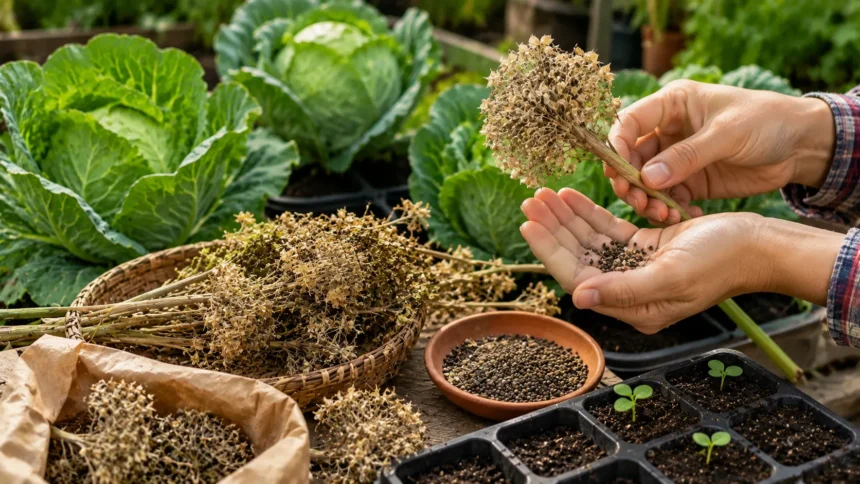
The flowers are usually yellow and are attractive to bees and other pollinating insects. After pollination, slender seed pods form where the flowers were located. These pods gradually mature, dry, and contain the small round seeds used for future cabbage crops.
This two-year cycle explains why many home gardeners have never seen cabbage seeds forming naturally. Most cabbages are harvested during their first season before they ever reach the flowering stage. To collect your own seed, you must intentionally keep selected plants alive long enough to complete the reproductive stage.
The Easiest Way to Get Cabbage Seeds
For most home gardeners, purchasing cabbage seeds from a reputable seed company or garden center is the simplest option. Commercial seed packets are convenient because they usually provide information about variety, days to maturity, planting depth, spacing, and sometimes disease resistance. This helps beginners make better decisions before planting.
Local garden centers are useful because they often stock varieties that perform well in the surrounding climate. Nurseries may also offer regionally adapted cabbage cultivars or brands commonly used by local gardeners. If you are unfamiliar with cabbage varieties, buying locally can provide a practical starting point.
Online seed suppliers generally offer a wider selection. You may find early-heading cabbage, long-storage varieties, compact cultivars for smaller gardens, heirloom cabbage, red cabbage, savoy cabbage, and varieties bred for specific seasonal conditions. This variety can be valuable if you want to experiment with different types.
When buying seed, check the packet date and choose seed intended for the current or upcoming growing season when possible. Properly stored cabbage seed can remain viable for several years, but fresher seed often provides more predictable germination. Purchase from sellers that clearly identify the cultivar and provide dependable growing information.
Choose the Right Cabbage Variety Before Buying Seeds
Not all cabbage varieties behave the same way, so selecting the right seed matters as much as finding a place to buy it. Some cabbages mature quickly and are ideal for spring planting, while others take longer and are better suited to autumn harvest or winter storage. Climate and growing-season length should guide your choice.
Early cabbage varieties tend to form smaller heads in a shorter period. They can be useful where summers become hot quickly because cabbage generally prefers cooler conditions. Midseason and late-season cultivars often produce larger heads and may have stronger storage qualities.
Gardeners in warmer climates may benefit from heat-tolerant or short-season varieties, while those growing cabbage through autumn can choose cultivars known for cold tolerance. Always compare days to maturity with the amount of favorable growing weather available in your region.
Flavor and texture may also influence your selection. Savoy cabbage has crinkled leaves and a tender texture, red cabbage offers distinctive color, while traditional green varieties are widely used for cooking, slaws, and fermentation. Choosing a variety you actually enjoy eating makes the effort of growing it far more worthwhile.
Should You Buy Heirloom, Open-Pollinated, or Hybrid Cabbage Seeds?
Understanding seed terminology becomes especially important if you eventually want to save cabbage seeds yourself. Open-pollinated varieties reproduce through normal pollination and can generally produce offspring that resemble the parent variety when unwanted cross-pollination is prevented.
Heirloom cabbage varieties are typically open-pollinated cultivars with a history of being maintained and passed down over many years. Gardeners often choose them for distinctive flavors, regional adaptation, or seed-saving potential. They can be especially appealing if you want to maintain your own seed supply.
Hybrid seeds are produced by crossing carefully selected parent lines to create specific characteristics such as uniformity, disease resistance, or improved vigor. Hybrid cabbage can perform extremely well in the garden, but seeds saved from hybrid plants may not produce offspring identical to the parent crop.
If your only goal is to grow cabbage for eating, both hybrid and open-pollinated seeds can be excellent options. If you plan to save seeds and grow the same variety repeatedly, open-pollinated cabbage is usually the more practical choice because its traits are more predictable from generation to generation.
Can You Get Seeds From a Store-Bought Cabbage?
A cabbage head purchased from a grocery store does not normally contain mature seeds. The part you eat is made primarily of tightly packed leaves, and the plant has usually been harvested before flowering. Cutting the head open will therefore not reveal seeds that can be planted.
In theory, some cabbage plants can regrow after the head has been harvested if enough stem and roots remain, but producing seed requires the plant to survive and complete its second-year reproductive cycle. A detached supermarket cabbage head without roots is not a dependable source for seed production.
Even if a store-bought cabbage could somehow be encouraged to flower, you would usually have limited information about its variety or whether it was a hybrid. This makes the resulting seed unpredictable. The plant may also have been grown under conditions very different from your home garden.
If you want to save your own cabbage seeds, begin with a known open-pollinated variety and deliberately grow healthy plants for seed production. This gives you much more control over plant quality, genetic consistency, and cross-pollination than trying to obtain seeds from supermarket produce.
How to Save Cabbage Seeds From Your Own Garden
Saving cabbage seeds begins during the first growing season rather than after flowering. Grow several healthy plants of an open-pollinated variety and observe them carefully. Select plants that show the characteristics you want to preserve, such as strong growth, healthy leaves, good head formation, and resistance to local problems.
Do not harvest every selected cabbage for the kitchen. Plants intended for seed production must remain alive long enough to experience cold conditions and flower the following year. Depending on your climate, they may overwinter directly in the garden or require protection and temporary storage.
During the second season, the cabbage plant will begin producing tall flowering stems. The original head may split as new shoots emerge from the center. This is normal and marks the transition from vegetative growth into seed production.
Allow the flowers to open naturally and attract pollinators. After successful pollination, seed pods will form along the stalks. Continue caring for the plants until those pods mature and begin drying, then harvest them before they become so brittle that they split open and scatter seed across the garden.
Why Cabbage Needs Two Seasons to Produce Seed
Cabbage is a biennial crop, meaning its natural life cycle usually spans two growing seasons. In the first year, it develops the leafy structure that gardeners harvest as a cabbage head. During the second year, after exposure to cold, it shifts toward flowering and seed production.
This period of cold exposure is known as vernalization. It acts as a biological signal telling the plant that winter has passed and it is time to reproduce. Without adequate cold exposure, some cabbage plants may not flower properly.
The exact temperature and duration needed for successful vernalization can vary among cabbage varieties. This is why seed saving can be easier in climates with cool winters than in locations where temperatures remain warm year-round.
Understanding the biennial cycle helps prevent one of the most common beginner mistakes: waiting for first-year cabbage heads to suddenly produce seed. They usually will not. Seed production requires intentionally carrying the plant through winter and allowing it to enter its reproductive phase.
How to Overwinter Cabbage for Seed Saving
In mild climates, cabbage plants may be able to remain in the garden throughout winter. Apply mulch around the base to help protect roots from temperature fluctuations, and monitor plants for damage, pests, or excessive moisture. Varieties differ in cold tolerance, so local conditions matter greatly.
In colder regions, plants may need stronger protection. Gardeners sometimes dig selected cabbage plants before severe winter weather, preserving the root system and storing them under cool, protected conditions. The goal is to keep the plant dormant but alive until it can be replanted.
Temperatures should remain cool enough to provide the cold exposure needed for flowering without allowing the plant to freeze severely or rot. Good airflow is important because excessive moisture during storage can encourage decay.
Once severe winter conditions have passed, stored cabbage plants can be replanted outdoors. They may look rough initially, but healthy plants usually resume growth and eventually send up flowering stalks. Seed-saving success depends on protecting the growing point and root system during the overwintering period.
How to Prepare a Cabbage Head for Flowering
A mature cabbage head can be extremely dense, which may make it difficult for second-year flowering shoots to emerge. Seed savers sometimes remove part of the head or make careful cuts that allow the central growing point to develop without completely destroying the plant.
The goal is to preserve the core and stem from which new growth will emerge. Cutting too deeply can damage the growing point and prevent the plant from flowering. If you are new to seed saving, work conservatively and monitor the plant as spring growth begins.
Some varieties naturally split as their flowering stems push upward. Others may benefit from careful assistance. Once the shoots begin elongating, they usually grow quite quickly and can become much taller than the original cabbage plant.
Because seed stalks can become heavy, windy locations may require stakes or other support. Keeping stems upright reduces breakage and makes mature seed pods easier to monitor and harvest later in the season.
Why You Need More Than One Cabbage Plant for Seed
Cabbage is largely self-incompatible, meaning an individual plant generally does not fertilize itself efficiently. For good seed production and stronger genetic diversity, seed savers should grow several compatible plants of the same variety rather than relying on one isolated plant.
Growing multiple plants allows pollen to move between individuals, usually with the help of insects. This improves the chances of successful seed formation and helps maintain a healthier genetic population over future generations.
Saving seed from only one or two plants can create a genetic bottleneck. Over time, repeatedly using a very small number of parent plants may reduce genetic diversity and potentially weaken the variety’s overall performance.
For casual home seed saving, maintaining a reasonable group of healthy plants is better than selecting a single favorite cabbage. Serious seed preservation may require larger populations, but even small-scale gardeners benefit from understanding that diversity matters.
Watch Out for Cross-Pollination
Cabbage belongs to the same species as broccoli, cauliflower, kale, Brussels sprouts, kohlrabi, and several other brassicas. When compatible varieties flower at the same time, insects can move pollen between them and create crosses.
This means a cabbage flowering beside broccoli or another cabbage variety may produce seed that does not grow true to type the following season. The resulting plants can show unexpected combinations of traits.
To save pure cabbage seed, gardeners need to separate flowering varieties by sufficient distance or use controlled pollination methods. Isolation requirements can be substantial because bees and other insects travel considerable distances while foraging.
If genetic purity is not important and you simply enjoy experimenting, accidental crosses may be interesting. If you want to preserve a specific variety accurately, however, preventing cross-pollination becomes one of the most important parts of cabbage seed saving.
How Cabbage Flowers Turn Into Seed Pods
Once second-year cabbage plants begin flowering, they produce clusters of small yellow blossoms. These flowers attract bees and other insects that carry pollen between compatible plants. Successful pollination triggers the development of elongated seed pods.
The pods are often called siliques and contain several seeds arranged inside. They begin green and gradually become pale brown or tan as they mature and dry. Seeds inside also become harder and darker as they reach maturity.
Do not harvest seed pods while they are still green and soft because the seeds may not have fully developed. At the same time, waiting too long can cause dry pods to split naturally and scatter seeds onto the ground.
The ideal harvest period occurs when most pods have dried but before widespread shattering begins. Because different pods may mature at slightly different times, careful monitoring becomes especially important during the final stage of seed development.
How to Harvest Cabbage Seed Pods
When most cabbage seed pods have turned dry and tan, cut the seed stalks and bring them to a sheltered, dry area. Handle them carefully because mature pods can split easily and release seeds before you are ready to collect them.
Place stalks over a clean sheet, tray, paper bag, or container while they finish drying. Good airflow helps remaining moisture escape and reduces the risk of mold during this stage.
Once completely dry, gently crush or rub the pods so they open and release the seeds. Cabbage seeds are small and round, making them relatively easy to separate from larger pieces of dried plant material.
Work slowly so seeds do not scatter. Gardeners harvesting larger quantities can place dry stalks inside a sack or large container before breaking the pods apart, helping contain the seeds and reducing losses.
How to Clean Cabbage Seeds After Harvesting
Freshly threshed cabbage seed is usually mixed with broken pods, stems, dust, and other plant debris. Cleaning this material before storage reduces bulk and makes it easier to inspect seed quality.
Start by removing large pieces of stalk and pod by hand. Smaller debris can then be separated using screens or gentle winnowing methods. Because cabbage seeds are heavier than much of the dried chaff, careful airflow can help separate them.
Avoid using excessively strong wind because the seeds themselves are small enough to blow away. Work over a large clean surface so any accidentally dropped seeds can be recovered.
Once cleaned, inspect the seed for signs of mold, insect damage, or incomplete maturity. Healthy cabbage seed is generally firm and well developed. Discard questionable material before placing the final seed batch into storage.
Dry Cabbage Seeds Thoroughly Before Storage
Proper drying is critical because stored seed containing too much moisture can develop mold or lose viability quickly. Even if the pods appeared dry when harvested, allow cleaned seeds additional time to dry in a protected location before sealing them in a container.
Spread seeds in a thin layer on a clean, dry surface away from direct rain and excessive humidity. Avoid intense heat because high temperatures can damage living seed tissue and reduce germination.
The drying period depends on environmental conditions. Seeds may dry relatively quickly in a warm, low-humidity room but require longer where air is humid. Gentle airflow is more useful than extreme heat.
Only place seeds into airtight or semi-airtight storage once you are confident they are thoroughly dry. Seed storage problems often begin with moisture, so taking extra time during this stage can protect an entire season’s work.
How to Store Cabbage Seeds for Future Gardening
Cabbage seeds store best in cool, dry, and dark conditions. After drying them completely, place the seeds in a labeled paper envelope, seed packet, or suitable airtight container depending on your storage environment.
Always label the container with the cabbage variety and harvest year. If you save multiple brassica varieties, clear labeling becomes especially important because cabbage, broccoli, and kale seeds can look very similar.
Avoid storing seeds near heat sources or locations with frequent temperature changes. A cool cupboard may work for shorter storage, while carefully sealed containers in a consistently cool environment can help preserve viability longer.
Good storage can allow cabbage seed to remain usable for several years, although germination generally declines gradually with age. Testing older seed before planting helps determine whether you need to sow more heavily or replace the batch.
How Long Do Cabbage Seeds Stay Viable?
Cabbage seed can remain viable for several years when stored under favorable conditions. Cool temperatures and low humidity slow the biological processes that gradually reduce a seed’s ability to germinate.
Seeds exposed to heat, moisture, or repeated temperature fluctuations may lose viability much faster. A packet forgotten in a hot garden shed is unlikely to remain reliable as long as seed stored in a cool, dry place.
Age does not necessarily mean every seed becomes unusable at once. Germination percentage usually declines gradually, so an older batch may still produce plants but require more seeds to achieve the desired number of seedlings.
Keeping the harvest year on every packet allows you to manage older seed intelligently. Instead of automatically throwing it away, conduct a simple germination test and decide whether the remaining viability is adequate for your needs.
How to Test Cabbage Seed Germination
A germination test can tell you whether stored cabbage seed is still worth planting. Count a specific number of seeds, such as ten or twenty, so calculating the germination percentage remains simple.
Place the seeds on a moist paper towel and fold it around them. Put the towel inside a loosely closed plastic bag or container to retain moisture, then keep it at an appropriate temperature for germination.
Check the seeds regularly and keep the towel damp rather than saturated. As seeds sprout, count how many successfully germinate within the expected period.
If eight out of ten seeds germinate, your germination rate is approximately 80 percent. A lower rate does not always mean the seed must be discarded, but you may need to sow more seeds to compensate.
When to Start Cabbage Seeds Indoors
Cabbage is a cool-season crop, and many gardeners start seeds indoors before outdoor conditions are ready. Indoor seed starting can provide strong young plants that are ready for transplanting once temperatures become suitable.
Timing depends on whether you are growing a spring or fall crop. Spring cabbage is often started several weeks before the expected outdoor transplanting period, while fall cabbage may be started during summer so plants mature as temperatures cool.
Avoid starting seeds excessively early because cabbage seedlings can become overcrowded or stressed if they remain indoors too long. Healthy transplants should be compact and sturdy rather than tall and weak.
Use your local frost dates, seasonal temperatures, and the maturity period of the selected variety to create a planting schedule. This approach is more reliable than choosing one universal date for every climate.
How to Sow Cabbage Seeds Successfully
Fill seed trays or small containers with a clean, well-draining seed-starting mix. Moisten the mix before sowing so seeds are not displaced by heavy watering afterward.
Plant cabbage seeds at a shallow depth according to packet guidance and cover them lightly. Keep the growing medium consistently moist without allowing it to become waterlogged.
Once seedlings emerge, provide strong light. Weak lighting can cause young plants to stretch and become leggy, making them less resilient when transplanted outdoors.
As seedlings grow, maintain good airflow and avoid overcrowding. Healthy young cabbage plants develop best when they receive adequate light, appropriate moisture, and enough space for leaves to expand.
Can You Direct Sow Cabbage Seeds?
Yes, cabbage can be direct-sown in some climates and seasons. Direct sowing eliminates transplant shock and reduces the amount of indoor seed-starting equipment required.
However, seedlings planted directly outdoors face greater exposure to weather, insects, slugs, birds, and soil-related problems. Flea beetles and other pests can cause significant damage to young brassica seedlings in some areas.
Direct sowing works best when soil conditions and temperatures are suitable for germination. Planting into excessively hot, cold, compacted, or saturated soil can reduce emergence.
Gardeners often use direct sowing for fall cabbage because outdoor soil is already warm enough for quick germination. The best method depends on your climate, pest pressure, and available growing setup.
How to Choose Healthy Cabbage Seedlings
If you decide to buy seedlings instead of seeds, select compact plants with healthy green leaves and strong stems. Avoid transplants that are severely wilted, yellow, overcrowded, or visibly damaged by pests.
Inspect the undersides of leaves for insects or eggs before bringing plants into your garden. Introducing infested seedlings can quickly spread pest problems to other brassicas.
Very large transplants are not always better. Plants that have remained in small containers too long may be root-bound and can struggle after transplanting.
A moderately sized, healthy seedling often establishes more successfully than an oversized plant under stress. If variety information is available, keep the label so you know what you are growing.
Common Mistakes When Trying to Get Cabbage Seeds
One common mistake is expecting seeds to be inside the cabbage head. The edible head consists of leaves, while seeds develop only after the mature plant flowers and produces seed pods.
Another mistake is trying to save seed from a hybrid cabbage and expecting identical plants the following year. Hybrid offspring can vary significantly, so open-pollinated varieties are usually better for reliable seed saving.
Cross-pollination is also frequently overlooked. Allowing several Brassica oleracea crops to flower together can create unintended crosses and reduce varietal purity.
Finally, harvesting pods too early or storing seed before it is fully dry can reduce seed quality. Patience during maturation, drying, and storage is essential if you want dependable cabbage seed for future planting.
Is Saving Cabbage Seeds Worth It?
Saving cabbage seeds can be worthwhile for gardeners who enjoy self-sufficiency, heirloom varieties, and long-term seed preservation. It allows you to maintain a favorite open-pollinated cultivar and gradually select plants that perform well under your local conditions.
However, cabbage seed saving requires more effort than saving seed from annual crops such as beans or lettuce. Plants must survive into a second season, several individuals should be maintained, and cross-pollination needs to be carefully controlled.
For small gardens, purchasing a packet of cabbage seeds may be far easier and more economical. A single packet often contains enough seed for multiple plantings, making commercial seed inexpensive compared with the space required for seed production.
The best choice depends on your gardening goals. Buy seed when convenience and variety matter most, and save your own when preserving genetics, learning seed production, or increasing garden self-reliance is part of the experience.
The Best Way to Get Cabbage Seeds for Your Garden
If you are growing cabbage for the first time, purchasing fresh seed from a reputable supplier is usually the best approach. Choose a variety suited to your climate, growing season, available space, and intended use.
Gardeners who want to become more self-sufficient can later experiment with seed saving. Begin with an open-pollinated cabbage and choose several healthy plants to overwinter. Allow them to flower during their second year and carefully manage cross-pollination.
Harvest seed pods once they mature and dry, then clean the seed thoroughly before storage. Label every batch with the variety and year so you can track its age and maintain accurate garden records.
Ultimately, understanding how to get cabbage seeds for gardening gives you more control over your vegetable garden. Whether you buy dependable seed or produce your own, starting with healthy, viable cabbage seed creates the foundation for vigorous seedlings and productive future harvests.
Frequently Asked Questions
Can you get seeds directly from a cabbage head?
No. The cabbage head is made of leaves and normally does not contain seeds. Seeds develop only after the plant flowers during its second year of growth.
Where is the best place to buy cabbage seeds?
Reputable garden centers, nurseries, and established online seed suppliers are good choices. Look for clearly labeled varieties with planting information and a recent seed date.
How long does it take cabbage to produce seeds?
Cabbage is usually biennial, so seed production takes two growing seasons. It forms a head during the first season and flowers after experiencing cold conditions.
Can I save seeds from hybrid cabbage?
You can collect them, but the next generation may not resemble the original hybrid plant. Open-pollinated cabbage varieties are more reliable for home seed saving.
How long can cabbage seeds be stored?
Properly dried cabbage seeds can remain viable for several years when kept cool, dry, and dark. Test older seeds before planting to check their germination rate.