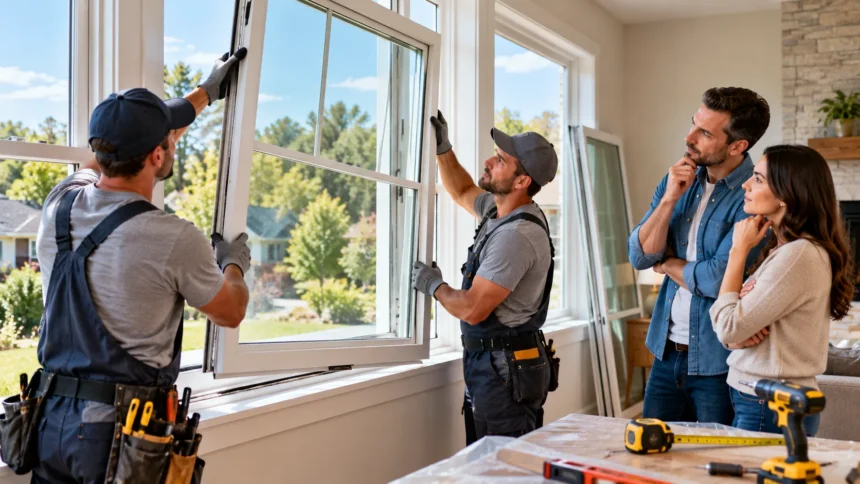
How Much Does It Cost to Replace Windows?
The cost to replace windows in the United States typically ranges from $450 to $1,500 per window for many standard installations. However, the final price depends on the window size, frame material, glass type, and installation complexity. Basic replacement windows are generally more affordable, while premium materials and custom designs can significantly increase the total project cost.
For a home with 10 to 15 windows, replacement costs may range from approximately $4,500 to $22,500. Smaller projects usually require a lower overall investment, although the cost per window can be higher. Homeowners replacing several windows together may receive more competitive installation pricing, depending on the contractor and project requirements.
Understanding window replacement costs helps homeowners prepare realistic budgets and avoid unexpected expenses. Beyond the price of the window itself, installation labor, old window removal, structural repairs, and additional features may affect the estimate. Comparing several detailed quotes is one of the most practical ways to determine what a particular replacement project will cost.
Average Window Replacement Cost in 2026
The average cost of window replacement varies considerably across the United States. Standard residential windows commonly fall within the $450 to $1,500 installed range, although some basic options cost less. Larger windows, specialty shapes, and premium frame materials can push individual replacement costs to several thousand dollars.
The following estimates provide a general overview of costs for replacing standard single-hung windows. They assume relatively straightforward installation without major structural modifications. Actual estimates may differ depending on local labor rates, product brands, window dimensions, and the condition of existing frames.
| Number of Windows | Estimated Replacement Cost |
|---|---|
| 1 window | $450–$1,500 |
| 3 windows | $1,350–$4,500 |
| 5 windows | $2,250–$7,500 |
| 10 windows | $4,500–$15,000 |
| 15 windows | $6,750–$22,500 |
| 20 windows | $9,000–$30,000 |
| 25 windows | $11,250–$37,500 |
These figures should be treated as planning estimates rather than guaranteed installation prices. Whole-house projects may qualify for volume discounts, while difficult installations can cost more. A professional assessment can provide a more accurate total by considering product selection, opening conditions, installation methods, and required finishing work.
Window Replacement Cost by Frame Material
Window frame material is one of the most important factors affecting replacement costs. Common options include vinyl, aluminum, fiberglass, wood, and composite materials. Each offers different characteristics related to durability, insulation, appearance, maintenance, and price, making material selection an important part of planning a window replacement project.
Vinyl windows are popular because they offer relatively affordable pricing and low maintenance requirements. Fiberglass frames generally cost more but provide strength and good dimensional stability. Wood windows offer a traditional appearance and flexible finishing options, although they typically require more maintenance and may increase the initial investment.
| Frame Material | Estimated Cost per Window Installed |
|---|---|
| Aluminum | $175–$1,000 |
| Vinyl | $200–$1,500 |
| Fiberglass | $400–$2,000 |
| Wood | $800–$3,800 |
| Composite | $400–$2,300 |
Choosing the cheapest material is not always the most economical decision over time. Climate, energy performance, maintenance requirements, and expected service life should also influence the selection. Homeowners can compare multiple frame options to identify the most suitable balance between upfront cost, appearance, and long-term performance.
Cost to Replace Windows by Style
Window style influences replacement pricing because different designs require different materials, hardware, and installation methods. Single-hung and double-hung windows are common residential options, while casement and awning windows use hinged operating systems. Larger designs such as bay and bow windows generally involve more materials and additional installation complexity.
Single-hung windows are often among the more affordable replacement choices. Double-hung windows provide additional ventilation flexibility because both sashes can move. Casement windows open outward using hinges, while picture windows remain fixed and are commonly selected for unobstructed views and natural light.
| Window Style | Estimated Installed Cost |
|---|---|
| Single-hung | $300–$2,100 |
| Double-hung | $350–$2,500 |
| Casement | $400–$3,000 |
| Awning | $400–$2,000 |
| Bay | $2,000–$6,000 |
| Bow | $3,000–$8,000+ |
The best window style depends on the room, architectural design, ventilation needs, and available budget. Specialty windows may improve visual appeal but can require greater investment. Homeowners should also consider cleaning accessibility, operating mechanisms, and long-term maintenance before selecting replacements based only on appearance.
How Window Size Affects Replacement Costs
Window dimensions play a major role in determining material and installation costs. Larger windows require more glass, stronger supporting components, and potentially additional labor. They can also be heavier and more difficult to position, particularly when installed on upper floors or in areas with limited exterior access.
Standard-sized windows generally cost less because manufacturers produce them in common dimensions. Custom-sized windows may require special manufacturing, additional lead time, and modified installation methods. Replacing an unusually shaped or oversized window can therefore cost considerably more than installing a standard unit in an existing opening.
Before ordering replacement windows, accurate measurements are essential. Small measurement errors may create installation problems or require additional adjustments. A professional installer can evaluate the opening and determine whether standard products are suitable or whether custom manufacturing is necessary for proper fit and weather protection.
How Much Does Window Installation Labor Cost?
Labor is a significant part of the total window replacement cost. Professional installation commonly costs approximately $100 to $500 per window, depending on location, accessibility, and project complexity. Straightforward replacements are generally more affordable, while installations involving structural modifications or difficult access require additional time and specialized equipment.
Labor pricing may also depend on the number of windows being replaced. Contractors sometimes offer lower per-window installation costs for larger projects because transportation, preparation, and equipment expenses can be shared across several units. However, additional framing work, exterior repairs, or disposal requirements may increase the final estimate.
Professional installation helps ensure that replacement windows are properly positioned, secured, sealed, and insulated. Incorrect installation can contribute to air leaks, moisture problems, and operating difficulties. Homeowners should request detailed labor estimates and confirm whether old window removal, cleanup, finishing work, and applicable warranties are included.
Full-Frame vs. Pocket Window Replacement Costs
Window replacement projects commonly use either full-frame or pocket installation methods. Full-frame replacement removes the existing window frame and surrounding components, while pocket replacement installs a new unit within a suitable existing frame. The appropriate method depends on the condition of the original opening and the homeowner’s renovation goals.
Pocket replacement is often more affordable because it involves less demolition and finishing work. It may be suitable when the existing frame remains structurally sound, properly aligned, and free from significant moisture damage. However, pocket installation can slightly reduce the visible glass area because the new frame fits inside the original opening.
Full-frame replacement typically costs more because it requires additional materials and installation labor. This method may be necessary when existing frames are damaged, poorly installed, or unsuitable for the replacement design. A contractor should inspect the opening before recommending an installation method based only on its upfront price.
Cost of Energy-Efficient Replacement Windows
Energy-efficient windows are designed to reduce unwanted heat transfer and improve indoor comfort. They may feature insulated glass units, low-emissivity coatings, improved frame designs, and specialized spacers. These technologies can increase the initial purchase price but may help reduce heating and cooling demands when suitable products are properly installed.
Double-pane windows are commonly selected because they provide better insulation than traditional single-pane designs. Triple-pane windows offer additional insulating potential but generally cost more and may not be necessary in every climate. Low-E glass coatings can also improve thermal performance by controlling the movement of radiant heat through the window.
Energy savings depend on local weather, existing window performance, building insulation, and household heating or cooling habits. Homeowners should compare recognized energy-performance ratings instead of assuming that every expensive window delivers superior results. Selecting products appropriate for the local climate can improve comfort while supporting sensible long-term energy expenses.
Additional Expenses That Affect Window Replacement Costs
Window replacement estimates may include additional expenses beyond the window unit and basic installation. Removing old frames, disposing of debris, repairing damaged trim, and replacing deteriorated surrounding materials can increase the total cost. These expenses are particularly relevant in older homes where moisture damage or previous installation problems may be discovered.
Structural repairs can become necessary when existing openings contain rotted wood, damaged framing, or signs of water intrusion. Correcting these problems before installing new windows helps protect the building and maintain proper performance. Depending on local regulations, certain projects may also require permits or additional inspections.
Custom finishes, decorative grids, upgraded hardware, and specialized glass can further increase the price. Homeowners should review every item listed in their contractor’s estimate before approving the project. A detailed quote reduces confusion and makes it easier to compare different companies using the same scope of work.
How to Save Money on Window Replacement
One practical way to reduce window replacement costs is to compare estimates from several qualified installers. Different companies may offer similar products at different prices because of their suppliers, labor structures, and installation methods. Requesting itemized estimates helps homeowners understand where meaningful savings may be available.
Choosing standard window sizes and commonly available frame materials can also help control expenses. Vinyl windows often provide a cost-effective option for homeowners who want durable, low-maintenance replacements. Avoiding unnecessary decorative upgrades or complex custom shapes may reduce the project cost without sacrificing essential window performance.
Replacing multiple windows during one project may produce savings on installation, although discounts are not guaranteed. Homeowners should also ask about manufacturer promotions, financing terms, and applicable energy-efficiency incentives. These opportunities should be evaluated carefully to ensure that advertised discounts do not hide higher product prices or additional charges.
Is It Cheaper to Repair or Replace Windows?
Repairing a window is often more affordable than replacing the entire unit when the damage is minor. Issues involving weatherstripping, hardware, or certain isolated glass problems may be repairable. However, the best decision depends on the window’s age, overall condition, energy performance, and the extent of damage.
Replacement may be more practical when frames are significantly deteriorated or repeated repairs are becoming expensive. Windows with persistent moisture problems, serious structural damage, or poor operating performance may require more extensive work. A professional assessment can determine whether repairs will address the actual problem or provide only temporary relief.
Homeowners should compare the cost of repairs with the remaining expected service life of the existing windows. An inexpensive repair may be worthwhile for a relatively new window, while an aging unit might justify replacement. Considering future maintenance and energy performance helps create a more complete financial comparison.
Signs That Your Windows Need Replacing
Drafts around closed windows can indicate worn seals, gaps, or installation problems. These issues may allow unwanted outdoor air to enter the home and affect indoor comfort. However, drafts do not always require complete replacement because some problems can be corrected through appropriate repairs or weatherproofing.
Condensation between the panes of an insulated glass unit may indicate seal failure. This problem can reduce insulating performance and affect visibility. Depending on the window design and condition, replacing the insulated glass unit may be possible without installing an entirely new window.
Other warning signs include difficult operation, damaged frames, persistent water leaks, and visible deterioration. Windows that cannot open or close safely may also create accessibility or emergency escape concerns. When multiple problems occur together, a professional inspection can help determine whether repair or replacement provides better long-term value.
Does Window Replacement Increase Home Value?
Replacing outdated windows can improve a home’s appearance, comfort, and perceived condition. Modern window designs may also improve functionality through easier operation and updated materials. These benefits can appeal to homeowners and potential buyers, particularly when existing windows show obvious wear or performance problems.
Energy-efficient replacements may contribute to lower heating and cooling expenses under suitable conditions. Improved sealing and insulating performance can also reduce uncomfortable drafts and indoor temperature fluctuations. However, actual savings depend on the building and local climate, so homeowners should avoid assuming that every replacement project will recover its cost through energy savings alone.
The financial return on window replacement varies by housing market, product selection, and overall project expense. Premium windows may offer attractive features without producing an equivalent increase in property value. Homeowners should consider window replacement as an investment in comfort, functionality, and maintenance rather than expecting a guaranteed resale profit.
How to Choose the Right Window Replacement Contractor
Choosing a qualified contractor is important because installation quality affects long-term window performance. Homeowners should look for companies with relevant experience, appropriate licensing where required, and suitable insurance coverage. Reviewing completed projects and customer feedback can provide additional information about reliability and workmanship.
Request written estimates that identify window materials, product specifications, installation methods, and project costs. The quote should also clarify responsibilities for removing existing windows, repairing damaged materials, and cleaning the work area. Clear documentation helps prevent misunderstandings and makes it easier to compare competing proposals.
Ask about product warranties and installation workmanship coverage before signing an agreement. Understand which problems are covered and whether service visits involve additional charges. A reliable contractor should explain the proposed installation process and answer questions about potential complications without pressuring homeowners into making immediate decisions.
How to Budget for a Whole-House Window Replacement
Planning a whole-house window replacement begins with counting existing windows and identifying which units need attention. Record approximate sizes, window styles, and visible damage before requesting estimates. This initial assessment helps homeowners establish a realistic project scope and prioritize replacements when the available budget is limited.
Next, compare the estimated cost of materials, installation, and additional repairs. A budget should account for possible complications such as deteriorated frames or damaged surrounding trim. Setting aside a reasonable contingency can help manage unexpected expenses without disrupting the entire renovation project.
Homeowners should also consider whether replacing all windows at once is necessary. In some situations, prioritizing damaged or poorly performing windows may be more affordable than completing a whole-house renovation immediately. Discussing phased installation options with contractors can help balance immediate needs, available funds, and long-term improvement goals.
Conclusion
The cost to replace windows depends on several important factors, including size, frame material, window style, glass specifications, and installation requirements. Many standard replacement windows cost approximately $450 to $1,500 each when professionally installed. Larger or more complicated projects may require significantly higher investments, particularly when structural repairs or premium materials are involved.
Choosing the right replacement windows involves more than comparing initial purchase prices. Energy performance, maintenance requirements, installation quality, and expected service life should influence the decision. Homeowners can often manage expenses by selecting appropriate materials, requesting several detailed estimates, and avoiding unnecessary upgrades.
A well-planned window replacement project can improve home comfort, appearance, and everyday functionality. Understanding possible expenses before installation helps reduce financial surprises and supports better purchasing decisions. With realistic budgeting and qualified professional installation, homeowners can select replacement windows that match their needs and long-term priorities.
Frequently Asked Questions
1. What Is the Average Cost to Replace One Window?
Replacing one standard residential window commonly costs between $450 and $1,500, including installation. The final price depends on window size, frame material, glass type, labor rates, and installation complexity.
2. How Much Does It Cost to Replace 10 Windows?
Replacing 10 standard windows may cost approximately $4,500 to $15,000. The total varies based on product quality, installation requirements, location, and whether the contractor offers discounts for multiple windows.
3. What Is the Cheapest Type of Replacement Window?
Basic vinyl and aluminum windows are often among the most affordable options. However, homeowners should compare durability, insulation, maintenance, and local climate suitability before selecting windows based only on price.
4. Is It Worth Replacing Old Windows?
Window replacement may be worthwhile when existing units have significant damage, persistent drafts, poor operation, or deteriorated frames. Potential benefits include improved comfort, functionality, appearance, and energy performance.
5. How Long Does It Take to Replace Windows in a House?
Installation time depends on the number, size, and type of windows. Straightforward projects may be completed within a few days, while complex installations involving structural repairs can take longer.