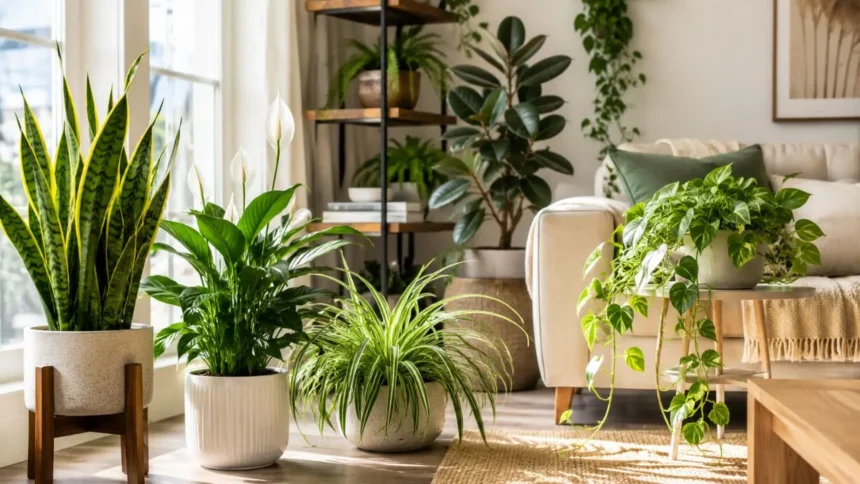
Indoor plants are often promoted as natural air purifiers that remove pollutants, increase oxygen and transform the atmosphere inside a home. Although houseplants offer many worthwhile benefits, the idea that a few pots can completely clean an entire room is an oversimplification of how indoor air quality works.
Laboratory studies have shown that plants and the microorganisms around their roots can absorb certain volatile organic compounds under controlled conditions. A normal home, however, is much larger and has regular air movement, open doors, ventilation and continuing pollution sources. Passive houseplants work too slowly to replace proper airflow or mechanical filtration.
That does not mean indoor plants are useless. Healthy greenery can make rooms feel calmer and more inviting, provide a connection with nature and add a small amount of moisture through transpiration. Leafy plants may also collect some settled dust, although their foliage must be cleaned regularly.
This guide explores the best indoor plants for air quality while keeping their benefits realistic. It covers easy-care houseplants, pet-friendly options, plants for bedrooms and bathrooms, safe placement, mould prevention and the practical steps that genuinely improve the air inside your home.
Quick Answer: Which Indoor Plant Is Best for Air Quality?
The spider plant is one of the best all-round choices because it is adaptable, leafy, easy to propagate and generally considered non-toxic to cats and dogs. It performs well in bright indirect light and tolerates occasional care mistakes better than many humidity-loving indoor plants.
An areca palm is a strong choice for a larger room where you want a substantial amount of green foliage. Its arching leaves create an attractive natural feature, and it can contribute moisture to dry indoor air when it is actively growing and correctly watered.
A Boston fern may suit a bright bathroom or another naturally humid room. Its dense fronds provide plenty of greenery, but it requires more consistent moisture and care than a snake plant, pothos or parlor palm.
No single plant will meaningfully purify the air throughout your home. Choose healthy plants that suit your available light, temperature, humidity, maintenance routine and pets, then combine them with ventilation, source control and effective air filtration.
Do Indoor Plants Really Improve Air Quality?
Plants use carbon dioxide during photosynthesis and release oxygen while they have suitable light. They can also interact with small amounts of airborne chemicals through their leaves, roots, potting material and the microorganisms living around the root system.
Many well-known air-purifying plant claims originated from experiments conducted in small, sealed chambers. Researchers placed plants inside controlled spaces and measured reductions in selected pollutants over several hours or days. These experiments demonstrated a biological ability but did not reproduce the conditions inside a typical occupied home.
Real rooms contain far more air, and new pollutants can enter continuously from cooking, cleaning products, furniture, paint, smoke, fragrances and outdoor sources. Ventilation can remove or dilute these pollutants much faster than a small collection of passive potted plants.
Indoor plants should therefore be treated as a supportive design and wellbeing feature rather than a complete air-cleaning system. Their greatest practical value comes from creating an enjoyable environment that encourages people to care more thoughtfully for their living space.
What Can Houseplants Realistically Do?
Houseplants can add visual softness to rooms filled with hard furniture, electronics and artificial materials. A healthy cluster of plants may make a home feel calmer, brighter and more comfortable, especially when the greenery is positioned where people spend significant time.
Plants release moisture as water moves from their roots and evaporates through their leaves. This process may provide a small local humidity benefit in a dry room, although the effect depends on plant size, growing conditions, watering and the number of plants present.
Leaves can collect dust and other particles that settle on their surfaces. Broad-leaved plants are easy to wipe clean, but the collected material does not disappear automatically. Dusty leaves can also reduce the amount of light available for photosynthesis.
Caring for plants can create a satisfying routine and provide a visible connection with growth and nature. These benefits are meaningful even when the plants do not reduce indoor pollutants enough to replace established air-quality measures.
How We Chose the Best Indoor Plants
The plants in this guide were selected for their ability to remain healthy in ordinary homes rather than for exaggerated purification claims. A struggling plant with yellow leaves, rotting roots or pest problems will not improve the appearance or comfort of an indoor space.
Leaf coverage was another consideration because dense, healthy foliage creates a stronger visual effect and allows more transpiration than a tiny, slow-growing plant. Large leaves are also relatively easy to inspect and clean when dust begins to collect.
Care requirements were considered carefully. Some of the plants tolerate lower light and inconsistent watering, while others are included for bright, humid rooms where more demanding species can grow successfully.
Pet safety is also highlighted because several popular air-purifying houseplants can irritate or poison cats and dogs when eaten. Pet-friendly does not mean that animals should be encouraged to chew the foliage, but it provides an important additional layer of reassurance.
1. Spider Plant: Best Overall Indoor Plant
The spider plant is an excellent starting point for beginners who want a full, attractive houseplant without a demanding care routine. Its long, striped leaves arch away from the centre, giving even a modest plant a lush appearance.
Spider plants prefer bright indirect light, although they can tolerate less light with slower growth. Strong direct sunlight may scorch the leaves, while a very dark position can reduce variegation and the production of new plantlets.
Allow the upper layer of compost to dry slightly before watering again. Constantly saturated soil can damage the roots, while long periods without water may cause the foliage to wilt or develop dry brown tips.
This plant is generally considered non-toxic to cats and dogs, making it a practical choice for many pet-owning households. Hanging it in a basket can still protect the leaves from playful animals while displaying the plantlets attractively.
2. Areca Palm: Best Large Plant for Living Rooms
The areca palm provides height, movement and a large amount of foliage without the heavy appearance of a broad-leaved tree. Its feather-like fronds work particularly well in bright living rooms, conservatories and spacious home offices.
Place the palm near a window with plenty of filtered or indirect light. Low light can produce thin, weak growth, while strong midday sunlight through glass may burn the leaves and create pale or brown areas.
Water when the upper compost begins to dry, but do not leave the pot sitting in collected water. Areca palms appreciate some humidity, although good drainage remains essential because permanently wet roots can begin to rot.
The areca palm is generally listed as non-toxic to cats and dogs. Buyers should check the botanical name because plants sold under similar common names may belong to completely different species with different safety profiles.
3. Boston Fern: Best for Humid Rooms
The Boston fern produces a dense collection of arching green fronds that can make a bathroom, kitchen or bright conservatory feel naturally lush. It looks especially effective on a stand or in a hanging container where its foliage has room to spread.
This fern prefers bright, indirect light and relatively consistent humidity. Dry air, hot radiators and long periods without water can lead to brown, crispy leaflets and a messy layer of fallen foliage around the pot.
Keep the compost lightly moist without allowing it to become waterlogged. A container with drainage holes is important, and any excess water should be emptied from the decorative pot after watering.
Boston ferns are generally considered non-toxic to cats and dogs. They still require thoughtful placement because curious pets may damage the delicate fronds or dig through consistently moist potting compost.
4. Parlor Palm: Best for Lower-Light Rooms
The parlor palm is a graceful and relatively compact palm that has been grown indoors for generations. It tolerates lower-light conditions better than many tropical plants, making it suitable for flats, bedrooms and rooms with smaller windows.
Although it can survive in lower light, it grows best in bright indirect light. Avoid placing it directly against a cold window in winter or under intense afternoon sun, as both conditions can damage the foliage.
Allow the surface of the compost to dry slightly between waterings. Overwatering is one of the most common problems, particularly when the palm grows slowly during cooler or darker months.
The parlor palm is generally considered non-toxic to cats and dogs. Its pet-friendly status, manageable size and ability to tolerate average indoor conditions make it one of the most versatile plants on this list.
5. Calathea: Best Pet-Friendly Statement Plant
Calatheas are known for patterned foliage featuring combinations of green, cream, silver, pink and purple. Their decorative leaves make them a strong choice when you want a pet-friendly plant that offers more visual interest than plain green foliage.
These plants prefer bright indirect light and protection from intense direct sunlight. Too much sun can fade the patterns or scorch the leaves, while insufficient light may produce weak growth and slower water use.
Calatheas appreciate consistent moisture and moderate to high humidity, but their roots should not remain waterlogged. They can react to dry air, irregular watering or mineral-heavy water by developing curled leaves and brown edges.
Calathea species are generally considered non-toxic to cats and dogs. They require more attention than spider plants or parlor palms, so they are better suited to owners who can monitor moisture and humidity consistently.
6. Snake Plant: Best Low-Maintenance Choice
The snake plant has upright, structured leaves that suit minimalist bedrooms, hallways and home offices. It tolerates missed waterings and a wide range of indoor light levels, making it popular with inexperienced or busy plant owners.
Bright indirect light supports stronger and faster growth, but the plant can survive in lower light. Very dark conditions may lead to weak development, while intense direct sunlight can damage leaves that have not been gradually adapted.
Allow the compost to dry substantially before watering again. Snake plants store water in their thick leaves and are more likely to be damaged by frequent watering than by a short period of dry soil.
Snake plants can be toxic to cats and dogs if chewed or eaten. Keep them out of reach of animals and young children who regularly touch or taste houseplant leaves.
7. Peace Lily: Best Flowering Option
The peace lily combines deep green foliage with distinctive white flower-like structures. It can add a softer decorative feature to bedrooms, living rooms and offices where bright direct sunlight is limited.
Peace lilies tolerate moderate light, although brighter indirect light normally encourages better flowering. A very dark position may keep the foliage alive but produce few or no flowers.
Water when the surface begins to dry or when the leaves show a slight loss of firmness. Do not leave the roots permanently submerged, as overwatering can cause yellow leaves, fungus gnats and root problems.
Peace lilies contain irritating calcium oxalate crystals and should be kept away from pets and children who may chew them. Despite their common name, they are not the same as true lilies, but ingestion can still cause painful mouth and digestive irritation.
8. Golden Pothos: Best Trailing Plant
Golden pothos is a fast-growing trailing plant with green and yellow-variegated leaves. It can be displayed on shelves, cabinets and hanging planters, allowing greenery to soften empty corners without using valuable floor space.
The plant grows well in bright indirect light but can tolerate lower-light conditions. Variegation may become less pronounced in dark rooms because the plant needs more green leaf tissue to use the available light.
Allow the upper portion of the compost to dry before watering. Pothos usually recovers from slight underwatering, but consistently wet soil can produce yellow leaves and damaged roots.
Golden pothos is toxic to cats and dogs when chewed. Position trailing vines carefully because an elevated pot may still place long stems within reach of climbing or curious animals.
9. Dracaena: Best for Height and Variety
Dracaenas are available in many forms, from slim plants with narrow striped leaves to broader varieties with substantial canes. Their upright growth makes them useful for adding height to corners without occupying as much floor space as a wide palm.
Most dracaenas prefer bright indirect light, although some tolerate moderate light. Strong direct sunlight can scorch their foliage, and a very dark position can cause slower growth or loss of attractive leaf colour.
Allow part of the compost to dry before watering. These plants can be sensitive to excessive moisture and may develop brown leaf tips because of dry air, irregular care or minerals in the water.
Many dracaena species are toxic to cats and dogs. Always check the exact botanical name and place the plant securely where pets cannot knock over the container or chew the leaves.
10. Rubber Plant: Best Broad-Leaved Feature
The rubber plant, or Ficus elastica, has large, glossy leaves that create a strong visual feature in contemporary rooms. Available varieties include deep green, burgundy and cream-variegated forms that complement different interior colour schemes.
Provide bright indirect light for healthy, balanced growth. Variegated varieties generally need more light than dark green types, although harsh direct sun through glass can burn the foliage.
Water when the upper layer of compost has dried and allow excess water to drain completely. Wiping the broad leaves occasionally removes settled dust and helps the plant receive available light more effectively.
Ficus elastica can irritate pets and people if its sap or foliage is ingested. Wear gloves when pruning if you have sensitive skin, and keep the plant away from animals that chew leaves or stems.
Best Pet-Friendly Indoor Plants
Spider plants, areca palms, parlor palms, Boston ferns and calatheas are among the better-known pet-friendly choices. They provide a variety of shapes, sizes and care levels without the toxicity concerns associated with pothos, dracaena and snake plants.
Pet-friendly status does not mean that eating large amounts of any plant is desirable. Chewed foliage or potting compost can still cause mild digestive upset, choking or exposure to fertilisers and pesticides.
Consider the behaviour of your particular animal. A plant that is safe on a high shelf for a dog may remain easily accessible to a climbing cat, while a hanging basket can attract playful animals because the leaves move.
Check botanical names before buying because common plant names can refer to several unrelated species. When ingestion occurs and you are uncertain about the plant, contact a veterinarian rather than waiting for serious symptoms to develop.
Best Indoor Plants for Bedrooms
Bedrooms generally suit calm, manageable plants that do not require frequent watering or create large amounts of fallen foliage. Snake plants, parlor palms and spider plants are practical options when their light and safety requirements match the room.
Avoid choosing a plant based on claims that it will produce enough oxygen to transform sleep quality overnight. The amount released by a few houseplants is small compared with the volume of air in a bedroom.
Good placement matters more than marketing claims. Keep plants away from cold draughts, heating vents and locations where pots could be knocked from a bedside table during the night.
Anyone with severe mould allergies should avoid maintaining consistently wet compost beside the bed. Allow appropriate drying, provide drainage and remove decaying leaves before they encourage fungal growth.
Best Indoor Plants for Bathrooms
Bathrooms can provide useful humidity for ferns, calatheas and other tropical plants, but only when they also receive sufficient light. A humid room without a window may still be unsuitable for long-term plant growth.
Boston ferns can perform well in bright bathrooms where the air remains more humid after showers. Spider plants and parlor palms are more forgiving alternatives when the humidity changes throughout the day.
Do not place pots where they will be repeatedly soaked with soap, shampoo or hot shower water. Excess water entering the compost can disturb drainage and expose the roots to ingredients not intended for plants.
Ventilation remains necessary even when humidity-loving plants are present. Plants do not prevent bathroom mould, and too many wet pots can add moisture to a room that already struggles with condensation.
Best Indoor Plants for Low-Light Spaces
Parlor palms, snake plants, pothos and some dracaenas tolerate lower light better than sun-loving species. Tolerance does not mean that they can grow indefinitely in a room with no natural or suitable artificial light.
Plants in low light use water more slowly, so they normally require less frequent watering. Following the same watering schedule used in summer or beside a bright window can quickly lead to saturated compost and root rot.
Rotate the container periodically if growth leans strongly towards the nearest window. This encourages a more balanced shape and prevents one side from becoming permanently crowded.
For windowless rooms, use a suitable grow light or choose high-quality artificial greenery. Replacing unhealthy plants repeatedly is less sustainable and less attractive than selecting a solution that suits the actual conditions.
How Many Plants Do You Need to Clean a Room?
There is no practical number of ordinary passive houseplants that can be recommended as a replacement for ventilation or filtration. Laboratory calculations suggest that a very large and unrealistic plant density would be required to match normal building air exchange.
Adding ten plants instead of one may create a stronger visual and psychological effect, but it does not guarantee measurably cleaner air. The outcome depends on plant size, light, airflow, pollutants, soil and many other variables.
An active botanical filtration system is different from placing plants in pots. These systems deliberately move air through plant roots or specialised growing material, increasing contact between pollutants and the biological filter.
For an ordinary home, choose the number of plants you can keep healthy without creating clutter, pests or moisture problems. A few thriving plants are more beneficial and attractive than a room filled with neglected containers.
Can Indoor Plants Cause Mould or Allergies?
Indoor plants can contribute to mould problems when compost remains wet for long periods or water is allowed to collect beneath containers. Mould spores already exist in indoor environments and grow more readily when moisture remains available.
Prevent problems by using pots with drainage holes, emptying saucers and allowing the compost to dry according to the plant’s needs. Remove fallen leaves before they decompose on the soil surface.
Flowering plants may release pollen, while dusty leaves, scented flowers and damp compost can bother sensitive individuals. Reactions differ, so a plant that causes no problem for one person may irritate another.
People with significant asthma, mould sensitivity or allergies should discuss persistent symptoms with a healthcare professional. Removing a problematic plant may help, but the home should also be checked for dampness, ventilation issues and other indoor triggers.
How to Keep Air-Quality Plants Healthy
Begin by matching each plant to the available light. A low-maintenance plant can still decline when it is placed in deep shade, while a shade-tolerant species may burn beside a hot south-facing window.
Check the compost rather than watering automatically on a fixed day. Insert a finger into the upper layer or assess the weight of the pot before adding more water.
Use containers with drainage and avoid allowing the roots to remain in standing water. Decorative outer pots should be checked after watering because hidden water can collect at the bottom.
Inspect leaves and stems regularly for scale insects, spider mites, mealybugs and other pests. Early treatment is easier and reduces the chance of pests spreading throughout a collection.
How to Clean Houseplant Leaves
Dust can create a dull coating on broad leaves and reduce the amount of light reaching the plant. Clean foliage also looks healthier and makes it easier to identify pests or early signs of disease.
Support each leaf gently and wipe it with a soft damp cloth. Use clean water unless the plant’s care guidance recommends another method, as oils and leaf-shine products may block pores or attract additional dust.
Fine-leaved plants and palms can be rinsed gently in a shower when the potting material is protected from becoming waterlogged. Allow the plant to drain before returning it to furniture or flooring.
Cleaning leaves does not turn a plant into a powerful air filter. It simply supports plant health, removes settled dust and improves the appearance of the foliage.
What Actually Improves Indoor Air Quality?
Source control is one of the most effective approaches. Avoid smoking indoors, repair combustion appliances, address dampness and reduce unnecessary use of strongly scented sprays, solvents and harsh cleaning products.
Ventilation helps remove or dilute pollutants when outdoor air conditions are suitable. Use extractor fans during cooking and bathing, open windows when practical and maintain ventilation systems according to their instructions.
Effective filtration can remove airborne particles more reliably than passive houseplants. A correctly sized air purifier with a genuine particle filter may help with smoke, pollen and fine dust, although it will not solve every gas, odour or moisture problem.
Maintain moderate humidity and repair water leaks quickly. Excess moisture encourages mould and dust mites, while extremely dry air can irritate the nose, throat, eyes and skin.
Common Indoor-Plant Mistakes to Avoid
The first mistake is purchasing a plant only because it is advertised as an air purifier. If its light, temperature and watering needs do not match your home, it will decline regardless of its laboratory reputation.
Overwatering is another widespread problem. Yellow leaves, fungus gnats, soft stems and unpleasant-smelling compost may indicate that roots are receiving too little oxygen because the growing material remains saturated.
Ignoring pet toxicity can turn a decorative purchase into a household risk. Research the exact species before bringing it home and place questionable plants beyond the reach of animals and young children.
Finally, do not use plants to hide a serious air-quality problem. Persistent smoke, dampness, mould, gas smells or physical symptoms require the source to be investigated rather than covered with fragrances or additional greenery.
Final Thoughts on the Best Indoor Plants for Air Quality
Spider plants, areca palms, Boston ferns, parlor palms and calatheas are attractive choices for households seeking healthy greenery and pet-friendly options. Snake plants, pothos, peace lilies, dracaenas and rubber plants provide additional variety but require careful placement around animals.
The best plant is one that can thrive in your actual home. Light, watering, temperature, available space, maintenance time and pet safety matter more than a dramatic claim printed on a plant label.
Houseplants can support wellbeing, visual comfort and a connection with nature. Their impact on pollutants in a normal room is limited, so they should complement rather than replace established indoor air-quality measures.
Use plants for the benefits they genuinely provide, then improve the air itself through source control, appropriate ventilation, moisture management and filtration. This balanced approach creates a home that feels greener without relying on misleading purification promises.
Which indoor plant is best for air quality?
The spider plant is a strong all-round choice because it is leafy, adaptable, beginner-friendly and generally pet-safe. However, no single potted plant can replace proper ventilation or filtration.
How many indoor plants do I need to purify a room?
There is no realistic household number that can reliably purify a room. Choose a manageable collection of healthy plants and use ventilation, source control and filtration for meaningful air-quality improvement.
Which air-purifying plants are safe for pets?
Spider plants, areca palms, parlor palms, Boston ferns and calatheas are generally considered non-toxic to cats and dogs. Always verify the exact botanical species before buying.
Is a snake plant good for a bedroom?
A snake plant is suitable for many bedrooms because it is compact and tolerates irregular watering. Keep it away from cats, dogs and children because chewing the leaves can cause illness.
Can indoor plants remove mould from the air?
No, plants cannot solve an indoor mould problem and wet compost may add moisture. Repair leaks, improve ventilation, control humidity and remove mould safely at its source.