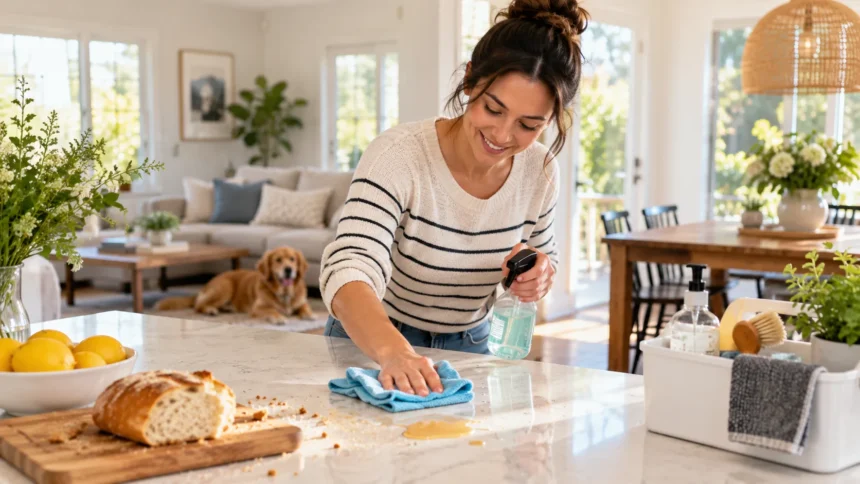
Everyday messes can make a home look untidy surprisingly quickly. Crumbs collect on kitchen counters, fingerprints appear on surfaces, shoes bring dirt indoors, and laundry can move from one room to another before you notice it. The easiest way to stay ahead of these problems is to handle small messes before they become time-consuming cleaning projects.
A practical cleaning routine does not require you to scrub every room from top to bottom each day. Instead, simple habits and efficient methods can keep the most frequently used areas comfortable and manageable. These home cleaning tips focus on common household messes and practical ways to deal with them without spending most of your free time cleaning.
Clean Spills and Stains as Soon as Possible
Fresh spills are usually much easier to remove than stains that have been allowed to dry. Whether you spill a drink on the counter, drop food on the floor, or notice a splash near the sink, dealing with it immediately can save time later. A quick response also reduces the chance of residue spreading to nearby surfaces.
Blot liquid spills instead of aggressively rubbing them into fabric or carpet. For hard surfaces, wipe away excess liquid before using a cleaner appropriate for the material. Different surfaces require different care, so avoid applying unfamiliar products without checking whether they are suitable for wood, stone, upholstery, or other materials.
Keeping a few basic cleaning supplies conveniently stored can make immediate cleanup easier. Cloths, paper towels, and suitable household cleaners should be accessible without creating clutter. When supplies are nearby, a thirty-second cleanup is much more likely to happen than when you have to search through several cupboards first.
Stay Ahead of Kitchen Crumbs and Grease
The kitchen is one of the fastest places for everyday mess to accumulate because cooking and eating happen repeatedly. Wipe counters after food preparation and remove crumbs before they spread to the floor. Cleaning small grease splatters around the stovetop regularly can also prevent the sticky buildup that requires much more scrubbing later.
Try cleaning while you cook rather than waiting until the meal is completely finished. Return ingredients to cupboards, rinse utensils during quiet moments, and put packaging in the bin as you work. By handling these small tasks naturally, you can significantly reduce the amount of cleaning waiting for you after dinner.
Pay particular attention to the sink because dirty dishes and food residue can quickly make the entire kitchen appear untidy. Load the dishwasher or wash necessary items regularly rather than allowing the sink to become overcrowded. A relatively clear sink and countertop can make a noticeable difference to how clean the whole room feels.
Keep Floors Cleaner With Simple Daily Habits
Floors collect crumbs, dust, pet hair, outdoor dirt, and other debris throughout the day. You do not necessarily need to vacuum the entire house daily, but high-traffic areas may benefit from quick attention. Entryways, kitchens, dining spaces, and busy hallways are often the most useful places to target first.
Encourage household members to remove particularly dirty footwear near the entrance when appropriate. A durable doormat can also capture some soil before it travels farther into your home. Providing a practical shoe rack or designated storage location prevents shoes from becoming floor clutter while helping contain outdoor dirt near the doorway.
Use a quick sweep or lightweight vacuum when visible debris begins to collect. Waiting until every floor looks dirty usually turns a small maintenance task into a much bigger job. Removing crumbs and dust in the areas where they appear most often can keep the home looking cleaner between full vacuuming or mopping sessions.
Manage Pet Hair Before It Builds Up
Pet hair can collect quickly on floors, sofas, rugs, bedding, and clothing. Short, frequent cleaning sessions are often easier than waiting until furniture and carpets are heavily covered. Vacuuming the areas where your pet spends the most time can reduce how much loose hair spreads into the rest of the home.
Wash or clean pet bedding according to its care instructions and keep pet blankets relatively contained. A washable cover on a favorite chair or sofa spot can also simplify cleanup because you can remove and clean the cover instead of repeatedly treating the entire piece of furniture.
Grooming your pet appropriately can help manage loose hair before it ends up around the house, although grooming needs vary between animals and breeds. Combine regular household cleaning with sensible pet-care routines rather than relying entirely on constant vacuuming. The goal is to control everyday shedding, not eliminate every single hair.
Deal With Bathroom Messes in Small Steps
Bathrooms can quickly collect water spots, toothpaste marks, hair, toiletries, and damp towels. A short daily reset helps stop these small issues from making the room feel dirty. Put products back after use, hang towels properly, and wipe obvious marks around the sink before they have time to harden.
Keeping the vanity relatively clear makes bathroom cleaning significantly faster. Store daily products in easy-to-access drawers, containers, or shelves rather than leaving everything scattered around the sink. When surfaces are open, you can wipe them in seconds instead of moving several bottles and personal items every time you clean.
Ventilation and moisture management are also important in bathrooms. Use available ventilation appropriately and allow wet areas to dry rather than leaving unnecessary moisture trapped in the room. Regularly removing damp towels and wiping excess water from frequently wet surfaces can make routine bathroom maintenance much easier.
Control Everyday Clutter Before Cleaning
Sometimes a home looks dirty when the main problem is actually clutter. Mail, chargers, toys, clothing, bags, and other belongings can cover otherwise clean surfaces and floors. Before reaching for cleaning products, spend a few minutes putting misplaced items away so you can clearly see which areas genuinely need cleaning.
Give frequently used belongings convenient storage locations. Keys might live in a tray, shoes on a rack, toys in baskets, and incoming paperwork in one folder or organizer. When every common item has an obvious place, tidying requires fewer decisions and family members can return belongings without wondering where they should go.
Use a collection basket when you need to tidy quickly. Gather misplaced items from one room and then return them to their proper locations together rather than making multiple individual trips. Make sure to empty the basket afterward so it remains a temporary cleaning tool rather than becoming another hidden pile of clutter.
Handle Laundry Before It Takes Over the House
Clothing can make bedrooms and bathrooms look messy even when the rooms are otherwise clean. Place dirty clothing directly into a hamper instead of allowing items to accumulate on floors, beds, or chairs. Position hampers where clothes naturally get removed so using them requires as little effort as possible.
Clean laundry should also move through the process efficiently. Leaving washed clothing in baskets may seem harmless initially, but those baskets can quickly become permanent storage and make it difficult to distinguish clean clothing from items that still need attention. Fold, hang, and put away each load when reasonably possible.
You do not need to wash clothes every day to control laundry. The important habit is preventing clothing from spreading throughout the home. Establishing simple locations for dirty, drying, and clean items keeps laundry contained and makes scheduled wash days much easier to manage.
Clean Fingerprints and Smudges on High-Touch Surfaces
Some surfaces look dirty primarily because they collect fingerprints and smudges throughout the day. Mirrors, glass doors, refrigerator fronts, tables, and certain cabinets can quickly show marks, especially in active households. A quick spot clean can improve their appearance without requiring you to clean every nearby surface at the same time.
Use cleaning methods appropriate for each material and follow product directions. A suitable cloth can often remove light marks quickly, while greasy fingerprints may require an appropriate cleaner. Avoid automatically using the same product on glass, painted furniture, electronic screens, and other materials because their care requirements may differ.
Focus on visible areas instead of chasing every tiny mark throughout the home. If fingerprints on one glass door are noticeable, clean that surface and move on. Spot cleaning works best when it solves obvious everyday messes quickly rather than turning into an unexpected deep-cleaning session.
Keep Dust Under Control With Regular Light Cleaning
Dust gradually settles on shelves, furniture, electronics, window areas, and decorative objects. Allowing it to build for long periods makes cleaning slower because you need to handle thicker layers across many surfaces. Light, regular dusting can keep frequently used rooms looking fresher without requiring an extensive whole-house session.
Start with higher surfaces and work downward so fallen dust can be removed when you clean the floor. Use suitable dusting tools rather than simply moving dust from one place to another. Keeping shelves and tables from becoming overcrowded also makes this process faster because fewer objects need to be lifted or rearranged.
You do not need to dust every room at the same frequency. Living rooms, bedrooms, and other regularly occupied spaces may need attention sooner than storage rooms or rarely used guest areas. Adjusting your cleaning schedule to actual household conditions helps you avoid unnecessary work while keeping visible dust under reasonable control.
Use Short Resets to Prevent Bigger Messes
A short reset can stop ordinary household activity from turning into a major cleanup. Spend five to fifteen minutes at a convenient time putting things away, clearing dishes, wiping obvious spills, and straightening heavily used spaces. These quick sessions work because they deal with mess while it is still relatively small.
Evening is a useful reset time for many households. Clear the kitchen after dinner, straighten the living room, gather toys, and return shoes or bags to their normal locations. Waking up to fewer unfinished chores can make the house feel more manageable before the next day’s activity begins.
Keep these resets focused on maintenance rather than perfection. You do not need to vacuum behind furniture or organize cabinets every night. Handle what is visible and disruptive, then leave deeper tasks for weekly or monthly cleaning sessions so everyday housework remains sustainable.
Conclusion
Everyday messes are easier to manage when you deal with them while they are still small. Cleaning spills quickly, controlling kitchen crumbs, managing clutter, and keeping busy floors reasonably clear can prevent simple problems from growing into difficult cleaning jobs. Consistency usually saves more effort than occasional intensive cleaning.
You can also make home cleaning easier by working with the way your household actually functions. Place storage where clutter naturally appears, keep essential supplies accessible, and focus more attention on high-traffic areas. These practical systems reduce unnecessary steps and make routine maintenance easier to fit into busy days.
A tidy home does not require perfect surfaces or constant cleaning. Small resets, sensible organization, and quick responses to common messes can keep your living spaces comfortable without consuming your schedule. The best cleaning habits are the ones that are simple enough to repeat regularly.
FAQs
What are the most important everyday cleaning tasks?
Focus on dishes, kitchen counters, spills, visible floor debris, bathroom messes, and misplaced belongings. These high-impact tasks prevent common household messes from accumulating and making later cleaning more difficult.
How can I keep my house clean when I am busy?
Use short five- to fifteen-minute resets, clean messes as they happen, and prioritize high-traffic spaces. Save less urgent jobs such as detailed dusting or deep cleaning for scheduled weekly sessions.
What should I clean first in a messy house?
Start by removing obvious trash and clutter so surfaces and floors become accessible. Then focus on dishes, kitchen and bathroom surfaces, visible dust, and heavily used floors for the biggest immediate improvement.
How often should I clean high-traffic areas?
The ideal frequency depends on household activity, children, pets, and outdoor dirt. Check high-traffic areas regularly and clean visible debris as needed instead of relying on one fixed schedule for every home.
How do I stop small messes from becoming overwhelming?
Give belongings designated storage locations, handle quick tasks immediately, and perform a short daily reset. Preventing clutter, dishes, spills, and laundry from accumulating makes weekly cleaning much faster and easier.