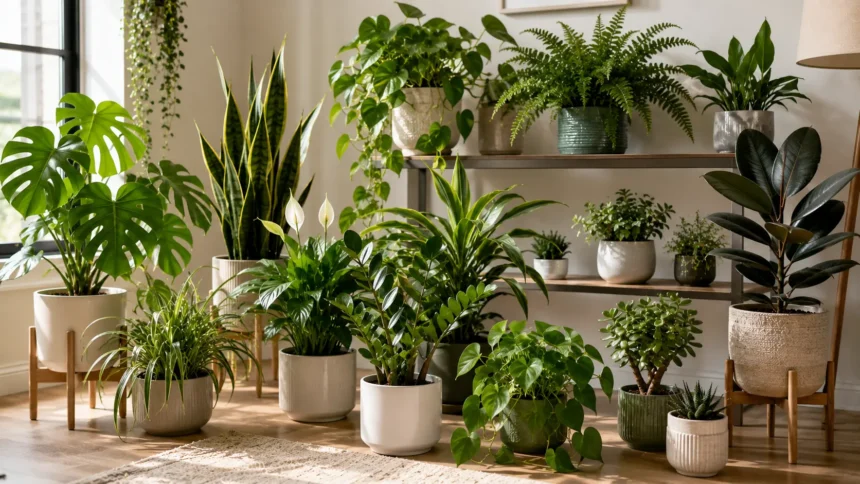
15 Best Houseplants That Are Easy to Grow Indoors
Houseplants can make a room feel brighter, calmer, and more inviting without requiring you to become an expert gardener. The best houseplants for beginners are generally adaptable, forgiving of occasional watering mistakes, and able to thrive under common indoor conditions. Some grow well in relatively low light, while others prefer a bright window with filtered sunlight. Choosing the right plant for your home is usually more important than choosing the plant that looks most impressive at the store. Light exposure, watering habits, temperature, humidity, available space, and pets can all influence long-term success. The 15 easy indoor plants below include popular foliage plants, succulents, palms, and flowering options that can suit apartments, offices, bedrooms, living rooms, and other indoor spaces.
Best Low-Light Houseplants for Beginners
The snake plant, also known as Dracaena trifasciata, is one of the easiest houseplants for people who want attractive greenery with minimal maintenance. Its upright, sword-shaped leaves create a clean architectural look that works especially well in bedrooms, offices, and small apartments. Snake plants tolerate lower-light locations, although they usually grow faster and maintain stronger patterns when given bright indirect light. Their thick leaves store moisture, so they do not need constantly wet soil and are vulnerable to root problems when watered excessively. Allowing much of the potting mix to dry before watering is usually a safer approach. A pot with drainage holes and a loose, well-draining indoor plant mix helps keep the roots healthy.
The ZZ plant, or Zamioculcas zamiifolia, is another excellent choice for indoor gardeners who sometimes forget to water. Its glossy dark-green leaves emerge along upright stems, giving the plant a polished appearance without demanding intensive care. Thick underground rhizomes store water, allowing the plant to tolerate extended periods of relatively dry soil better than frequent overwatering. ZZ plants can adapt to low-light rooms, but brighter indirect light generally encourages stronger and faster growth. Avoid placing them in constantly saturated potting soil because prolonged moisture around the roots can cause rot. They are especially useful for offices, hallways, and rooms where many more demanding tropical plants would struggle.
The golden pothos is popular because it grows quickly, adapts to many indoor environments, and can be trained to trail or climb. Its heart-shaped leaves often display attractive yellow or cream variegation, although plants kept in very dim light may produce greener foliage. Pothos performs well in bright indirect light but can tolerate moderate or relatively low light, making it a flexible option for beginners. Water when the upper portion of the soil begins to dry instead of following a rigid calendar. If the vines become too long, pruning encourages a fuller appearance and produces cuttings that can often be propagated easily. Hanging baskets, shelves, plant stands, and climbing supports all work well for this adaptable houseplant.
The cast iron plant, scientifically known as Aspidistra elatior, earned its durable reputation because it tolerates conditions that can challenge many ornamental plants. Its broad dark-green leaves grow slowly but can remain attractive with relatively little attention. This plant performs well in low to moderate indirect light and should generally be protected from strong direct afternoon sun that may damage the foliage. It also tolerates occasional missed watering better than plants that require consistently moist soil. Water after the upper portion of the potting mix has dried, while avoiding prolonged waterlogging around the roots. Because growth is naturally slow, the cast iron plant is particularly suitable for people who want dependable greenery without frequent pruning or repotting.
The Chinese evergreen, commonly associated with the Aglaonema group, combines easy care with decorative foliage in shades of green, silver, cream, pink, or red depending on the variety. Many green-leaved varieties tolerate moderate or lower-light conditions especially well, while highly colorful cultivars may maintain stronger coloration in brighter indirect light. Chinese evergreens prefer evenly managed moisture but should not remain permanently soggy. Allowing the upper layer of soil to dry slightly before watering helps balance hydration with root aeration. They also appreciate stable indoor temperatures and should be protected from cold drafts. Their compact growth and attractive leaves make them useful for desks, bedrooms, living rooms, and spaces where a dependable tropical houseplant is needed.
Easy Houseplants for Bright Indirect Light
The spider plant, or Chlorophytum comosum, is a classic beginner-friendly houseplant known for its narrow arching leaves and small plantlets that develop on long stems. It performs particularly well in bright indirect light, although it can adapt to somewhat lower-light locations with slower growth. Spider plants prefer regular watering but are usually forgiving if the soil dries slightly between waterings. Brown leaf tips can appear for several reasons, including dry conditions, mineral buildup, or inconsistent watering, but they rarely mean the entire plant is failing. Mature plants can produce numerous baby plants that are easy to propagate. This makes spider plants especially rewarding for beginners who enjoy multiplying their indoor plant collection.
The heartleaf philodendron is a fast-growing tropical vine with soft, heart-shaped leaves and a reputation for being remarkably adaptable indoors. It looks attractive trailing from a shelf or hanging planter, but it can also be encouraged to climb a support. Bright indirect light generally produces fuller growth, although the plant can tolerate moderate light surprisingly well. Water when the upper layer of the potting mix has begun to dry, and avoid leaving the roots sitting in water. Regular pruning can prevent thin, excessively long vines and encourage a denser shape. Because it responds visibly to improved light and care, heartleaf philodendron is a useful plant for beginners learning how indoor growing conditions affect foliage.
The Monstera deliciosa is famous for its large leaves that can develop dramatic splits and openings as the plant matures. Despite its exotic appearance, it is relatively manageable indoors when given enough space, suitable light, and reasonable watering. Bright indirect light supports stronger growth, while very dark rooms may produce smaller leaves with fewer characteristic openings. Water when the upper portion of the soil feels dry rather than keeping the mix constantly saturated. A chunky, well-aerated potting mix can help reduce the risk of roots remaining too wet. As Monstera grows, providing a moss pole or another sturdy support can encourage a more upright form and help the plant use its natural climbing habit.
The rubber plant, or Ficus elastica, is an attractive indoor tree with broad, glossy leaves that may be deep green, burgundy, or variegated depending on the cultivar. It prefers bright indirect light and can tolerate some gentle direct sunlight when gradually acclimated. Rubber plants dislike constant changes, so keeping them in a reasonably stable location often produces better results than moving them repeatedly. Water thoroughly when the upper soil begins to dry, then allow excess water to drain from the container. Overwatering is a more common problem than allowing the soil surface to become slightly dry. With proper care, a rubber plant can grow into a striking floor specimen that gives a room a bold, structured appearance.
The peace lily, or Spathiphyllum, offers glossy foliage along with distinctive white flower-like structures when growing conditions are favorable. It is often described as a low-light plant, but brighter filtered light generally improves flowering while direct hot sunlight can scorch its leaves. Peace lilies prefer more consistent moisture than snake plants or ZZ plants, although permanently waterlogged soil can still damage their roots. Their leaves may droop noticeably when the plant becomes too dry, providing beginners with a visible clue that watering is needed. However, repeatedly allowing severe wilting is not ideal for long-term health. Peace lilies appreciate moderate indoor humidity and can work well for growers willing to monitor soil moisture a little more frequently.
Small and Stylish Indoor Plants That Are Easy to Grow
The aloe vera plant is a practical succulent with thick, pointed leaves that store water and create a distinctive sculptural appearance. Unlike many foliage plants that tolerate dim rooms, aloe performs best with plenty of bright light and may appreciate some direct sun when properly acclimated. Its biggest care requirement is avoiding excessive moisture around the roots. Use a fast-draining succulent or cactus-style potting mix and allow the soil to dry substantially before watering again. A drainage hole is particularly important because water trapped in the container can quickly create root problems. Aloe’s compact size makes it well suited to sunny windowsills, desks near bright windows, and other small spaces where larger tropical plants would be inconvenient.
The jade plant, Crassula ovata, is another long-lived succulent that can eventually develop a thick trunk and branching structure resembling a miniature tree. Its fleshy oval leaves store water, making it more tolerant of missed watering than constantly wet soil. Jade plants need strong indoor light to maintain compact, healthy growth, so place them near a bright window rather than in a dark corner. Allow the potting mix to dry well between waterings and reduce watering frequency when growth slows. A gritty, well-draining soil mixture helps provide the aeration succulent roots require. With appropriate light and restrained watering, jade can remain attractive for many years and may become a substantial indoor specimen over time.
Peperomia plants are available in numerous shapes, colors, and textures, making them useful when you want compact houseplants without sacrificing visual variety. Popular types may have rippled leaves, silver markings, rounded foliage, or trailing stems. Most peperomias prefer bright indirect light but can often adapt to moderate light conditions. Their relatively thick leaves and stems store some moisture, which means constantly wet soil can be more problematic than allowing the surface to dry somewhat. Small pots are usually appropriate because these plants do not need excessive soil volume surrounding their roots. Peperomias are excellent choices for desktops, shelves, side tables, and apartments where available plant space is limited.
The ponytail palm is not a true palm, but its swollen trunk and long cascading leaves give it a distinctive tropical appearance. The enlarged base stores water, allowing the plant to tolerate drought considerably better than frequent soaking. Ponytail palms prefer bright light and can often handle some direct sunlight indoors once adapted. Water thoroughly, then allow much of the soil to dry before watering again. Their slow growth means they can remain manageable in the same general location for a long time. Because overwatering is one of the easiest ways to damage this plant, it suits people who tend to forget watering more than those who enjoy watering every few days.
The parlor palm, or Chamaedorea elegans, provides the soft, feathery look of a palm without requiring the intense sunlight or enormous space associated with many larger palm species. It adapts well to moderate indoor light and can tolerate lower-light areas, although extremely dark conditions will reduce growth. Parlor palms prefer soil that dries slightly between waterings rather than staying either completely dry or constantly saturated. Their relatively slow growth makes them manageable for apartments and offices where a rapidly expanding plant would become inconvenient. Avoid placing them directly beside heating or cooling vents that create extreme dry drafts. With simple, consistent care, a parlor palm can provide dependable greenery for years.
How to Choose the Best Houseplant for Your Home
Light should be the first factor you evaluate before buying a houseplant. A sunny south- or west-facing window can support plants that need stronger light, while a room several feet away from a small window may be much dimmer than it appears to human eyes. Many plants marketed as “low light” merely tolerate reduced light rather than thriving in complete darkness. Observe how much natural light enters the room throughout the day and whether direct sun reaches the intended plant location. Snake plants, ZZ plants, and cast iron plants are relatively adaptable, while aloe and jade require much brighter conditions. Matching the plant to available light immediately increases the chance of successful indoor growth.
Your watering habits should influence plant selection just as much as your windows. People who frequently forget to water may find snake plants, ZZ plants, ponytail palms, jade plants, and aloe easier than moisture-loving varieties. Someone who enjoys checking plants regularly may be comfortable caring for peace lilies or tropical foliage that prefers more even moisture. Problems often begin when the owner tries to force a plant into a routine that does not match its biology. A fixed schedule such as watering every Sunday can be unreliable because soil dries at different speeds throughout the year. Choosing plants suited to your natural habits reduces maintenance and makes indoor gardening feel far less stressful.
Available space is another practical consideration that beginners sometimes overlook. A small Monstera purchased for a tabletop may eventually become a large floor plant with leaves extending far beyond the pot. Rubber plants can also grow tall when conditions are favorable, while pothos and heartleaf philodendrons develop increasingly long vines. Peperomias, aloe, and compact Chinese evergreens are easier to accommodate in smaller rooms. Before purchasing a plant, consider its mature indoor size rather than judging only the young specimen displayed at the store. Pruning can control many plants to some extent, but choosing appropriately sized species saves work. Planning ahead also prevents plants from being placed in unsuitable dark corners simply because they have outgrown their original locations.
Households with pets need to consider plant toxicity before bringing new species into accessible areas. Several popular houseplants, including pothos, philodendrons, peace lilies, snake plants, ZZ plants, Monstera, jade, aloe, and rubber plants, may cause problems if chewed or eaten by cats or dogs. The exact level and type of toxicity vary between species, so pet owners should check the specific plant before purchasing it. Placing a plant on a high shelf may not provide reliable protection when cats can climb or vines hang within reach. Pet-safe alternatives can be a better choice for animals that regularly investigate greenery. Plant selection should support the safety of everyone sharing the home, including curious pets.
Finally, choose a plant because you genuinely like its appearance and growth habit. A theoretically easy plant will still feel like a chore if you dislike how it looks or have nowhere suitable to display it. Someone who prefers architectural plants may enjoy snake plants and rubber plants, while another person may prefer trailing pothos or philodendrons. Those who enjoy patterned foliage can explore Chinese evergreens and peperomias. Larger tropical leaves make Monstera an obvious choice for creating a dramatic indoor focal point. Selecting plants that match both your home and your personal style makes regular care more rewarding and encourages you to notice changes before small problems become serious.
Light, Water, Soil, and Drainage Basics
Indoor plant light is often misunderstood because a room that feels bright to a person may still provide relatively little usable light for a plant. Bright indirect light generally means a well-lit location near a window where intense midday sunlight does not strike the leaves for long periods. Direct light means sunlight actually reaches the foliage, while low light usually describes a location farther from windows or near less exposed windows. Plants can survive temporarily under inadequate light while gradually becoming weak or stretched. Watch for pale growth, long gaps between leaves, leaning, or unusually slow development. Moving a plant closer to an appropriate window can sometimes solve problems more effectively than fertilizer or extra watering.
Watering correctly means paying attention to the soil rather than blindly following a calendar. Push a finger into the upper portion of the potting mix, lift the pot to judge its weight, or use another consistent method to determine whether moisture remains. Plants such as pothos and philodendrons generally prefer some drying between waterings, while succulents need a more substantial dry period. When watering is required, applying enough water to moisten the root zone thoroughly is usually preferable to giving tiny amounts every day. Allow excess water to escape through drainage holes rather than leaving the pot permanently standing in water. This combination supports both hydration and oxygen around healthy roots.
Drainage is one of the most important factors for easy houseplant care. Roots require oxygen as well as water, and potting soil that remains saturated for long periods can create conditions where roots deteriorate. Decorative containers without drainage holes are attractive, but they are easier to overwater unless a removable nursery pot is used inside them. Empty excess water from outer containers or saucers after watering. The soil itself should also have a structure appropriate for the plant. Tropical foliage plants generally appreciate an airy indoor mix, while succulents such as aloe and jade need a faster-draining substrate. Correct drainage reduces the likelihood of many common indoor plant problems.
Humidity requirements vary considerably among houseplants, but ordinary household humidity is acceptable for many beginner-friendly species. Tropical plants may develop better foliage when humidity is moderately higher, especially during dry heating seasons. However, increasing humidity does not mean keeping soil constantly wet because root moisture and air humidity are separate factors. Grouping plants together or using a humidifier can sometimes help in unusually dry homes. Misting usually provides only temporary moisture and is not a substitute for stable humidity or proper watering. Snake plants, ZZ plants, jade, and ponytail palms generally tolerate typical household dryness better than more humidity-sensitive tropical species. Choosing plants matched to your environment minimizes the need for special equipment.
Temperature also influences indoor plant performance. Most common houseplants grow comfortably within the range that people find comfortable, but sudden extremes can cause stress. Cold drafts from doors, excessively hot windows, radiators, and powerful air-conditioning vents can damage foliage or rapidly dry soil. Tropical plants are particularly sensitive to prolonged cold conditions. Seasonal changes near windows should also be considered because a location that is comfortable in spring may become extremely hot in summer or cold during winter. Moving plants slightly away from extreme conditions can protect them without dramatically reducing light. Stable growing conditions are usually more valuable than constant attempts to create supposedly perfect temperatures.
Common Houseplant Mistakes to Avoid
Overwatering is one of the most common reasons supposedly easy houseplants decline. Beginners often assume that giving more water demonstrates better care, but roots can suffer when soil stays saturated continuously. Early symptoms may include yellow leaves, soft stems, unpleasant-smelling soil, or a plant that wilts even though the potting mix is wet. Different species tolerate different moisture levels, so watering should reflect the plant rather than a universal schedule. Snake plants, ZZ plants, jade, aloe, and ponytail palms are especially vulnerable to excessive moisture. Before adding water, check whether the soil has dried to an appropriate level. When uncertain with drought-tolerant plants, waiting slightly longer is often safer than watering again immediately.
Insufficient light is another major problem because many indoor plants are placed primarily according to interior design. A beautiful empty corner may seem perfect for a Monstera, but the plant cannot thrive there if almost no natural light reaches it. Plants use light to power photosynthesis, so water and fertilizer cannot compensate for severe light deficiency. Low-light-tolerant species still benefit from usable daylight and may grow slowly when conditions are dim. If a plant repeatedly produces small, weak, or elongated growth, evaluate its light exposure before increasing fertilizer. Moving it closer to a window can create a dramatic improvement. Grow lights are another option when natural light is genuinely insufficient.
Using a pot that is much too large can also create unexpected problems. A large volume of soil surrounding a small root system may remain wet for far longer than the plant can use the moisture. This can increase the risk of root rot, particularly for succulents and drought-tolerant plants. Repotting is usually necessary when roots have genuinely filled the current container, drainage has deteriorated, or the potting mix has broken down. Moving up only one reasonable container size at a time is often sufficient. Repotting simply because a plant has been owned for several months is unnecessary. Some houseplants perform perfectly well when slightly snug in their pots.
Overfertilizing is another mistake that can make plant care unnecessarily complicated. Houseplants need nutrients, but their requirements are usually lower than those of rapidly growing outdoor crops. Excess fertilizer can cause salt accumulation in potting soil, potentially damaging roots and producing brown leaf edges or other symptoms. Fertilizer is most useful when a plant is actively growing under suitable light rather than when it is already stressed by poor conditions. Always follow product directions and avoid assuming that twice as much fertilizer will create twice as much growth. Fresh potting mixtures may already contain nutrients as well. Good light, watering, and root health should be established before fertilizer becomes the focus.
Frequently moving, touching, pruning, or treating plants can create more problems than simply allowing them to grow. New plant owners sometimes respond to every yellow leaf by changing several conditions simultaneously, making it impossible to identify the original issue. A single older leaf occasionally yellowing can be part of normal plant growth. Similarly, minor cosmetic damage does not always indicate disease. Observe patterns over time before making major changes unless there is an obvious urgent problem such as severe pest infestation or rotting roots. Plants respond slowly compared with people, so improvements may take weeks to become visible. Consistent care is usually more successful than constant intervention.
How to Keep Easy Houseplants Healthy Year-Round
Seasonal changes affect houseplants even when they remain inside throughout the year. Days become shorter during winter, sunlight enters windows at different angles, indoor heating reduces humidity, and plants may grow more slowly. A plant that needed water weekly during warm, bright weather may require significantly less moisture during darker months. Continuing the same watering schedule can therefore create overwatering problems. Check the soil rather than assuming seasonal needs remain constant. Fertilizer should also generally be adjusted according to active growth rather than applied aggressively throughout the year. Learning to recognize seasonal changes makes houseplant care more responsive and prevents routine maintenance from becoming harmful.
Rotate plants occasionally when they grow strongly toward a window. Many houseplants naturally orient leaves and stems toward their strongest light source, which can eventually create an uneven shape. Turning the pot gradually helps distribute growth more evenly, although climbing species attached to supports may not need regular rotation. Dust can also accumulate on broad leaves such as those of rubber plants and Monstera. Gently wiping foliage with a damp cloth can improve appearance and allows you to inspect for pests. Avoid applying unnecessary leaf-shine products that may leave residues. Regular observation during simple maintenance often reveals problems early, when they are easier to correct.
Indoor pests such as spider mites, scale insects, fungus gnats, thrips, and mealybugs can occasionally appear even on easy houseplants. Inspect new plants before placing them directly beside an established collection because pests can spread from one pot to another. Look underneath leaves, along stems, and around new growth for insects, webbing, sticky residue, or unusual damage. Isolating a suspicious plant temporarily can make treatment easier and reduce spread. The appropriate response depends on the specific pest, so identifying the problem is more useful than spraying random products. Healthy growing conditions also help plants tolerate minor stress. Pest prevention begins with observation rather than waiting until the entire collection shows damage.
Pruning helps many houseplants maintain an attractive shape. Pothos and heartleaf philodendrons can become sparse when vines grow long without branching, so trimming selected stems may encourage fuller growth. Rubber plants and other upright species can also be pruned when they become too tall for their space. Always use clean cutting tools and understand where new growth is likely to develop before removing large sections. Dead or badly damaged foliage can generally be removed without harming a healthy plant. However, excessive pruning removes leaves that the plant uses for photosynthesis. Moderate maintenance is usually better than repeatedly reshaping the plant whenever a leaf grows in an unexpected direction.
Repotting should be based on the plant’s needs rather than an automatic annual routine. Signs that repotting may be appropriate include roots tightly circling the container, water passing through unusually quickly, soil that has compacted significantly, or growth becoming restricted despite otherwise good care. Choose a new container only modestly larger than the previous one and use a potting mix suited to the species. After repotting, give the plant time to adjust rather than immediately changing multiple other conditions. Some temporary stress can occur when roots are disturbed. With appropriate light, watering, periodic maintenance, and basic pest awareness, beginner-friendly houseplants can remain attractive for many years.
FAQs About Easy Indoor Houseplants
What is the easiest houseplant to keep alive?
Snake plants and ZZ plants are among the easiest options because they tolerate missed watering and a wide range of indoor light conditions. Pothos is another excellent beginner houseplant when you want faster growth and trailing foliage.
What houseplants are best for low light?
Snake plants, ZZ plants, cast iron plants, Chinese evergreens, and parlor palms can tolerate relatively low indoor light. However, even low-light-tolerant plants generally grow better when they receive some natural or suitable artificial light rather than complete darkness.
What indoor plants do not need frequent watering?
Aloe vera, jade plants, ponytail palms, snake plants, and ZZ plants can tolerate longer dry periods because they store moisture in leaves, stems, roots, or underground structures. Always check the soil before watering because consistently wet conditions can be especially damaging to these plants.
How often should indoor plants be watered?
There is no single watering schedule that works for every houseplant because light, temperature, humidity, pot size, soil, and season all affect drying speed. Check the potting mix regularly and water according to the needs of the particular species rather than automatically watering on the same day every week.
Which easy houseplants are good for small spaces?
Peperomias, aloe vera, young snake plants, compact Chinese evergreens, and small pothos plants can work well in apartments, offices, and other limited spaces. Choose compact varieties and consider mature size before buying so the plant remains practical as it grows.