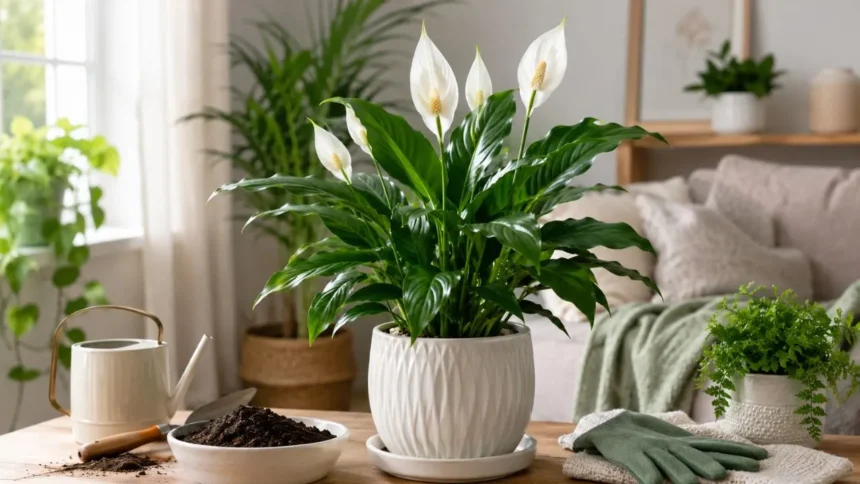
Caring for Peace Lily Plants: A Complete Indoor Guide
Peace lilies are popular houseplants because their glossy green leaves and elegant white blooms can brighten almost any indoor space. They look delicate, but they are generally forgiving once you understand their basic needs. Most peace lily problems come from incorrect watering, harsh sunlight or sudden temperature changes.
The peace lily belongs to the Spathiphyllum genus and is native to warm, humid tropical regions. Despite its common name, it is not a true lily from the Lilium genus. Its white “flower” is actually a modified leaf called a spathe surrounding a narrow flower spike called a spadix.
Caring for peace lily plants involves providing bright indirect light, slightly moist soil, moderate humidity and stable indoor warmth. The plant often communicates its needs clearly by drooping, yellowing or developing brown leaf tips. Learning to read these signals makes peace lily care much easier.
This complete guide explains how to water, feed, repot and propagate an indoor peace lily. It also covers flowering problems, pests, root rot, seasonal care and pet safety. Whether your plant is newly purchased or struggling, these practical steps can help it recover and grow.
Key Takeaways
Place your peace lily in bright, indirect light to encourage healthy leaves and regular flowering. It can survive in lower light, but growth may slow and blooms may become less frequent. Strong direct sunlight can scorch the leaves and create pale or brown patches.
Water when the upper layer of potting mix begins to feel dry, but do not allow the roots to remain waterlogged. Peace lilies prefer consistent moisture rather than repeated cycles of severe dryness and saturation. A container with working drainage holes is essential.
Feed lightly during spring and summer with a balanced houseplant fertilizer. Reduce feeding during autumn and winter when growth naturally slows. Too much fertilizer can damage the roots and contribute to brown leaf tips or mineral buildup in the soil.
Keep peace lilies away from pets and small children who may chew their leaves. The plant contains insoluble calcium oxalate crystals that can irritate the mouth and digestive tract. Contact a veterinarian or healthcare professional after a suspected significant exposure.
What Is a Peace Lily Plant?
A peace lily is a tropical evergreen plant grown mainly for its broad green foliage and distinctive white spathes. Most indoor varieties remain compact, although some cultivars can become considerably larger. New leaves emerge from the base rather than from woody branches.
The most commonly grown species include Spathiphyllum wallisii and hybrids developed for larger flowers or more compact growth. Cultivars such as ‘Mauna Loa,’ ‘Sensation,’ ‘Domino’ and ‘Chopin’ may differ in size, leaf pattern and flowering habit. Their essential care requirements remain broadly similar.
Peace lilies grow naturally beneath taller vegetation, where they receive filtered light and relatively humid conditions. This background explains why they prefer indirect indoor light rather than intense sunshine. It also explains their appreciation for warmth and moderately moist soil.
The plant can live for several years when cared for consistently. Older specimens may gradually form multiple crowns and become crowded inside their containers. They can then be divided into smaller plants during repotting, allowing one mature peace lily to produce several new specimens.
Where Should You Place a Peace Lily?
Choose a location that receives plenty of natural daylight without strong sun falling directly on the leaves. An east-facing window can provide gentle morning light, while a position several feet from a brighter south- or west-facing window may also work well.
Avoid placing the plant in a permanently dark corner simply because peace lilies tolerate lower light. It may survive there, but the stems can stretch, growth can slow and flowering may stop. A brighter position generally produces a fuller and healthier-looking plant.
Keep the peace lily away from radiators, heating vents, air conditioners and frequently opened exterior doors. Hot or cold draughts can quickly dry the foliage or stress the roots. A location with stable temperature is usually better than one with repeated environmental changes.
Bathrooms and kitchens can be suitable when they contain a window and receive enough daylight. These rooms may offer greater humidity than other parts of the home. A windowless bathroom is not appropriate unless reliable artificial grow lighting is provided.
How Much Light Does a Peace Lily Need?
Bright, indirect light is the ideal condition for caring for peace lily plants. The room should feel naturally bright during the day, but the plant should not sit beneath harsh rays for several hours. Filtered light supports photosynthesis without overheating the foliage.
A peace lily in low light may produce large, dark green leaves but few white blooms. This can make the plant appear healthy while leaving the owner confused about the lack of flowers. Moving it gradually to a brighter position may improve flowering over time.
Too much direct sun can bleach the leaves or create dry, brown scorch marks. Afternoon sunlight through glass is often especially intense during warm weather. A sheer curtain can soften the light while allowing the plant to remain near the window.
Rotate the pot by approximately one-quarter turn every week or two. This helps prevent all the leaves from leaning toward the same light source. Regular rotation encourages more balanced growth and keeps the plant looking attractive from every side.
How Often Should You Water a Peace Lily?
There is no single watering schedule that works for every peace lily. Pot size, room temperature, light, humidity and season all affect how quickly the soil dries. Checking the potting mix is more reliable than automatically watering every seven days.
Insert your finger approximately two to three centimetres into the soil. Water when this upper layer feels dry but the soil deeper in the container is not completely dehydrated. The plant generally prefers slightly moist conditions while actively growing.
Water thoroughly until excess moisture runs through the drainage holes. Allow the pot to drain before returning it to a decorative container or saucer. Empty any collected water so the roots do not remain submerged for long periods.
Peace lilies may need water more frequently during bright, warm summer conditions. During winter, reduced daylight and cooler temperatures slow water use. Continue checking the soil, but expect longer intervals between waterings.
What Type of Water Is Best?
Ordinary tap water is suitable for many peace lilies, but water quality differs between locations. Some plants develop brown tips when exposed to high levels of fluoride, chlorine or dissolved mineral salts. These symptoms can also have other causes, so consider the entire care routine.
Allowing tap water to stand does not remove every mineral, but it may let some chlorine dissipate. Filtered water, rainwater or suitable bottled water may help when leaf-tip damage continues despite correct watering, humidity and fertilizer use.
Use water close to room temperature rather than extremely cold water straight from the tap. Tropical roots may respond poorly to sudden temperature shocks. Fill the watering container in advance when your household water becomes particularly cold during winter.
Flush the potting mix occasionally by allowing a generous amount of clean water to drain through it. This can remove some accumulated fertilizer salts and minerals. Always perform flushing in a sink or outdoor area where excess water can escape freely.
Signs Your Peace Lily Needs Water
A thirsty peace lily often develops soft, drooping leaves that hang noticeably lower than usual. The pot may also feel light, and the soil may pull slightly away from the container’s edges. Mild wilting often improves after a thorough watering.
Do not wait for dramatic collapse every time before watering. Repeated severe wilting can stress the roots and damage older leaves. Use the soil moisture and pot weight as your regular guides rather than relying entirely on drooping foliage.
Dry peace lily leaves may develop curled edges, brown tips or a less glossy appearance. The plant may also stop producing new growth while conserving moisture. These symptoms usually appear when dryness has become prolonged or repeated.
Check the soil before adding water because overwatered peace lilies can also droop. A plant sitting in wet soil may wilt because damaged roots cannot absorb oxygen or moisture properly. The condition of the soil helps distinguish underwatering from root problems.
Signs You Are Overwatering
Yellow lower leaves are a common early sign of excessive moisture, particularly when several leaves change colour together. The soil may remain wet for many days, and the container may feel unusually heavy. New growth can also appear weak or pale.
More advanced overwatering can cause soft leaf bases, unpleasant-smelling soil and black or brown roots. The entire plant may droop even though the potting mix is saturated. Adding more water at this stage will usually make the problem worse.
Remove the decorative outer pot and check whether water has collected beneath the nursery container. Peace lilies are often sold inside attractive cover pots that hide standing water. Emptying this water after every irrigation can prevent many root problems.
Allow mildly overwatered soil to dry before watering again and improve airflow around the plant. If the roots smell rotten or feel mushy, repotting may be necessary. Remove damaged tissue and replace the old soil with fresh, well-draining potting mix.
Best Soil for Peace Lily Plants
Peace lilies need potting soil that holds some moisture while allowing excess water and air to move through the root zone. A quality indoor houseplant mix is usually an effective starting point. Avoid dense garden soil, which can compact inside a container.
You can improve drainage by mixing in perlite, fine orchid bark or another coarse material designed for houseplants. The finished mixture should feel loose rather than heavy and muddy. It should retain moisture without remaining saturated for weeks.
Peat-based and coco-coir-based mixes can both work when properly aerated. The ideal formula depends partly on your indoor conditions and watering habits. People who water frequently may benefit from a faster-draining mix than those living in hot, dry homes.
Replace old soil when it becomes compacted, develops a sour smell or no longer absorbs water evenly. Potting materials gradually break down and lose their original structure. Fresh soil can improve drainage, nutrient availability and overall root health.
Choosing the Right Container
Always use a container with at least one effective drainage hole. Water must be able to leave the pot after irrigation. Adding stones to the bottom of a container without holes does not provide the same protection as proper drainage.
Select a pot only slightly wider than the existing root ball when repotting. An oversized container holds a large volume of unused wet soil around the roots. This can increase the risk of overwatering and slow the plant’s recovery after repotting.
Plastic and glazed ceramic pots retain moisture longer than unglazed terracotta. Terracotta allows faster evaporation and can be useful for people who tend to water too often. However, it may require more frequent checking in warm or dry rooms.
A decorative cover pot can be used if the peace lily remains inside a draining nursery pot. Remove the inner pot when watering and let it drain completely before replacing it. Check the bottom regularly to ensure no hidden water has accumulated.
Temperature and Humidity Requirements
Peace lilies prefer consistent indoor warmth and generally perform well at temperatures comfortable for people. Protect them from prolonged conditions below approximately 15°C. Cold exposure can cause drooping, dark patches or permanent leaf damage.
Moderate humidity supports healthy foliage, particularly when indoor heating dries the air. Bathrooms, kitchens and grouped plant displays may offer slightly more humid conditions. A small humidifier can also help in very dry homes.
A pebble tray may provide limited local humidity if the pot sits above rather than inside the water. Ensure the drainage holes do not remain submerged. The greater benefit often comes from keeping the plant away from direct heating and drying airflow.
Misting provides only a brief humidity increase and is not essential. Wet leaves that remain cool or crowded may develop spotting. Cleaning the foliage with a damp cloth is usually more useful than repeatedly spraying it.
How to Fertilize a Peace Lily
Apply a balanced liquid houseplant fertilizer during active spring and summer growth. Dilute it according to the label instead of assuming a stronger mixture will create more flowers. Peace lilies can be sensitive to excessive fertilizer salts.
Monthly feeding is sufficient for many plants in bright indoor conditions. A slow-growing peace lily in lower light may need less. Never fertilize simply because the calendar says so when the plant is stressed, waterlogged or not actively growing.
Reduce or stop feeding during autumn and winter when growth naturally slows. Nutrients remain unused when the roots are inactive and may accumulate in the soil. Resume feeding gradually when fresh leaves begin appearing in spring.
Water the plant before applying liquid fertilizer to prevent concentrated nutrients from contacting very dry roots. If white crust develops on the soil or pot rim, flush the pot with water. Persistent buildup may require repotting into fresh mix.
How to Encourage More Peace Lily Flowers
Adequate light is the most important factor when a healthy peace lily produces leaves but no flowers. Move it to a brighter location with filtered daylight. Avoid placing it immediately in direct sunshine because leaves adapted to shade can scorch.
Maturity also influences flowering. A recently divided, repotted or young plant may focus on root and leaf growth before producing blooms. Give it time to establish rather than repeatedly moving or feeding it in an attempt to force immediate flowering.
Use balanced fertilizer lightly during the active season. Excess nitrogen can encourage abundant green leaves without improving flower production. Avoid unlabelled “bloom booster” products or extremely strong feeding routines that may damage the roots.
Stable warmth, consistent moisture and healthy roots support flowering more effectively than stress. Peace lilies may flower in cycles rather than continuously throughout the year. Short periods without blooms are normal even when the plant is well cared for.
How Long Do Peace Lily Flowers Last?
A peace lily spathe may remain attractive for several weeks under suitable conditions. It often begins bright white, gradually turns pale green and eventually becomes brown. This colour change is part of the natural ageing process.
The central spadix contains the plant’s small true flowers. As these mature, pollen may appear on nearby leaves or surfaces. Flowering stems usually rise above the foliage and gradually bend or dry as the display ends.
Remove an ageing flower by cutting the entire stalk near the base with clean scissors. Do not cut healthy leaves while removing it. Deadheading redirects attention to the remaining foliage and keeps the plant looking tidy.
A green flower is not necessarily a sign of disease. Some peace lily spathes naturally become green as they mature, while excessive fertilizer or low light may also influence colour. Review the overall plant before changing its care routine.
How and When to Repot a Peace Lily
Repot when roots circle tightly around the container, emerge through drainage holes or cause the plant to dry unusually quickly. Crowded plants may also produce smaller leaves or require frequent watering. Peace lilies often tolerate slight root restriction before needing more space.
Spring or early summer is generally a convenient time to repot because the plant is actively growing. Choose a container only a few centimetres wider than the previous one. Prepare fresh houseplant soil before removing the root ball.
Slide the plant out gently and loosen tightly circling roots with your fingers. Trim only dead, black or mushy roots using clean tools. Place the plant at the same depth it grew previously and fill around it without tightly compressing the soil.
Water after repotting and place the plant in bright indirect light. Mild drooping can occur while disturbed roots adjust. Avoid heavy fertilizer for several weeks because fresh potting mix may already contain nutrients and the roots need time to recover.
How to Propagate a Peace Lily
Peace lilies are most reliably propagated by division rather than leaf cuttings. A detached leaf without roots or part of the crown will not usually produce a new plant. Division works best when a mature specimen has developed several distinct clusters.
Remove the peace lily from its container and identify natural sections with their own leaves and roots. Gently pull the crowns apart or cut between them with a clean knife. Each division should retain enough healthy roots to support its foliage.
Place each section in a small pot filled with lightly moist, well-draining soil. Keep the divisions warm and away from direct sunlight. Smaller root systems use water more slowly, so avoid keeping the new containers constantly wet.
Some temporary drooping is common after division because the roots have been disturbed. Maintain stable moisture without flooding the pot and avoid fertilizer until new growth begins. Recovery may take several weeks depending on the size of the division.
Why Is My Peace Lily Drooping?
Dry soil is the most familiar cause of peace lily drooping. Check the potting mix and water thoroughly when it feels dry. Mildly thirsty plants often regain their shape within several hours after receiving enough moisture.
Wet soil can produce similar symptoms when the roots are damaged or oxygen-starved. If the pot feels heavy and the soil remains saturated, do not add more water. Improve drainage and inspect the roots if the plant does not recover.
Sudden temperature changes, cold draughts and repotting stress can also cause temporary wilting. A peace lily moved from a shop or divided into a new pot may need time to adjust. Keep the environment stable while monitoring moisture.
Persistent drooping with yellow leaves, soft stems or an unpleasant smell may indicate root rot. Remove the plant from its container and examine the roots. Healthy roots feel firm, while rotten sections are soft, dark and easily damaged.
Why Are the Leaves Turning Yellow?
One or two older leaves may naturally turn yellow as the plant redirects resources toward new growth. This is usually harmless when the rest of the peace lily remains firm, green and productive. Remove the ageing leaf once it has mostly changed colour.
Several yellow leaves appearing together often suggest excess water or poor drainage. Check whether the soil stays wet for too long or water is trapped inside a cover pot. Adjust the routine before the roots become seriously damaged.
Insufficient light may contribute to pale, weak growth, especially when watering remains frequent. A plant in deep shade uses moisture slowly and becomes more vulnerable to root problems. Move it gradually into brighter indirect light.
Nutrient problems, cold exposure and natural transplant stress can also yellow peace lily foliage. Avoid applying fertilizer until you understand the cause. Feeding damaged roots or saturated soil may intensify rather than solve the problem.
Why Do Peace Lily Leaves Have Brown Tips?
Brown leaf tips commonly develop because of inconsistent watering, low humidity, mineral-heavy water or fertilizer buildup. The damaged tissue cannot turn green again, but correcting the cause can help future leaves emerge more cleanly.
Dry indoor air may be partly responsible when brown tips appear during winter heating. Move the plant away from radiators and consider using a humidifier. Continue checking soil moisture because humidity cannot compensate for severely dry roots.
Excess fertilizer can leave soluble salts around the roots and burn leaf edges. Flush the soil thoroughly and reduce future applications. When buildup is severe, replacing the compacted mix may be more effective than repeated flushing.
Trim brown tips with clean scissors when their appearance bothers you. Follow the natural shape of the leaf and leave a thin brown edge rather than cutting into healthy green tissue. Pruning improves appearance but does not treat the original cause.
Why Are the Leaves Turning Black?
Black or dark brown areas may develop after exposure to cold, particularly when leaves touch a freezing window. Damaged tissue often feels soft or water-soaked before drying. Move the plant into a consistently warmer location.
Overwatering and advanced root rot can also cause blackening near the leaf bases. The plant may wobble inside the pot or produce an unpleasant smell. Remove affected roots and repot promptly when decay is confirmed.
Fungal or bacterial leaf spots may appear as expanding dark patches, especially when foliage remains wet and airflow is poor. Remove badly affected leaves and avoid splashing water over the plant. Isolate it when the problem appears to be spreading.
Harsh direct sunlight usually causes pale or dry scorched areas rather than soft black tissue, but severe burns can darken later. Consider the plant’s recent environment and soil condition before selecting a treatment.
Root Rot and How to Save the Plant
Root rot occurs when the soil remains saturated and the roots cannot access enough oxygen. Symptoms include yellowing, persistent drooping, slow growth, soft leaf bases and foul-smelling soil. Early action gives the plant a better chance of recovery.
Remove the peace lily from the container and gently wash or loosen away the wet soil. Cut off all black, brown or mushy roots with disinfected scissors. Healthy roots should feel firm and usually appear light tan or cream.
Repot the remaining plant in a clean container with fresh, airy houseplant soil. Choose a pot that closely fits the reduced root system rather than returning it to an oversized container. Keep the crown at its original depth.
Water lightly enough to settle the new mix, then allow the upper soil to begin drying before watering again. Place the recovering plant in bright indirect light and stable warmth. Do not fertilize until healthy new growth confirms recovery.
Common Peace Lily Pests
Peace lilies may occasionally attract spider mites, mealybugs, scale insects or fungus gnats. Inspect the undersides of leaves and the spaces where stems emerge. Early pest detection makes treatment easier and limits damage to nearby houseplants.
Spider mites can create pale speckling and fine webbing, particularly in warm, dry conditions. Mealybugs resemble small white cottony clusters, while scale insects appear as fixed brown bumps. Fungus gnats fly around damp soil and may indicate excessive moisture.
Isolate the affected plant and remove visible insects with a damp cloth or cotton swab. An appropriate insecticidal soap or labelled houseplant treatment may be needed. Repeat treatment according to instructions because eggs can survive the first application.
Avoid using strong homemade sprays containing concentrated alcohol, detergent or essential oils. These mixtures may scorch peace lily foliage. Improving watering, cleaning leaves and inspecting new plants can reduce the likelihood of recurring infestations.
Seasonal Peace Lily Care
During spring, increase watering as brighter conditions encourage active growth. Begin light monthly feeding and consider repotting crowded plants. This is also a suitable period for dividing mature peace lilies into smaller sections.
In summer, protect the leaves from intense sunshine and monitor soil more frequently. Warm rooms can dry containers faster, especially near open windows. Maintain stable moisture without leaving the plant in standing water.
During autumn, reduce fertilizer as daylight declines and growth slows. The plant may require less frequent watering even when indoor temperatures remain comfortable. Continue providing bright indirect light to support healthy foliage.
In winter, protect the peace lily from cold windows, heaters and dry draughts. Water only after checking the soil rather than following a summer schedule. Pause routine feeding until active growth resumes.
Is a Peace Lily Toxic to Pets?
Peace lilies contain insoluble calcium oxalate crystals. When a cat or dog bites the foliage, these sharp crystals can irritate the lips, mouth and tongue. The pet may drool, paw at its mouth or have difficulty swallowing.
Vomiting, reduced appetite and oral discomfort may also occur after ingestion. Keep the plant in a genuinely inaccessible location rather than assuming a pet will ignore it. Curious animals may suddenly begin chewing a plant they previously avoided.
Contact a veterinarian or animal poison service when you suspect your pet has eaten a peace lily. Do not induce vomiting or give an unapproved home treatment. Provide the plant’s name and an estimate of the amount consumed when possible.
Peace lilies are not true Lilium lilies, which can cause severe kidney failure in cats after very small exposures. However, a peace lily is still unsuitable for chewing and should be treated as a potentially harmful household plant.
Is a Peace Lily Safe for Children?
The same calcium oxalate crystals can irritate a child’s mouth, lips and throat if the plant is chewed. Sap may also irritate sensitive skin or eyes. Place the peace lily beyond the reach of babies and young children.
Wear gloves when dividing or heavily pruning the plant if your skin is sensitive. Wash your hands and clean tools afterward. Remove fallen leaves promptly so they are not handled or placed in the mouth.
After suspected ingestion, remove remaining plant material from the mouth and seek advice from a healthcare professional or poison information service. Do not provide an unapproved remedy or deliberately cause vomiting.
Urgent medical attention is appropriate when swelling, breathing difficulty, severe pain or persistent vomiting occurs. Keeping the plant inaccessible is much easier than managing an exposure after it happens.
Does a Peace Lily Purify Indoor Air?
Peace lilies can interact with certain airborne compounds under controlled laboratory conditions. This finding has contributed to widespread claims that one plant can significantly clean the air in a room. Real homes have much larger air volumes and continuous air exchange.
A normal collection of houseplants should not be treated as a replacement for ventilation, filtration or removing a pollution source. Peace lilies remain valuable decorative plants, but their practical air-cleaning effect in an ordinary room is limited.
The foliage may still contribute to a pleasant indoor environment by adding greenery and a small amount of moisture through transpiration. Many people also find that caring for plants makes a space feel calmer and more welcoming.
Address smoke, mould, carbon monoxide and chemical exposure with proven safety measures. Open windows when appropriate, maintain ventilation systems and use suitable filtration. A peace lily should be enjoyed as a plant rather than relied upon as safety equipment.
Common Peace Lily Care Mistakes
Watering on a rigid schedule is one of the most common mistakes. Soil does not dry at the same rate throughout the year. Checking moisture before watering helps prevent both prolonged drought and root rot.
Another mistake is keeping the plant in extremely low light because it is advertised as shade tolerant. Peace lilies can endure dim rooms, but brighter indirect light supports stronger growth and more flowers. Tolerance should not be confused with ideal care.
Frequent strong fertilizer applications may cause brown tips, damaged roots and excessive salt buildup. Feed lightly and only during active growth. More fertilizer does not guarantee more white blooms.
Constantly moving the plant can also create stress. Select a suitable location and give it time to adjust. Change one care factor at a time when solving a problem so you can identify what actually helps.
A Simple Peace Lily Care Schedule
Check the soil once or twice each week without automatically watering. Water thoroughly when the upper layer feels dry and allow the excess to drain. Empty water from the saucer or decorative cover pot.
Inspect the leaves regularly for yellowing, brown tips, pests and dust. Wipe the foliage gently with a damp cloth every few weeks. Rotate the pot occasionally to maintain balanced growth toward the light.
Feed monthly during active spring and summer growth using a diluted balanced fertilizer. Stop or reduce feeding when growth slows. Flush the soil occasionally to reduce mineral accumulation.
Review the roots and pot size each spring. Repot only when the plant has become crowded or the soil has deteriorated. Remove old flower stalks and damaged leaves with clean tools throughout the year.
Final Thoughts on Caring for Peace Lily Plants
Successful peace lily care depends on balance rather than constant attention. Give the plant bright indirect light, stable warmth and soil that remains lightly moist without becoming waterlogged. These simple conditions prevent most common problems.
Learn to check the soil instead of reacting only when the leaves collapse. Both excessive dryness and damaged wet roots can cause drooping. The pot’s moisture level provides the most useful clue.
Feed lightly during active growth, repot only when necessary and remove faded flowers at the base. Moderate humidity and protection from temperature extremes will help the glossy foliage remain attractive.
Keep the plant away from pets and small children because chewing can cause painful irritation. With sensible placement and consistent care, a peace lily can remain a graceful indoor plant for many years.
Frequently Asked Questions
How often should I water a peace lily?
Water when the upper two to three centimetres of soil feel dry. The interval changes with light, temperature, pot size and season, so check the soil instead of using a fixed schedule.
Why is my peace lily drooping?
Dry soil commonly causes temporary drooping, but waterlogged soil and damaged roots can produce the same symptom. Check the moisture level before deciding whether to add water.
How do I get my peace lily to flower?
Move it to bright, indirect light and provide consistent moisture, warmth and light feeding during spring and summer. Low light is one of the most common reasons a healthy plant does not bloom.
Should I cut brown tips off a peace lily?
You may trim brown tips with clean scissors, following the leaf’s natural outline. Correct inconsistent watering, dry air, mineral-heavy water or excess fertilizer to protect future growth.
Are peace lilies toxic to cats and dogs?
Yes. Chewing the plant can release calcium oxalate crystals that irritate the mouth and may cause drooling, vomiting or difficulty swallowing. Contact a veterinarian after suspected ingestion.