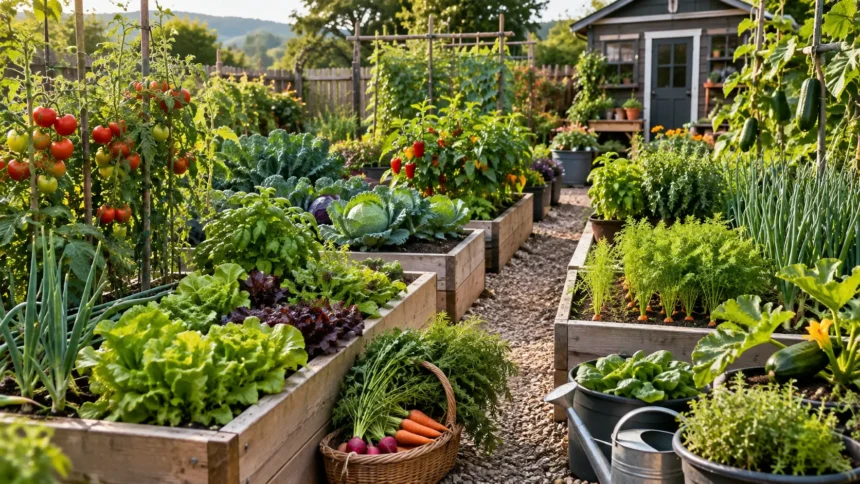
Growing vegetables throughout the year is possible when you choose crops that match changing temperatures and growing conditions. Some vegetables prefer cool weather, others thrive in heat, and a few can be planted repeatedly across several seasons. By planning carefully, home gardeners can enjoy a more consistent supply of fresh produce instead of relying on one short harvest period.
Year-round vegetable gardening also depends on climate, sunlight, frost dates, and whether you use containers, raised beds, greenhouses, or protective covers. No single vegetable grows outdoors all year in every region, but combining cool-season and warm-season crops can keep your garden productive for much longer. The following vegetables are excellent choices for building a continuous seasonal harvest.
Leafy Lettuce for Repeated Harvests
Leaf lettuce is one of the easiest vegetables to include in a year-round garden because many varieties grow quickly and can be harvested repeatedly. It performs especially well during mild and cool weather when temperatures are not excessively hot. Loose-leaf varieties are particularly useful because gardeners can remove outer leaves while allowing the center to continue producing new growth.
During warmer months, lettuce may bolt quickly or develop a bitter flavor, so choose heat-tolerant varieties and provide partial afternoon shade when possible. Containers are useful because they can be moved away from intense sunlight during hot periods. In very warm climates, lettuce is often more productive during autumn, winter, and early spring than during peak summer heat.
For continuous harvests, sow a small amount of lettuce every two or three weeks instead of planting an entire bed at once. Succession planting creates multiple growth stages and prevents all plants from becoming ready simultaneously. Keep soil evenly moist, harvest regularly, and replace aging plants so younger lettuce can continue supplying fresh leaves.
Spinach for Cooler Growing Seasons
Spinach is another productive leafy vegetable that performs best during cool weather. It grows rapidly when temperatures are mild and can provide several harvests before plants mature. Gardeners can pick young leaves for salads or allow plants to grow larger before harvesting them for cooking, smoothies, soups, and other meals.
Hot weather can cause spinach to bolt, meaning the plant sends up a flower stalk and leaf quality begins declining. Instead of trying to force spinach through intense summer heat, plant it during cooler sections of the year. In mild-winter regions, autumn and winter sowings can produce reliable crops when severe freezes are uncommon.
Regular succession planting helps extend the spinach harvest rather than creating one large crop that finishes quickly. Sow new seeds every few weeks while conditions remain suitable, and keep the soil consistently moist. When temperatures become too warm, replace spinach temporarily with heat-tolerant leafy vegetables and return to spinach once cooler weather arrives.
Kale for Long-Season Vegetable Gardens
Kale is valued by year-round gardeners because it tolerates cooler temperatures better than many common vegetables. Established plants can continue producing leaves for an extended period when properly maintained. Instead of harvesting the entire plant, remove mature outer leaves and leave younger center growth intact so production can continue.
Although kale prefers cooler conditions, some varieties tolerate moderate warmth if they receive adequate water. During very hot summers, however, growth may slow and leaves can become tougher. Partial shade during the hottest part of the day may help plants remain productive in climates where summers are intense but not permanently extreme.
Planting kale at different times can provide overlapping harvests across several seasons. Start new plants before older ones lose productivity, and choose varieties suited to local temperatures. Regular harvesting, good soil fertility, and pest monitoring can keep kale productive for months, making it an excellent foundation crop for gardeners seeking a dependable supply of leafy greens.
Radishes for Fast Year-Round Production
Radishes are among the fastest vegetables to grow, with many varieties ready for harvest within a few weeks. Their short growth cycle makes them ideal for filling temporary gaps between larger vegetables. Gardeners can plant them in containers, raised beds, or small spaces where slower crops have not yet expanded fully.
Radishes generally prefer cool to mild weather because high temperatures may cause poor root development or premature flowering. Spring and autumn are excellent planting periods in many climates, while winter production may be possible in milder regions. In very hot seasons, gardeners can pause production and begin sowing again when temperatures become more suitable.
Plant small batches every one or two weeks for a steady harvest instead of sowing hundreds of seeds at once. Harvest roots while they are still tender because oversized radishes can become tough or overly strong in flavor. Their rapid maturity makes radishes valuable for keeping garden beds productive between longer-season vegetable crops.
Carrots for Multiple Seasonal Harvests
Carrots can be grown across several parts of the year when planting dates are adjusted to local temperatures. They generally develop best in loose, well-drained soil that allows roots to grow downward without heavy compaction. Different varieties mature at different speeds, giving gardeners opportunities to stagger plantings and extend harvest periods.
Cool conditions often improve carrot quality because roots can develop gradually without intense heat stress. In regions with mild winters, autumn-planted carrots may remain in the garden for an extended period and be harvested as needed. Hot summer conditions can make germination more challenging because shallow soil dries quickly before seedlings become established.
To keep carrots available longer, sow a new row every few weeks while temperatures remain suitable. Keep the soil surface consistently moist during germination and thin crowded seedlings so roots have adequate space. Choosing quick-maturing varieties alongside storage types can provide both early harvests and larger roots for later use.
Green Onions for Continuous Harvesting
Green onions are compact, easy to grow, and useful in nearly every small vegetable garden. They require little space and can be planted around larger crops or along garden-bed edges. Because they are harvested before developing large bulbs, green onions can often be grown across a wider range of seasons than traditional storage onions.
Many varieties tolerate cool temperatures while also performing reasonably well during mild warm conditions. Extremely hot or freezing weather may slow growth, but container production can make seasonal management easier. Gardeners can move pots into more protected locations or use covers to extend production when outdoor conditions become less favorable.
Plant green onions in small batches every few weeks to maintain a steady supply. They can be harvested young or allowed to develop thicker stems depending on preference. Because they mature relatively quickly and occupy very little soil, green onions work especially well between slower-growing vegetables where unused space would otherwise remain empty.
Swiss Chard for Warm and Cool Conditions
Swiss chard is one of the most adaptable leafy vegetables for gardeners who want production across several seasons. It tolerates warmer temperatures better than spinach while still performing well during cooler weather. This flexibility makes chard especially valuable during transitional periods when some cool-season greens are struggling but summer vegetables are not yet fully productive.
Harvesting outer leaves allows the center of the plant to continue producing new growth for months. Mature plants can become relatively large, so provide enough spacing to prevent overcrowding. Chard can be grown in raised beds or containers, and colorful stem varieties also add visual interest to edible garden spaces.
Extreme heat may slow growth, while severe frost can damage plants depending on variety and local conditions. However, with mulch, shade, or other seasonal protection, Swiss chard can remain productive for a surprisingly long period. Regular watering and consistent harvesting help encourage tender leaves while preventing older foliage from dominating the plant.
Beets for Both Roots and Greens
Beets provide two edible crops from one plant because gardeners can use both the roots and leafy tops. They grow particularly well during cool and mild seasons, making them useful in spring, autumn, and sometimes winter gardens. Young leaves can be harvested carefully while roots continue developing beneath the soil.
Like carrots and radishes, beets perform best in loose soil where roots can expand without obstruction. Thin crowded seedlings early because each developing root needs enough physical space. Consistent moisture is also important, as alternating extremely dry and wet conditions may reduce root quality and contribute to uneven growth.
Succession planting can keep fresh beets available over a longer period. Sow smaller batches at intervals instead of planting one large crop at the beginning of the season. In warm climates, pause planting during the hottest months and restart when temperatures moderate, while gardeners in cooler regions can concentrate production around spring and autumn.
Tomatoes for the Warmest Part of the Year
Tomatoes are not true year-round outdoor vegetables in most climates, but they are essential for maintaining garden productivity during warm months. They thrive when temperatures, sunlight, and soil conditions are suitable. By combining tomatoes with cool-season vegetables before and after summer, gardeners can keep the same growing area productive across most of the year.
Choose compact determinate varieties for containers and smaller gardens, or grow indeterminate tomatoes vertically when you have strong supports. Cherry tomatoes are particularly productive and can continue producing fruit over a long season. Regular harvesting encourages gardeners to monitor plants closely for watering needs, pests, and developing fruit.
As temperatures cool, tomato production eventually slows or stops in many regions. Remove finished plants and replace them with cool-season crops such as spinach, lettuce, radishes, or leafy greens. This seasonal transition allows warm-weather vegetables to occupy valuable space only when conditions favor strong growth and good fruit production.
Peppers for Long Warm-Season Harvests
Peppers can remain productive for months when temperatures stay warm and plants receive sufficient sunlight. Both sweet and hot varieties work well in containers, raised beds, and traditional gardens. Once established, healthy plants may produce repeated flushes of flowers and fruit, making them valuable crops for maximizing summer and early autumn harvests.
Peppers prefer warmth and usually grow slowly when nights remain cold. Start them early indoors when appropriate so established transplants are ready once outdoor conditions become suitable. Container-grown peppers can sometimes have their season extended because pots can be moved to protected areas when temperatures begin falling.
Harvesting fruit regularly can encourage continued production while weather remains favorable. Some peppers can be picked green, while others may be left to mature into red, orange, yellow, or other colors. Pairing warm-season pepper production with cool-weather leafy crops before and after summer helps create a garden that remains useful throughout changing seasons.
Beans for Productive Summer Gardening
Beans are highly productive vegetables during warm weather and can provide repeated harvests over several weeks. Bush beans fit compact garden areas, while pole beans climb vertically and use less ground space. Their relatively fast growth also makes beans useful for filling summer beds after early-season vegetables such as spinach, radishes, or lettuce have finished.
Pole beans generally produce over a longer period when pods are harvested regularly. Install trellises or supports before plants become large so their roots are not disturbed later. Bush beans often produce a concentrated crop, which means gardeners can sow additional batches every few weeks to extend the harvest.
Beans are most useful as part of a seasonal rotation rather than as permanent year-round crops. When cold weather arrives, replace finished bean plants with cool-season vegetables suited to lower temperatures. This approach keeps beds productive while allowing each vegetable to grow during the conditions it naturally prefers.
Cucumbers for High Summer Yields
Cucumbers can produce large harvests from relatively little ground space when trained vertically. They prefer warm temperatures, plenty of sunlight, regular moisture, and fertile soil. Trellising keeps vines organized and makes fruit easier to find, especially in gardens where available growing space is limited.
Frequent harvesting is important because cucumbers can grow quickly and become oversized within a short period. Picking them at the appropriate stage can encourage plants to continue producing new fruit. Monitor watering carefully because inconsistent moisture may affect growth, fruit shape, and overall plant performance during hot summer conditions.
Once cucumber vines decline, remove them and prepare the space for another seasonal crop. Fast-growing greens, radishes, or other cool-weather vegetables may follow as temperatures begin dropping. Combining warm-season cucumbers with cooler replacements is an efficient way to keep the same garden bed producing throughout different parts of the year.
How to Plan a Year-Round Vegetable Garden
Year-round gardening works best when you think in seasons rather than expecting every plant to survive all twelve months. Divide vegetables into cool-season, warm-season, and transitional crops, then create a planting calendar around local temperature patterns. This approach helps ensure that finished crops are replaced quickly instead of leaving productive soil empty.
Succession planting is particularly useful because it spreads harvests over time. Sow quick crops such as lettuce, radishes, green onions, and spinach at intervals instead of planting them all on one date. As one batch finishes, another can begin producing, creating a more consistent supply of vegetables without requiring significantly more garden space.
Regular care also keeps long-season gardens productive. Following effective vegetable garden maintenance practices can help you manage watering, weeds, feeding, harvesting, plant support, and seasonal cleanup. Healthy beds transition more easily between crops and provide a stronger foundation for repeated planting throughout the year.
Conclusion
The best vegetables to grow throughout the year are those that fit naturally into changing seasonal conditions. Lettuce, spinach, kale, radishes, carrots, green onions, Swiss chard, and beets can cover cooler periods, while tomatoes, peppers, beans, and cucumbers keep gardens productive during warmer weather. Combining these crops creates a continuous planting cycle.
Successful year-round gardening depends more on timing than on finding one vegetable that grows perfectly in every season. Use succession planting, seasonal crop changes, containers, and protective growing methods to extend production. Pay attention to local temperatures and replace declining crops promptly with vegetables better suited to the conditions ahead.
Start with a manageable selection of vegetables and keep simple notes about planting dates, harvests, and seasonal performance. Over time, you will learn exactly when different crops perform best in your garden. With thoughtful planning and consistent maintenance, even a modest growing space can provide fresh vegetables during much of the year.
FAQs
What vegetables can grow all year round?
No vegetable grows outdoors year-round in every climate. However, kale, Swiss chard, green onions, lettuce, and some root vegetables can grow across multiple seasons when temperatures remain suitable or protection is provided.
What is the easiest vegetable to grow throughout the year?
Leaf lettuce is one of the easiest options because it grows quickly and works well with succession planting. In very hot weather, however, it may require shade or temporary replacement with heat-tolerant greens.
How can I keep my vegetable garden producing all year?
Combine cool-season and warm-season crops, use succession planting, and replace harvested plants quickly. Containers, row covers, greenhouses, or shade structures can also help extend vegetable production beyond normal outdoor growing periods.
Which vegetables grow best in winter?
Kale, spinach, lettuce, carrots, radishes, beets, and certain brassicas are commonly suited to cooler conditions. Their performance depends on local winter temperatures, frost severity, variety selection, and any protection provided.
Which vegetables are best for summer gardening?
Tomatoes, peppers, cucumbers, beans, eggplants, squash, and other heat-loving crops are strong summer choices. Provide adequate sunlight, regular watering, good soil fertility, and enough spacing for productive warm-season growth.