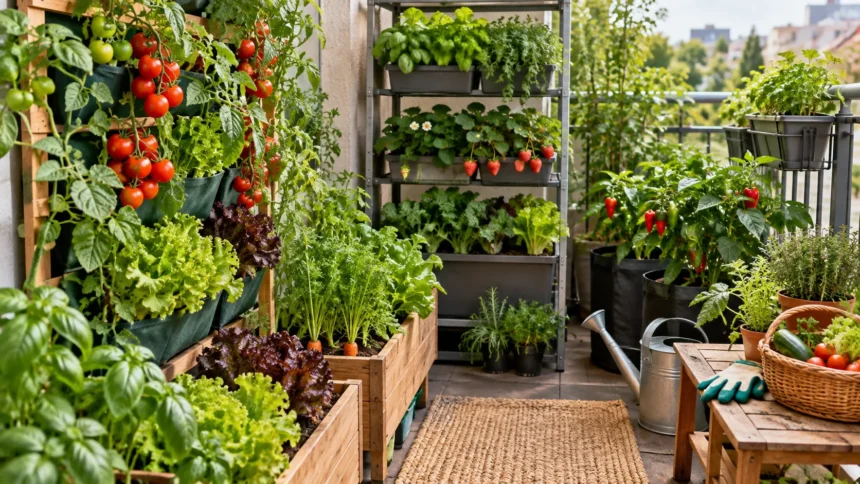
Growing plenty of fresh vegetables does not require a large backyard or traditional farm-sized garden. With smart planning, even a balcony, patio, courtyard, rooftop, or compact raised bed can produce an impressive amount of food. The key is to use every available area efficiently while giving plants enough sunlight, nutrients, water, and room to develop.
Small-space vegetable gardening works best when you combine compact varieties, vertical growing, containers, succession planting, and careful spacing. Instead of trying to squeeze random plants into every empty corner, focus on crops that provide strong yields for the space they occupy. The following strategies can help you grow more vegetables while keeping your garden organized, healthy, and manageable.
Start by Planning Your Available Growing Space
Begin by measuring the areas where you can realistically grow vegetables. Look at patios, balconies, raised beds, fence lines, windows, pathways, and unused corners that receive adequate sunlight. Knowing the dimensions of each area makes it easier to select containers, trellises, and vegetable varieties that fit without creating an overcrowded growing environment.
Observe sunlight patterns throughout the day before deciding where different crops should grow. Tomatoes, peppers, cucumbers, beans, and many other fruiting vegetables generally perform best in sunny locations, while some leafy greens can tolerate partial shade. Tall plants should be positioned carefully so they do not block important sunlight from shorter vegetables growing nearby.
Create a simple layout before buying seeds or seedlings. Mark where containers, raised beds, climbing crops, and pathways will be located so you can use both horizontal and vertical space efficiently. A thoughtful [small-space vegetable garden](Add link here) plan can prevent overcrowding while helping you make better use of every productive corner.
Choose High-Yield Vegetables for Small Gardens
Some vegetables naturally provide more food from limited growing space than others. Leaf lettuce, spinach, radishes, green onions, herbs, cherry tomatoes, climbing beans, cucumbers, and compact peppers are excellent examples. Many can be harvested repeatedly or grown vertically, allowing gardeners to produce substantial yields without using large sections of valuable ground space.
Consider how much edible produce each plant provides compared with the space it occupies. A large sprawling pumpkin vine may dominate a small garden for months, while the same area could support multiple leafy greens, herbs, or vertically trained vegetables. Selecting productive crops allows you to focus limited garden space on plants that deliver greater practical value.
Personal preference should still guide crop selection because there is little benefit in growing vegetables nobody wants to eat. Prioritize vegetables you regularly use in meals, especially those that taste noticeably better when freshly harvested. Combining productivity with household demand helps make a small vegetable garden both efficient and genuinely useful throughout the season.
Grow Vegetables Vertically Whenever Possible
Vertical gardening is one of the most effective ways to increase vegetable production in a limited area. Instead of allowing climbing plants to spread across the ground, train them upward using trellises, stakes, cages, fences, or sturdy supports. Cucumbers, pole beans, peas, indeterminate tomatoes, and some squash varieties can all benefit from vertical training.
Growing upward creates additional planting space underneath and around climbing vegetables. Smaller crops such as lettuce, radishes, herbs, or green onions can sometimes use open ground near vertically supported plants, depending on sunlight and spacing. Vertical growth can also make harvesting easier because fruits and pods are often more visible and accessible.
Choose supports strong enough to handle mature plants, especially when growing heavy cucumbers, tomatoes, or vigorous vines. Install trellises before plants become large so roots are not damaged later. Position tall structures where they will not create excessive shade over sun-loving vegetables in nearby containers, raised beds, or garden rows.
Use Containers to Expand Your Growing Area
Containers allow vegetables to grow in places where traditional gardening would be impossible. Balconies, patios, driveways, rooftops, and paved courtyards can all become productive spaces when suitable pots or planters are added. Containers also provide flexibility because some can be moved to improve sunlight exposure or protect plants during challenging weather conditions.
Choose containers according to the mature root size of each vegetable. Herbs, radishes, green onions, and lettuce can grow in relatively compact containers, while tomatoes, peppers, eggplants, and larger crops need greater soil volume. Every container should have drainage holes because waterlogged soil can reduce oxygen around roots and cause serious plant problems.
Use a high-quality potting mix rather than filling containers with heavy garden soil. Container vegetables usually require closer attention to watering and nutrition because their roots cannot explore surrounding ground for additional resources. Regular monitoring helps maintain consistent moisture and ensures that plants have enough nutrients to continue producing throughout the growing season.
Practice Intensive Spacing Without Overcrowding
Traditional vegetable gardens often use wide rows that leave significant areas of bare soil between plants. Small-space gardeners can reduce unnecessary empty areas by using closer, carefully planned spacing. The goal is to arrange vegetables efficiently while still providing enough room for mature leaves, roots, sunlight, and airflow.
Square-foot gardening and raised-bed layouts can be useful because they divide growing areas into manageable sections. Smaller vegetables may be planted relatively close together, while larger crops receive more room. Always consider mature size rather than seedling size, because a small transplant can quickly develop into a plant several times wider within a few weeks.
Intensive planting should never mean crowding plants until leaves remain constantly wet or roots compete severely for resources. Excessive density can reduce airflow, complicate harvesting, and make pest or disease problems harder to detect. Efficient spacing means eliminating wasted areas while maintaining the growing conditions each vegetable requires for healthy development.
Use Succession Planting for Continuous Harvests
Succession planting allows one garden space to produce multiple crops during the same growing season. Instead of planting everything at once, sow small amounts of quick-growing vegetables every few weeks. Lettuce, radishes, spinach, green onions, and other fast crops are particularly useful for this approach because they can be harvested relatively quickly.
You can also replace one finished vegetable with another crop suited to the next part of the season. Early radishes or spinach might be followed by beans, cucumbers, or another warm-season vegetable once temperatures rise. Later, cool-season greens can sometimes return to spaces that become available after summer vegetables finish producing.
Planning harvest dates makes succession planting more effective. Check approximate maturity times on seed packets and keep simple notes about when each crop was planted. This helps you prepare seedlings or seeds before garden space becomes available, reducing periods when productive containers or beds remain empty between vegetable crops.
Try Interplanting Crops With Different Growth Habits
Interplanting means growing different vegetables together when their growth patterns allow them to share space effectively. For example, quick-growing radishes can occupy soil between slower-developing vegetables early in the season. By the time larger plants need additional room, the radishes may already have been harvested and removed from the bed.
Vegetables with different heights and root systems can sometimes share space efficiently. Tall tomatoes may grow above lower crops, while shallow-rooted lettuce can use areas that do not heavily interfere with deeper root systems. Successful interplanting depends on understanding mature plant sizes, sunlight requirements, watering needs, and expected harvest times.
Avoid combining plants simply because a companion planting chart says they are compatible. Practical growing requirements should guide your decisions more than rigid pairing rules. If two vegetables compete aggressively for light, root space, or moisture, they may perform poorly together even when they are commonly described as suitable companion plants.
Make Better Use of Sunlight and Shade
Sunlight is one of the most valuable resources in a small vegetable garden, so use it strategically. Place vegetables that need strong light in the sunniest parts of your available space. Tomatoes, peppers, cucumbers, beans, and many fruiting crops generally benefit from several hours of direct sun for healthy flowering and production.
Partial shade does not always mean an area must remain unused. Lettuce, spinach, certain herbs, and some other leafy vegetables may tolerate lower light better than fruiting crops. These plants can make productive use of areas beside taller vegetables or locations that receive strong morning sunlight but become shaded later in the day.
Remember that sunlight patterns change as plants grow. A small tomato seedling creates little shade, but a mature plant can cover nearby crops significantly. Plan for final plant height and width before planting, and regularly prune or train appropriate vegetables when necessary to maintain airflow and improve light distribution within crowded growing areas.
Improve Soil Quality for Higher Vegetable Yields
Small gardens need productive soil because every square foot is expected to support useful plant growth. Add finished compost or suitable organic matter to raised beds to improve soil structure, biological activity, and moisture management. Healthy soil allows roots to expand efficiently and helps vegetables access the water and nutrients they need.
Container gardens require a different approach because regular garden soil can become heavy and compacted inside pots. Use a quality potting mixture with good drainage and moisture retention. Refresh old container soil when necessary, and remove severely compacted or depleted material rather than repeatedly planting demanding vegetables into poor growing media.
Fertilize according to crop needs rather than applying large amounts automatically. Heavy-feeding vegetables may need supplemental nutrients during active growth, while others require less. Overfertilizing can produce excessive foliage, damage roots, or reduce fruiting, so follow fertilizer instructions and observe plant growth before deciding that additional nutrients are necessary.
Water Small Vegetable Gardens Efficiently
Small gardens and containers can dry quickly, especially during warm, windy weather. Check moisture regularly rather than following an identical watering schedule every day. Container size, soil type, sunlight, temperature, and plant maturity all influence how quickly water disappears from the root zone.
Water deeply enough to moisten the active root area instead of repeatedly wetting only the soil surface. Shallow watering can encourage roots to remain near the top where moisture disappears quickly. Applying water near the base of plants also reduces unnecessary wetting of foliage and ensures that more moisture reaches the area where roots can absorb it.
Mulching can help conserve moisture in raised beds and larger containers. Suitable organic mulch also reduces weed growth and helps stabilize soil temperature. Do not pile mulch tightly against vegetable stems, and continue checking moisture underneath because the soil surface may appear dry even when lower layers still contain adequate water.
Keep Plants Productive With Regular Harvesting
Frequent harvesting encourages many vegetables to continue producing. Beans, cucumbers, zucchini, peppers, herbs, and certain leafy greens can provide repeated harvests when picked regularly. Allowing mature produce to remain on plants for too long may reduce quality and can sometimes slow the development of additional flowers or fruits.
Learn the ideal harvesting stage for each crop rather than waiting for vegetables to become as large as possible. Tender zucchini, young beans, and leafy greens are often more enjoyable before they become oversized or tough. Regular picking also allows you to notice pests, damaged leaves, water stress, and other problems while they remain easier to manage.
Use cut-and-come-again harvesting with suitable leafy vegetables and herbs. Instead of removing the entire plant, harvest outer leaves while allowing the central growing point to continue developing. This technique can extend production from individual plants and reduce how frequently you need to replace crops in limited containers or raised-bed spaces.
Keep the Garden Organized Throughout the Season
A small garden can become crowded quickly when vines, leaves, tools, and empty containers are allowed to accumulate. Train climbing vegetables regularly, remove finished crops promptly, and keep pathways accessible. Simple maintenance prevents productive plants from becoming tangled and helps ensure that sunlight and airflow remain available throughout the growing area.
Inspect vegetables several times each week for pests, nutrient problems, damaged leaves, or signs of disease. Early detection is particularly important in compact gardens because closely positioned plants can allow certain problems to spread quickly. Remove badly damaged plant material when appropriate and address the underlying cause before adding more plants to the space.
Keep basic records of what you grow and how much each crop produces. Note successful varieties, planting dates, container sizes, sunlight conditions, and harvest periods. After one or two seasons, these records can reveal which vegetables provide the best return from your limited area, helping you design an increasingly productive garden every year.
Conclusion
Growing more vegetables in a small space depends on using available resources intelligently rather than simply planting more densely. Vertical gardening, containers, compact vegetable varieties, succession planting, and interplanting can dramatically increase productivity. Careful planning helps every plant receive enough sunlight, moisture, nutrients, and physical space to develop properly.
Focus on crops that provide strong yields and vegetables your household actually enjoys eating. Train climbing plants upward, replace harvested crops quickly, and use partially shaded areas for vegetables that tolerate lower light. These techniques help turn balconies, patios, raised beds, and small backyards into productive food-growing spaces.
The most productive small gardens improve through observation and experimentation. Keep track of which crops perform well, harvest vegetables regularly, and adjust your layout each season based on actual results. With smart use of vertical and horizontal space, even a compact garden can provide a steady supply of fresh vegetables for much of the growing season.
FAQs
What vegetables produce the most food in a small space?
Leafy greens, radishes, climbing beans, cucumbers, cherry tomatoes, peppers, green onions, and herbs can provide strong yields in limited areas. Vertical and repeat-harvest crops are especially useful for compact gardens.
Can I grow vegetables on a small balcony?
Yes. Use containers, railing planters, vertical supports, and compact vegetable varieties suited to the available sunlight. Make sure containers have adequate drainage and enough soil volume for each plant’s mature root system.
How can I maximize space in a raised vegetable bed?
Combine vertical crops, intensive but appropriate spacing, succession planting, and quick-growing vegetables. Replace finished crops promptly and avoid leaving large areas empty during periods when suitable vegetables could still be growing.
Is vertical gardening good for vegetables?
Yes. Vertical gardening works particularly well for pole beans, peas, cucumbers, indeterminate tomatoes, and other climbing vegetables. It saves ground space and can make plants easier to inspect, maintain, and harvest.
Can vegetables be planted closer together in a small garden?
Some vegetables can be spaced efficiently, but overcrowding should still be avoided. Always consider mature plant size, root space, airflow, sunlight, and watering requirements rather than simply placing as many plants as possible together.