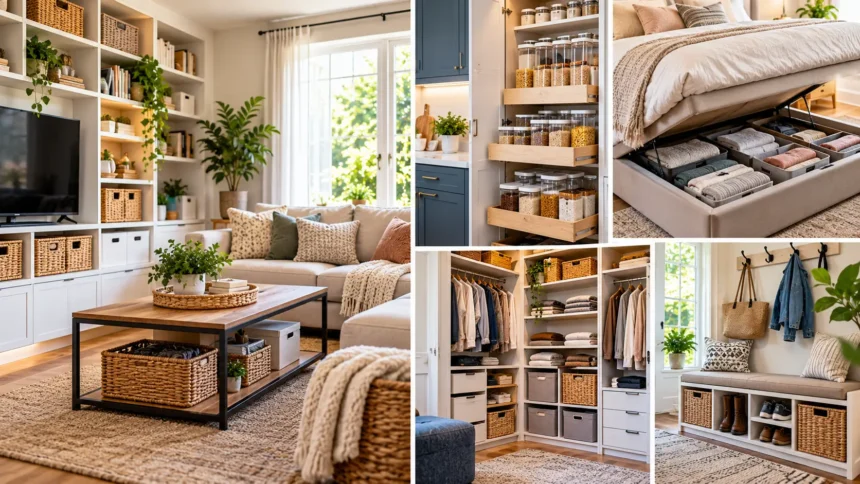
A clutter-free home does not necessarily mean owning fewer things. In many cases, clutter appears because everyday belongings do not have practical storage locations. When shoes, toys, paperwork, kitchen tools, clothing, and household supplies are stored efficiently, rooms feel calmer, cleaner, and easier to maintain without constant tidying.
The best storage ideas focus on making the most of the space you already have. Vertical walls, unused corners, space under furniture, closet doors, cabinets, and multipurpose furniture can all provide valuable storage opportunities. The right solution should make belongings easy to find, simple to return, and convenient for everyone in the household.
You do not need expensive built-in cabinets or a complete home renovation to improve organization. Small changes such as adding baskets, shelves, drawer dividers, hooks, or storage benches can make a noticeable difference. These practical storage ideas can help you reduce visible clutter while creating a more functional and comfortable home.
Use Vertical Space With Wall Shelves
Walls often provide valuable storage space that goes unused, especially in smaller homes. Floating shelves can hold books, decorative objects, baskets, kitchen supplies, or bathroom essentials without taking up valuable floor space. Installing shelves above desks, beds, sofas, or countertops can increase storage while keeping frequently used belongings within easy reach.
Tall shelving units are another useful option when you need more storage capacity. Instead of choosing short furniture that uses only the lower part of a wall, consider bookcases or cabinets that extend upward. Higher shelves can hold seasonal or rarely used belongings, while everyday items remain on lower levels where they are easier to access.
Avoid filling every shelf completely because overcrowded storage can make a room feel visually cluttered. Group similar belongings together and leave some open space where possible. Baskets or matching containers can also help organize smaller objects on shelves, creating a cleaner appearance while preventing loose items from spreading across the room.
Make Use of Under-Bed Storage
The area under a bed can provide a surprising amount of hidden storage, particularly in bedrooms with limited closet space. Flat storage containers can hold seasonal clothing, extra bedding, shoes, bags, or rarely used belongings. Using this space helps free up drawers and wardrobes for items needed more frequently.
Choose containers with lids to protect stored belongings from dust. Clear containers make contents easy to identify, while labeled boxes work well when you prefer a cleaner appearance. Measure the available height before purchasing storage bins so they can slide easily beneath the bed without becoming difficult to remove.
Beds with built-in drawers are another practical option when replacing bedroom furniture. These designs combine sleeping space and storage without requiring additional cabinets or dressers. They are particularly useful in children’s rooms, guest bedrooms, or compact apartments where every square foot of floor space needs to serve a useful purpose.
Add Baskets to Control Everyday Clutter
Baskets are one of the easiest storage solutions for controlling everyday clutter. They can hold blankets, toys, magazines, electronics, craft supplies, bathroom products, or household accessories while keeping them easy to reach. Decorative baskets can also blend naturally with furniture, making practical storage feel like part of the room’s design.
Place baskets near the locations where clutter naturally appears. A basket beside the sofa can store throws, while another near the entrance can hold hats, scarves, or reusable shopping bags. Children’s rooms can use open baskets for toys so cleanup stays simple enough for younger family members to manage independently.
Avoid using baskets as places to hide random belongings indefinitely. Each container should have a clear purpose or category so items remain easy to find later. When baskets become overcrowded, review their contents and remove anything that no longer belongs rather than adding another container to manage unnecessary possessions.
Choose Multipurpose Furniture With Storage
Furniture that serves more than one purpose can significantly improve storage in small or busy homes. Storage ottomans, benches with hidden compartments, coffee tables with drawers, and beds with built-in storage help reduce clutter without adding extra furniture. These options make use of space that would otherwise serve only one function.
A storage bench near the entrance can provide seating while holding shoes, bags, or seasonal accessories. In the living room, an ottoman can store blankets, board games, or children’s toys while also functioning as a footrest or additional seat. Choosing pieces based on actual household needs helps every item of furniture contribute more value.
When buying multipurpose furniture, prioritize easy access over maximum storage capacity. A compartment that requires moving several objects before opening it may become inconvenient for daily use. Frequently used belongings should remain simple to reach, while deeper or less accessible compartments can hold items needed only occasionally.
Organize Closets With Zones
Closets work better when they are divided into clear zones instead of becoming large spaces filled with unrelated belongings. Group clothing, shoes, accessories, bags, and seasonal items separately. Keeping similar items together makes it easier to see what you own and reduces the chance of purchasing duplicates because something was hidden.
Use upper shelves for seasonal or rarely used belongings and keep everyday clothing at comfortable heights. Lower areas can hold shoe racks, drawers, baskets, or storage boxes. Adding a second hanging rail can also increase available clothing space, especially when most garments are shirts, jackets, skirts, or trousers that do not require full-height hanging.
Review closets periodically instead of waiting until they become difficult to use. Storage solutions cannot completely solve overcrowding if the space contains many unwanted items. Removing clothes that no longer fit or suit your lifestyle creates breathing room, making shelves and hanging areas easier to organize and maintain.
Use Drawer Dividers for Small Items
Drawers often become cluttered because small belongings move around and mix together. Drawer dividers create separate compartments for clothing, utensils, office supplies, cosmetics, accessories, or other small household items. Giving each category its own section makes it easier to locate what you need without searching through an entire drawer.
In bedrooms, dividers can separate socks, underwear, belts, scarves, and smaller accessories. Kitchen drawers can use them for cutlery, cooking tools, measuring spoons, and gadgets. Bathroom drawers benefit from separate sections for grooming products, hair accessories, skincare items, and other everyday essentials that might otherwise become difficult to manage.
You do not always need expensive organizers to create divided storage. Small boxes, trays, or repurposed containers can work effectively inside larger drawers. The important goal is creating clear boundaries so items stay in predictable places and can be returned quickly after they are used.
Maximize Kitchen Cabinet Storage
Kitchen cabinets often contain more usable space than people realize. Shelf risers can create additional levels for plates, bowls, mugs, or pantry products, while stackable containers can make better use of vertical space. Organizing cabinets by category also makes meal preparation easier because related ingredients and tools remain together.
Consider using the inside of cabinet doors for lightweight storage. Small racks or hooks can hold measuring spoons, cleaning cloths, cutting boards, or other slim items. Pull-out baskets and rotating organizers can also improve access to deep cabinets where products commonly disappear behind other items and are forgotten.
Avoid filling kitchen cabinets to maximum capacity. Leaving some room makes it easier to remove and return cookware, containers, and ingredients without rearranging everything. Regularly check for expired food, damaged equipment, duplicate tools, and unused appliances so available storage remains dedicated to items your household actually uses.
Create a Functional Entryway Storage Area
The entryway is one of the most important places to create practical storage because many belongings enter and leave the home there. Shoes, coats, bags, keys, umbrellas, and deliveries can quickly create clutter. A simple combination of hooks, a shoe rack, baskets, and a small tray can keep these items under control.
Assign storage areas according to how your household uses the entrance. Children might have lower hooks for backpacks and jackets, while adults can use higher hooks for coats and bags. A small container for keys, sunglasses, and wallets can reduce time spent searching for these essentials before leaving home.
Keep the entryway limited to belongings currently in regular use. Seasonal coats, extra shoes, or rarely used bags should be moved elsewhere when they are not needed. Keeping this area lightly stocked makes it easier to maintain and creates a cleaner, more welcoming transition between the outside world and your home.
Use Over-the-Door Storage
Doors can provide useful storage space without taking up additional floor area. Over-the-door organizers work well in bedrooms, bathrooms, closets, pantries, and utility spaces. Depending on the design, they can hold shoes, accessories, toiletries, cleaning products, children’s supplies, or pantry items that would otherwise occupy valuable shelves.
Bathroom doors can hold towels, hair tools, or personal care products, while bedroom organizers can store shoes and accessories. Pantry doors can support lightweight food items, wraps, snacks, or small kitchen supplies. Using vertical door space is particularly helpful in compact homes where cabinets and closets are already limited.
Choose organizers that fit the door properly and do not interfere with opening or closing. Avoid placing very heavy objects in hanging storage systems that are not designed to support them. Keeping categories consistent also prevents over-the-door organizers from becoming another collection point for random household clutter.
Create Hidden Storage in the Living Room
Living rooms need practical storage because they often serve several purposes at once. Families may use the same space for relaxing, watching television, reading, playing, entertaining guests, or working. Hidden storage helps keep these activities supported without leaving every related object visible throughout the room.
Coffee tables with drawers can store remote controls, chargers, notebooks, and entertainment accessories. Storage ottomans can hide blankets, toys, or games, while cabinets and media consoles provide enclosed space for electronics and household supplies. Furniture with doors or drawers can reduce visual clutter while keeping commonly used belongings close by.
Balance hidden storage with accessible storage depending on how often something is used. Everyday items should be easy to reach without opening several containers or moving furniture. Belongings used only occasionally can remain in deeper compartments, allowing the most convenient storage areas to support the routines that happen every day.
Organize Bathroom Storage by Routine
Bathrooms can feel cluttered quickly because many small products are used within a limited space. Organize toiletries according to daily routines rather than simply placing them wherever they fit. Products used every morning can remain together, while backup supplies, occasional treatments, and less frequently used items can be stored separately.
Drawer dividers, small baskets, medicine cabinets, and under-sink organizers can make bathroom storage more efficient. Use containers to separate dental care, skincare, hair products, cosmetics, and grooming tools. When every category has a dedicated place, counters are less likely to become covered with bottles, brushes, and accessories.
Use wall-mounted or over-the-toilet shelving if floor and cabinet space is limited. These areas can hold towels, toilet paper, baskets, or decorative items without crowding the room. Keep frequently used products accessible while storing extras higher up so the bathroom remains practical without looking overloaded.
Make Better Use of Corner Spaces
Corners are often overlooked when planning household storage, yet they can offer useful opportunities. Corner shelving units, floating shelves, cabinets, or narrow furniture can transform unused areas into practical storage. These solutions work well in living rooms, bedrooms, kitchens, bathrooms, and home offices where standard furniture may not fit.
A small corner shelf can hold books, plants, baskets, or decorative objects without interfering with walking areas. In kitchens, corner cabinets can benefit from rotating trays or pull-out organizers that improve access to deep spaces. Bedrooms can use narrow corner units for accessories, books, or personal items.
Avoid adding storage furniture to every empty corner simply because the space exists. New storage should solve a real organizational need rather than create an excuse to keep more possessions. Choose corner solutions when they improve accessibility or reduce existing clutter without making the room feel crowded.
Label Storage Where It Adds Value
Labels can make storage systems easier to understand, particularly in homes shared by several people. Pantry containers, children’s toy bins, craft supplies, seasonal boxes, and household utility storage can benefit from clear labeling. When people know exactly where something belongs, they are more likely to return it after use.
Keep labels simple and specific enough to remain useful. Broad categories such as toys, cleaning supplies, winter clothing, cables, or baking ingredients are often sufficient. Overly detailed labels can create unnecessary maintenance if belongings regularly change or if the system becomes too complicated for family members to follow.
Not every drawer or basket needs a label. Use them where they reduce confusion, especially for containers that look similar or hold items that are not immediately visible. A balanced labeling system supports organization without making your home feel like a warehouse or requiring constant updates whenever something changes.
Avoid Buying Storage Before Decluttering
One of the most common organization mistakes is purchasing storage containers before deciding what actually needs to be kept. New baskets and boxes may simply hide unnecessary possessions rather than reduce clutter. Decluttering first helps you understand exactly how much storage you need and prevents spending money on solutions that may not fit.
Start by removing broken, unused, expired, duplicated, or unwanted items. Once you know what remains, measure shelves, closets, cabinets, and available floor space before buying organizers. This ensures new storage fits properly and supports the belongings you actually use rather than encouraging you to keep unnecessary items.
Think of storage as the final step in organization rather than the first. Good storage should make useful belongings easier to access and maintain. When every container serves a clear purpose, your home is more likely to remain organized because the system is built around real needs rather than simply hiding clutter.
Conclusion
The best storage ideas for a clutter-free home focus on using existing space more efficiently. Vertical shelving, under-bed containers, baskets, multipurpose furniture, drawer dividers, and organized closets can provide practical solutions without requiring major renovations. The goal is to make everyday belongings easy to access and equally easy to put away.
Effective storage also depends on keeping the amount of belongings realistic for the space available. Adding more containers will not create lasting organization if cabinets and drawers are filled with items that are rarely used. Regular decluttering creates the room needed for storage systems to function properly instead of becoming overcrowded.
Most importantly, choose storage solutions that match your household’s natural routines. Simple systems are easier to maintain than complicated arrangements that require constant effort. When every frequently used item has a clear and convenient home, keeping your living spaces cleaner, calmer, and more organized becomes part of everyday life.
FAQs
What is the best storage idea for a small home?
Vertical shelving, under-bed containers, over-the-door organizers, and multipurpose furniture are excellent choices for small homes. They increase storage capacity without requiring large amounts of additional floor space.
How can I create more storage without buying furniture?
Use existing cabinets more efficiently with shelf risers, baskets, drawer dividers, hooks, and door organizers. Decluttering unwanted belongings can also create significant extra storage without adding new furniture.
Are storage baskets good for reducing clutter?
Yes, baskets are useful for grouping related belongings such as toys, blankets, toiletries, or accessories. They work best when each basket has a clear purpose instead of becoming a place for random items.
How should I organize storage in a small bedroom?
Use under-bed containers, tall shelves, closet organizers, hooks, and furniture with built-in storage. Keep frequently used belongings accessible while placing seasonal or occasional items in less convenient spaces.
Should I declutter before buying storage containers?
Yes. Decluttering first helps you determine how much storage you actually need. It also prevents you from spending money on containers that simply hide unnecessary possessions rather than improving organization.