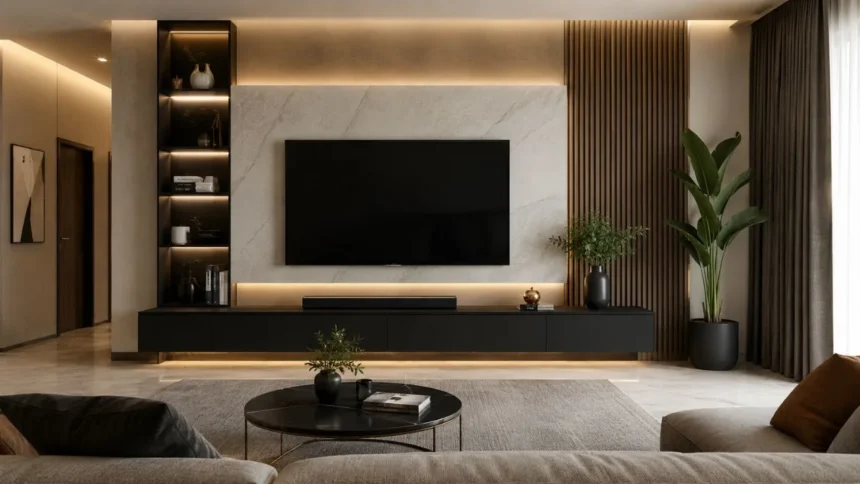
A well-designed media wall can turn an ordinary television area into the main architectural feature of your living room. Instead of placing a TV on an empty wall or using a freestanding cabinet, a media wall brings the screen, storage, lighting and decorative details together in one coordinated design.
Modern media walls can be simple and understated or bold and luxurious. Some include an electric fireplace, built-in shelving and concealed cabinets, while others use textured panels, stone-effect finishes or slim floating units. The best design depends on your room size, viewing habits, storage needs and preferred interior style.
A successful TV feature wall should look attractive without making the room feel crowded. The television needs to sit at a comfortable viewing height, cables should remain hidden, and electronic equipment must have enough ventilation. Decorative features should support the screen rather than compete with it for attention.
This guide explores ten stylish media wall ideas for modern homes, from minimalist floating units to statement marble-effect designs. It also explains how to choose materials, plan lighting, position a television, integrate storage and avoid common installation mistakes.
What Is a Media Wall?
A media wall is a purpose-built feature that combines a television with surrounding architectural or storage elements. It may include fitted cabinets, open shelves, wall panelling, integrated lighting, speakers, decorative niches or an electric fireplace beneath the screen.
Unlike a basic TV stand, a media wall is designed as part of the room itself. The structure can extend from floor to ceiling or occupy only the central section of a wall. It may be built using timber framing, plasterboard, cabinetry, wall panels or a combination of several materials.
Media walls are popular because they help organise entertainment equipment while creating a clean focal point. Power cables, streaming devices, game consoles and speaker wires can be hidden inside the structure, reducing visible clutter around the television.
The design can also solve practical storage problems. Closed cupboards can hold toys, games, remote controls and everyday items, while open shelves provide space for books, ceramics, framed photographs and carefully selected decorative accessories.
Why Are Media Walls So Popular?
Open-plan living and larger television screens have made entertainment areas more visually important. A media wall gives the TV a considered position within the interior instead of allowing it to look like a large black rectangle placed on an unfinished wall.
Homeowners also appreciate the ability to personalise the design. A media wall can reflect minimalist, contemporary, industrial, Scandinavian, traditional or luxury interiors through different finishes, shapes and storage arrangements.
Another advantage is efficient use of wall space. Floor-to-ceiling shelving and fitted cabinets can provide substantial storage without requiring several separate pieces of furniture. This is particularly useful in smaller homes where every available area needs to serve a practical purpose.
Media walls can also make a room feel more complete. Layered lighting, balanced proportions and high-quality finishes create a polished appearance that may be difficult to achieve with a television and standalone console alone.
1. Minimalist Floating Media Wall
A minimalist floating media wall is ideal for contemporary homes that favour clean lines and uncluttered surfaces. The television is mounted directly onto the wall, while a slim floating cabinet sits underneath without visible legs or floor supports.
Keeping the unit raised above the floor creates a sense of space and makes the room easier to clean. The open area beneath the cabinet also helps a smaller living room feel lighter, particularly when the unit matches the wall colour.
Choose handleless drawers or push-to-open cupboard doors to maintain the streamlined appearance. Matte white, soft grey, warm beige and light wood finishes work especially well when the aim is calm, understated modern design.
Complete the look with subtle LED lighting underneath the cabinet or behind the television. Avoid filling the wall with too many ornaments, as the strength of this style comes from simplicity, negative space and carefully controlled proportions.
2. Media Wall With an Electric Fireplace
A media wall with an electric fireplace creates a warm focal point by combining entertainment and ambience in one design. A slim linear fire is usually positioned beneath the television, producing a balanced vertical arrangement.
Modern electric fires are available in a wide range of widths, flame styles and fuel-bed effects. Some feature logs, crystals or stones, allowing the fireplace to complement both cosy traditional rooms and sleek contemporary interiors.
The television should not be positioned too close to the fire. Always follow the clearance and installation guidance provided by the television and fireplace manufacturers, as heat management requirements vary between models.
A recessed shelf or non-combustible mantel between the fire and screen can visually separate the two features. Side cabinets, display niches or textured wall panels can then be added to make the overall composition feel wider and more substantial.
3. Slatted Wood Media Wall
Slatted wood panels bring warmth, texture and vertical rhythm to a modern media wall. The narrow timber strips soften the appearance of technology and help the television area feel more connected to furniture, flooring and natural materials elsewhere in the room.
Oak-effect slats are popular in light, Scandinavian-style interiors, while walnut and darker timber finishes create a richer and more dramatic look. Black acoustic backing between the slats can provide contrast and make the wood grain stand out.
You can cover the entire media wall with timber slats or use them only on selected sections. Placing slats behind the television, around a central panel or on one side of the composition can create interest without overwhelming the room.
Slatted wall panels may also help improve sound quality by reducing some hard-surface reflections, depending on their construction. However, they should not block ventilation openings, electrical access points or the safe installation of television brackets.
4. Marble-Effect Media Wall
A marble-effect media wall delivers a luxurious appearance without necessarily requiring large slabs of natural stone. Porcelain panels, sintered stone, decorative boards and high-quality laminates can recreate dramatic veining while being easier to maintain.
The television can be mounted against one large marble-look surface, creating a clean backdrop with very few visible joints. Dark veining adds movement and visual depth, while lighter stone tones can make the room feel brighter and more spacious.
Pair the finish with black, bronze or brushed brass details for a refined modern look. A low floating cabinet in dark timber or a matching neutral shade can provide storage without distracting from the statement surface.
Because marble patterns are visually strong, the rest of the media wall should remain controlled. Use simple lighting, minimal shelving and only a few accessories so the stone effect remains elegant rather than becoming busy or excessively decorative.
5. Built-In Media Wall With Storage
A built-in media wall with storage is one of the most practical choices for a family living room. It combines the television with cupboards, drawers and shelving that can hold entertainment equipment, toys, books and household items.
Closed storage should be placed at lower levels where it remains easy to reach. Open shelves can sit beside or above the television, but they should be arranged carefully so the screen remains the visual centre of the wall.
Use a mixture of cabinet sizes to organise different objects. Deep cupboards can hold board games and larger electronics, while shallow drawers are useful for remote controls, charging cables, controllers and instruction manuals.
Built-in storage works best when it appears integrated with the architecture. Matching the cabinetry to the wall colour creates a seamless appearance, while contrasting timber or dark painted units make the media wall feel more like bespoke furniture.
6. Asymmetrical Media Wall Design
An asymmetrical media wall offers a more creative alternative to traditional balanced layouts. Instead of placing identical shelves on each side of the television, the design uses different shapes, heights or storage elements to create controlled visual movement.
One side may feature tall open shelving, while the other includes a low cabinet or textured panel. The television can remain centred or be positioned slightly off-centre, depending on the room layout and viewing area.
Successful asymmetry should still feel intentional. Repeating materials, colours or lighting details across the composition helps connect the different elements and prevents the wall from looking unfinished.
This style works particularly well in open-plan spaces or rooms with doors, windows and awkward wall proportions. It allows the design to respond to existing architecture rather than forcing every component into a perfectly mirrored arrangement.
7. Dark and Dramatic Media Wall
A dark media wall can make the television blend into its surroundings when the screen is switched off. Charcoal, black, deep navy and dark brown finishes reduce the contrast between the TV and the wall, creating a cinematic atmosphere.
Use matte surfaces to minimise glare and reflections. Dark painted plaster, black cabinetry, smoked wood and graphite wall panels can all create depth without looking overly glossy or distracting during viewing.
Layered lighting is essential in a dark design. Warm LED strips, illuminated shelves and soft wall lights prevent the feature from becoming flat or heavy, particularly during the evening.
Balance the dark media wall with lighter flooring, upholstery or nearby walls. This contrast allows the feature to feel bold and intentional without making the entire living room appear smaller or excessively enclosed.
8. Media Wall With Open Display Shelves
Open display shelves are ideal for homeowners who want their media wall to show personality. They provide space for books, plants, photographs, candles, artwork and decorative objects while framing the television.
The shelves can be arranged symmetrically for a formal appearance or staggered for a more relaxed modern look. Different shelf heights allow you to display objects of varying sizes without forcing everything into identical compartments.
Avoid filling every available space. Leaving some shelves partly empty creates visual breathing room and helps individual objects stand out. A crowded display can compete with the television and make the feature wall feel disorganised.
Integrated lighting can transform the shelves in the evening. Recessed spotlights or concealed LED strips create gentle pools of light, highlighting textures and objects without producing harsh glare on the television screen.
9. Microcement or Concrete-Effect Media Wall
A microcement or concrete-effect finish brings an architectural, slightly industrial character to a media wall. Its continuous appearance works well in modern interiors where clean surfaces, neutral tones and tactile materials are important.
True microcement can be applied across a properly prepared surface to create subtle variation and depth. Concrete-effect paint, decorative plaster and wall panels can provide a similar visual style at different price points.
The cool appearance of concrete pairs well with warm timber cabinetry, soft furnishings and warm-white lighting. This combination prevents the room from feeling stark while preserving the modern, structured character of the feature.
Keep the design simple so the surface texture remains visible. A floating cabinet, narrow fireplace or recessed television may be enough to complete the wall without adding several competing materials and decorative elements.
10. Floor-to-Ceiling Media Wall
A floor-to-ceiling media wall creates a strong architectural statement and uses the full height of the room. It can make the television area appear more substantial while providing additional storage or display space above the screen.
Vertical panels, tall cabinets and illuminated niches can draw the eye upwards, helping a standard-height room feel taller. In rooms with high ceilings, the design prevents the TV from appearing lost against a large empty wall.
Upper cupboards are useful for storing items that are not needed every day. However, the television should still remain at a comfortable viewing height rather than being pushed upwards simply to create space beneath it.
A full-height design requires careful proportions. The central television section should have enough surrounding space, while shelving and cabinetry should align with other architectural features such as door frames, windows and ceiling details.
How to Choose the Right Media Wall for Your Room
Begin by considering the size and shape of your living room. A large floor-to-ceiling design may suit an open-plan space, while a compact floating unit may be more appropriate for a narrow lounge or smaller apartment.
Measure the wall, television and main seating area before selecting a design. The media wall should feel proportionate to the room rather than appearing squeezed between architectural features or extending too close to doors and windows.
Think about how much storage you genuinely need. A decorative media wall may prioritise texture and lighting, while a family room may require deep cupboards, toy storage and easy access to game consoles or streaming devices.
Your design should also complement the existing interior. Repeat colours, timber tones, metal finishes or shapes already present in the room so the media wall feels connected to the wider space rather than added as an isolated feature.
How Wide Should a Media Wall Be?
The ideal width depends on the size of the television and the dimensions of the room. As a general design principle, the wall feature should extend beyond both sides of the screen so the television does not appear cramped.
A narrow media wall can make a large television look oversized, while an excessively wide structure may dominate a compact living room. Sketching the planned dimensions with masking tape can help you understand the scale before construction begins.
When adding side shelving or cabinets, maintain enough visual space around the TV. Decorative objects positioned too close to the screen can be distracting, particularly when they are brightly coloured or illuminated.
Consider the position of nearby furniture as well. The media wall should align comfortably with the sofa and viewing area without blocking walkways, radiators, switches, sockets or doors.
What Is the Best Height for a Wall-Mounted TV?
A television is normally most comfortable when the centre of the screen sits close to seated eye level. The exact height depends on the sofa, viewing distance, screen size and personal preference.
Mounting the TV too high can cause viewers to tilt their heads upwards for long periods. This may become uncomfortable during films, gaming sessions or extended television viewing.
Media walls with fireplaces often create pressure to place the screen higher. Choosing a low-profile electric fire and maintaining only the required clearance can help keep the television at a more comfortable position.
Before fixing the bracket, sit in your normal viewing position and mark the proposed screen outline on the wall. This simple test can prevent an expensive height mistake after the structure and finishes are complete.
How to Hide Wires in a Media Wall
Cable management should be planned before the media wall is built. Power leads, HDMI cables, network cables, speaker wires and aerial connections need clear routes between the television, sockets and entertainment equipment.
A service channel behind the wall can hide cables while allowing future access. Removable panels, cabinet openings or discreet access points make it easier to replace equipment without damaging plaster or decorative finishes.
Avoid sealing streaming devices and game consoles inside unventilated compartments. Electronic equipment generates heat, so cabinets may need ventilation grilles, openings or quiet cooling systems.
Leave spare cable capacity for future technology. An empty conduit running between the television and cabinet can make it easier to add or replace cables when devices and connection standards change.
How to Add Storage Without Making the Wall Look Bulky
Use a combination of concealed and open storage. Closed cupboards hide everyday clutter, while a limited number of shelves provide space for decorative items and prevent the design from feeling like a solid block of cabinetry.
Floating base units reduce visual weight by exposing more floor area. Handleless doors and cabinets painted in the wall colour can also make storage appear less dominant.
Recessed shelves are another effective option because they sit within the structure rather than projecting into the room. Their depth should still be sufficient for the books, speakers or accessories you plan to display.
Avoid creating storage simply to fill empty space. Unnecessary cupboards increase cost and visual weight, while overly deep units can reduce valuable floor area in a smaller living room.
Best Materials for a Modern Media Wall
Plasterboard is commonly used to create the main structure because it can form smooth walls, niches and fireplace openings. It must be supported by suitable framing, particularly where a heavy television or cabinet will be mounted.
Timber and decorative wall panels add warmth and texture. Slatted panels, veneered boards and fitted cabinetry can be used as accents or across the complete feature, depending on the desired style.
Porcelain, stone-effect panels and microcement create a more luxurious architectural finish. These materials may require specialist installation, careful surface preparation and appropriate support because of their size or weight.
Paint remains one of the most flexible and affordable finishes. A well-chosen colour can make the television blend in, connect the media wall with surrounding furniture or create a dramatic contrast without introducing another material.
How to Plan Media Wall Lighting
Lighting should add atmosphere without reflecting strongly on the television screen. Concealed LED strips are useful behind shelves, beneath floating cabinets and inside recessed niches.
Warm-white lighting generally creates a comfortable living-room mood. Very cool or brightly coloured lighting can feel harsh unless it is used deliberately as part of a gaming or entertainment setup.
Place lighting on separate controls where possible. This allows you to use shelf lighting, ambient backlighting and main room lights independently depending on whether you are watching television or entertaining guests.
Plan power supplies and drivers in accessible locations. LED equipment may eventually need replacement, so it should not be permanently sealed behind plaster or cabinetry with no maintenance access.
Should You Put a Fireplace Under the TV?
An electric fireplace can sit beneath a television when both products are installed according to their technical requirements. The design must account for heat output, ventilation, clearances and the direction in which warm air leaves the fire.
Not every fireplace is suitable for this arrangement. Some release heat directly upwards, which may expose the television to temperatures outside its recommended operating conditions.
A recessed mantel, shelf or structural separation may help redirect heat and create a visual break. However, decorative solutions should never replace the manufacturer’s required safety distances.
Professional installation is sensible when the project combines electrical work, structural framing and a fireplace. A qualified installer can help ensure that sockets, wiring, materials and clearances are appropriate for the chosen equipment.
How Much Does a Media Wall Cost?
The cost of a media wall varies according to its size, materials and complexity. A simple painted structure with a floating cabinet may cost considerably less than a full-height design with bespoke cabinetry, stone-effect panels and an electric fireplace.
Labour is another major part of the budget. Carpentry, plastering, electrical work, decoration and specialist fireplace installation may involve several trades, particularly when the design includes detailed niches and integrated lighting.
Allow money for the less visible elements as well. Television brackets, sockets, LED drivers, cables, ventilation components and finishing materials can add to the overall cost even though they are not the main decorative features.
Set a realistic budget before finalising the design. A restrained media wall with good proportions and careful finishing will usually look better than an overcomplicated design that relies on low-quality materials to control costs.
Can You Build a Media Wall in a Small Living Room?
A media wall can work well in a small living room when the depth and visual weight are carefully controlled. Slim floating cabinetry and wall-mounted storage preserve more usable floor space than deep freestanding furniture.
Use light or mid-tone finishes when you want the structure to blend into the room. Painting cabinets and panels in a similar colour to the surrounding walls can prevent the media wall from appearing too dominant.
Limit the number of materials and decorative niches. Too many shelves, contrasting panels and illuminated sections can make a compact wall look busy and reduce the calm effect you are trying to create.
Consider whether the structure needs to reach the ceiling. A lower floating design may provide sufficient storage and visual interest without reducing the feeling of openness in a small lounge.
Media Wall Design Mistakes to Avoid
Mounting the television too high is one of the most common media wall mistakes. The design may look impressive when standing, but regular viewing takes place from a seated position and should remain comfortable.
Another mistake is failing to plan ventilation. Game consoles, amplifiers, routers and streaming devices can become hot inside tightly enclosed cabinets, potentially reducing performance and equipment life.
Insufficient access is also problematic. A beautiful wall becomes frustrating when replacing an HDMI cable requires removing fixed panels, cutting plasterboard or dismantling cabinetry.
Finally, avoid using too many decorative ideas at once. Marble, timber slats, bright lighting, mirrors, shelves and a fireplace can compete when they are all included in one composition. Select a clear focal material and let supporting elements remain simpler.
How to Style Media Wall Shelves
Begin with a small collection of objects that vary in height, texture and shape. Books, ceramics, small plants and framed artwork can create interest without overwhelming the shelves.
Group items rather than spacing every object equally. A stack of books with a decorative piece on top often looks more intentional than several unrelated accessories arranged in a straight line.
Repeat a limited colour palette across the display. Colours taken from the sofa, curtains, rugs or artwork can help connect the shelving with the rest of the living room.
Leave empty space around some objects. Negative space helps the eye rest and ensures that the shelves enhance the media wall rather than distracting viewers from the screen.
Are Media Walls Still in Style?
Media walls remain popular because they solve practical problems as well as providing a decorative feature. Homeowners continue to need organised storage, hidden wiring and a clear location for increasingly large television screens.
The style is evolving towards more personalised and architectural designs. Simple plastered walls, natural timber, integrated cabinetry and subtle lighting often feel more timeless than overly decorative arrangements.
A media wall is more likely to age well when it suits the proportions and character of the home. Designs based only on a short-lived trend may feel dated sooner, particularly when they use very bold materials or complex shapes.
Choose finishes you genuinely like and keep permanent elements relatively versatile. Decorative accessories, paint colours and lighting effects can be changed later without rebuilding the complete structure.
Final Thoughts on Modern Media Wall Ideas
The best media wall ideas combine visual impact with practical planning. A successful design makes the television feel integrated, hides cables, provides suitable storage and remains comfortable to view.
Minimalist floating units suit clean contemporary homes, while electric fireplaces and built-in shelving create a stronger focal point. Slatted wood, marble effects, microcement and dark finishes allow the design to reflect different interior styles.
Before building, consider television height, equipment ventilation, electrical access and future cable changes. These practical details determine whether the media wall remains convenient after the initial appearance is complete.
Choose one clear design direction and support it with balanced materials, lighting and storage. A thoughtfully planned media wall can improve the organisation, atmosphere and overall appearance of your living room for years.
Frequently Asked Questions
What should be included in a media wall?
A media wall can include a television, floating cabinet, closed storage, open shelves, lighting and an electric fireplace. Include only features that fit your room and everyday needs.
Do media walls make a room look smaller?
A deep or dark media wall can dominate a compact room, but slim floating units and coordinated colours can make the area feel organised without reducing the sense of space.
Can any TV be installed on a media wall?
Most flat-screen televisions can be wall-mounted using a compatible bracket and suitable structural support. Check the TV’s weight, mounting pattern and ventilation requirements before installation.
Do you need ventilation in a media wall?
Yes, electronic equipment needs airflow to prevent excessive heat. Include vents, open sections or suitable gaps around consoles, receivers, routers and other devices stored inside cabinets.
Is a media wall worth the cost?
A media wall can be worthwhile when it improves storage, cable management and the overall appearance of your room. Its value depends on design quality, functionality and how long you plan to keep it.