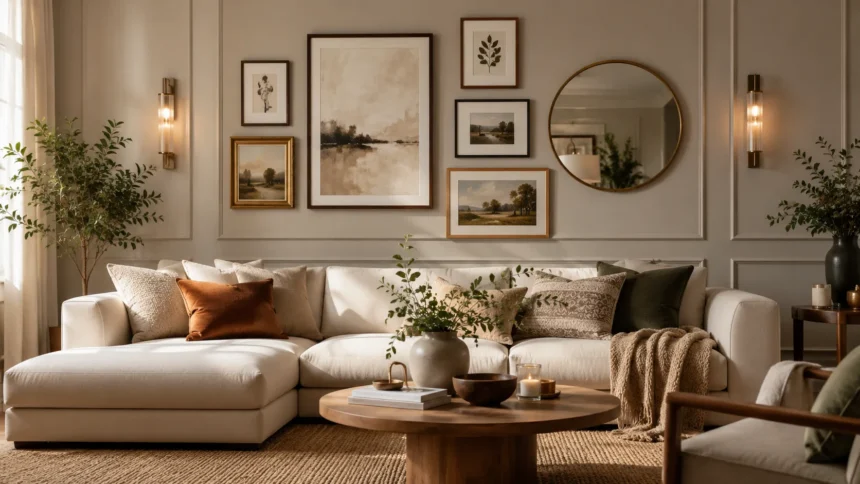
Living Room Wall Decor Ideas Above the Sofa
The wall above the sofa is often one of the largest blank spaces in a living room, which makes it an ideal place to create a strong visual focal point. The right living room wall decor above the sofa can bring balance, personality, color, and dimension to the entire room without requiring a complete makeover.
However, decorating this wall can feel surprisingly difficult. Artwork that is too small may look disconnected from the sofa, while oversized pieces can overwhelm the room if they are not positioned correctly. The best approach is to think about scale, proportion, color, furniture placement, and the overall style of the living space.
Your sofa naturally anchors the seating area, so the wall directly above it should feel visually connected rather than decorated as a separate feature. Whether you prefer large artwork, a gallery wall, a mirror, floating shelves, textiles, or minimalist decor, the goal is to create a composition that feels intentional and comfortable.
This guide explores practical and stylish living room wall decor ideas above the sofa for modern, traditional, minimalist, farmhouse, eclectic, and contemporary interiors. Each idea can be adapted to different room sizes, budgets, and decorating styles while helping you make better use of a wall that might otherwise feel unfinished.
Start With the Right Scale Above Your Sofa
Scale is one of the most important considerations when decorating above a sofa. A tiny piece of artwork floating over a wide three-seater often feels visually weak because the wall decor does not have enough presence. Larger artwork or grouped pieces usually create a stronger relationship with the furniture below.
As a general decorating principle, the overall width of the wall arrangement should feel substantial compared with the sofa rather than extending far beyond it. The exact proportion does not need to be mathematically perfect, but your eyes should perceive the art and sofa as part of the same visual composition.
Height matters as well. Hanging artwork too close to the ceiling creates an awkward gap between the sofa and wall decor, while placing it too low can make the arrangement feel crowded. Aim for a comfortable amount of breathing room between the top of the sofa and the lowest decorative element.
Before drilling holes, create paper templates in the approximate dimensions of your artwork and tape them to the wall. This allows you to experiment with placement, spacing, and proportions. A few minutes of planning can prevent unnecessary holes while helping the final arrangement feel much more balanced.
1. Hang One Oversized Piece of Wall Art
One large piece of art is one of the easiest ways to transform the empty wall above a sofa. Oversized wall art immediately creates a focal point while keeping the room visually clean. This approach works especially well in contemporary, minimalist, modern, and transitional living rooms.
Choose artwork with enough visual presence to relate to the width of your sofa. Abstract paintings, landscapes, botanical art, photography, textured canvases, and graphic compositions can all work beautifully. Select something that supports the mood of your room rather than choosing a piece solely because it fills the available wall.
Color can help connect the artwork with the rest of the living room. Look for small elements within the painting or print that repeat colors already present in throw pillows, curtains, rugs, or accessories. The colors do not need to match exactly; subtle repetition is usually enough to create visual harmony.
A single large artwork is also useful when the sofa already has patterned cushions or sits on a visually busy rug. Instead of adding numerous frames and decorative objects, one substantial piece gives the eye somewhere to rest. This creates impact without making the living room feel unnecessarily crowded.
2. Create a Gallery Wall Above the Sofa
A gallery wall above the sofa provides more flexibility and personality than a single artwork. It allows you to combine photographs, illustrations, paintings, typography, sketches, and meaningful pieces in one arrangement. The result can feel curated and personal when spacing and scale are handled carefully.
For a polished look, use frames in similar finishes or choose a controlled mix of two complementary materials. Black, white, natural wood, brass, and antique-inspired frames can all work depending on your interior style. Repeating frame colors helps different pieces feel connected even when the artwork itself varies.
If you prefer a relaxed or eclectic appearance, mix frame sizes and orientations while maintaining consistent spacing between pieces. Begin with one larger anchor piece and build smaller artworks around it. This makes the arrangement easier to balance than starting with several unrelated pieces of equal visual weight.
Lay the entire gallery wall arrangement on the floor before hanging anything. Take a photograph when you find a combination you like and use it as a reference while installing the frames. This simple planning step helps maintain consistent spacing and reduces the risk of a gallery wall feeling random.
3. Use a Large Statement Mirror
A large mirror can make the wall above your sofa feel brighter and more spacious while functioning as a decorative focal point. Mirrors are particularly useful in small or darker living rooms because they reflect available natural and artificial light around the space.
Choose a mirror shape that complements the architecture and furniture in the room. Round mirrors soften straight-lined sofas and rectangular furniture, while arched designs can add elegance. Large rectangular mirrors create a structured appearance that works especially well in traditional or contemporary interiors.
The frame provides another opportunity to reinforce your decorating style. Natural wood introduces warmth, black metal creates a modern look, brass feels elegant, and ornate vintage-style frames can bring character into more traditional rooms. The mirror should feel connected to nearby furniture rather than selected in isolation.
Pay attention to what the mirror will reflect before installing it. A mirror facing a window, artwork, or attractive part of the room can enhance the overall effect, while one reflecting visual clutter may make the space feel busier. Placement should therefore consider both the wall itself and the surrounding room.
4. Install Floating Shelves for Flexible Decor
Floating shelves provide both decoration and flexibility above the sofa. Instead of committing to one permanent artwork arrangement, you can layer framed prints, books, small plants, ceramics, photographs, and decorative objects, then change them whenever your style or seasonal decor changes.
One long picture ledge can create a particularly clean look. Leaning artwork against the wall removes the need to hang each piece individually while allowing frames to overlap slightly. This creates depth and gives the display a relaxed but intentional appearance.
If using multiple shelves, avoid filling every available inch. Leave some empty space between objects so each item remains visible and the display does not become cluttered. Mixing different heights and shapes creates more visual interest than arranging identical objects in a straight line.
Because shelves sit directly above a seating area, installation should be especially secure. Use appropriate wall anchors and follow the shelf manufacturer’s weight limits. Keep particularly heavy, fragile, or unstable objects away from the area directly above where people regularly sit.
5. Try a Triptych for a Clean, Balanced Look
A triptych consists of three coordinated pieces displayed together, making it a natural choice for the long horizontal wall above a sofa. The repetition creates balance while providing more visual interest than one simple print. It works especially well in symmetrical and contemporary interiors.
The three artworks may form one continuous image or feature separate but related designs. Landscapes, botanical illustrations, abstract compositions, architectural photographs, and minimalist line art are popular choices because they can be distributed evenly across the width of the sofa.
Maintain equal spacing between all three frames to keep the arrangement intentional. If one gap is noticeably wider than the others, the composition can appear unbalanced. Measuring carefully before hanging will give the display a cleaner and more professional appearance.
Choose frames that match or coordinate closely when creating a triptych. Because repetition is part of the visual appeal, consistent framing reinforces the structure. The artwork can still contain variation in color or detail while the frame treatment keeps everything unified.
6. Decorate With a Wall Tapestry or Textile
Textiles offer a softer alternative to traditional framed artwork. A wall tapestry, woven piece, quilt, or fabric panel can bring texture and warmth into the living room while helping large walls feel less empty. This approach works beautifully in bohemian, organic, rustic, and eclectic interiors.
A woven wall hanging can be especially useful when the living room contains many hard surfaces such as wood, glass, stone, and metal. The softer material provides contrast and makes the seating area feel more comfortable and layered.
Choose a textile that is large enough to relate visually to your sofa. Small macramé pieces can disappear above a wide couch, while a larger woven artwork creates a stronger focal point. Neutral fibers work well for understated interiors, while patterned textiles can introduce significant color.
Textile decor can also be easier to change than heavy framed art. Seasonal pieces, vintage fabrics, or handmade textiles can be rotated whenever you want a different mood. This makes them particularly appealing for people who enjoy refreshing their living room regularly.
7. Use Sculptural Wall Decor for More Dimension
Flat artwork is not the only option for decorating above a sofa. Sculptural wall pieces introduce depth, shadows, and movement, making the wall more visually interesting. Metal sculptures, carved wood panels, ceramic installations, and dimensional geometric pieces can all create strong focal points.
Sculptural decor works particularly well in modern living rooms where the color palette is intentionally restrained. Instead of adding more color, the wall piece can create interest through texture and form. This produces a sophisticated effect without making the space visually busy.
Natural materials such as wood, rattan, woven fibers, and clay can soften contemporary furniture and introduce organic warmth. Metallic decor, on the other hand, can create a cleaner architectural look when paired with modern lighting and streamlined furniture.
Avoid placing too many unrelated three-dimensional objects together. One larger sculptural piece or a carefully coordinated grouping is usually more effective. Strong shapes need enough empty space around them to remain visually clear rather than competing with surrounding decoration.
8. Add Picture Ledges for Layered Artwork
Picture ledges provide the flexibility of shelves but are specifically designed for displaying framed art. Their shallow depth keeps the composition visually close to the wall while allowing you to layer photographs and artwork without drilling new holes every time you rearrange the display.
Use several frame sizes to create depth. Position larger pieces at the back and place smaller prints slightly in front, making sure important sections of the artwork remain visible. This layered arrangement can feel more casual and creative than a traditional gallery wall.
Keep the color palette relatively connected if you use many different artworks. Similar frame finishes, repeated colors, or related subject matter can prevent the display from becoming chaotic. The strongest arrangements combine variety with at least one consistent visual element.
Picture ledges are particularly useful for people who enjoy changing their interiors regularly. Artwork can be swapped according to the season, personal interests, or new purchases without changing the overall installation. This creates a living room display that can evolve naturally over time.
9. Bring Nature Indoors With Botanical Wall Decor
Botanical artwork can bring a fresh and calming atmosphere to the space above your sofa. Framed leaves, floral illustrations, landscape photography, pressed botanicals, and nature-inspired prints work particularly well in rooms that already include houseplants or natural materials.
Choose muted botanical prints for a subtle organic look or large colorful illustrations when you want the wall to become a stronger focal point. Green artwork pairs naturally with beige, cream, brown, terracotta, and other earthy living room colors.
Pressed botanical specimens can create a more delicate and handcrafted appearance. Display several in matching frames for a structured gallery wall or choose one oversized botanical illustration for a cleaner arrangement. Both approaches introduce natural imagery without requiring additional living plants.
Botanical wall decor is especially effective when repeated through nearby accessories. A few green cushions, wooden side tables, woven baskets, or real plants can connect the artwork to the rest of the room and strengthen the overall organic design.
10. Choose Black-and-White Photography for Timeless Style
Black-and-white photography provides a sophisticated option for almost any living room style. Because the artwork does not depend heavily on color, it can remain relevant even when you update rugs, cushions, curtains, or furniture later.
Travel photography, architecture, landscapes, portraits, and abstract compositions can all work above a sofa. Choose images that mean something to you or reinforce the mood you want to create rather than selecting generic photography purely for decorative purposes.
Large black-and-white photographs look particularly striking in thin black frames with generous white matting. This creates a gallery-inspired aesthetic that suits modern, minimalist, and transitional spaces while keeping attention focused on the image.
For a more personal arrangement, combine professional prints with your own travel or family photography. Editing all images consistently in black and white can visually connect photographs taken at different times and locations, creating a unified gallery wall.
11. Create Symmetry With Matching Frames
Symmetrical wall decor can bring a sense of calm and order to the space above a sofa. Two, four, or six matching frames arranged evenly create a structured display that works especially well in traditional, transitional, and formal living rooms.
Choose artwork with consistent dimensions and similar visual styles. Botanical sketches, architectural drawings, abstract prints, and black-and-white photography all work well in symmetrical grids because repetition strengthens the overall composition.
Measure carefully before hanging. Consistent horizontal and vertical spacing is essential when creating a grid because even minor alignment differences can become noticeable. Using a level and paper templates can make the installation much easier.
Symmetry can also help balance rooms containing other strong visual elements. If patterned curtains, colorful rugs, or decorative furniture already create interest, an orderly frame arrangement above the sofa provides a quieter focal point that prevents the room from feeling chaotic.
12. Add a Large Decorative Clock
A decorative clock can fill a substantial amount of wall space while providing practical function. Oversized clocks work particularly well in farmhouse, industrial, rustic, or transitional living rooms where decorative objects with architectural character complement the furniture.
Choose a design that feels proportional to your sofa and wall. A small clock placed alone above a large couch can appear disconnected, while an oversized design creates enough visual weight to serve as the main focal point.
Wooden clocks introduce warmth, black metal designs provide industrial contrast, and minimalist clocks can suit modern rooms. Consider the surrounding finishes when selecting the frame so the clock feels connected with lamps, tables, shelving, or other accessories.
Avoid surrounding a large clock with too many additional decorations. If it already has a bold design, allow it enough empty wall space to make an impact. Simpler supporting pieces can be added nearby only when the overall composition still feels balanced.
13. Display Personal Photography With Style
Personal photographs can make the wall above your sofa feel more meaningful than generic store-bought decor. Family moments, travel photographs, landscapes from memorable places, or artistic photographs you have taken yourself can turn the wall into a reflection of your life.
The challenge is keeping the display visually cohesive. Choose one framing style or edit photographs using similar tones so that different images feel connected. Black-and-white editing can be especially useful when the original photographs contain many unrelated colors.
Avoid using dozens of very small photographs unless you intentionally want a dense gallery wall. A few larger images generally look more sophisticated and are easier to appreciate from across the room.
You can also mix personal photography with art rather than creating a purely family-photo wall. Combining travel photographs, illustrations, and abstract art can produce a layered display that feels both personal and decorative.
14. Use Wall Panels or Molding as Decor
Architectural wall treatments can decorate the area above the sofa without requiring much artwork at all. Picture-frame molding, board-and-batten details, wooden slats, or decorative panels can add dimension while making a plain living room wall feel more finished.
Wall molding works particularly well in traditional and transitional interiors because it creates subtle architectural character. Painting the molding and wall in the same color produces an elegant tonal look without introducing additional visual clutter.
Wood slat panels offer a more contemporary approach. Vertical slats can make the ceiling appear taller while adding warmth and texture. They can be used across the entire sofa wall or limited to one section to create a defined focal area.
Once architectural details are added, keep other wall decor restrained. A small artwork or simple sconce may be enough because the paneling itself provides visual interest. This approach is especially effective for homeowners who prefer sophisticated interiors with fewer decorative objects.
15. Place Wall Sconces Around the Artwork
Wall sconces can frame artwork while adding functional and atmospheric lighting to the seating area. A pair positioned on either side of a painting, mirror, or grouped prints can create a polished and intentional composition.
Choose sconces that coordinate with the style of the room. Slim metal designs suit contemporary spaces, while brass or traditional shaded sconces can bring warmth to classic interiors. Plug-in versions may offer an easier solution when new electrical wiring is not practical.
Lighting can make artwork more noticeable in the evening and create a softer atmosphere than relying entirely on overhead fixtures. Warm ambient lighting is particularly effective when the sofa area is used for conversation, reading, or relaxing at night.
Maintain enough visual space between the sconces and artwork so the wall does not feel crowded. The entire arrangement should appear like one balanced composition rather than several independent objects placed above the same piece of furniture.
16. Try Minimalist Wall Decor Above the Sofa
Not every sofa wall needs a dramatic gallery arrangement. Minimalist living room wall decor often works best when the furniture, architecture, or view already provides plenty of visual interest. One carefully chosen piece can create more impact than numerous smaller decorations.
Consider a simple abstract canvas, a subtle line drawing, or one sculptural object. Neutral colors and generous negative space can help the seating area feel calm and uncluttered while still preventing the wall from appearing completely unfinished.
Minimalism depends heavily on scale and placement. Because there are fewer objects, each one becomes more noticeable. Choose pieces with enough size and quality to hold their own above the sofa rather than using small decor simply to fill space.
Keep surrounding accessories equally restrained. A few cushions, one textured throw, a side table, and thoughtful lighting may be all you need. This creates a living room that feels intentional rather than empty while maintaining a peaceful visual rhythm.
17. Make a Statement With Wallpaper
Wallpaper can transform the entire sofa wall into a decorative feature without requiring a large collection of artwork. Botanical patterns, subtle textures, geometric designs, murals, and grasscloth-inspired finishes can all create distinctive backgrounds.
If the wallpaper pattern is bold, use simpler artwork above the sofa or leave the wall largely undecorated. Adding multiple strong decorative elements on top of an already detailed pattern can make the seating area feel visually overwhelming.
Textured or tonal wallpaper provides a more understated alternative. Linen effects, subtle geometric patterns, and natural fiber-inspired designs add depth without dominating the room. This works particularly well in elegant or minimalist interiors.
Consider how the wallpaper connects with the sofa upholstery, curtains, and rug. Repeating one or two colors from the pattern elsewhere in the room can make the feature wall feel integrated rather than separate from the rest of the design.
18. Use a Large Wall Mural for Maximum Impact
A wall mural can turn the entire area behind a sofa into artwork. Landscapes, abstract designs, botanical scenes, architectural illustrations, and soft watercolor compositions can create a dramatic focal point without requiring individual frames.
Murals work particularly well on large living room walls where conventional artwork might feel too small. Because the design can cover the entire wall, it creates an immersive effect and gives the seating area a clear identity.
Choose a mural with a palette that supports your existing furnishings. If the sofa is already colorful or heavily patterned, a subtle mural may work best. Neutral furniture provides more flexibility for stronger patterns and saturated colors.
Keep other wall accessories limited when using a mural. The mural itself should remain the primary visual feature, while cushions, lamps, and side tables can repeat selected colors or textures to connect the wall with the rest of the room.
How High Should You Hang Decor Above a Sofa?
The relationship between your wall decor and sofa matters more than following a rigid universal measurement. Artwork should generally sit close enough to the sofa that the two elements feel visually connected instead of appearing as unrelated objects separated by a large empty gap.
If artwork is placed too high, people often instinctively look upward rather than experiencing the wall arrangement as part of the seating zone. Lowering the display slightly can make the entire room feel more cohesive and comfortable.
Consider the height of the sofa back and any cushions that rise above it. Leave enough clearance so guests can sit comfortably without the wall decor feeling uncomfortably close, while still maintaining a strong visual connection.
When hanging several pieces, treat the entire group as one artwork. Measure the full height and width of the arrangement rather than positioning each frame independently. This creates a more balanced relationship with the furniture below.
How to Match Wall Decor With Your Sofa Color
Neutral sofas provide the greatest flexibility because they can support almost any wall art palette. Beige, cream, gray, white, and brown couches work with bold artwork, black-and-white photography, colorful gallery walls, and nature-inspired prints.
For colorful sofas, consider artwork that repeats the sofa color subtly rather than matching it exactly. A green couch might work beautifully with artwork containing small amounts of green alongside beige, black, rust, or blue.
Patterned sofas usually benefit from simpler wall decor. One large artwork, mirror, or restrained pair of prints can balance the visual activity of the upholstery without making the room feel overloaded.
Remember to consider the entire room rather than only the sofa. Wall art should also relate to the rug, curtains, accent chairs, lighting, and nearby furniture. Repeating colors and materials across several areas creates a more cohesive interior.
Common Mistakes When Decorating Above the Sofa
The most common mistake is using artwork that is too small. A tiny frame above a large sofa can look lost even when the artwork itself is beautiful. Choosing a larger piece or grouping several smaller artworks usually creates better visual balance.
Another mistake is hanging decor too high. When there is a large empty gap between the sofa and artwork, the two elements no longer feel connected. Bringing the display lower can instantly make the room look more intentional.
Overdecorating can be equally problematic. Filling every inch with frames, shelves, plants, mirrors, and objects may make the seating area feel chaotic. Select one clear decorative direction rather than combining every wall decor idea at once.
Finally, avoid copying a trend without considering your own room. The best above sofa wall decor reflects your personal style, complements your furniture, and fits the proportions of your space. A thoughtful arrangement will usually remain appealing longer than a purely trend-driven display.
How to Choose the Best Wall Decor Above Your Sofa
Begin by deciding whether you want the sofa wall to become a strong focal point or remain relatively quiet. Large paintings, murals, and gallery walls create stronger visual statements, while minimal art, simple mirrors, and architectural molding provide a calmer effect.
Consider your decorating style next. Modern rooms may benefit from abstract art or sculptural pieces, traditional interiors can support framed landscapes and symmetrical arrangements, while bohemian spaces often look best with textiles, organic materials, and eclectic artwork.
Your lifestyle should also influence the decision. If you frequently rearrange decor, picture ledges or floating shelves provide more flexibility than permanently positioned gallery walls. If you prefer simplicity, one large artwork requires less ongoing styling.
Most importantly, choose pieces you genuinely enjoy seeing every day. The wall above your sofa occupies a prominent position in the living room, so it deserves more thought than simply filling empty space. Meaningful and well-scaled decor will always feel more personal than decoration chosen only to follow trends.
Final Thoughts on Living Room Wall Decor Above the Sofa
The empty wall behind your sofa offers one of the best opportunities to give your living room more personality and visual balance. From oversized paintings and gallery walls to mirrors, shelves, textiles, and architectural details, there are countless ways to create an attractive focal point.
Scale should always be your starting point. Whatever you choose needs enough visual weight to relate to the sofa below it. Proper proportions, thoughtful spacing, and comfortable hanging height often make a bigger difference than the price or style of the decor itself.
Consider the existing colors, furniture, lighting, textures, and overall mood of the room before selecting your wall arrangement. The strongest living room wall decor ideas above the sofa complement the entire space instead of behaving like an isolated design feature.
Ultimately, there is no single correct solution. Whether you prefer one bold canvas, an expressive gallery wall, a simple mirror, or a minimal textured piece, choose an arrangement that feels balanced and reflects how you want your living room to look and feel every day.
Frequently Asked Questions About Wall Decor Above the Sofa
What should I put on the wall above my sofa?
Popular options include oversized artwork, gallery walls, mirrors, picture ledges, floating shelves, wall sculptures, tapestries, and framed photography. Choose something proportional to your sofa and consistent with your living room style.
How big should artwork be above a sofa?
Artwork should feel substantial compared with the sofa rather than appearing small and disconnected. One large piece or a coordinated group of smaller frames usually creates the best visual balance.
How far above a sofa should wall art hang?
Keep enough space between the sofa and artwork for comfortable visual breathing room while ensuring they still feel connected. Avoid hanging artwork so high that it appears closer to the ceiling than the furniture.
Is a mirror good above a sofa?
Yes. A large mirror can make the living room feel brighter and more spacious while creating an attractive focal point. Position it where it reflects an appealing view, window, or part of the room.
Can you put shelves above a sofa?
Yes, floating shelves and picture ledges can work beautifully above a sofa when installed securely. Use them for lightweight artwork and decor while avoiding unstable or very heavy objects directly above the seating area.