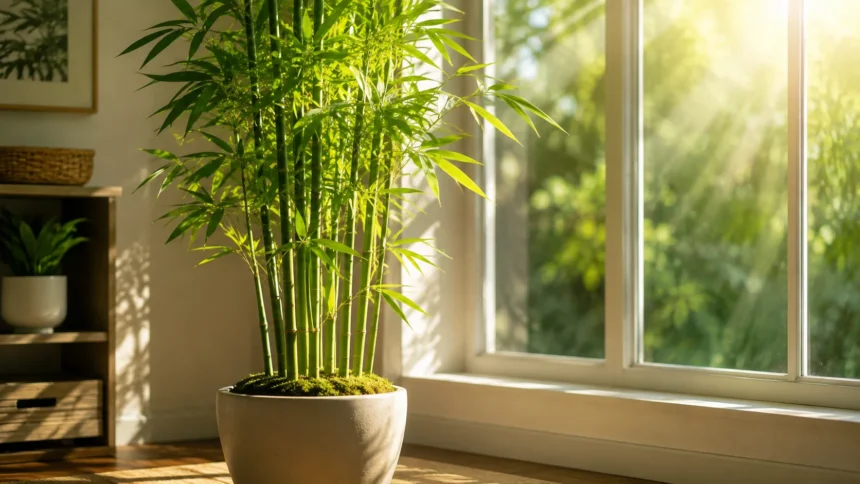
How Much Light Does Bamboo Need? Indoor and Outdoor Guide
Bamboo can be surprisingly adaptable, but its light needs depend heavily on which plant you actually have. Outdoor landscape bamboo usually prefers a bright location and many types thrive in full sun, while the popular houseplant sold as lucky bamboo is not true bamboo at all. Lucky bamboo is Dracaena sanderiana, a tropical plant that generally prefers bright, indirect light and can tolerate lower-light conditions. This difference explains why advice about how much light bamboo needs can seem contradictory online. One source may recommend several hours of sun, while another warns that direct sunlight can burn the leaves, and both may be correct for different plants.
For most true bamboo growing outdoors, a sheltered sunny position is a reliable starting point, although some species tolerate partial shade better than others. The Royal Horticultural Society notes that most bamboos thrive in sunny, sheltered locations, while emphasizing that there are bamboo varieties suitable for many different sites. Lucky bamboo, by comparison, performs well in bright indirect indoor light and can tolerate shade because it naturally behaves more like an understory tropical plant. North Carolina State University Extension specifically recommends bright but indirect indoor light for lucky bamboo and notes that it can also grow in partial or deeper shade. Understanding which plant you own is therefore the first step toward getting the light level right.
How Much Light Does Bamboo Need?
Most true bamboo species grow best with generous natural light. A sunny or partly sunny outdoor location often produces stronger growth, denser foliage, and more vigorous canes than deep shade. The Royal Horticultural Society recommends planting most bamboos in a sheltered, sunny position, although it also points out that species vary and some will tolerate less sun. In practical terms, many garden bamboos can perform well with several hours of direct sunlight each day. The exact requirement depends on species, climate, soil moisture, and temperature. A bamboo growing in a cool climate may tolerate strong sun much better than the same plant growing in extreme summer heat.
Partial shade is also suitable for many types of bamboo. A plant receiving morning sun followed by afternoon shade can often grow very well, especially in regions where intense midday or afternoon sunlight causes heat stress. Partial shade may also help conserve soil moisture, which matters because many bamboos prefer consistently moist but well-drained conditions. The trade-off is that deeply shaded bamboo may grow more slowly and produce fewer or thinner canes. Some shade-tolerant species remain attractive under trees or beside buildings, but sun-loving varieties can become sparse when light is consistently inadequate. Checking the label or botanical name gives more reliable guidance than treating every bamboo species alike.
Indoor bamboo is more complicated because the plant commonly called lucky bamboo has entirely different needs. Lucky bamboo prefers bright, indirect or filtered light rather than long periods of intense direct sun. University of Vermont Extension recommends bright, indirect filtered light and specifically advises avoiding direct sunlight. North Carolina State University Extension similarly describes lucky bamboo as suitable for bright indirect light indoors and partial shade outdoors during summer. It can survive in fairly low light, which is why it is frequently grown in offices, bathrooms with windows, and rooms away from direct sun. However, survival in low light is not necessarily the same as producing the strongest possible growth.
Light intensity also changes dramatically with distance from a window. A lucky bamboo plant sitting directly beside a bright window may receive far more light than one positioned several feet deeper into the room, even when both locations appear bright to human eyes. Window direction matters as well. South- and west-facing windows can provide intense sunlight in many regions, while north-facing windows often produce softer light. East-facing windows usually give gentler morning sun, which many indoor foliage plants tolerate more easily. A sheer curtain can soften strong sunlight while preserving high overall brightness. Adjusting distance and filtering is often easier than constantly moving the plant between rooms.
The best light level ultimately reveals itself through the plant’s growth. Healthy bamboo should maintain good foliage color, steady new growth during its active season, and relatively balanced development. A lucky bamboo growing toward the window or becoming weak and sparse may need more light, while bleached or scorched leaves suggest the light is too strong. Outdoor bamboo that remains thin despite adequate water and nutrition may also be struggling with excessive shade. Rather than following one universal number of sunlight hours, combine species-specific guidance with observation. Plants respond to the total environment, not just the theoretical amount of light listed on a care guide.
Does Bamboo Need Full Sun or Shade?
Many true bamboos are naturally suited to sunny conditions and respond with fast, dense growth when given enough light. Full sun generally refers to a location receiving approximately six or more hours of direct sunlight during the growing season, although horticultural definitions vary somewhat. A bright planting position can encourage vigorous canes and create the dense screening effect many homeowners want from bamboo. This is particularly useful when bamboo is planted along boundaries or used as a privacy screen. However, stronger sun increases water demand, especially during warm weather. A sunny site works best when the soil can remain reasonably moist without becoming permanently waterlogged.
Not every bamboo needs all-day sun. Some species naturally grow beneath taller vegetation or on forest margins and are better adapted to filtered light. Even traditionally sun-tolerant bamboo can benefit from afternoon shade in very hot regions. Extreme heat combined with intense sunlight and dry soil can cause leaf rolling, browning, and temporary stress. Therefore, a recommendation for full sun should always be interpreted alongside local climate. Morning sun with some afternoon shade may produce better-looking foliage in a hot, dry environment than an exposed location that receives intense radiation until sunset.
Shade does not automatically harm true bamboo either. Many varieties can tolerate moderate shade, although growth rate and cane density may decrease. A bamboo used primarily as an ornamental feature may still look attractive in a partly shaded garden even if it does not reach maximum height as quickly. Deep shade is more challenging because photosynthesis becomes limited. The plant may stretch toward available light and produce more open growth. If a privacy screen is the goal, insufficient light can make the screen less dense than expected.
The RHS advises that most bamboos prefer sheltered, sunny positions but also emphasizes that suitable bamboo exists for almost every site. This is an important reminder that the genus and species matter more than the word “bamboo” alone. Some Fargesia species, for example, are widely associated with woodland-like conditions and can be more comfortable in partial shade than extremely exposed heat. Other vigorous landscape bamboos tolerate or prefer brighter sun. Choosing a plant for the existing conditions is generally easier than trying to force a shade-loving variety into intense sun or a sun-loving variety into darkness.
Lucky bamboo should not be included in the same full-sun recommendation because it is biologically different. It is a dracaena rather than a true bamboo, and direct sunlight can scorch its leaves. North Carolina State University describes its preferred indoor condition as bright but indirect light and notes tolerance for partial or deep shade. This means someone growing lucky bamboo on a desk should not move it into direct midday sunlight simply because garden bamboo likes sun. Correct identification prevents one of the most common bamboo-light mistakes.
How Much Light Does Lucky Bamboo Need Indoors?
Lucky bamboo generally performs best in bright, indirect light. This means the room should feel well lit during the day, but strong sunlight should not remain directly on the leaves for long periods. A position near a bright window with filtered light is often ideal. University of Vermont Extension specifically recommends bright, indirect filtered light and advises avoiding direct sun. The Royal Horticultural Society similarly recommends a light position for lucky bamboo without direct sunlight. These recommendations align well with the plant’s tropical understory origin, where it would naturally receive light filtered through other vegetation rather than constant exposed sunlight.
An east-facing window can be particularly convenient because morning sunlight tends to be gentler than intense afternoon sun. A lucky bamboo may tolerate some soft early sun, especially when it is gradually acclimated, but the leaves should be monitored for bleaching or browning. Near south- or west-facing windows, a sheer curtain or greater distance from the glass may be needed. Strong sunlight through glass can heat the leaves and container quickly. A location that works during winter may also become much more intense during summer as day length and sun angle change.
Lucky bamboo is notably tolerant of low light, which contributes to its reputation as an easy office plant. Oregon State University Extension includes lucky bamboo among houseplants suited to low light, and Penn State Extension reports that it can remain vibrant in deep shade. However, very low light can slow growth and reduce the amount of new foliage produced. The plant may survive for a long time without looking obviously unhealthy, making it easy to assume that darkness is ideal. In reality, moderate indirect light generally supports more robust growth than a dim interior corner.
Artificial lighting can help when natural light is limited. Lucky bamboo can tolerate office lighting better than many sun-loving plants, and University of Vermont Extension notes that it is tolerant of low-level and artificial light. A bright LED grow light can also be used when the room has no suitable window. The light does not need to be extremely powerful for a relatively shade-tolerant dracaena. What matters is providing a consistent day-night cycle and avoiding placing a strong lamp so close that it causes leaf heat or bleaching. Artificial lighting is especially useful during dark winters or in interior offices.
If you are uncertain whether your indoor location is suitable, watch how the plant changes over several weeks. Lucky bamboo that remains green and produces healthy leaves is probably receiving usable light. A plant that stretches dramatically toward one side, grows weakly, or loses lower foliage may benefit from greater brightness. Leaves that develop pale, scorched patches after being moved toward a sunny window may be receiving too much direct light. Moving the plant gradually is better than making extreme changes overnight. Indoor plants often need time to acclimate when their light environment changes significantly.
How Much Sun Does Outdoor Bamboo Need?
Outdoor bamboo generally benefits from substantially more light than lucky bamboo. Many landscape varieties perform best in full sun or partial sun, especially when homeowners want rapid growth and dense screening. The RHS identifies a sunny sheltered location as suitable for most bamboo. In a temperate garden, this could mean several hours of direct sunlight across much of the day. Strong light fuels photosynthesis and gives vigorous bamboo the energy needed to produce new shoots, leaves, and expanding rhizomes. Well-established bamboo in an appropriate sunny location can therefore grow remarkably quickly during the active season.
Newly planted bamboo may require more careful management than an established stand. Roots need time to develop enough capacity to supply water to a large mass of foliage. In strong sun, leaves can lose moisture quickly through transpiration, particularly when wind is also present. Adequate irrigation becomes important during establishment, even for a species that will eventually tolerate the site well. Mulching around the root zone can help conserve soil moisture and moderate soil temperature. Light and water should therefore be considered together rather than independently.
In warm climates, afternoon shade can be valuable. The strongest late-day sun often coincides with high air temperatures, creating more water stress than morning sunlight. A site that receives bright morning sun and filtered afternoon light may provide plenty of photosynthesis without exposing the foliage to the harshest conditions. This can be especially helpful for bamboo species that prefer cooler woodland environments. If leaf edges repeatedly scorch despite adequate irrigation, excessive heat and sun exposure may be contributing. Moving established bamboo is difficult, so site selection matters at planting time.
Buildings, fences, and trees can alter outdoor light more than expected. A location that appears sunny during spring may become shaded once nearby deciduous trees develop full foliage. Likewise, a narrow passage between buildings may receive direct sun for only a brief period despite having an open sky overhead. Observe the proposed planting site across the day before choosing bamboo for it. If the site receives only a few hours of sun, choose a species known to tolerate partial shade rather than expecting a full-sun variety to perform normally.
Winter light also deserves attention, particularly for evergreen bamboo. The plant still carries foliage when the sun is lower and days are shorter, although growth may slow dramatically. A site shaded by buildings can become considerably darker during winter than during summer. This usually is not catastrophic for an established outdoor bamboo, but persistent year-round shade can reduce vigor. Matching the species to the site’s annual light pattern provides better long-term results than focusing only on summer sunshine.
Can Bamboo Grow in Low Light?
True bamboo can tolerate varying levels of shade, but very low light is rarely ideal for vigorous outdoor growth. Plants need light to generate energy through photosynthesis, and bamboo is no exception. In a heavily shaded location, new canes may emerge more slowly, foliage may become less dense, and stems may lean toward the brightest available direction. The result can be attractive in a woodland garden when a shade-tolerant species is used, but it may disappoint someone expecting a thick privacy hedge. Low-light tolerance should therefore be distinguished from optimum performance.
Shade-tolerant bamboo species are useful when large trees or buildings limit sun exposure. Choosing the right variety can make the difference between a healthy planting and years of poor performance. Some clumping bamboos are especially well suited to partial shade and cooler locations. Plant labels and reputable nursery information should identify whether a particular cultivar prefers sun, partial shade, or more protected conditions. Because bamboo includes a huge range of species, general advice can only go so far.
Lucky bamboo is far more tolerant of low indoor light. Penn State Extension notes that Dracaena sanderiana can remain vibrant even in deep shade, while Oregon State University lists it among low-light houseplants. This makes it useful in rooms where bright natural sunlight is limited. However, low light still slows photosynthesis. A lucky bamboo may remain alive while producing fewer leaves or growing more slowly than it would in brighter indirect light.
One sign that indoor light is too low is excessive leaning toward a window or light source. Plants naturally orient growth toward stronger light, but a dramatic lean indicates uneven or inadequate illumination. Rotating the container periodically can keep growth more balanced, although rotation does not solve an extremely dark location. Moving the plant closer to a window or adding a grow light is more effective. The goal is not necessarily direct sunlight but a brighter overall environment.
Low light can also interact with watering. A plant in darker conditions generally uses water more slowly because photosynthesis and transpiration are reduced. Continuing the same watering routine used in bright light can therefore create excessively wet conditions, especially for potted plants grown in soil. Lucky bamboo grown directly in water has different moisture requirements, but water quality and cleanliness remain important. Light adjustments should always be accompanied by observation of the plant’s overall care needs rather than changing one factor in isolation.
Can Bamboo Get Too Much Sun?
Yes, bamboo can receive more sunlight and heat than it can comfortably tolerate, particularly when a species is adapted to partial shade or when the root system cannot supply enough water. Sun stress in true bamboo may cause leaf edges to brown, foliage to curl, or leaves to look faded and dry. Strong wind can worsen these symptoms because it increases moisture loss. A plant exposed to hot reflected sunlight from concrete or walls may experience even greater heat than nearby temperature readings suggest. Sun-loving bamboo is generally resilient, but “full sun” does not mean unlimited tolerance for drought and extreme heat.
Young bamboo is often more vulnerable because its root system is not yet fully established. Newly planted specimens should be monitored carefully through their first hot season. Providing enough water, maintaining mulch, and temporarily shading highly stressed plants can help them establish. Once roots spread into the surrounding soil, their ability to manage bright conditions usually improves. Abruptly moving container-grown bamboo from a shaded nursery to intense all-day sun can also cause temporary leaf damage, so gradual acclimation is useful.
Lucky bamboo is significantly more sensitive to direct sunlight. NC State Extension recommends bright indirect light indoors, and Penn State describes leaf scorching when lucky bamboo receives too much direct sun. Because lucky bamboo evolved as an understory tropical plant, its foliage is not adapted to the same exposed conditions as many outdoor bamboos. A sunny windowsill may therefore be one of the worst indoor locations despite appearing ideal for a plant.
Sunburn on lucky bamboo may appear as pale yellow, bleached, tan, or brown patches on exposed portions of the leaves. Once tissue is badly burned, it generally will not turn green again. Move the plant out of harsh direct light and allow healthy new growth to replace damaged foliage over time. Do not immediately compensate by overwatering because sun damage and water stress are different problems. Maintaining bright indirect light is usually sufficient.
Too much sun can also warm water containers used for lucky bamboo. Warm stagnant water can create poorer conditions around the roots and encourage microbial growth. Keeping transparent vases out of intense direct sun reduces both leaf scorching and overheating around the root zone. If algae becomes persistent in a clear container, reducing direct light exposure may help. A decorative opaque container can also limit light reaching the water while the foliage still receives plenty of indirect illumination.
Signs Your Bamboo Is Not Getting Enough Light
Slow growth is one of the most obvious signs of inadequate light, although it should not be evaluated in isolation. Bamboo naturally grows more slowly during colder months, after transplanting, or when water and nutrients are limited. If a plant that should be actively growing remains unusually sparse despite otherwise good care, low light may be contributing. Outdoor bamboo can also produce thinner, weaker canes when planted in more shade than the variety prefers. Comparing growth with the plant’s expected seasonal pattern gives useful context.
Leaning or stretching toward a brighter area is another indicator. Indoor lucky bamboo may orient new leaves strongly toward a nearby window. Outdoor bamboo growing beside a tall wall may lean away from the shaded side and toward open sky. Some directional growth is normal, but extreme asymmetry suggests the plant is searching for light. Rotating indoor containers can improve appearance, while outdoor problems may require thinning overhead vegetation or accepting a less dense growth habit.
Leaf color may become less vibrant under prolonged insufficient light. Variegated or naturally bright foliage can lose contrast when photosynthesis is limited. New leaves may appear smaller, and internodes or stems may seem more stretched. These symptoms can overlap with nutrient problems, which is why light should be considered alongside soil conditions and watering. Fertilizing heavily will not solve poor light and may create additional stress.
Low light can indirectly contribute to root problems in containers because water use slows. Soil stays wet longer, and roots can experience oxygen shortage if drainage is poor. A lucky bamboo in dim light therefore may need watering less frequently than the same plant near a bright window. Yellowing leaves that occur together with constantly wet soil can indicate watering trouble rather than light alone. Understanding these interactions helps prevent correcting one problem in a way that creates another.
The simplest test is to improve the plant’s brightness gradually and watch the response. Move lucky bamboo closer to a bright window without placing it directly in harsh sunlight. For outdoor plants, pruning a small amount of nearby shading vegetation may increase light. Give the plant time because new growth, rather than old leaves, provides the clearest evidence of improvement. Healthy new foliage suggests the adjusted location is more suitable.
Signs Your Bamboo Is Getting Too Much Light
Leaf scorching is the most recognizable symptom of excessive light, particularly in lucky bamboo. The edges or surfaces of leaves may become pale, tan, or brown after exposure to intense direct sun. Penn State Extension specifically describes lucky bamboo foliage scorching under too much light. Because burned tissue cannot repair itself completely, the goal is to prevent further damage rather than expect old leaves to regain perfect color.
Outdoor bamboo suffering from excessive sun and heat may roll its leaves tightly during the hottest part of the day. Leaf rolling can be a water-conservation response rather than permanent damage, and leaves may open again as temperatures fall. Persistent rolling, browning, or crispy tips can indicate that the roots are unable to replace moisture as quickly as the leaves lose it. Check soil moisture before assuming the only solution is shade. Often the underlying issue is a combination of high light, heat, wind, and insufficient water.
Bleaching can occur before obvious browning. Leaves exposed suddenly to much stronger sunlight may turn washed out or yellowish. This is particularly common when plants are moved from a shaded indoor or nursery environment directly into outdoor sun. Gradual acclimation lets foliage adjust to increasing light intensity. Moving a plant outside for an hour or two initially and increasing exposure over several days can reduce shock when outdoor conditions are suitable for the species.
Excessive light can also make the overall plant look dry even when soil contains some moisture. Hot leaves lose water faster, and container plants are especially vulnerable because their root volume is limited. Dark-colored pots can become extremely warm in direct summer sun. Providing afternoon shade or moving the container away from heat-reflecting surfaces can sometimes improve conditions more effectively than simply adding more water.
With lucky bamboo, the safest response to suspected excess light is usually moving it into bright indirect illumination. Do not transfer it from harsh sunlight into a completely dark corner because the plant still needs usable light for photosynthesis. A spot a few feet back from a bright window or behind a sheer curtain often works well. Observe newly emerging leaves over the following weeks to judge whether the new position is better.
Best Window Direction for Indoor Lucky Bamboo
An east-facing window is often one of the easiest positions for lucky bamboo because it provides bright morning light that is usually less intense than afternoon sun. The plant can benefit from good overall brightness without spending hours under the strongest heat of the day. If direct morning rays reach the leaves briefly and the plant shows no bleaching, the location may be suitable. However, window intensity varies with climate, season, and surrounding buildings. Observation remains more reliable than window direction alone.
North-facing windows usually provide gentle, indirect illumination in the Northern Hemisphere. This can suit lucky bamboo well, particularly when the window is unobstructed. The main risk is that a heavily shaded north-facing room may become too dim, especially during winter. Moving the plant closer to the glass can increase brightness without greatly increasing direct sun exposure. Oregon State University categorizes lucky bamboo as suitable for low-light indoor environments, so it is relatively forgiving in these situations.
South-facing windows often provide the greatest amount of sunlight in the Northern Hemisphere. Lucky bamboo can grow near them, but direct rays should usually be softened with a sheer curtain or sufficient distance. RHS guidance for dracaenas broadly recommends bright but indirect light, which aligns with this strategy. A plant can receive abundant illumination while avoiding direct leaf exposure.
West-facing windows can be challenging because afternoon sunlight may be both bright and hot. During summer, leaves positioned directly against the window may scorch. Pulling the plant farther into the room or filtering the window can prevent this. In winter, the same position may become much gentler and require less filtering. Seasonal adjustment is therefore useful.
Remember that window direction is only one factor. Trees, balconies, neighboring buildings, blinds, tinted glass, and window size can dramatically modify indoor illumination. A south-facing window blocked by a building may receive less useful light than an unobstructed east-facing window. Judge the actual light reaching the plant rather than relying entirely on compass direction. Bright but diffuse conditions remain the central goal for lucky bamboo.
Does Bamboo Need a Grow Light Indoors?
Lucky bamboo does not automatically need a grow light if it receives adequate natural illumination. A bright room with indirect window light is usually enough for normal household growth. The plant is tolerant enough of low light that it can also survive in many offices without special lighting. University of Vermont Extension specifically describes lucky bamboo as tolerant of low-level and artificial light. This makes it one of the easier decorative plants for interior spaces.
A grow light becomes useful when the room has no windows, receives extremely limited winter daylight, or causes consistently weak growth. LED grow lights are efficient and can provide the wavelengths plants need without generating the intense heat associated with older lighting systems. Lucky bamboo does not require the same high-powered setup used for fruiting vegetables or sun-loving succulents. A moderate light positioned according to the manufacturer’s guidance is usually adequate.
Consistency matters more than leaving artificial light on continuously. Plants require a dark period as part of their normal biological cycle. A timer can provide a regular schedule without requiring you to remember to switch the light on and off manually. The exact duration depends on light intensity, but many indoor foliage setups provide roughly 10 to 14 hours of artificial light. A low-intensity lamp may need to operate longer than a bright grow light to deliver comparable daily light.
Distance from the lamp affects intensity dramatically. A grow light positioned too far away may contribute little useful energy, while one placed too close can cause bleaching or heat stress depending on the fixture. Follow the manufacturer’s recommended distance and watch the plant. If new growth becomes compact and green, the setup is probably functioning reasonably well. If the plant stretches toward the lamp, it may need greater intensity or closer placement.
Grow lights can also help maintain an attractive shape. Light coming from only one window encourages directional growth, while an overhead fixture can provide more even exposure. This is useful for decorative lucky bamboo arrangements that are intended to remain upright and balanced. Rotating the plant periodically can achieve a similar effect without additional equipment. Artificial light is therefore helpful but optional in many homes.
Light Requirements for Different Types of Bamboo
Bamboo is not one single plant but a large group containing many genera and species. This diversity explains why light recommendations can vary substantially. Some vigorous running bamboos thrive in open sunny spaces, while many clumping varieties can tolerate more filtered light. Climate further changes performance, so the same species may appreciate stronger sunlight in a cool region and more afternoon shade in a hot region. Plant-specific information should therefore guide important landscaping decisions.
Phyllostachys species, widely used for screens and ornamental groves, are often grown successfully in bright or sunny conditions. Adequate light supports vigorous culm development, although soil moisture remains important. Because many Phyllostachys species spread by running rhizomes, site selection must also account for containment. Light may determine growth speed, but managing underground spread can be an even bigger long-term consideration.
Fargesia bamboos are commonly associated with clumping growth and are often valued in sites with partial shade. Many are native to cooler woodland environments and can struggle with intense hot afternoon sunlight in warmer climates. A location with morning sun or dappled shade may be more suitable. This makes Fargesia useful where homeowners want non-running bamboo in a less exposed position.
Container-grown bamboo can have slightly different practical requirements because roots are confined. A potted bamboo sitting in full sun may dry much faster than the same species planted in the ground. Even if the foliage tolerates the light, insufficient root moisture can produce browning and leaf rolling. Larger containers, consistent irrigation, and some protection from extreme heat can improve performance. Light recommendations should therefore be adjusted for container conditions.
Lucky bamboo belongs outside these true-bamboo comparisons. Botanically, it is Dracaena sanderiana, not a bamboo, and its preferred bright indirect indoor light reflects that difference. NC State Extension identifies it as a tropical shrub in the asparagus family and notes that its bamboo-like common name comes from appearance rather than botanical relationship. This single fact resolves much of the conflicting advice people encounter when searching for bamboo care.
How Light Affects Bamboo Growth and Leaf Color
Light drives photosynthesis, so increasing usable illumination generally gives a healthy bamboo more energy to produce foliage, roots, and new canes. True bamboo planted in an appropriately sunny position can develop rapidly during its growing season. This vigorous response is one reason bamboo is widely used for screening. However, growth also depends on water, nutrients, temperature, and established root mass. Bright light cannot compensate for severely dry soil or damaged roots.
Shade reduces the energy available for growth. A bamboo adapted to partial shade can remain healthy, but the plant may grow more slowly than it would under its optimum conditions. Cane spacing may become wider, and leaves may orient themselves to capture available light. In ornamental woodland-style planting, this can create an attractive natural appearance. For a dense privacy barrier, however, the same growth habit may be less desirable.
Leaf color can also reflect the light environment. Adequate illumination generally helps foliage maintain normal coloration, while severe shade can produce weaker or less vibrant growth. Excessive sun can bleach or scorch leaves, particularly when combined with heat or water stress. Variegated bamboo requires a particularly careful balance because colored sections contain less chlorophyll and can react differently to strong light.
Lucky bamboo follows similar basic principles even though it is a dracaena. Bright indirect light usually encourages greener, healthier new growth, while deep shade slows development. Too much direct sun can cause bleaching and scorch. NC State and University of Vermont Extension both recommend avoiding intense direct sunlight for indoor lucky bamboo.
When diagnosing leaf-color problems, avoid assuming light is always responsible. Yellow leaves may also result from root stress, water quality, overwatering, nutrient problems, or natural aging. Brown tips on dracaenas can be related to salts, chlorine, or fluoride in tap water; NC State Extension specifically notes that dracaenas can be sensitive to these water contaminants. Consider the whole care routine before moving a plant simply because one leaf changes color.
How to Move Bamboo Into Brighter Light Safely
Plants adapt their leaves to the light conditions in which they grow, so abrupt changes can cause stress. A bamboo or lucky bamboo that has spent months in low light should not necessarily be moved straight into intense sun. Leaves developed under shade may be less prepared to handle high radiation. Gradual acclimation gives the plant time to adjust. This is particularly important when moving container plants outdoors for summer.
Start by increasing brightness without immediately increasing strong direct exposure. Lucky bamboo can be moved closer to a bright window for several days before being placed in a slightly brighter position. If taking it outside temporarily, choose a shaded porch or filtered-light location rather than full sun. NC State Extension specifically recommends partial shade for outdoor summer placement of lucky bamboo.
True bamboo can also benefit from acclimation when moving from a shaded nursery or indoor holding area into the landscape. Provide a few hours of gentler sun initially when practical, particularly during hot weather. Container bamboo is easy to shift gradually, while field planting may require temporary shade cloth if conditions are extreme. Once established, a sun-loving variety can generally tolerate its intended exposure more easily.
Monitor leaves during the transition. Mild temporary stress can occur, but rapidly bleaching or browning foliage indicates that the change may be too aggressive. Move the plant back into slightly softer conditions and increase exposure more slowly. Do not remove large amounts of healthy foliage simply because a few older leaves develop stress damage. New growth is often the best indicator of adaptation.
Water demand may increase as light increases. Brighter conditions generally raise photosynthesis and transpiration, meaning soil can dry faster. Check moisture more frequently after moving outdoor bamboo into stronger sunlight. For lucky bamboo grown in soil, avoid turning this into automatic overwatering; check the potting mix rather than following a fixed schedule. Light acclimation works best when watering is adjusted thoughtfully at the same time.
The Bottom Line: How Much Light Does Bamboo Really Need?
The answer to how much light bamboo needs depends first on whether you have true bamboo or lucky bamboo. Most outdoor true bamboos perform well in sunny or partly sunny sites, and the RHS states that most varieties thrive in sheltered sunny positions. Some species tolerate considerable shade, so the exact botanical variety still matters. If the goal is rapid, dense growth, providing adequate light is usually important.
Lucky bamboo requires a very different approach. Dracaena sanderiana prefers bright, indirect indoor light and should generally be protected from strong direct sunlight. It can tolerate low light surprisingly well, which explains its popularity in offices and interior spaces. NC State Extension recommends bright indirect light indoors, while Penn State and Oregon State Extension both describe the plant as capable of growing in lower-light conditions.
For outdoor bamboo, several hours of sun can support healthy vigorous growth, but hotter climates may call for afternoon shade. For indoor lucky bamboo, window direction matters less than actual intensity. A bright east-facing or filtered south-facing window often works well, while harsh west-facing sunlight may require a curtain or greater distance from the glass. The plant should receive enough light to grow without developing scorched foliage.
Watch the plant rather than relying only on a theoretical number of hours. Sparse growth, strong leaning, and weak new foliage can indicate insufficient light. Bleached patches, brown scorching, severe leaf rolling, and excessive heat stress can indicate too much exposure. Because water, temperature, humidity, and light interact, evaluate all of these factors together before changing the care routine.
Ultimately, true bamboo usually wants considerably more sunlight than lucky bamboo. Identify the plant, choose a location suited to its natural growth habit, and make major light changes gradually. A sunny or partially sunny garden can support many true bamboos, while bright filtered indoor light keeps lucky bamboo attractive without exposing its leaves to damaging direct rays. Getting that distinction right solves most bamboo-light problems before they begin.
Frequently Asked Questions
How many hours of sunlight does bamboo need?
Many true outdoor bamboos perform well with several hours of direct sunlight and often thrive in sunny positions. Some shade-tolerant species need less, so check the requirements of the specific variety.
Does lucky bamboo need direct sunlight?
No. Lucky bamboo generally prefers bright, indirect or filtered light, and strong direct sunlight can scorch its foliage.
Can bamboo grow in shade?
Yes, many true bamboo species tolerate partial shade, although growth may be slower or less dense. Lucky bamboo is even more shade tolerant and can survive in relatively low indoor light.
Where should I put lucky bamboo in my house?
Place it near a bright window where it receives indirect light, such as near an east-facing window or behind a sheer curtain. Avoid prolonged harsh midday or afternoon sun.
How do I know if my bamboo is getting too much light?
Look for bleaching, crispy brown areas, scorched leaf edges, or persistent heat-related leaf curling. Lucky bamboo is particularly prone to scorching when exposed to strong direct sunlight.