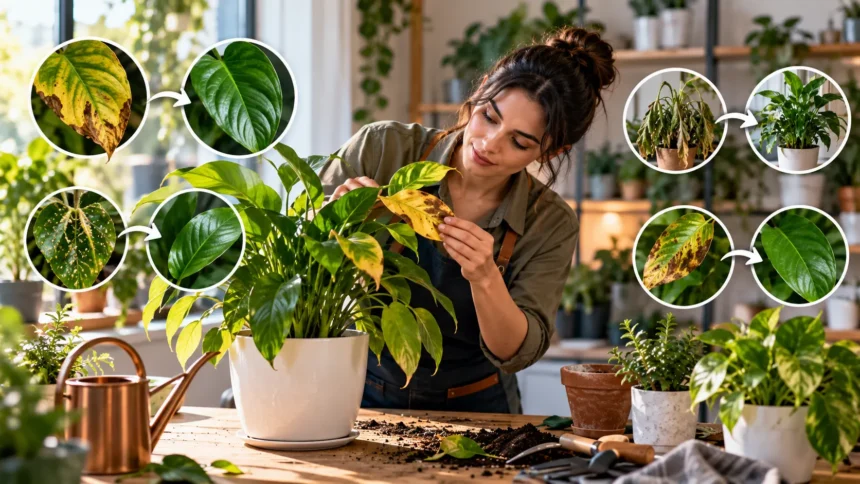
Indoor plants bring natural beauty, freshness, and a relaxing atmosphere into living spaces. However, keeping houseplants healthy can sometimes become challenging, especially when leaves start turning yellow, stems become weak, or growth suddenly slows down. These common indoor plant problems often develop because of watering mistakes, unsuitable lighting, poor drainage, or environmental changes that affect plant health.
Many plant owners assume that unhealthy leaves indicate a serious disease, but the actual cause is often related to everyday care habits. Too much water, insufficient sunlight, dry indoor air, and overcrowded roots can all affect how plants grow. Understanding these warning signs makes it easier to identify potential problems and apply suitable solutions before the damage becomes severe.
Fortunately, most common houseplant problems can be managed by making simple adjustments to plant care routines. This guide explains why indoor plants develop yellow leaves, brown tips, drooping stems, root rot, and other issues. It also shares practical indoor plant care tips to help you create healthier growing conditions and maintain attractive houseplants throughout the year.
Why Do Indoor Plants Develop Problems?
Indoor plants experience problems when their growing environment does not meet their natural requirements. Different houseplants need different amounts of water, sunlight, humidity, and nutrients to remain healthy. When these conditions become unbalanced, plants may respond through leaf discoloration, slower growth, or changes in appearance. Recognizing these early warning signs can help prevent minor problems from becoming more difficult to manage.
Many common houseplant issues result from watering habits that do not match the plant’s needs. Overwatering can limit oxygen around the roots, while underwatering may cause dehydration and wilting. Other factors, including unsuitable potting soil, incorrect lighting, and temperature fluctuations, can produce similar symptoms. This overlap makes it important to investigate several possible causes instead of assuming one explanation.
Indoor environments also change throughout the year as temperatures, sunlight exposure, and heating or cooling systems vary. A plant that grows successfully during summer may require less frequent watering in winter. Similarly, newly purchased plants may need time to adjust to different surroundings. Understanding these environmental influences helps plant owners develop flexible care routines based on actual growing conditions.
Yellow Leaves on Indoor Plants and How to Fix Them
Yellow leaves are among the most common indoor plant problems, and they can develop for several reasons. Excess moisture is a frequent cause because saturated soil prevents roots from receiving enough oxygen. Insufficient light, nutrient imbalances, and natural leaf aging may also contribute. Identifying which leaves are affected and checking soil moisture can provide useful clues about the underlying problem.
When yellowing appears alongside consistently wet soil, examine the container’s drainage and watering schedule. Allow the potting mix to dry to an appropriate depth before watering again, depending on the plant species. If the soil remains waterlogged or smells unpleasant, root damage may already be developing. Healthy roots need both moisture and air to function properly.
Yellowing does not always indicate that a plant is unhealthy. Older leaves naturally change color and fall as new growth develops, especially near the base of certain houseplants. However, widespread yellowing, sudden leaf loss, or soft stems deserve closer attention. Adjusting watering, improving light conditions, and checking root health can help address many common causes.
Brown Leaf Tips and Crispy Edges
Brown leaf tips often appear when indoor plants experience moisture stress or unsuitable growing conditions. Low humidity, inconsistent watering, and mineral buildup from fertilizers or water can contribute to this problem. Some plants, including certain tropical foliage varieties, are particularly sensitive to dry indoor environments. Understanding the plant’s preferences is important before choosing a solution.
Begin by checking whether the potting mix becomes excessively dry between watering sessions. Plants that prefer consistently moderate moisture may develop crispy edges when soil repeatedly dries out. If watering appears appropriate, examine humidity levels and fertilizer use. Excessive fertilizer can leave dissolved salts in the potting mix, potentially damaging sensitive roots and causing leaf discoloration.
Brown tips cannot return to their original green color, but preventing additional damage is often possible. Remove severely damaged portions with clean scissors if desired, avoiding unnecessary cuts into healthy tissue. Maintain suitable watering habits and avoid excessive fertilizer applications. For humidity-loving plants, a properly maintained humidifier or grouping plants together may help create more comfortable growing conditions.
Drooping and Wilting Indoor Plant Leaves
Drooping leaves can make an otherwise healthy houseplant appear weak or lifeless. This problem often occurs when the plant cannot maintain enough water pressure within its tissues. Both dry soil and waterlogged roots can cause wilting, making soil inspection essential. Some species also temporarily droop during environmental changes or when exposed to excessive heat.
If the soil feels unusually dry and the pot is lightweight, the plant may need water. Water thoroughly until excess moisture drains through the container, then allow the pot to drain completely. Avoid leaving the pot standing in collected water. A dehydrated plant may recover its appearance as it absorbs moisture, although recovery depends on its condition.
When drooping occurs despite wet soil, adding more water may worsen the problem. Examine drainage holes, soil texture, and signs of root damage. Soft stems or an unpleasant smell can suggest prolonged waterlogging. Correcting the underlying moisture imbalance is more effective than following a fixed watering schedule without considering the plant’s actual needs.
Overwatering and Root Rot in Houseplants
Overwatering is a common reason indoor plants struggle, particularly when containers lack adequate drainage. Waterlogged potting mix limits oxygen availability around roots and creates conditions that favor root decay. Affected plants may develop yellow leaves, wilting, slow growth, or soft stems. These symptoms sometimes resemble underwatering, which can lead owners to mistakenly add even more water.
To investigate possible root rot, gently remove the plant from its container when symptoms justify inspection. Healthy roots are generally firm, although their natural color varies by species. Rotten roots often feel soft or mushy and may have an unpleasant odor. Removing severely damaged roots with clean tools and replacing waterlogged potting mix may help salvage an affected plant.
Preventing root rot begins with choosing containers that have drainage holes and using appropriate potting soil. Water according to the plant’s needs rather than relying entirely on a calendar. Empty excess water from decorative outer pots and saucers after drainage finishes. These simple habits help maintain a balance between moisture and oxygen around the roots.
Underwatering and Dry Potting Soil
Underwatering occurs when a houseplant does not receive enough moisture to support normal growth. Leaves may become limp, curl inward, or develop dry brown patches. Some plants also drop older leaves to reduce water loss. The severity of symptoms depends on the species, container size, surrounding temperature, and length of time the soil remains dry.
Check soil moisture below the surface rather than judging only by its appearance. If the potting mix is dry beyond the depth appropriate for the species, water thoroughly and allow drainage. Extremely dry peat-based mixes sometimes repel water initially. In such cases, watering slowly in stages can help the soil absorb moisture more evenly.
Preventing underwatering requires understanding how quickly each plant uses moisture. Small pots, warmer rooms, and active growth periods may increase watering needs. However, different species tolerate dry conditions differently, and succulents generally prefer more drying between waterings than moisture-loving tropical plants. Observing soil conditions and leaf responses helps establish a reliable care routine.
Indoor Plants Not Growing or Producing New Leaves
Slow growth can be frustrating when a plant appears healthy but produces few new leaves. Insufficient light is a common reason because plants need energy from photosynthesis to develop new tissues. Limited nutrients, overcrowded roots, and unfavorable temperatures may also restrict growth. Some houseplants naturally grow more slowly than others, even under suitable conditions.
Start by evaluating whether the plant receives enough light for its species. Many popular foliage plants prefer bright, indirect light, while others tolerate lower light levels. A plant placed far from a window may survive without developing much new growth. Gradually moving it toward a brighter location can improve growing conditions without exposing sensitive leaves to sudden intense sunlight.
Growth also slows naturally during periods with shorter daylight hours and cooler temperatures. Avoid automatically increasing fertilizer when a plant is not actively growing. Instead, inspect its roots, soil moisture, and overall appearance. Appropriate light, stable temperatures, and balanced nutrition provide better long-term support than attempting to force rapid growth through excessive feeding.
Brown Spots and Black Marks on Leaves
Brown or black spots can develop from several environmental and biological causes. Direct sunlight may scorch sensitive foliage, while cold exposure can damage leaf tissues. Fungal or bacterial leaf diseases may also produce discolored patches. The appearance, location, and progression of spots can offer useful clues, but symptoms alone may not always identify the exact cause.
Check whether affected leaves receive intense sunlight or touch cold window glass. Sudden exposure to direct afternoon sun can damage plants accustomed to shaded conditions. If spots are spreading, isolate the plant temporarily and inspect nearby foliage. Good air circulation and avoiding unnecessary wetting of leaves may help reduce conditions favorable to certain leaf diseases.
Remove badly affected leaves when appropriate using clean pruning tools. Avoid applying random household chemicals or strong homemade sprays because they can damage plant tissues. If spotting continues, consider obtaining a diagnosis from a knowledgeable nursery or plant specialist. Correct identification helps determine whether the problem requires environmental adjustments, sanitation, or a plant-specific treatment.
Common Indoor Plant Pests and Easy Solutions
Indoor plants can attract pests such as spider mites, mealybugs, scale insects, aphids, and fungus gnats. These organisms may feed on leaves, stems, or roots depending on the species. Warning signs include sticky residue, webbing, distorted growth, or small insects moving around the plant. Early detection makes infestations easier to manage before they spread.
Regularly inspect the undersides of leaves, stem joints, and new growth where pests often gather. Isolate an affected plant from nearby houseplants to reduce the chance of spreading insects. Some pests can be removed with gentle rinsing or careful wiping. For persistent problems, use a treatment specifically labeled for the plant and pest involved, following its instructions.
Fungus gnats often become noticeable when potting soil stays moist for extended periods. Allowing the upper soil layer to dry when appropriate can make the environment less favorable for their development. Sticky monitoring traps may help identify adult insects, but they do not eliminate every life stage. Consistent moisture management and appropriate pest control are important for long-term improvement.
Indoor Plant Leaves Curling or Changing Shape
Curling leaves may indicate water stress, pest activity, temperature problems, or unsuitable humidity. Some plants curl their foliage to reduce moisture loss when environmental conditions become uncomfortable. Others develop distorted new leaves after insect feeding or irregular growth. Because many factors can produce similar symptoms, careful observation is necessary before changing the care routine.
Begin by checking soil moisture and examining the plant for visible pests. Look beneath leaves and around growing tips for insects, webbing, or sticky deposits. Also consider whether the plant sits near heating vents, air conditioners, or drafty windows. Sudden temperature changes can affect sensitive foliage, particularly tropical species accustomed to more stable growing environments.
Correcting the cause may help future leaves grow normally, although existing damage is not always reversible. Maintain consistent growing conditions and avoid making several major changes simultaneously. When possible, adjust one suspected factor and observe the response. This approach makes it easier to determine which conditions are affecting the plant and whether additional attention is required.
White Mold on Indoor Plant Soil
A white, fuzzy layer on potting soil can develop when fungi grow on organic material near the surface. It often appears in containers where moisture remains high and air circulation is limited. Many surface fungi feed on decaying organic matter rather than directly attacking healthy plants. However, persistent dampness may indicate watering conditions that deserve attention.
First, inspect the soil to determine whether the white material is fuzzy growth or a crusty mineral deposit. Surface mold can sometimes be removed by carefully replacing the affected upper layer of potting mix. Improving airflow and adjusting watering habits may reduce its return. Avoid keeping soil constantly saturated unless the particular plant requires consistently moist conditions.
White surface growth does not automatically mean that the roots are rotting. Nevertheless, yellowing leaves, wilting, or unpleasant odors may indicate additional problems below the soil. Check drainage and overall plant health before deciding whether repotting is necessary. Maintaining appropriate moisture levels helps create healthier conditions for both roots and beneficial soil organisms.
Leggy Indoor Plants and Weak Stems
Leggy growth occurs when plants develop unusually long stems with widely spaced leaves. This often happens when they receive insufficient light and stretch toward a brighter source. The resulting growth may appear thin, uneven, or less compact than normal. Some houseplants naturally have trailing stems, so understanding their typical growth habit is important.
Improving light exposure is usually the first step when inadequate sunlight causes stretching. Move the plant gradually toward a brighter location that matches its species requirements. Rotating the container periodically can also encourage more balanced growth when light arrives mainly from one direction. Avoid placing shade-adapted plants directly in intense sunlight without allowing time for adjustment.
Pruning may help some species produce fuller growth, although not every houseplant responds in the same way. Cut stems only when the plant is healthy enough and the species tolerates pruning. Existing stretched sections generally do not shorten naturally. Better light conditions help encourage more compact future growth while supporting stronger overall plant development.
How to Prevent Common Indoor Plant Problems
Preventing houseplant problems begins with understanding the requirements of each species. Choose plants that match the lighting, temperature, and humidity conditions available in your home. A sunny windowsill may suit certain succulents, while many tropical foliage plants prefer filtered light. Matching plants to their environment reduces the need for frequent corrective care.
Develop a watering routine based on soil moisture rather than fixed weekly instructions. Inspect containers regularly, check drainage, and consider seasonal changes in plant growth. Clean leaves gently when dust accumulates because heavy dust can reduce the light reaching their surfaces. Consistent observation also makes it easier to recognize pests, discoloration, and unusual growth patterns early.
Avoid making unnecessary changes when a plant appears healthy. Frequent repotting, excessive fertilization, and constantly moving plants between locations can introduce avoidable stress. Instead, maintain stable conditions and respond to clear signs of changing needs. With appropriate care and patience, many indoor plants can remain attractive and healthy for years.
Conclusion
Common indoor plant problems such as yellow leaves, brown tips, drooping foliage, root rot, and slow growth often develop because of unsuitable growing conditions. Watering mistakes, inadequate sunlight, poor drainage, and environmental stress can affect houseplant health. Recognizing these symptoms early makes it easier to investigate potential causes and choose suitable corrective measures.
Healthy indoor plants depend on balanced moisture, appropriate light, suitable soil, and consistent care. Different species have different requirements, so a method that works for one houseplant may not suit another. Regular inspections and thoughtful adjustments are more effective than reacting to every unusual leaf with additional water, fertilizer, or drastic changes.
Keeping houseplants healthy does not require complicated equipment or expert gardening knowledge. Understanding basic plant care principles and observing how plants respond to their environment can prevent many common problems. With patience and suitable growing conditions, you can create a thriving indoor garden that adds natural beauty to your home throughout the year.
Frequently Asked Questions
Why are my indoor plant leaves turning yellow?
Yellow leaves may result from overwatering, insufficient light, nutrient problems, or natural aging. Check soil moisture, drainage, and recent environmental changes before adjusting your plant care routine.
How do I fix an overwatered indoor plant?
Allow the potting mix to dry appropriately and ensure excess water can drain away. If root rot is suspected, inspect the roots and replace waterlogged soil when necessary.
Why do indoor plants get brown leaf tips?
Brown leaf tips commonly develop because of dry air, inconsistent watering, or excess mineral salts. Identifying the cause and improving growing conditions can help prevent additional damage.
How often should I water indoor plants?
Watering frequency depends on plant species, pot size, soil type, temperature, and light exposure. Check the potting mix regularly and water when it reaches the appropriate dryness for your plant.
Can indoor plants recover from root rot?
Some plants can recover when enough healthy roots remain and the underlying moisture problem is corrected. Remove severely damaged roots when appropriate, improve drainage, and monitor recovery carefully.