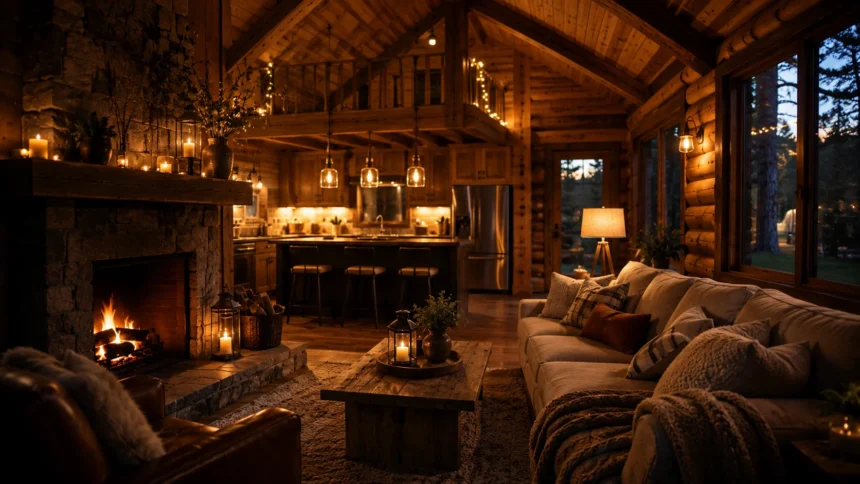
Cabin Lighting Ideas to Create a Warm, Cozy Retreat
Cabin interiors are naturally associated with comfort, warmth, and escape, but lighting plays a much bigger role in creating that atmosphere than many people realize. Even a beautifully designed cabin can feel cold or flat if the lighting is too harsh, too bright, or poorly distributed. The best cabin lighting ideas combine practical illumination with soft ambient light, natural materials, and warm color temperatures that make wood, stone, textiles, and architectural details feel richer. Instead of relying on one strong ceiling fixture, successful cabin lighting usually comes from several smaller light sources placed around the room. This layered approach creates depth and makes the space feel intimate after sunset.
Lighting should also respond to how the cabin is actually used. A weekend retreat needs enough light for cooking, reading, relaxing, and moving safely through darker hallways, while a full-time cabin home may need more flexible task lighting for everyday routines. Rustic design does not mean sacrificing comfort or visibility. Modern LEDs, dimmers, smart controls, and discreet under-cabinet lighting can work beautifully alongside timber beams, iron fixtures, vintage-style lanterns, and woven shades. The goal is to make technology disappear into the overall atmosphere. When the light feels warm, controlled, and thoughtfully placed, the cabin becomes a true retreat rather than simply a rustic building.
Why Lighting Matters So Much in a Cabin
Cabins often contain a high proportion of dark natural materials, including timber walls, exposed beams, stone fireplaces, and deep-toned flooring. These finishes absorb more light than pale painted surfaces, which means a lighting plan that works in a bright suburban home may feel inadequate in a cabin. Simply increasing bulb wattage is not always the best solution because one powerful source can create glare while leaving the rest of the room in shadow. Multiple light sources spread around the space produce a softer and more balanced effect. This is especially important in rooms with high ceilings, lofts, or heavy architectural features that create deep areas of shade.
Warm light enhances the natural tones commonly found in cabin interiors. Timber tends to look richer under warm illumination, while stone appears softer and less severe. Cooler light can make rustic rooms feel unexpectedly clinical, especially at night. For this reason, warm-white bulbs are usually a strong choice for living spaces, bedrooms, and dining areas. The exact color temperature can vary by room, but the overall goal is to create a gentle golden tone rather than a blue or stark white appearance.
Lighting also affects the perceived size of a cabin. Small cabins can feel cramped if every corner is dark, while very large cabins can feel empty if light is concentrated only in the center. Wall lights, lamps, and accent lighting can visually expand smaller rooms by illuminating vertical surfaces. In bigger spaces, pools of light help divide open-plan areas into more intimate zones. A pendant above a dining table, table lamps beside a sofa, and a floor lamp near a reading chair can make one large room feel like several comfortable destinations.
Another reason lighting matters is the transition between day and night. Cabins often receive beautiful natural light during the day, particularly when they have large windows overlooking forests, mountains, or lakes. After sunset, however, those same windows become dark reflective surfaces and the room can suddenly feel exposed or cavernous. Layered interior lighting helps maintain warmth and focus when the outdoor view disappears. Lighting near windows can also prevent the glass from feeling like a dark void.
Finally, good lighting supports safety without reducing atmosphere. Stairs, loft ladders, entryways, kitchen worktops, and outdoor paths all need enough illumination to use comfortably. The trick is to provide practical light without flooding every surface. Low-level stair lights, concealed LEDs, shielded sconces, and directional fixtures can provide visibility while preserving the cozy mood. Cabin lighting works best when function and atmosphere are designed together rather than treated as separate concerns.
Start With Layered Lighting for a Cozy Cabin
The foundation of good cabin lighting design is layering. Most rooms benefit from at least three types of light: ambient lighting for overall visibility, task lighting for specific activities, and accent lighting for atmosphere or architectural features. Relying only on ambient ceiling lights can make a room look flat and overly bright. Task and accent sources allow you to use less general illumination while still making the space practical. This creates the soft contrast that people often associate with cozy cabins.
Ambient light might come from a central chandelier, pendant, recessed lights, or several ceiling fixtures. In a cabin with exposed beams, hanging fixtures can work particularly well because they draw attention to the architecture. However, a central fixture should not be expected to illuminate every corner perfectly. Think of it as the base layer rather than the entire lighting plan. Using dimmers allows the ambient level to be reduced in the evening while smaller lamps take over.
Task lighting should be positioned where specific activities occur. Kitchen worktops need brighter directed light, reading chairs benefit from floor or table lamps, and bathroom mirrors require even illumination around the face. In a cabin office or writing corner, a focused desk lamp may be more useful than increasing the brightness of the whole room. Task lights can still look rustic, using finishes such as aged brass, black metal, ceramic, or natural wood. Function does not require visually modern fixtures if that does not suit the interior.
Accent lighting creates the mood. A small lamp on a console table, concealed lighting behind a beam, uplighting near a stone wall, or picture lights over artwork can give the room depth after dark. Accent light should usually be softer than task lighting. Its purpose is to make surfaces, textures, and architectural details more interesting rather than provide primary illumination. In a cabin, this can be especially effective because rough timber and stone cast attractive shadows.
The most inviting rooms allow different combinations of these layers. During cleaning or cooking, you may use nearly everything. During dinner, the ceiling fixture might be dimmed while the pendant and wall lights remain on. Later in the evening, only lamps and the fireplace area may be illuminated. Flexibility is what makes the lighting feel responsive and comfortable rather than fixed.
Best Warm Light Bulbs for a Cabin Atmosphere
Color temperature is one of the most important decisions in creating a cozy cabin. For most living rooms, bedrooms, and dining spaces, bulbs around 2200K to 3000K usually create the warmest and most comfortable effect. Lower values appear more amber, while higher values gradually become whiter. A 2700K bulb is a popular middle ground because it feels warm without making every surface overly yellow. In particularly rustic rooms, 2200K or 2400K decorative bulbs can create a candle-like atmosphere.
Kitchen work areas may benefit from slightly clearer light, especially when preparing food. Bulbs around 3000K can provide better visibility while still feeling warm enough to coordinate with surrounding timber. You do not need to use exactly the same color temperature in every part of the cabin, but extreme differences between adjacent spaces can look awkward. Keeping the overall range relatively consistent creates a more cohesive atmosphere. For example, 2700K in the living area and 3000K under kitchen cabinets can work comfortably together.
Color rendering is also worth considering. Bulbs with a high Color Rendering Index, commonly called CRI, reproduce the colors of wood, food, fabrics, and artwork more naturally. A high-CRI bulb can make timber grain and warm textiles appear richer than a lower-quality light source with the same color temperature. This is especially useful in cabins where natural materials are central to the design. Choosing better-quality bulbs can therefore improve the room even when the fixtures remain unchanged.
Dimmable bulbs provide another major advantage. A light level that feels appropriate at 6 p.m. may feel too bright at 10 p.m. Dimmers allow the same fixture to shift from functional to atmospheric use. When selecting LED bulbs, make sure both the bulb and dimmer are compatible because mismatched components can cause buzzing, flickering, or poor dimming performance. Warm-dim LEDs are particularly attractive because they become more amber as they are dimmed.
Avoid very cool daylight bulbs in primary relaxation areas unless there is a specific reason for using them. Bulbs around 4000K to 5000K can be useful in garages, utility spaces, or certain work areas, but they often clash with the cozy character of a timber cabin. Cool light emphasizes contrast and can make warm wood look dull or gray. For a retreat-like atmosphere, warmer light is generally easier to live with after dark.
Rustic Cabin Living Room Lighting Ideas
The living room is usually the emotional center of a cabin, so the lighting should feel comfortable from several seating positions. A statement chandelier or pendant can create a strong focal point, particularly when the room has a vaulted ceiling. Black iron, aged bronze, antler-inspired shapes, timber frames, or simple oversized lanterns can all work depending on the cabin style. The fixture should feel proportionate to the room rather than disappearing into the ceiling. In a tall space, hanging it lower can make the room feel more intimate.
Table lamps are essential for softening the living room. Place them beside sofas, on side tables, or on consoles where they can create smaller pools of warm light. Fabric shades, parchment, woven materials, or softly colored glass can diffuse the light attractively. Avoid using only exposed bulbs throughout the room because too many visible light sources can create glare. A few exposed decorative bulbs are effective, but shaded fixtures are usually more comfortable near eye level.
Floor lamps can help where side tables are limited. A reading lamp beside a chair or sectional provides useful task light without requiring another piece of furniture. Choose designs with adjustable heads if the lamp will be used for books or crafts. For atmosphere, an uplighter can wash light across a timber wall or ceiling, emphasizing natural texture. This is particularly effective in rooms with rough sawn wood or exposed beams.
Fireplaces naturally attract attention, and lighting can reinforce that focal point. Small wall sconces on either side of a stone fireplace can make the wall feel balanced even when no fire is burning. Directional uplights at floor level can reveal the texture of stacked stone, while a picture light can highlight artwork above the mantel. Keep these sources subtle so they support rather than compete with the fire. During evenings when the fireplace is active, dimming nearby lights can strengthen the effect.
Avoid placing every light source in the center of the room. Corners that remain completely dark can make the space feel smaller and less welcoming. A small lamp near a bookshelf, plant, or window can create visual depth without greatly increasing brightness. When all these layers are combined, the living room feels warm from every direction rather than brightly lit from one point.
Cozy Cabin Bedroom Lighting Ideas
Bedrooms should have some of the softest lighting in the cabin. A bright ceiling fixture may be useful when cleaning or packing, but it should not be the only source available at night. Bedside lamps or wall-mounted reading sconces make the room feel calmer and provide practical light without illuminating everything. Mounting sconces can also free up bedside-table space, which is particularly useful in compact cabins. Adjustable versions allow the light to be directed toward a book without shining into the other side of the bed.
Warm color temperature is especially important in sleeping areas. Bulbs around 2200K to 2700K create a gentle evening atmosphere and complement timber walls beautifully. Avoid overly bright cool-white bulbs close to bedtime because they can make the room feel more active than restful. Dimmer controls or smart bulbs can make the transition into evening much more comfortable. Even simple plug-in lamps with low-output bulbs can improve the mood dramatically.
A small pendant on either side of the bed can be an attractive alternative to table lamps. This works particularly well in a modern cabin where clean lines are balanced with rustic materials. Choose pendants with opaque or softly diffusing shades so the light does not shine directly into the eyes. Hanging height should allow easy use without blocking access to the bed. Matching pendants create symmetry, while different fixtures can work in a more eclectic cabin.
Accent lighting can highlight architectural details without making the room too bright. Concealed LED strips above beams, behind headboards, or under built-in shelves can create a subtle glow. Low-level lighting beneath the bed can also help with nighttime movement, especially when controlled by a motion sensor. The light should remain warm and dim enough that it does not disturb sleep. This is an example of modern technology working quietly within a rustic setting.
If the bedroom has a reading chair or window seat, give that area its own lamp. Creating a separate pool of light makes the room feel larger and provides a place to relax before bed. A warm floor lamp beside a chair can transform an unused corner into one of the most inviting areas of the cabin. Small details like this often have more impact than installing a dramatic central fixture.
Cabin Kitchen Lighting Ideas That Feel Warm and Practical
Cabin kitchens need a stronger balance between atmosphere and visibility than most other rooms. Food preparation requires clear task light, while dining and evening use benefit from warmer, softer lighting. Under-cabinet lighting is one of the most practical additions because it illuminates worktops without filling the entire room with brightness. Warm-white LED strips or linear fixtures can remain nearly invisible while dramatically improving usability. Position them toward the front of cabinets so the work surface is evenly lit.
Pendant lights over an island or breakfast bar can become a major design feature. Metal lanterns, milk-glass shades, woven pendants, ceramic fittings, or simple black fixtures can all complement a cabin kitchen. Choose a size appropriate to the island and space multiple fixtures evenly where necessary. The lower position of pendant lights creates a more intimate feeling than relying entirely on recessed ceiling lights. Dimming them makes the kitchen easier to transition from cooking zone to evening gathering space.
Recessed lights can be useful, especially in low-ceiling cabins where hanging fixtures would obstruct movement. The problem occurs when too many are installed in a rigid grid, making the ceiling feel commercial. Use recessed lighting strategically above work areas or circulation zones rather than treating the entire ceiling like an office. Warm color temperature and dimmer controls can help soften them further. Combining recessed lights with decorative pendants and under-cabinet lighting gives better depth.
Open shelves provide another opportunity for subtle accent light. Small concealed fixtures can illuminate ceramics, glassware, or decorative objects, adding depth after the main kitchen lights are dimmed. This is particularly attractive against stone or timber walls. Avoid making every shelf glow equally, which can look overly designed. One or two highlighted areas usually feel more natural.
If the kitchen flows directly into the living room, keep the lighting styles related. The fixtures do not have to match exactly, but similar finishes or color temperatures help the areas feel connected. For example, black metal kitchen pendants can coordinate with black wall sconces in the living room. The transition should feel gradual rather than like two different lighting schemes placed side by side.
Cabin Dining Room Lighting Ideas
The dining table is one of the best locations for a low-hanging decorative fixture. A pendant or chandelier centered over the table creates a visual anchor and makes meals feel more intimate. In cabins, this fixture can be rustic, modern, or somewhere in between. Iron frames, timber details, glass lanterns, woven shades, and simple metal domes all work depending on the room. The fixture should illuminate the table without shining harshly into diners’ eyes.
Dimming is especially useful in dining spaces. Brighter light is helpful for breakfast, games, or working at the table, while lower levels feel more appropriate for dinner. A dimmable fixture allows one dining area to support all these uses. Warm-dim bulbs can make the atmosphere even richer as the brightness is reduced. This small feature can make the room feel far more sophisticated.
Candles can complement electric lighting beautifully. They should not be the only source in a practical dining room, but they add movement and warmth that electric fixtures cannot fully replicate. Place them safely away from low shades, foliage, and other combustible materials. Flameless LED candles can create a similar visual effect where open flames are impractical. Their usefulness is particularly noticeable in rental cabins or homes with children.
Wall sconces can reduce the contrast between a bright table and dark walls. Place them on sideboards, around artwork, or along nearby timber walls to create gentle peripheral illumination. This keeps the dining area from feeling like a spotlight surrounded by darkness. Sconces with fabric, frosted glass, or shielded shades provide a softer result than exposed bulbs.
If the dining room contains a large window, consider how the space looks after dark. A pendant reflected in the glass can become visually dominant, so avoid excessively bright exposed bulbs directly opposite windows. Lowering the fixture brightness and adding wall lights can help balance reflections. Curtains or shades also change the evening atmosphere significantly by replacing black glass with a softer surface.
Cabin Bathroom Lighting Ideas
Bathrooms require brighter practical light, but they can still feel warm and cabin-like. The most important area is around the mirror, where even illumination helps with grooming and reduces harsh shadows. Wall sconces placed on either side of the mirror are often more flattering than one fixture directly overhead. If side mounting is not possible, a broad diffused light above the mirror can still work. Warm-white bulbs around 2700K to 3000K usually provide a comfortable balance between clarity and atmosphere.
Overhead lighting should provide enough visibility for cleaning and safe movement. Recessed fixtures can work well in bathrooms because they are discreet and resist visual clutter. In wet zones such as showers, use fixtures specifically rated for that location. Safety ratings matter more than decorative style when electricity and moisture are involved. A qualified electrician can ensure the installation meets local requirements.
Accent lighting can make a small cabin bathroom feel more luxurious. LED strips beneath a vanity or behind a mirror create a soft nighttime glow and help with navigation without activating bright overhead lights. This is particularly useful in a cabin where people may wake during the night. Motion sensors can make the feature even more convenient. Keep the light warm so it does not feel clinical.
Natural materials in bathrooms look especially good under warm, high-quality lighting. Stone, timber vanities, brass fittings, and textured tile can appear much richer than they do under cheap cool-white LEDs. High-CRI bulbs help preserve the natural color of these materials. Lighting should reveal texture rather than flatten it.
If the cabin uses a freestanding bath, a pendant or chandelier can create drama, but electrical safety distances must be respected. Do not place decorative fixtures in unsafe wet-zone positions simply because they look attractive in photographs. Local electrical codes determine what is acceptable. Where hanging fixtures are impractical, wall sconces or concealed lighting can create the same sense of luxury more safely.
Cabin Entryway and Hallway Lighting Ideas
The entryway sets the tone for the entire cabin, so it should feel warm immediately rather than brightly utilitarian. A lantern-style pendant can work beautifully in a timber entry, particularly if the ceiling has enough height. In a smaller cabin, a compact semi-flush fixture may be more practical. The light should make it easy to remove coats and shoes while still preserving the welcoming atmosphere. A dimmer can help if the fixture feels too strong at night.
Wall sconces are especially useful in narrow hallways. They illuminate the vertical surfaces rather than only the floor, making the passage feel wider. Fixtures with upward and downward light can create attractive patterns on timber walls. Keep projections relatively shallow in tight areas so people do not bump into them. Repeating the same sconce at intervals creates rhythm without requiring excessive brightness.
Artwork, hooks, and small console tables can also be highlighted. A small picture light above a landscape painting or a table lamp near the entrance can add personality. These sources help the hallway feel like part of the home rather than simply a route between rooms. A soft lamp left on in the evening can also make arrivals feel more welcoming.
Stairs deserve particular attention because they combine atmosphere and safety. Low-level step lights or wall lights installed near tread height can provide visibility without flooding the stairwell. Motion sensors are helpful if the staircase connects sleeping areas and living spaces. The light should turn on gently and remain warm. Very bright automatic lights can be unpleasant during nighttime use.
At the exterior side of the entrance, coordinate fixtures with the interior where possible. A warm lantern outside and similar finishes inside create a seamless transition. The exterior fixture should provide enough light to see keys, steps, and door hardware without creating glare. Shielded lights are usually more comfortable than exposed bright bulbs pointed outward.
Cabin Porch and Outdoor Lighting Ideas
Outdoor cabin lighting should help people move safely without destroying the darkness that makes rural settings attractive. Excessive floodlighting can eliminate the view of stars, disturb wildlife, and make the property feel more like a parking area than a retreat. Use smaller shielded fixtures around doors, steps, pathways, and seating areas. Warm light between roughly 2200K and 2700K generally feels more natural outdoors than cool-white light. Directing illumination downward also reduces glare.
Porch lanterns are a classic choice. Black metal, aged bronze, copper, or weathered finishes complement timber siding and stone. Wall-mounted lanterns on either side of a door create symmetry, while one larger fixture can work where space is limited. Make sure the fixture is rated for exterior conditions. Damp- and wet-location ratings depend on how exposed the porch is.
String lights can make covered decks and porches feel especially welcoming. Choose warm, low-output bulbs rather than extremely bright commercial-style strands. Running lights along beams or above a dining area defines the space without requiring strong overhead fixtures. Keep cables securely installed and use products rated for outdoor use. The goal is atmosphere, not maximum brightness.
Path lighting should reveal changes in level and direction without turning the garden into a runway. Low bollards, recessed step lights, and shielded ground fixtures can mark routes effectively. Solar lights are convenient, but quality varies and many produce cool or uneven illumination. Hardwired low-voltage systems usually provide more consistent results when a permanent installation is desired.
Fire pits and outdoor fireplaces often provide much of the atmosphere naturally. Supplement them with subtle nearby lighting rather than strong overhead sources. Small lights near seating or steps are usually enough. Too much surrounding illumination reduces the visual effect of the fire. Good outdoor lighting allows darkness to remain part of the design.
Use Wall Sconces to Highlight Timber and Stone
Wall sconces are particularly effective in cabins because they illuminate architectural surfaces rather than only the center of a room. Timber walls gain depth when light grazes across the grain, revealing texture and natural variation. Stone walls become more dramatic when shadows form around their irregular surfaces. This makes sconces one of the easiest ways to make an ordinary wall feel intentional after dark. They also help avoid the flat look created by a single ceiling fixture.
Up-and-down sconces create graphic light patterns and can suit modern cabins particularly well. Traditional shaded sconces feel softer and work beautifully in classic rustic interiors. Candle-style fixtures can add historic character, although exposed bulbs should be dim enough to remain comfortable. Choose the style according to the architecture rather than automatically selecting the most rustic option available.
Placement height affects the result. Fixtures installed too high may illuminate mainly the ceiling, while those mounted too low can create glare at eye level. The appropriate height depends on the fixture design and wall proportions. In seating areas, test the visual line from sofas and chairs before finalizing placement. A professional electrician or designer can help when several sconces need to align across a room.
Sconces can also flank focal points. Use them beside a fireplace, mirror, artwork, bed, or console table to create symmetry. In a cabin with a large stone fireplace, two simple metal sconces can provide enough visual structure that additional decoration is unnecessary. Their effect continues during daylight because the fixtures themselves become part of the architecture.
Dimmers make wall lights even more useful. A bright level can support general activity, while a low setting turns them into accent lights. If the cabin has many hardwired fixtures, grouping sconces on separate circuits from overhead lights provides greater control. The more independently the layers can be adjusted, the easier it becomes to create a cozy atmosphere.
Pendant and Chandelier Ideas for High Cabin Ceilings
Vaulted ceilings are one of the most dramatic features found in cabins, but they can make lighting difficult. A small fixture mounted too close to the ceiling may look lost and provide little useful light. Oversized pendants or chandeliers can fill the vertical space and visually bring the ceiling lower. This makes the room feel more intimate despite its height. The fixture should relate to the scale of the room, fireplace, and furniture below.
Timber-frame chandeliers work naturally in traditional cabins, while simple black metal rings can create a more contemporary interpretation. Lantern clusters, branching fixtures, and large woven shades can also work well. Avoid choosing a fixture based only on its diameter; vertical depth matters too. A chandelier that extends downward several feet may look more appropriate in a tall room than a wide fixture with little height.
Suspension height should balance drama with sightlines. A chandelier over an open living area should not block important views or feel uncomfortably close to people below. Over a dining table, it can hang lower because nobody walks beneath it. In an entry or stairwell, clearance becomes more important. Scale drawings or temporary cardboard mockups can help before installation.
Maintenance is worth considering. A beautiful fixture installed very high above a vaulted ceiling can become frustrating if bulbs frequently need replacement or dusting is difficult. Long-life LEDs reduce maintenance, and fixtures with accessible lamps are preferable where possible. Motorized lowering systems exist for very large chandeliers but add cost. Practicality matters even in highly decorative spaces.
High ceilings also benefit from uplighting. Floor-mounted fixtures or concealed lights aimed toward beams can reduce darkness above eye level. This is particularly useful when the main pendant focuses light downward. Illuminating both the lower room and ceiling architecture gives the entire volume a warmer appearance. Without uplighting, very tall timber ceilings can disappear into darkness at night.
Small Cabin Lighting Ideas to Make Rooms Feel Bigger
Small cabins need careful lighting because oversized fixtures and dark corners can quickly make rooms feel cramped. One useful strategy is to illuminate walls rather than concentrating all light at the center. Wall sconces, table lamps, and concealed shelf lights expand the visual boundaries of the room. When vertical surfaces remain visible after dark, the space feels more open. A single central light can have the opposite effect by leaving the perimeter in shadow.
Choose fixtures that fit the scale of the room. Large chandeliers may overpower a small cabin unless the ceiling is unusually high. Compact pendants, flush fixtures, and slim wall lights provide character without consuming visual space. Transparent glass shades can also feel lighter than large opaque fixtures. However, completely transparent exposed bulbs can create glare, so choose lower-output lamps or frosted glass when necessary.
Mirrors can amplify light effectively. Positioning a mirror opposite a window or near a lamp reflects both daylight and evening illumination. This works especially well in narrow hallways, small dining areas, and bedrooms. The mirror should reflect something attractive rather than clutter. Combining reflected light with pale textiles can make dark timber interiors feel much more balanced.
Furniture placement affects lighting too. A sofa pushed tightly against every wall may leave no room for lamps, forcing greater dependence on ceiling fixtures. Even one small side table or wall-mounted lamp can introduce another light layer. In very small spaces, plug-in sconces provide the effect of hardwired lighting without taking up surface area. Cable management keeps the result neat.
Avoid over-lighting a small cabin. Extremely bright rooms can make every object and boundary more obvious, which sometimes emphasizes limited size. Softer pools of light create depth and give the eye different areas to focus on. The goal is not to illuminate every square inch equally. Controlled contrast often makes small rooms feel more sophisticated and comfortable.
Modern Cabin Lighting Ideas Without Losing Warmth
Modern cabins often combine large windows, dark metal, concrete, and clean-lined furniture with traditional timber and stone. Lighting can help connect these materials. Minimal black pendants, slim linear fixtures, and discreet recessed lights look contemporary while warm bulbs preserve the cozy atmosphere. The fixture shape can be modern even when the light itself feels traditional. This balance prevents the interior from becoming either overly rustic or too industrial.
Linear pendants work particularly well above kitchen islands and long dining tables. Their horizontal shape echoes modern architecture and can provide even illumination. Choose a warm finish such as aged brass or dark bronze if pure black feels too severe. Timber details can also soften minimalist designs. A simple fixture does not have to look cold.
Concealed lighting is another strong modern-cabin technique. LED strips hidden beneath shelves, stairs, benches, or architectural ledges provide light without visible fixtures. This keeps the room visually clean while highlighting texture. Warm color temperature is essential; cool concealed lighting can quickly make a cabin feel commercial. Dimming adds another layer of control.
Modern smart controls can improve comfort without changing the visual style. Preset scenes can switch the cabin from “cooking” to “dinner” to “evening” using several lighting circuits at once. Smart bulbs can also adjust brightness and, in some cases, color temperature. The technology should simplify use rather than become a distraction. Physical wall controls should remain intuitive for guests.
The best modern cabin lighting respects the architecture. If exposed beams are beautiful, light them. If large windows frame a landscape, avoid placing bright fixtures where reflections interfere with the view. If stone walls are a focal point, use grazing light to emphasize them. Modern design works best when lighting reveals materials rather than competing with them.
Budget-Friendly Cabin Lighting Ideas
Creating cozy cabin lighting does not require replacing every fixture. Changing bulbs can produce one of the biggest improvements for the least money. Swap cool-white bulbs for warm 2700K versions and choose lower lumen levels where fixtures currently feel harsh. If compatible, adding plug-in or wall dimmers can provide even greater flexibility. This simple change can transform the atmosphere immediately.
Table lamps are another affordable solution. Thrifted ceramic, timber, brass, or metal lamps can work beautifully in rustic interiors when paired with new shades and quality bulbs. Lamps do not need to match perfectly. A slightly collected look often suits cabins better than a fully coordinated showroom set. Focus on similar warmth and proportion rather than identical designs.
Plug-in wall sconces can add layered lighting without requiring new electrical wiring. These are useful beside beds, reading chairs, or in narrow hallways. Many designs now resemble hardwired fixtures once the cable is neatly secured. This can be particularly useful in rental cabins or weekend properties where major renovation is not practical. Choose versions with accessible switches for convenience.
Battery-operated picture lights and rechargeable lamps offer another flexible option. Rechargeable table lamps can be placed on shelves, dining tables, or porch areas without visible cords. They are especially useful where electrical outlets are limited. Battery life and brightness vary, so these lights are best used as accent sources rather than primary illumination. Warm settings generally look most natural.
Finally, move existing lamps before buying more. A lamp that contributes little in one location may completely change a dark corner elsewhere. Experiment with height, shade direction, and wall reflections. Sometimes the problem is distribution rather than total light quantity. A thoughtful rearrangement can improve the room without spending anything.
Common Cabin Lighting Mistakes to Avoid
One of the most common mistakes is relying entirely on one bright overhead fixture. This creates harsh shadows and leaves the room feeling flat. Even attractive chandeliers are more effective when supported by lamps, sconces, or accent lighting. Think of overhead light as only one layer. A cabin should offer multiple sources that can be used independently.
Using bulbs that are too cool is another frequent problem. Bright blue-white light can make natural timber feel dull and remove the warmth people expect from cabin interiors. Unless the room has a specific functional need for cool illumination, stay within warmer color temperatures. Kitchen task lighting can be slightly brighter without shifting into a clinical appearance. Consistency matters.
Another mistake is choosing decorative fixtures without considering light output. A beautiful woven shade may block too much light in a kitchen, while an exposed industrial bulb can cause uncomfortable glare in a bedroom. The fixture must support the activity happening below it. Decorative appearance and functional performance should be evaluated together. This is especially important in rooms used for several purposes.
Outdoor over-lighting is also common. Powerful floodlights aimed across the property can destroy nighttime atmosphere and create glare. Use targeted light where people need to walk or gather instead. Shield fixtures so they point downward and choose warm bulbs. Darkness is part of the cabin experience and does not need to be eliminated completely.
Finally, avoid ignoring controls. Even the best fixtures can feel uncomfortable if they operate only at full brightness. Dimmers, separate switches, motion sensors, and smart scenes make lighting far more adaptable. Spending slightly less on decorative fixtures and more on good controls can produce a better everyday experience. Cozy lighting depends as much on adjustability as appearance.
The Bottom Line on Cabin Lighting Ideas
The best cabin lighting ideas begin with warmth, layering, and flexibility. Instead of relying on one ceiling light, combine ambient, task, and accent sources throughout the room. This creates a comfortable mix of brighter areas and softer shadows that works beautifully with timber, stone, textiles, and natural finishes. Lamps, wall sconces, pendants, and concealed lighting each contribute something different. Together, they make the cabin feel welcoming rather than simply illuminated.
Warm color temperature is one of the easiest ways to improve the atmosphere. Bulbs around 2200K to 3000K generally suit living rooms, bedrooms, dining spaces, and decorative fixtures. Kitchen and bathroom task areas may use slightly clearer light while remaining warm overall. High-CRI bulbs can make wood and natural materials look richer. Dimmers make the same fixture useful at different times of day.
Each room should be lit according to how it is used. Living rooms need several comfortable pools of light, bedrooms need soft bedside illumination, kitchens require focused task lighting, and hallways need safe low-level visibility. Porches and paths should remain functional without overwhelming the darkness outside. A successful plan feels natural because each fixture has a reason to be there.
Style can range from traditional rustic to completely modern. Lanterns, iron chandeliers, timber frames, woven shades, minimal black pendants, and concealed LEDs can all belong in a cabin when they support the architecture. The common element should be warmth rather than one specific decorative theme. Mixing old and new often produces the most interesting result.
Ultimately, cozy cabin lighting is about making the space feel comfortable after the daylight disappears. Highlight timber and stone, keep glare under control, preserve areas of shadow, and give yourself several lighting combinations for different activities. You do not need enormous fixtures or an expensive renovation to create a warm retreat. Thoughtful placement, warm bulbs, and layered light can transform even a simple cabin into a space that feels calm, intimate, and inviting.
Frequently Asked Questions
What is the best color temperature for cabin lighting?
For most cabin living spaces, bulbs around 2200K to 3000K create a warm and cozy appearance. Around 2700K is a versatile choice for living rooms, bedrooms, and dining areas.
How do I make cabin lighting feel cozy?
Use multiple low- to medium-level light sources instead of one bright ceiling light. Combine lamps, sconces, pendants, accent lighting, warm bulbs, and dimmers to create layers.
What lighting works best with wood walls?
Warm wall sconces, shaded lamps, and grazing accent lights work especially well with timber because they reveal the grain and texture. High-CRI warm LEDs can also make the natural color of wood appear richer.
Should cabin kitchens use warm or cool lighting?
Warm-white light around 2700K to 3000K usually works best. Use the clearer end of that range for worktops and food preparation while keeping dining and ambient lighting softer.
Are recessed lights good for a cabin?
Yes, when used selectively. Recessed lights can provide practical illumination, but they look best when combined with decorative pendants, lamps, sconces, and warm dimming rather than covering the entire ceiling in a bright grid.