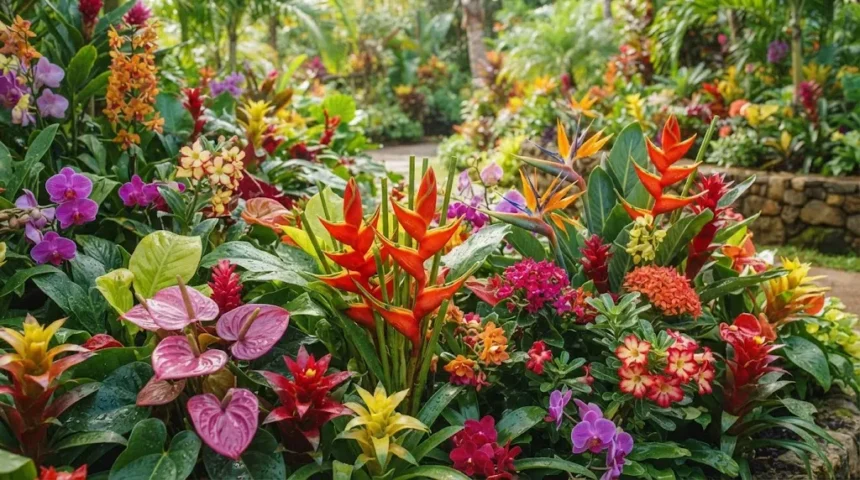
20 Tropical Flowers That Bring Bold Color to Your Garden
Tropical flowers can completely change the mood of a garden, replacing ordinary greenery with dramatic foliage, vivid blossoms, and an unmistakably exotic atmosphere. From fiery orange heliconias and bright pink hibiscus to fragrant plumeria and cascading bougainvillea, tropical flowering plants offer an impressive range of colors, shapes, and growing habits. Many thrive in warm climates, while others can be grown as seasonal annuals or container plants in cooler regions. Choosing the right varieties depends on sunlight, temperature, moisture, available space, and how much maintenance you want to provide. Some tropical plants flower almost continuously in warm weather, while others produce spectacular seasonal displays. With thoughtful planning, you can create a colorful tropical garden even without living in the tropics.
The best tropical flowers do more than add color because they can also create privacy, attract pollinators, soften patios, frame walkways, and become dramatic focal points. Some varieties form compact clumps suitable for containers, while vigorous vines can cover pergolas and fences with brilliant blooms. Large flowering shrubs can provide structure, and shade-loving tropical plants can brighten areas beneath trees or covered patios. Gardeners in cooler climates can enjoy many of these plants by bringing containers indoors before frost or treating frost-sensitive varieties as annuals. Understanding each plant’s preferred conditions makes success much easier. The following 20 tropical flowers offer plenty of options for creating a lush, colorful, and visually memorable outdoor space.
Tropical Flowers That Love Full Sun
1. Tropical hibiscus is one of the easiest flowers to recognize when imagining a bright tropical garden. Its large trumpet-shaped blooms appear in shades of red, pink, orange, yellow, white, and combinations of several colors. Hibiscus performs best with plenty of sunlight, warmth, regular watering, and soil that drains well rather than remaining constantly waterlogged. In consistently warm climates, plants can grow into substantial evergreen shrubs and bloom for long periods. Gardeners in colder regions often grow hibiscus in large containers so plants can be moved indoors when temperatures fall. Regular feeding during active growth can encourage more flowers, while occasional pruning helps maintain a full, attractive shape.
2. Bird of paradise creates one of the most dramatic architectural displays available from a tropical flowering plant. Its orange and blue flowers resemble the head of an exotic bird, while large upright leaves give the entire plant a lush, sculptural appearance. Bird of paradise grows best in strong light and typically produces the most flowers when it receives several hours of direct sun. Mature plants can become quite large, so allow enough room for leaves to spread without crowding nearby plants. Consistent moisture during active growth helps, but soggy soil can damage the roots. In cooler climates, bird of paradise also performs impressively in containers placed on sunny patios during the warmest months.
3. Canna lilies are excellent choices when you want bold tropical color without relying only on flowers. Their broad leaves can be green, burgundy, bronze, striped, or dramatically variegated, while tall flower spikes appear in red, orange, yellow, pink, and multicolored forms. Cannas appreciate full sun, fertile soil, and consistent moisture, particularly during hot summer weather. They can grow rapidly when temperatures rise, making them useful for filling empty borders or creating seasonal privacy. In cold-winter areas, gardeners commonly lift and store the rhizomes after frost or protect them according to local conditions. Removing spent flowers keeps plants looking tidy and may encourage continued blooming through the season.
4. Plumeria, also known as frangipani, combines tropical color with one of the most recognizable floral fragrances. The waxy flowers often appear in combinations of white, yellow, pink, red, and coral, creating clusters above thick sculptural branches. Plumeria loves warmth and strong sunlight, making it particularly well suited to hot patios, courtyards, and tropical landscapes. Established plants tolerate some dryness because their thick stems can store moisture, although regular watering during active growth supports healthy flowering. Excellent drainage is especially important because constantly wet roots can lead to problems. Gardeners in regions with cold winters can grow smaller plumeria varieties in containers and move them to protected locations before freezing weather arrives.
5. Bougainvillea delivers some of the strongest color available for hot, sunny gardens. What appear to be flowers are actually brightly colored bracts surrounding much smaller true flowers, with common colors including magenta, purple, red, orange, pink, white, and yellow. Bougainvillea thrives in full sun and often flowers more heavily when it is not overwatered or overfed. Depending on the variety, it can grow as a vigorous vine, sprawling shrub, container specimen, or trained wall plant. Its thorny stems mean placement should be planned carefully near walkways and children’s play areas. Once established in a suitable warm climate, bougainvillea can create spectacular walls and cascades of color for extended periods.
Tropical Flowers for Part Shade and Humid Gardens
6. Anthurium is famous for glossy heart-shaped leaves and colorful waxy structures commonly seen in red, pink, white, coral, and purple shades. The showy portion is technically a modified leaf called a spathe, which surrounds the upright flower structure known as the spadix. Anthuriums generally prefer bright filtered light rather than harsh midday sunlight, making them excellent for protected tropical gardens and shaded patios. Warm temperatures, higher humidity, and loose well-draining growing media help these plants perform well. Too much direct sun can scorch leaves, while excessively wet soil can damage their sensitive roots. In cooler regions, anthuriums transition easily into indoor plants when outdoor temperatures become unsuitable.
7. Heliconia provides the kind of dramatic color that can make an ordinary garden look instantly tropical. Its upright or hanging flower structures contain brightly colored bracts in shades of red, orange, yellow, pink, and green, often arranged in striking geometric patterns. Many heliconias prefer warm, humid conditions and consistently moist but well-drained soil. Light requirements vary by species, although many perform well with strong filtered light or a mixture of sun and partial shade. Larger varieties require generous growing space because their leaves and underground rhizomes can spread significantly. If you have a protected warm garden with reliable moisture, heliconia can become a spectacular centerpiece surrounded by lush foliage.
8. Torch ginger produces enormous flower heads that look almost too sculptural to be real. Its waxy red, pink, or coral blooms emerge from separate stems near the base of tall leafy growth, creating a distinctive layered effect within tropical landscapes. This plant appreciates warm temperatures, high humidity, rich soil, and regular moisture, making it particularly suitable for humid subtropical and tropical regions. Torch ginger can become very large, so it works best where there is plenty of room for expansion. Strong filtered sunlight or partial shade often produces healthy growth without excessive leaf stress. In suitable climates, the plant can become a commanding garden feature that combines impressive foliage with extraordinary flowers.
9. Siam tulip, also known as Curcuma, offers upright flower bracts in elegant shades of pink, purple, white, and green. Despite its common name, it is not a true tulip and belongs to the ginger family. The plant produces broad tropical foliage before sending up colorful floral structures that can remain attractive for a relatively long period. Siam tulips generally prefer warm conditions, rich well-drained soil, and bright light with some protection from the most intense afternoon sun. Plants may enter dormancy when temperatures cool or seasonal conditions change, causing foliage to disappear temporarily. They work beautifully in shaded borders and decorative containers where their clean vertical form can contrast with softer surrounding foliage.
10. Blue ginger brings an unusual shade to tropical gardens because genuinely blue-purple flowers are less common than reds, oranges, and yellows. The plant develops tall leafy stems topped with clusters of intense violet-blue blossoms that become especially striking against deep green foliage. Despite its name, blue ginger is not a true ginger, although its growth habit can resemble members of the ginger family. It generally prefers warm temperatures, moist fertile soil, and filtered sunlight or partial shade. Shelter from intense dry conditions helps leaves stay attractive throughout the growing season. When planted in groups, blue ginger can create a rich band of cool color that balances brighter tropical flowers nearby.
Tropical Flowering Shrubs and Climbers for Big Impact
11. Mandevilla is a vigorous flowering vine that can cover trellises, fences, arches, and patio supports with glossy foliage and trumpet-shaped flowers. Common colors include vivid pink, deep red, white, and occasionally softer pastel shades. Mandevilla performs best in warm weather with strong light, although protection from extreme afternoon heat can be useful in very hot climates. It appreciates regular watering but should be planted in soil or potting mix that allows excess water to drain freely. A sturdy support encourages climbing types to grow vertically rather than sprawling across nearby plants. In colder regions, container-grown mandevilla can be protected indoors or overwintered according to available light and temperature conditions.
12. Allamanda, sometimes called golden trumpet, creates glowing yellow flowers that stand out beautifully against glossy green leaves. This tropical climber or sprawling shrub grows quickly in warm weather and can be trained over fences, trellises, and other sturdy structures. Full sun generally produces the strongest flowering, although plants can tolerate some partial shade in hot regions. Allamanda appreciates fertile, well-drained soil and consistent moisture during active growth without prolonged waterlogging. Regular pruning can prevent plants from becoming overly tangled and encourages a more controlled shape. The plant’s sap can irritate skin, and ingestion can be harmful, so gardeners should handle it carefully and consider placement around pets and young children.
13. Ixora is a compact tropical shrub covered with rounded clusters of tiny star-shaped flowers. Bright red, orange, coral, pink, and yellow varieties can provide strong color for borders, foundations, patios, and low hedges. Ixora generally performs best in warm conditions with good light, consistent moisture, and slightly acidic soil. Plants may develop yellowing leaves when soil conditions interfere with nutrient availability, so proper planting conditions are important for maintaining deep green foliage. Once established, repeated flowering can make ixora valuable for gardeners who want long-lasting tropical color without growing a large vine. Butterflies and other pollinating insects may also visit the dense clusters of nectar-rich flowers.
14. Rangoon creeper is a tropical vine valued for clusters of fragrant flowers that change color as they mature. Blossoms commonly open pale or white, gradually become pink, and eventually deepen toward red, allowing several colors to appear on the same plant at once. The flowers can become especially fragrant during the evening, adding another sensory element to patios and outdoor sitting areas. Rangoon creeper grows vigorously in warm climates and needs a strong structure capable of supporting mature growth. Regular pruning can keep the plant within its intended space and improve airflow through dense stems. Plant it where its changing blossoms can be viewed closely, because the multicolored clusters are one of its most interesting features.
15. Firebush is an excellent tropical shrub for gardeners who want fiery color while also supporting pollinator activity. Clusters of narrow orange-red tubular flowers appear against green foliage and can attract butterflies and nectar-feeding birds where those species occur naturally. Firebush tolerates substantial heat once established and generally flowers best in sunny locations. It can be maintained as a medium-size shrub or allowed to develop into a larger informal specimen depending on climate and pruning. Well-drained soil and moderate moisture encourage healthy growth without making maintenance complicated. In warmer landscapes, firebush works particularly well along sunny boundaries, wildlife-friendly plantings, and mixed tropical borders where its vivid flowers provide repeated flashes of color.
Tropical Flowers for Containers, Patios, and Colorful Borders
16. Pentas are dependable warm-season flowering plants covered with clusters of small star-shaped blooms. Varieties are available in red, pink, lavender, purple, and white, allowing gardeners to create either bold contrasting displays or coordinated color schemes. Pentas perform well in sunny conditions and appreciate fertile soil with regular watering during periods of active growth. Their nectar-rich flowers are particularly attractive to butterflies and other pollinators, adding movement as well as color to the garden. Compact varieties work effectively in patio pots, while taller plants can fill gaps in mixed borders. Removing fading flower clusters can maintain a neat appearance and encourage the plant to direct energy toward continued growth.
17. Crossandra, sometimes called firecracker flower, produces glowing orange, salmon, coral, yellow, or reddish blossoms above shiny green foliage. It is particularly useful in tropical gardens where intense afternoon sunlight makes other flowering plants struggle because crossandra can perform well with bright filtered light. Warm temperatures and relatively high humidity help the plant maintain healthy leaves and regular flowering. Soil should stay moderately moist without becoming constantly saturated, especially when the plant is grown in containers. Crossandra’s compact growth makes it easy to combine with foliage plants in decorative patio arrangements. In frost-prone regions, pots can be moved indoors to a warm, bright position when cold weather approaches.
18. Pride of Barbados produces spectacular clusters of fiery orange, red, and yellow flowers with long projecting stamens that give each blossom an exotic appearance. In warm regions, this plant can form a large shrub or small tree and flower repeatedly during periods of heat and strong sunlight. Its airy foliage provides texture without visually overpowering surrounding plants, making it useful as an architectural accent. Once established, it can handle hot conditions and periods of dryness better than many moisture-loving tropical plants. Thorny stems may occur, so choose its location with traffic and maintenance access in mind. A sunny border or spacious container can showcase the brilliant flowers while keeping the plant manageable.
19. Bat flower is ideal for gardeners who prefer tropical plants that look unusual rather than traditionally colorful. Its remarkable dark purple, maroon, or nearly black floral structure can resemble wings, while long threadlike bracts hang beneath the flower and create a dramatic silhouette. Bat flowers prefer warm, humid, protected conditions with bright indirect light rather than intense direct sunlight. Their soil should be rich, loose, and well drained while retaining enough moisture to prevent repeated drying. Because these conditions can be difficult to maintain in exposed gardens, many growers use sheltered patios, conservatories, or containers. Although darker than most tropical flowers, bat flower adds extraordinary contrast among bright foliage and lighter blooms.
20. Angel’s trumpet, or Brugmansia, produces enormous hanging trumpet-shaped flowers that can turn a patio or garden corner into a dramatic focal point. Depending on the variety, blooms may be white, cream, yellow, peach, pink, or orange and often release a strong fragrance, particularly later in the day. Brugmansia prefers warmth, rich soil, regular feeding, and consistent moisture during vigorous growth. Large containers can work well because gardeners gain better control over watering and can move plants to protected areas before cold weather. Every part of Brugmansia is toxic if ingested, so it requires careful placement and handling. Households with children or pets may prefer a different tropical flowering plant if accidental contact or ingestion is a concern.
How to Choose the Best Tropical Flowers for Your Garden
Start by looking closely at how much direct sunlight different parts of your garden receive. Full-sun tropical flowers such as hibiscus, bougainvillea, plumeria, and Pride of Barbados usually produce better flowering when they receive abundant light. Anthuriums, bat flowers, blue ginger, and some other tropical plants prefer filtered light or partial shade because intense midday sun can damage their foliage. Observe your garden several times throughout the day rather than assuming a location is sunny because it appears bright in the morning. Nearby buildings and mature trees can dramatically change light levels between seasons. Matching plants with realistic sunlight conditions prevents many common problems before they begin.
Climate is equally important because tropical plants vary greatly in their tolerance of cool temperatures. Some can survive brief periods of mild chill, while others develop damage long before temperatures reach freezing. If you live in an area with cold winters, consider growing tropical flowers as annuals or keeping them in containers that can be moved to a protected location. Larger plants may require considerable indoor space, so think about winter storage before purchasing them. Gardeners in consistently warm areas can choose permanent tropical shrubs and climbers that remain outdoors throughout the year. Understanding your local seasonal conditions allows you to select exotic flowers that are realistic to maintain rather than repeatedly replacing unsuitable plants.
Available space should influence your choices because tropical plants range from compact flowering perennials to vigorous vines and large shrubs. A potted crossandra may stay relatively manageable, while mature bougainvillea, Rangoon creeper, heliconia, or Brugmansia can require much more room. Check the expected mature width and height rather than making decisions based on the size of a young nursery plant. Large leaves can spread far beyond the original container and shade smaller plants growing nearby. Climbers also require appropriate supports, while spreading rhizomatous plants may gradually move beyond their original planting area. Choosing according to mature dimensions keeps a tropical garden lush without allowing it to become overcrowded and difficult to manage.
Think about how frequently you want to water before choosing species. Heliconias, gingers, and several shade-loving tropical plants appreciate consistent moisture and may struggle in dry gardens without irrigation. Plumeria and established bougainvillea generally cope better with periods of dryness, making them useful in warm areas where water conservation matters. Containers dry faster than garden soil, so even moderately drought-tolerant plants may need regular watering when grown in pots. Grouping plants with similar moisture needs makes routine care simpler and prevents one species from being overwatered while another remains thirsty. Mulching the soil can also reduce evaporation while moderating temperature around plant roots during hot weather.
Finally, choose flowers according to what you want the garden to accomplish. If your goal is a pollinator-friendly landscape, pentas, firebush, and other nectar-producing plants can bring extra wildlife activity. For privacy, larger hibiscus shrubs, cannas, and vigorous vines can create screening during the growing season. Fragrant plumeria, Brugmansia, and Rangoon creeper can make sitting areas more memorable, while bird of paradise and torch ginger work beautifully as dramatic focal points. Smaller patios may benefit more from container-grown crossandra, Siam tulips, or compact tropical hibiscus. Combining function with appearance produces a garden that feels intentional rather than simply becoming a collection of colorful plants.
How to Grow and Care for Tropical Flowering Plants
Good soil preparation is one of the simplest ways to improve the performance of tropical flowering plants. Most varieties prefer soil that contains organic matter while still allowing excess water to move away from the roots. Heavy compacted soil can hold too much moisture and reduce oxygen around root systems, while extremely sandy soil may dry faster than moisture-loving plants prefer. Adding appropriate organic material can improve structure, although the exact amendment depends on your existing soil. Container plants need a high-quality potting mix rather than dense garden soil placed directly into pots. Whatever you grow, containers should have functioning drainage holes so roots are not left sitting in accumulated water after irrigation.
Watering should be adjusted according to each plant rather than following one fixed schedule for the entire tropical garden. Newly planted flowers usually need closer monitoring until their root systems become established. During very hot weather, large tropical leaves can lose substantial moisture, especially when exposed to wind and strong afternoon sunlight. Check the soil before watering and learn how quickly each planting area dries between irrigation cycles. Continually saturated conditions can encourage root problems, while severe repeated drying can reduce flowering and damage sensitive leaves. Drip irrigation or soaker systems can make watering more efficient in larger gardens by delivering moisture directly to the root zone instead of repeatedly wetting foliage.
Tropical flowering plants often respond well to nutrients during active growth because producing large leaves and repeated blooms requires substantial energy. However, excessive fertilizer can cause lush foliage at the expense of flowers, particularly in species such as bougainvillea. Follow fertilizer directions carefully rather than assuming that doubling the amount will produce twice as many blooms. Slow-release products can provide steady nutrition, while liquid fertilizers may be convenient for container plants during the growing season. Soil quality and plant species should guide how frequently feeding is necessary. If a plant appears unhealthy despite fertilization, investigate light, watering, drainage, pests, and soil conditions before automatically adding more nutrients.
Pruning keeps vigorous tropical plants attractive while preventing vines and shrubs from overwhelming smaller spaces. Remove damaged, dead, or diseased growth using clean tools, and shape plants according to their natural growing habit rather than forcing every species into the same form. Some tropical flowers bloom on new growth, while others have different flowering patterns, so aggressive pruning at the wrong time can temporarily reduce blooming. Deadheading spent blossoms can improve appearance and may encourage repeat flowering in plants such as cannas and pentas. Large climbers may require periodic training onto supports as new shoots develop. Regular light maintenance is generally easier than trying to regain control after a tropical plant becomes severely overgrown.
Pests can become more noticeable when tropical plants are moved indoors for winter because warm indoor conditions allow insects such as spider mites, aphids, scale, and mealybugs to persist. Inspect leaves, stems, and growing tips regularly so small infestations can be handled before they spread. Plants should also have good airflow because dense, constantly wet foliage may encourage fungal problems. Avoid allowing fallen flowers and damaged leaves to accumulate around containers where they can create untidy, humid conditions. When purchasing new tropical plants, inspect them before placing them beside established specimens. A combination of healthy growing conditions, routine observation, and early intervention usually provides better long-term results than relying only on repeated pesticide treatments.
Tropical Garden Ideas for a Bold, Colorful Landscape
Layering plants according to height is one of the easiest ways to create the dense, immersive appearance associated with tropical gardens. Position tall plants such as bird of paradise, Brugmansia, heliconia, or large hibiscus toward the rear of borders where they create a leafy backdrop. Medium-height cannas, ixora, and gingers can fill the central layer, while pentas and crossandra provide color closer to pathways. Vines such as mandevilla and Rangoon creeper add another level by carrying flowers upward onto fences and pergolas. This vertical arrangement makes even a relatively small garden appear deeper and more established. Repeat selected plants in several locations so the design feels connected rather than random.
Color planning can make tropical flowers appear even more dramatic. One approach is to combine similar hot colors such as orange, red, coral, and yellow for a high-energy garden inspired by tropical sunsets. Hibiscus, heliconia, firebush, crossandra, and Pride of Barbados work particularly well within this palette. Another strategy is to introduce purple, blue, and white flowers to create cooling contrast against warmer colors. Green foliage acts as the visual background that prevents strong flower colors from becoming overwhelming. You can also select one dominant color and repeat it through several plant varieties. A limited palette often looks more polished than using every possible color in equal quantities throughout the same small space.
Containers make tropical garden design possible even when permanent planting space is limited. Large pots can hold hibiscus, plumeria, bird of paradise, cannas, mandevilla, or Brugmansia while smaller containers provide room for crossandra and other compact plants. Group containers at different heights to create the effect of a layered garden around patios, entrances, pools, and balconies. Decorative pots can reinforce the tropical theme, but make sure design choices do not compromise drainage. Container gardening also provides flexibility because individual plants can be moved when sunlight patterns change or severe weather approaches. In cold climates, portable planters make it possible to protect valuable tropical specimens indoors rather than allowing the first frost to end the display.
Foliage is just as important as flowers when creating a convincing tropical landscape. Large leaves from cannas, bird of paradise, heliconias, gingers, and other broad-leaved plants create texture even when flowers temporarily disappear. Mixing leaf shapes prevents the garden from looking flat, so combine upright leaves with fine foliage, glossy shrubs, and climbing plants. Dark burgundy or variegated foliage can provide another layer of color without relying exclusively on constant blooming. Repeating broad leaves around pathways and seating areas immediately produces a more exotic feeling. When flowers are treated as highlights within a strong foliage framework, the garden can remain visually interesting throughout periods when individual species are resting between blooming cycles.
Consider fragrance, wildlife, and movement when designing the final planting plan. Plumeria and Rangoon creeper can contribute fragrance near patios, while pentas and firebush help attract visiting pollinators in suitable regions. Tall canna leaves and ornamental tropical foliage move gently in a breeze, adding motion to spaces dominated by solid walls and paving. Place dramatic flowers where they can actually be seen from windows, seating areas, entrances, and frequently used paths rather than hiding them in distant corners. Night-fragrant varieties can be especially enjoyable near evening entertaining spaces. By combining color with scent, texture, height, and wildlife value, tropical flowers can create a garden experience that feels rich and layered rather than merely bright.
Frequently Asked Questions About Tropical Flowers
What are the easiest tropical flowers to grow?
Hibiscus, cannas, pentas, mandevilla, and bougainvillea are relatively approachable choices when provided with suitable warmth and light. The easiest option for you will depend on whether your garden is sunny, shaded, humid, dry, or exposed to winter frost.
Can tropical flowers grow in cold climates?
Yes, many tropical flowers can be grown as warm-season annuals or container plants in cooler climates. Move frost-sensitive container plants indoors before cold weather or replace annual specimens the following growing season.
Which tropical flowers bloom the longest?
Hibiscus, pentas, ixora, mandevilla, and some bougainvillea varieties can flower repeatedly for long periods when temperatures, sunlight, moisture, and nutrition are favorable. Flowering generally slows when plants experience cold temperatures, inadequate light, or other environmental stress.
What tropical flowers are best for pots?
Hibiscus, mandevilla, crossandra, pentas, plumeria, cannas, and compact bird of paradise varieties can all work well in containers. Choose a pot large enough for the mature root system and always provide effective drainage.
Do tropical flowers need full sun?
Not all tropical flowers need full sun. Bougainvillea and plumeria prefer abundant direct light, while plants such as anthurium, bat flower, blue ginger, and some gingers perform better with bright filtered light or partial shade.