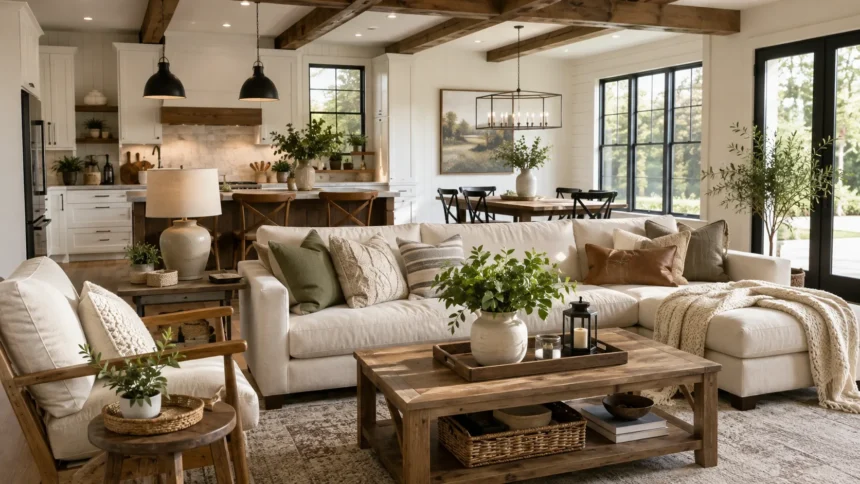
Farmhouse Home Decor Ideas With Modern Charm
Farmhouse decorating has changed considerably from the days when every room needed white shiplap, distressed furniture, mason jars, and oversized rustic signs. Today, farmhouse home decor feels warmer, cleaner, and much more personal. The most inviting farmhouse interiors combine natural materials, comfortable furniture, thoughtful vintage touches, and contemporary details without turning the home into a themed space. The result is relaxed enough for everyday living while still looking polished, stylish, and carefully considered.
Modern farmhouse style works because it brings together two qualities many homeowners want: comfort and simplicity. Rustic wood, woven textures, linen fabrics, aged finishes, and handmade-looking details add character, while streamlined furniture and uncluttered layouts keep everything fresh. Instead of copying traditional country interiors exactly, the modern approach borrows their warmth and authenticity while introducing cleaner shapes, practical storage, and a more restrained decorative palette.
Another advantage of farmhouse decor is flexibility. You do not need an actual farmhouse, exposed beams, or a countryside property to make the aesthetic work. An apartment, suburban home, new construction, or older property can all benefit from farmhouse-inspired details when they are introduced thoughtfully. Something as simple as a warm wood console, linen curtains, ceramic vase, vintage artwork, or woven basket can create the welcoming character associated with this decorating style.
The key is avoiding decoration that feels forced. Modern farmhouse homes look best when materials feel authentic, rooms are functional, and decorative objects appear collected rather than purchased as matching sets. Instead of filling every surface with rustic accessories, focus on texture, craftsmanship, warmth, and balance. These farmhouse decor ideas will help you create a home that feels comfortable and timeless while maintaining enough modern refinement to keep the style from looking dated.
What Makes Modern Farmhouse Decor Feel Fresh?
Modern farmhouse decor combines the welcoming character of traditional rural homes with the simplicity of contemporary interior design. Traditional farmhouse interiors often emphasized practical furniture, natural materials, handmade objects, and durable finishes because homes were designed around everyday family life. Modern interpretations preserve that sense of usefulness and comfort while removing excessive ornamentation and introducing cleaner architectural lines, calmer color palettes, and more intentional styling.
One noticeable difference is the treatment of rustic elements. Instead of making every piece look distressed or weathered, modern farmhouse rooms usually use aged materials more selectively. A reclaimed wood dining table might sit beside contemporary chairs, or an antique cabinet might become the character piece in an otherwise streamlined room. Limiting rustic finishes allows individual materials to stand out rather than competing for attention.
Modern farmhouse interiors also rely heavily on visual balance. Rough wood can be softened by linen upholstery, darker metal accents can contrast with creamy walls, and clean furniture silhouettes can sit comfortably alongside vintage artwork. These combinations prevent the room from feeling either too rustic or too minimal. Mixing old and new creates the layered appearance that makes farmhouse interiors feel lived-in rather than manufactured.
Most importantly, modern farmhouse decorating focuses on personality. Generic word signs and identical accessories are less effective than objects that have meaning, history, or craftsmanship. Family photographs, handmade pottery, inherited furniture, collected artwork, old books, and natural materials give the home individuality. When farmhouse decor reflects the people living there, the style becomes warmer, more authentic, and far less likely to feel like a temporary decorating trend.
Start With a Warm Neutral Color Palette
A warm neutral palette creates the ideal foundation for modern farmhouse interiors because it makes rooms feel calm without becoming cold or empty. Cream, warm white, oatmeal, beige, soft taupe, mushroom, and muted greige can all work beautifully on walls and larger furniture. These colors allow natural wood, artwork, textiles, plants, and architectural details to receive more attention while keeping the overall environment visually comfortable.
Pure bright white can still be used, but relying on it everywhere may make farmhouse spaces appear too stark. Warmer whites usually complement timber, stone, brass, leather, and woven materials more naturally. If your room receives limited natural light, creamy undertones can also help create a softer appearance. Before painting an entire space, test several shades at different times of day because natural and artificial lighting can significantly change how neutrals appear.
Neutral does not have to mean colorless. Earthy green, muted blue, clay, rust, dusty brown, charcoal, and faded terracotta can introduce depth without overpowering the relaxed farmhouse character. These colors work particularly well through cushions, rugs, cabinets, artwork, upholstered chairs, or decorative ceramics. A small amount of richer color often makes a neutral room feel more layered and intentional.
Think of your palette as several related tones rather than one repeated shade. A cream wall can sit behind an oatmeal sofa, darker wood coffee table, olive cushion, woven tan basket, and faded patterned rug. Because the colors have different depths and textures, the room feels interesting even though the overall palette remains restrained. This tonal approach creates the effortless warmth associated with sophisticated modern farmhouse decor.
Bring Natural Wood Into Every Room
Few materials define farmhouse style as effectively as natural wood. It introduces warmth, variation, and an organic quality that manufactured surfaces often struggle to reproduce. Dining tables, console tables, shelving, benches, bedside tables, kitchen stools, and decorative bowls all provide opportunities to bring wood into the home. The material does not need to be heavily distressed; visible grain and natural variation usually provide enough farmhouse character.
Mixing wood tones can make an interior feel more collected. Many homeowners worry that every timber finish needs to match, but using only one wood tone can make a room look overly coordinated. Light oak, medium brown wood, and a darker antique piece can coexist when other elements connect them visually. Repeating each tone at least once can help create a sense of balance throughout the room.
Reclaimed wood can be especially effective when used sparingly. A reclaimed mantel, dining table, floating shelf, or ceiling beam can become a strong focal point because its imperfections create visual interest. However, filling a room with reclaimed materials may push the design toward a much more rustic aesthetic. Pair aged wood with smooth walls, refined upholstery, simple lighting, or modern hardware to keep the overall look balanced.
Small wooden accents can also make a significant difference when larger furniture changes are not practical. Wooden picture frames, trays, chopping boards, stools, candleholders, or decorative boxes can introduce warmth inexpensively. Focus on materials that look and feel authentic rather than artificial wood prints whenever possible. Natural wood develops character over time, making it particularly well suited to farmhouse interiors intended to feel comfortable and lived in.
Mix Rustic Elements With Clean Modern Furniture
One of the easiest ways to prevent farmhouse decor from looking outdated is to balance rustic materials with contemporary furniture. A heavy timber dining table, for example, can feel much fresher when paired with simple upholstered chairs rather than an entire matching rustic dining set. Similarly, a vintage cabinet can sit beside a streamlined sofa or modern floor lamp without losing its traditional charm.
Clean-lined furniture provides visual breathing room around textured farmhouse materials. Sofas with straightforward silhouettes, simple coffee tables, modern dining chairs, and uncluttered storage pieces help create this balance. The furniture does not need to look ultra-modern or minimalist. Instead, choose pieces that feel timeless and uncomplicated, allowing wood grain, vintage accessories, textiles, and architectural details to provide most of the decorative personality.
Avoid purchasing matching furniture collections for every room. A bedroom where the bed, nightstands, dresser, and bench share exactly the same finish may feel more like a showroom than a comfortable farmhouse home. Mixing complementary pieces creates a sense that the interior developed naturally over time. An upholstered bed, antique nightstand, modern lamp, and wooden dresser can look far more interesting together.
The most successful combination usually includes contrast. Rough materials look better beside smooth ones, traditional shapes gain freshness beside contemporary silhouettes, and darker pieces become more dramatic against lighter backgrounds. Instead of asking whether two objects belong to exactly the same style, consider whether their scale, color, material, and visual weight complement one another. This mindset makes rustic modern decor significantly easier to personalize.
Layer Linen, Cotton and Other Natural Fabrics
Textiles are essential for making farmhouse rooms feel soft and welcoming. Linen, cotton, wool, jute, and other natural-looking materials provide tactile contrast against wood, metal, stone, and painted surfaces. Curtains, bedding, upholstery, cushions, throws, table linens, and rugs offer easy opportunities to introduce these textures without changing major architectural features or investing in expensive furniture.
Linen curtains work particularly well because their slightly relaxed texture complements farmhouse interiors while allowing rooms to remain elegant. Hanging curtains higher and wider than the window can visually increase the room’s height and make windows feel more substantial. Warm white, oatmeal, flax, or subtle patterned fabrics maintain a casual atmosphere without introducing unnecessary visual clutter.
Layering several fabrics helps prevent neutral rooms from feeling flat. A cotton sofa can be paired with a knitted throw, linen pillows, woven rug, and upholstered accent chair. Even if the colors are similar, variations in texture create enough contrast to keep the room interesting. This approach is especially useful in farmhouse bedrooms where comfort and softness should remain central to the design.
Patterns can also be introduced carefully. Subtle stripes, small checks, faded florals, ticking patterns, and understated botanical prints fit naturally within farmhouse interiors. Instead of using all of them at once, select one or two patterns and combine them with solid fabrics. Restraint keeps the home looking modern while allowing textiles to bring the relaxed character associated with traditional country interiors.
Add Vintage Pieces Without Making the Home Look Old
Vintage decor adds history and personality to farmhouse interiors, but it works best when individual pieces are given room to breathe. An antique dresser, weathered stool, old landscape painting, wooden chest, or vintage mirror can make a room far more memorable than numerous mass-produced rustic accessories. Choose pieces because you genuinely like their shape, craftsmanship, material, or story rather than simply because they appear old.
Mixing vintage and contemporary objects also keeps rooms visually balanced. Try placing a vintage landscape painting above a simple modern console or using an antique side table next to a contemporary sofa. The contrast highlights the character of the older piece while preventing the room from becoming a historical reproduction. This old-and-new relationship is one of the defining qualities of modern farmhouse design.
Secondhand shops, antique markets, family collections, flea markets, and architectural salvage stores can all provide interesting farmhouse accessories. Look for solid wood furniture, stoneware, framed artwork, brass candlesticks, ceramic vessels, woven baskets, old books, and small wooden objects. Minor imperfections often add charm, although furniture should still be structurally sound and practical enough for its intended purpose.
Be selective rather than filling every available corner. Too many antique items can make a home appear cluttered, especially when they are displayed in large groups without visual organization. One meaningful vintage object may contribute more character than ten generic decorations. Giving old pieces enough empty space around them allows their craftsmanship and unique details to become part of the room’s visual story.
Make the Farmhouse Living Room Warm and Inviting
The living room should communicate comfort immediately because it is often where farmhouse style becomes most noticeable. Begin with comfortable seating in durable fabrics such as linen blends, cotton, performance fabrics, or textured upholstery. Cream, beige, warm gray, camel, and soft brown are versatile choices that create a neutral foundation while allowing rugs, pillows, artwork, and wooden furniture to introduce greater personality.
A wood coffee table or substantial central ottoman can anchor the seating area. Instead of choosing furniture with exaggerated distressing, look for visible grain, simple craftsmanship, and an appropriately scaled silhouette. Add a woven or softly patterned area rug underneath to connect the furniture and introduce texture. Rugs also help define conversational areas, particularly in open-plan farmhouse interiors.
Create layers using a mixture of cushions and throws rather than perfectly matching accessories. A few linen pillows, a subtle striped cushion, and a knitted blanket can provide enough variety while preserving an uncluttered appearance. Decorative objects should also feel purposeful. A ceramic bowl, stack of books, small plant, or wooden tray often looks more sophisticated than filling the coffee table with numerous themed decorations.
Finish the living room with personal elements. Landscape artwork, family photography, collected pottery, vintage books, and meaningful objects make the space feel connected to the people living there. If the room has a fireplace, treat it as a natural focal point rather than overdecorating the mantel. A large piece of artwork, mirror, or restrained arrangement usually provides enough interest for a polished farmhouse living room.
Give the Farmhouse Kitchen a Modern Update
Farmhouse kitchens are known for combining practicality with warmth. Cabinetry in warm white, cream, muted green, natural wood, or deeper earthy colors can provide a strong foundation. Shaker-style doors remain particularly compatible with the aesthetic because their simple construction feels traditional without appearing excessively decorative. Clean hardware and uncluttered countertops can then bring a more contemporary finish.
Natural materials can create farmhouse character even in modern kitchens. Wood stools, chopping boards, stone countertops, ceramic containers, woven pendants, and open shelving can soften hard surfaces such as appliances and cabinetry. You do not need to use every farmhouse feature simultaneously. A few carefully selected natural elements usually create more visual impact than filling the room with decorative signs and accessories.
Open shelving can look beautiful when it serves a practical purpose. Display plates, glasses, bowls, cookbooks, or frequently used kitchenware rather than purely decorative objects. Keeping the arrangement functional prevents shelving from becoming cluttered. If open shelves require more maintenance than you prefer, glass-front cabinets can provide a similar opportunity to display attractive kitchenware while keeping items protected.
Lighting can significantly influence the atmosphere. Pendants above an island, wall lights near open shelving, and warm under-cabinet lighting can make the kitchen feel welcoming throughout the day. Choose fixtures with clean profiles in aged brass, dark metal, glass, ceramic, or woven materials. The goal is to complement the cabinetry and architectural details without making every fixture aggressively rustic.
Create a Farmhouse Dining Room That Feels Collected
A substantial dining table is often the natural centerpiece of a farmhouse dining room. Solid wood works beautifully because it offers durability while adding warmth and texture. The table can be rustic, traditional, or relatively modern depending on your preferences. What matters most is creating an inviting place where meals, conversations, and everyday activities can happen comfortably rather than designing a room used only for special occasions.
Dining chairs do not necessarily have to match the table. Upholstered chairs can soften a heavy timber surface, while simple black or natural wood chairs can introduce contrast. In larger rooms, using different chairs at the ends of the table can create an intentionally collected look. Whatever combination you choose, comfortable proportions should take priority because farmhouse spaces are intended for relaxed, practical living.
Lighting should help visually anchor the dining table. A substantial pendant, lantern-inspired fixture, understated chandelier, or modern sculptural light can all work depending on the architecture. Choose something large enough to feel connected to the table without overwhelming the room. A contemporary fixture can be especially effective because it provides contrast against more traditional dining furniture.
Complete the room with a restrained centerpiece and meaningful storage. A ceramic vessel filled with branches, bowl of seasonal fruit, or simple arrangement of greenery can provide natural beauty without blocking conversation. A sideboard or vintage cabinet can store dishes while displaying artwork or collected objects above it. These practical layers create the welcoming, informal quality associated with farmhouse dining room decor.
Turn the Bedroom Into a Relaxed Farmhouse Retreat
Farmhouse bedroom decor should prioritize comfort before decorative details. Begin with soft bedding in warm whites, cream, flax, muted green, faded blue, or other calm natural tones. Rather than purchasing an entire coordinated bedding set, layer sheets, a duvet or quilt, textured pillows, and a throw. Slight differences in shade and material give the bed more depth while keeping the room peaceful.
The bed itself can introduce character through an upholstered headboard, simple wooden frame, metal frame, or understated four-poster design. Avoid overly distressed finishes if you want the room to feel contemporary. Pairing a traditional bed shape with modern bedside lighting or minimal artwork can create a balanced aesthetic that combines farmhouse warmth with cleaner modern styling.
Nightstands provide another opportunity to mix old and new. Matching pieces can create symmetry, but two complementary tables can make the bedroom feel more naturally collected. A vintage wooden nightstand paired with a contemporary ceramic lamp creates subtle contrast. Keep bedside styling minimal so the room remains restful rather than becoming another location for excessive decorative objects.
Natural textiles complete the atmosphere. Linen curtains, a woven rug, upholstered bench, cotton bedding, and wool throw can make even a simple bedroom feel layered. Add artwork or photographs that have personal meaning rather than generic farmhouse slogans. Bedrooms should feel particularly individual, and carefully chosen objects often create more emotional warmth than any recognizable decorating trend.
Refresh the Bathroom With Subtle Farmhouse Details
Farmhouse bathrooms do not need to rely on distressed vanities or decorative signs. A cleaner approach combines simple cabinetry, warm wood, classic tile, natural stone, soft textiles, and thoughtfully chosen fixtures. These elements provide enough traditional character while allowing the room to remain fresh and practical. Bathrooms generally benefit from restraint because too many decorative details can quickly make smaller spaces feel crowded.
A wood or wood-look vanity can introduce warmth against tile and porcelain surfaces. If natural wood does not suit the environment, painted cabinetry in cream, muted green, mushroom, or deep charcoal can achieve a similar effect. Pair it with straightforward hardware and a simple countertop so the materials remain balanced rather than overly decorative.
Mirrors and lighting can add personality without requiring a major renovation. A rounded mirror can soften a room dominated by straight lines, while aged brass, black metal, ceramic, or glass sconces create subtle character. Select finishes that complement the rest of the home but do not feel obligated to make every metal fixture match perfectly.
Finish the room with practical textures. Cotton towels, woven storage baskets, simple bath mats, wooden stools, ceramic soap dispensers, and a small plant can create warmth while remaining useful. Decorative accessories should tolerate the moisture and daily activity of the bathroom. Farmhouse design feels most authentic when attractive objects also serve a clear purpose.
Use Farmhouse Decor in the Entryway
An entryway sets expectations for the rest of the home, making it an ideal location for a few strong farmhouse elements. A wood console, simple bench, woven basket, or vintage cabinet can establish the aesthetic immediately without requiring extensive decoration. Select furniture based on the available space so that the entrance remains comfortable and easy to move through.
Practical storage helps maintain the relaxed appearance. Baskets can hold shoes, scarves, or everyday accessories, while wall hooks provide convenient storage for coats and bags. A bench offers somewhere to sit while putting on shoes and can include hidden storage underneath. Functional elements are particularly consistent with farmhouse design because traditional farmhouse interiors were created around daily household routines.
Artwork and mirrors can provide vertical interest above entryway furniture. A vintage-inspired landscape, botanical print, family photograph, or large simple mirror can create a welcoming focal point. Avoid filling the wall with numerous small decorations unless a curated gallery arrangement suits the architecture. One strong piece often produces a cleaner and more contemporary impression.
Add softness with a washable runner, small lamp, pottery, or seasonal branches. These details can make an entrance feel warm without creating clutter near the doorway. Seasonal changes are easy here because branches, flowers, or a different textile can refresh the space without replacing major furniture. Keeping the foundation neutral allows these smaller changes to feel intentional throughout the year.
Bring Farmhouse Character Through Lighting
Lighting can transform farmhouse interiors because fixtures sit at the intersection of function and decoration. Instead of relying entirely on recessed or overhead lighting, create layers using pendants, chandeliers, sconces, table lamps, and floor lamps. Multiple light sources help rooms feel warmer in the evening while allowing different activities to receive appropriate illumination.
Materials can reinforce the farmhouse aesthetic subtly. Aged brass, iron, glass, ceramic, wood, linen, and woven fibers all work well depending on the room. Avoid choosing fixtures simply because they are labeled farmhouse. Look instead at their proportions, materials, and craftsmanship. A clean contemporary brass pendant can sometimes complement a farmhouse kitchen more successfully than an overly decorative lantern-style fixture.
Scale matters considerably. Small fixtures can disappear above large dining tables or kitchen islands, while oversized pieces may dominate compact rooms. Consider the size of the furniture and surrounding architecture when selecting lighting. In open-plan interiors, related finishes or shapes can connect different fixtures without requiring every pendant, lamp, and chandelier to come from the same collection.
Warm lighting can also make natural materials look richer and more inviting. Wood grain, woven textiles, plaster, stone, and warm paint colors benefit from softer illumination. Dimmers are especially useful because they allow brighter functional light when needed and a gentler atmosphere during meals or evenings. Thoughtful lighting ensures farmhouse rooms feel comfortable after natural daylight disappears.
Decorate Farmhouse Walls Without Overdoing It
Wall decor has a powerful influence on whether farmhouse interiors feel modern or outdated. Instead of relying heavily on inspirational quotes and oversized word signs, choose art that contributes color, history, or personality. Landscapes, botanical illustrations, sketches, still-life paintings, photography, and abstract artwork can all complement farmhouse interiors when their palettes connect naturally with the room.
Vintage artwork can add depth without requiring expensive originals. Flea-market paintings, old prints, framed textiles, and antique-style reproductions can provide visual character. Mixing one older-looking artwork with simpler contemporary furniture creates an effective contrast. Frames in natural wood, dark timber, antique brass, or understated painted finishes can strengthen the collected appearance.
Gallery walls can work well when they feel intentional. Combine different sizes rather than arranging many identical frames into a rigid grid unless the architecture calls for symmetry. Family photographs can be mixed with artwork, sketches, or small objects to create a more meaningful display. Maintaining some consistent element, such as a limited color palette, keeps the grouping visually connected.
You can also leave walls partially empty. Negative space is an important part of modern farmhouse design because it allows architecture, furniture, and meaningful objects to stand out. Every wall does not require artwork, shelves, or decorative signs. A calmer visual environment usually makes the pieces you do display feel more valuable and deliberate.
Add Greenery and Natural Elements
Greenery creates an easy connection between farmhouse interiors and the natural world. Houseplants, branches, cut flowers, herbs, and seasonal foliage can soften furniture and introduce organic shapes. You do not need elaborate floral arrangements; a few olive branches, eucalyptus stems, garden flowers, or leafy cuttings in a simple ceramic vessel can provide enough movement and color.
Choose plants according to the available light and your willingness to maintain them. Hardy indoor plants can be better choices than purchasing greenery solely for appearance. Kitchen herbs can also combine decoration with usefulness when adequate natural light is available. Terracotta pots, ceramic planters, baskets, and simple neutral containers complement farmhouse styling without distracting from the plants themselves.
Natural objects can provide similar effects when plants are impractical. Branches, dried grasses, pinecones, stones, wooden bowls, and seasonal fruit introduce organic textures while requiring minimal maintenance. Avoid filling every surface with nature-inspired accessories; one substantial arrangement often makes more impact than several small decorations scattered throughout a room.
Seasonal natural elements make farmhouse interiors easy to refresh throughout the year. Fresh blossoms can brighten spring rooms, leafy branches work well during summer, dried grasses and warm foliage suit autumn, and evergreen cuttings provide winter texture. Changing these temporary details allows your home to evolve seasonally without repeatedly purchasing new themed decorations.
Mix Metals for a More Natural Look
Modern farmhouse interiors often use black metal because it provides strong contrast against neutral walls and natural wood. However, using black fixtures everywhere can make the aesthetic feel formulaic. A more layered approach combines dark metals with aged brass, bronze, nickel, or other understated finishes. The variation makes the home appear developed over time rather than installed as one coordinated package.
Begin by choosing one dominant finish for permanent features such as faucets, door hardware, or major lighting fixtures. Introduce a second finish through smaller accessories, lamps, cabinet hardware, mirror frames, or decorative objects. Repeating each finish a few times helps the mixture feel intentional rather than accidental.
Warm metals such as brass work particularly well alongside natural wood and creamy neutral colors. Dark iron or black finishes can provide sharper contrast, while brushed nickel may create a lighter contemporary touch. Consider the undertones of surrounding materials instead of choosing metals based solely on trend. Warm and cool finishes can coexist when the rest of the room provides visual connections.
Do not worry about achieving perfect coordination. Farmhouse style benefits from a certain amount of variation because real homes acquire objects gradually. The objective is not random mixing but relaxed consistency. When furniture, lighting, and architectural details share complementary proportions and materials, slightly different metal finishes can actually make the room feel richer and more authentic.
Use Open Shelving Carefully
Open shelving can provide attractive farmhouse character because it allows practical objects to become part of the decoration. Kitchen shelves can display everyday dishes, drinking glasses, serving bowls, cookbooks, or ceramic containers. Living room shelves can hold books, artwork, pottery, and small personal objects. The most effective arrangements combine useful storage with enough empty space to keep the display visually calm.
Choose shelf materials that complement the room. Natural wood adds warmth, painted shelving can blend into surrounding walls, and simple metal brackets may create stronger contrast. Thick reclaimed timber provides a rustic appearance, while slimmer wooden shelves feel more contemporary. The level of rustic character should match the overall direction of the room rather than overpower it.
Avoid decorating every inch. Group objects with different heights and shapes, and allow some areas of the shelf to remain empty. A stack of books, ceramic vase, framed artwork, and small bowl can create more visual interest than rows of unrelated decorative accessories. Items should feel as if they have been gathered intentionally instead of purchased solely to fill available space.
Open shelving also requires realistic consideration of maintenance. Kitchen shelves can collect dust and cooking residue, particularly when objects are rarely used. If constant styling or cleaning does not suit your lifestyle, use fewer open shelves or choose glass-front cabinetry instead. Farmhouse interiors should support daily life rather than creating unnecessary work simply to achieve a particular appearance.
Avoid Farmhouse Decor That Feels Too Themed
The easiest way to make farmhouse decor feel dated is to repeat obvious symbols throughout the home. Roosters, tractors, mason jars, word signs, miniature windmills, distressed frames, and farm-related accessories can become overwhelming when used together. A farmhouse interior does not need to literally explain its theme. Natural materials and comfortable styling can communicate the aesthetic much more subtly.
Distressed furniture should also be used selectively. Artificially chipped paint on every cabinet, shelf, and table can make a home feel intentionally aged rather than naturally collected. If you love weathered pieces, choose one or two with genuine character and surround them with cleaner finishes. Contrast allows rustic elements to look special rather than repetitive.
Another common mistake is using too much stark white. Earlier interpretations of farmhouse interiors often depended heavily on white walls, white cabinets, white furniture, and pale accessories. Modern spaces usually benefit from greater tonal depth. Warm beige, wood, earthy colors, darker furniture, patterned textiles, and vintage finishes can make farmhouse rooms feel significantly richer.
Finally, resist buying complete collections of farmhouse accessories. A home becomes more personal when objects come from different places and periods. Combine new furniture with older finds, handmade objects, family pieces, travel discoveries, artwork, and practical everyday items. A farmhouse home should look like people actually live there, not like a retail display designed around a single decorative theme.
How to Decorate Farmhouse Style on a Budget
Creating farmhouse style does not require replacing every piece of furniture. Start by identifying what already works. A simple sofa, wooden table, neutral bedding, ceramic dishes, or existing baskets may fit the aesthetic once surrounded by different accessories. Reusing existing furniture also prevents the interior from looking as though everything was purchased at the same time.
Secondhand shopping can provide exceptional value for farmhouse interiors because older objects often contain the craftsmanship and patina the style naturally celebrates. Look for wooden stools, framed art, mirrors, pottery, baskets, side tables, cabinets, books, and brass accessories. A piece may need cleaning or minor repair, but small imperfections can contribute authentic character.
Paint and textiles provide affordable ways to create larger visual changes. Repainting a wall, cabinet, dresser, or interior door can transform a room without major renovation. Linen-look curtains, cushion covers, throws, and inexpensive rugs can introduce softness and warmth. Focusing spending on visible surfaces often delivers a stronger decorative result than purchasing numerous small accessories.
Take your time rather than trying to complete the entire home immediately. Collected farmhouse interiors become more interesting when items are added gradually. Waiting for the right secondhand table or artwork can produce a more distinctive home while controlling costs. Decorating slowly also gives you time to understand which colors, materials, and objects genuinely suit your lifestyle.
Blend Farmhouse Style With Your Personality
The best farmhouse interiors are not exact copies of inspiration photographs. They reflect how the homeowner lives, what they collect, and which colors and materials make them comfortable. If you prefer cleaner spaces, lean toward minimal modern farmhouse styling. If you enjoy antiques and pattern, introduce more vintage character while maintaining enough visual balance to prevent clutter.
Other interior styles can also blend naturally with farmhouse design. Scandinavian furniture can bring simplicity, traditional pieces can add elegance, industrial details can strengthen contrast, and cottage influences can introduce softer patterns and color. Mixing influences helps prevent the home from becoming trapped within one decorating category while allowing the farmhouse foundation to remain recognizable.
Personal objects are particularly valuable. Family photographs, inherited furniture, handmade pottery, children’s artwork, travel finds, books, and collected objects can make a neutral farmhouse room memorable. These elements tell a story that mass-produced decorations cannot recreate. Give meaningful pieces visible locations rather than hiding them because they do not perfectly match a predetermined color scheme.
Ultimately, farmhouse style should make your home feel comfortable rather than controlled by design rules. Choose durable materials, furniture you enjoy using, colors you find relaxing, and objects that matter to you. When modern simplicity, natural texture, and personal character work together, farmhouse decor becomes more timeless and far less dependent on temporary trends.
Final Thoughts
Farmhouse home decor remains appealing because it focuses on many qualities that make homes enjoyable to live in: warmth, comfort, natural materials, practical furniture, and personal character. The modern approach simply removes excessive rustic decoration and creates greater balance between traditional influences and contemporary design. This allows farmhouse interiors to feel relaxed without appearing outdated.
Begin with warm neutrals and natural wood, then introduce texture through linen, cotton, wool, woven materials, and subtle patterns. Add vintage pieces gradually and combine them with clean-lined furniture so neither the modern nor rustic side dominates. Thoughtful lighting, meaningful artwork, greenery, and carefully selected accessories can then give each room greater individuality.
You do not need major renovations to achieve the look. Changing textiles, adding a vintage side table, introducing warm wood, replacing decorative accessories, or adjusting the color palette can significantly change the character of a room. Small improvements often create better results than attempting to install every recognizable farmhouse feature at once.
The most successful modern farmhouse home feels collected rather than decorated according to a formula. Focus on authentic materials, useful objects, comfortable spaces, and pieces that reflect your personality. When you prioritize those qualities, farmhouse charm becomes something deeper than a decorating trend—it becomes a warm, practical, and welcoming way to shape the spaces you use every day.
Frequently Asked Questions
What colors work best for modern farmhouse decor?
Warm white, cream, beige, taupe, mushroom, soft green, muted blue, brown, and earthy tones work beautifully. Combine lighter neutrals with natural wood and deeper accents for more depth.
Is farmhouse decor still stylish?
Yes, especially when it combines natural materials, vintage character, warm colors, and clean modern furniture. Avoid excessive distressed finishes and themed accessories to keep the style fresh.
How can I make farmhouse decor look modern?
Use cleaner furniture silhouettes, warm neutral walls, natural wood, simple lighting, limited rustic accessories, and carefully chosen vintage pieces. Mixing old and new creates a more refined appearance.
Can you decorate farmhouse style on a small budget?
Absolutely. Reuse existing furniture, shop secondhand, change textiles, paint older pieces, add baskets, and introduce inexpensive natural materials instead of replacing everything at once.
What should I avoid in farmhouse decorating?
Avoid excessive word signs, matching furniture sets, too much distressed wood, overly bright white rooms, and large collections of themed accessories. Aim for a natural, collected appearance instead.