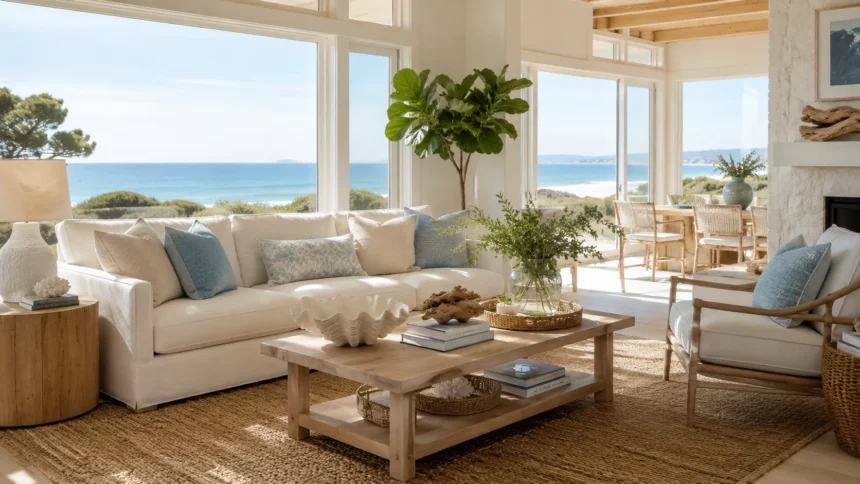
What Is Coastal Interior Design? Colors, Style & Ideas
Coastal interior design is a bright, relaxed decorating style inspired by beaches, ocean views, sandy landscapes, and the easygoing feeling of life near the water. It usually combines airy colors, natural materials, casual furniture, and plenty of light to create spaces that feel fresh rather than overly themed. The goal is not to fill your home with seashells and anchors, but to capture the calm atmosphere of the coast.
One reason the style remains so popular is its flexibility. A coastal home can feel modern, traditional, Mediterranean, tropical, or minimalist depending on the colors, furniture, and materials you choose. This makes the style suitable for everything from small apartments to large family homes, even if you live hundreds of miles away from an actual beach.
Authentic coastal interiors tend to focus on comfort and simplicity. Rooms are usually open, easy to move through, and filled with soft textures, natural fibers, pale woods, linen fabrics, and relaxed upholstery. These details create a casual look that feels welcoming rather than formal or overly decorated.
Understanding what coastal interior design is can help you create a home that feels lighter, calmer, and more connected to nature. Whether you are decorating a living room, bedroom, kitchen, or entire home, the style works best when you focus on atmosphere rather than obvious beach-themed decoration.
What Is Coastal Interior Design?
Coastal interior design is a style inspired by natural coastal environments, particularly the colors, textures, and materials associated with the sea, sky, sand, and shoreline. Instead of recreating a beach literally, the style translates those natural elements into a comfortable indoor setting through thoughtful choices in color, furniture, light, and texture.
The most recognizable features include white or soft neutral walls, blue accents, natural wood, woven materials, breezy fabrics, and uncluttered layouts. These elements work together to create the visual impression of openness and freshness, which is why coastal rooms often feel larger and brighter than they actually are.
Natural light plays an especially important role. Large windows, sheer curtains, light-reflecting surfaces, and simple furniture arrangements help daylight move throughout the room. Even homes with smaller windows can achieve a coastal feel by using pale colors and avoiding heavy window treatments that block available light.
Unlike strict nautical interiors, coastal design does not require ropes, ship wheels, anchors, or obvious maritime decorations. The most sophisticated versions of the style are subtle, using texture, color, and natural materials to suggest the coast rather than turning a home into a themed vacation rental.
Where Does Coastal Interior Design Come From?
Coastal interiors are influenced by homes built near shorelines around the world. Beach houses in places such as California, Florida, New England, the Mediterranean, Australia, and parts of Europe all developed different versions of relaxed seaside living based on their local climate, materials, architecture, and culture.
Traditional American coastal design often features white-painted wood, blue accents, slipcovered sofas, woven furniture, and natural textures. Mediterranean coastal interiors may include warmer stone, plaster walls, terracotta, earthy colors, and deeper blues. Australian coastal homes often emphasize open layouts, pale timber, greenery, and indoor-outdoor living.
These regional differences explain why coastal design is better understood as a broad family of styles rather than one rigid decorating formula. A home can feel coastal without using the exact same colors or furniture seen in another part of the world.
Modern coastal interior design has become increasingly refined. Instead of relying on obvious beach decorations, contemporary spaces often mix clean architectural lines, sculptural furniture, natural stone, textured fabrics, and subtle ocean-inspired colors. This updated approach feels more timeless and works well in homes that are not physically located near the coast.
Key Characteristics of Coastal Interior Design
The first major characteristic is brightness. Coastal spaces generally use light wall colors, simple window treatments, and reflective surfaces to make the most of natural daylight. This creates an airy quality that immediately makes the room feel more relaxed and open.
The second characteristic is connection to nature. Wood, rattan, linen, cotton, jute, stone, seagrass, and other natural materials appear frequently because they resemble the textures found in coastal environments. These materials also make pale interiors feel warmer and more tactile.
Comfort is another defining element. Coastal furniture is usually designed for relaxed living rather than formal display. Deep sofas, comfortable chairs, soft bedding, easy-care fabrics, and practical dining furniture help create spaces that are stylish but still suitable for everyday family life.
Finally, coastal rooms are generally uncluttered. Decorative objects are used selectively, and furniture layouts allow breathing room between pieces. This sense of visual space supports the calm, open atmosphere associated with beaches and ocean landscapes.
Coastal Interior Design Color Palette
The classic coastal color palette begins with white, cream, ivory, or pale beige. These colors create a light foundation and help reflect natural light around the room. Warm whites often work particularly well because they feel softer and less clinical than extremely bright, cool white.
Blue is the color most strongly associated with coastal interiors, but it can appear in many forms. Pale sky blue, seafoam, dusty navy, soft aqua, and muted blue-gray all work depending on the mood you want. Lighter blues create a breezy feeling, while deeper navy adds sophistication and contrast.
Sand-inspired neutrals such as beige, taupe, warm gray, oatmeal, and light brown are equally important. These colors keep a coastal room from becoming too blue-and-white and help connect the interior visually with natural materials like wood, jute, and stone.
Green, coral, soft terracotta, and muted yellow can also appear as accents. The key is to choose colors that feel slightly softened rather than overly bright. Coastal interiors usually feel more natural when the palette resembles sun-faded landscapes rather than highly saturated tropical décor.
The Role of Natural Light in Coastal Style
Natural light is essential because it reinforces the open, breezy feeling associated with coastal homes. Whenever possible, windows should remain visually light and unobstructed. Sheer curtains, linen panels, woven shades, or simple blinds can provide privacy while still allowing daylight to enter.
Pale walls and ceilings help distribute available light throughout the room. Mirrors can also be useful when positioned to reflect windows or bright areas. These strategies are particularly valuable in apartments or smaller homes where large coastal-style windows may not be possible.
Furniture placement matters as well. Avoid putting bulky cabinets or tall furniture directly in front of major windows unless necessary. Keeping sightlines open allows the room to feel brighter and creates a stronger visual connection between indoor and outdoor spaces.
Artificial lighting should support the same relaxed atmosphere after sunset. Woven pendants, simple table lamps, wall sconces, and warm floor lamps can provide multiple layers of light without making the room feel overly formal or harsh.
Natural Materials That Define Coastal Interiors
Natural materials bring depth to coastal spaces and prevent light color schemes from looking flat. Pale oak, weathered wood, bamboo, rattan, wicker, linen, cotton, jute, seagrass, stone, and ceramic are all commonly used because they feel casual and connected to nature.
Wood plays a particularly important role. Light-toned or lightly finished timber can be used for flooring, coffee tables, dining furniture, shelving, and cabinetry. Weathered finishes can work too, but they should feel authentic rather than artificially distressed on every surface.
Woven materials add texture without making the room feel heavy. A rattan chair, seagrass basket, jute rug, or woven pendant light can introduce warmth while maintaining the relaxed coastal atmosphere. Using too many woven pieces at once, however, can make a room feel visually busy.
Stone and ceramic provide a useful contrast to softer materials. A limestone-look table, handmade ceramic vase, stone countertop, or textured pottery can make a coastal space feel more refined while still fitting naturally within the overall palette.
Coastal Furniture: Relaxed, Simple, and Comfortable
Furniture in a coastal interior should look comfortable before it looks impressive. Sofas are often deep and inviting, with simple silhouettes and upholstery in white, cream, beige, or pale gray. Slipcovers can reinforce the casual character, although structured upholstery also works in more modern versions of the style.
Wood furniture typically has a light or medium natural finish rather than a very dark, glossy appearance. Dining tables, benches, cabinets, and coffee tables can include visible grain and subtle imperfections that make the room feel more organic and less formal.
Rattan and woven furniture are also popular, especially for accent chairs, dining seats, or occasional tables. These materials create an indoor-outdoor quality that works particularly well in sunny rooms and open-plan living spaces.
Avoid overcrowding the room with too many furniture pieces. Coastal interiors feel calmer when each item has enough space around it. A few comfortable, well-proportioned pieces will usually create a stronger result than filling every corner simply because space is available.
How to Design a Coastal Living Room
Start with a light foundation. Warm white walls, pale wood floors, and a natural-fiber rug create an easy backdrop for a coastal living room. If your floors are dark, lighter furniture and textiles can still brighten the overall space.
Choose a comfortable sofa in a neutral color and add blue, green, or sandy accents through cushions and throws. Rather than buying matching sets, mix textures such as linen, cotton, wool, and woven materials to make the room feel layered.
Use natural materials in your tables and accessories. A wooden coffee table, rattan chair, ceramic lamp, and woven basket can create plenty of coastal character without relying on literal beach décor.
Finish with selective artwork and greenery. Abstract ocean-inspired art, landscape photography, botanical prints, or simple natural forms can create atmosphere. A few healthy plants also help connect the room with nature and prevent the palette from feeling too static.
Creating a Coastal Bedroom
A coastal bedroom should feel calm, light, and comfortable. Begin with soft colors such as white, cream, pale blue, beige, or muted green. These shades create a restful foundation and pair naturally with wood, woven textures, and simple bedding.
Choose a bed frame with clean lines, natural wood, or subtle upholstery. Rattan or woven headboards can also work beautifully when used as one focal texture rather than repeated throughout the entire room.
Layer bedding with cotton or linen sheets, a lightweight duvet, textured blanket, and a few carefully chosen pillows. Coastal bedrooms usually look more relaxed when bedding feels slightly casual instead of overly formal or perfectly arranged.
Keep accessories simple. A ceramic lamp, woven basket, small plant, framed artwork, or wooden bedside table may be enough. The bedroom should feel visually quiet so that the coastal theme supports rest rather than becoming decorative clutter.
Coastal Kitchen Design Ideas
Coastal kitchens often combine light cabinetry with natural materials and practical layouts. White, cream, pale gray, soft blue, or muted green cabinets can all work depending on the amount of daylight and the overall mood of the home.
Wood brings warmth to the space through stools, shelves, flooring, cutting boards, or dining furniture. In more modern coastal kitchens, pale oak cabinetry can replace traditional white cabinets while still maintaining a light and natural appearance.
Countertops may include quartz, marble-look surfaces, limestone, or other pale materials. The aim is usually to keep the kitchen bright without making every surface exactly the same shade of white.
Lighting can become an important design feature. Woven pendant lights above an island or dining table introduce texture and warmth, while simple metal or glass fixtures can create a more contemporary coastal look.
Coastal Bathroom Design Ideas
Bathrooms are naturally suited to coastal design because water already plays an important role in the space. Light tiles, pale walls, natural wood, and soft blue or green accents can create a clean and refreshing atmosphere.
White subway tile, textured stone, pale terrazzo, and sandy-colored surfaces all fit well within the style. Rather than using ocean-themed patterns everywhere, keep the permanent finishes relatively timeless.
Natural wood vanities or shelving can soften cool tile surfaces. Woven baskets, cotton towels, ceramic accessories, and simple greenery add texture without requiring major renovation.
Keep storage organized so the bathroom feels open rather than crowded. Coastal style works best when countertops remain relatively clear and practical storage keeps everyday products accessible but visually controlled.
Modern Coastal Interior Design
Modern coastal interior design combines the relaxed atmosphere of traditional coastal style with cleaner lines and more contemporary furniture. The result is lighter and more refined than heavily themed beach-house décor.
Modern coastal rooms often use fewer colors. White, warm beige, pale oak, muted blue, black, and soft green may form the entire palette. This restraint makes textures and architectural details more noticeable.
Furniture can be sculptural or streamlined rather than rustic. Curved sofas, simple dining chairs, stone tables, and contemporary lighting can all fit naturally within a coastal home when the materials and colors remain soft.
The biggest difference is subtlety. Modern coastal design suggests the coast through atmosphere rather than decoration. A room may contain no shells or maritime objects at all and still feel unmistakably coastal.
Coastal vs. Nautical Interior Design
Coastal and nautical interior design are related but not the same. Coastal style is generally inspired by natural seaside landscapes, while nautical design draws more directly from ships, sailing, and maritime imagery.
Nautical interiors often use navy blue, crisp white, stripes, rope details, anchors, brass hardware, and other recognizable marine references. These features create a stronger thematic identity.
Coastal interiors usually feel softer and more natural. Pale woods, sand tones, linen, woven textures, and muted blues are more common than bold navy-and-white contrasts.
If you want a timeless home, coastal design is often easier to maintain because it relies less on obvious decorative symbols. Nautical elements can still be added selectively as accents when you want a slightly more traditional seaside character.
Coastal vs. Hamptons Interior Design
Hamptons design is one variation within the broader coastal family. It is inspired by luxurious homes in the Hamptons region of New York and tends to feel more polished, traditional, and upscale than casual beach-house interiors.
Hamptons rooms often feature detailed cabinetry, paneled walls, classic furniture, navy accents, large rugs, and more formal lighting. Coastal design in general can be much more relaxed and varied.
Both styles use light colors, natural materials, blue accents, and generous daylight. The main difference is the level of formality and architectural detailing.
If you prefer elegant, symmetrical spaces, a Hamptons-inspired coastal look may suit you. If you prefer casual furniture, organic textures, and a more relaxed atmosphere, broader coastal design may feel more natural.
Coastal vs. Mediterranean Interior Design
Mediterranean coastal design takes inspiration from countries surrounding the Mediterranean Sea, including Greece, Italy, Spain, and parts of southern France. It often feels warmer and more earthy than typical American coastal interiors.
White plaster walls, stone, terracotta, rustic wood, deep blue, olive green, and natural fibers are common. Arched openings, textured walls, and handmade ceramics may also appear.
Traditional coastal design in the United States tends to use lighter wood, soft blue, white, beige, and casual upholstery. The overall feeling is often cooler and airier.
You can blend both approaches by combining pale coastal colors with warm stone, textured walls, ceramics, and earthy accents. This creates a sophisticated home that feels coastal without looking predictable.
How to Use Coastal Decor Without Overdoing It
The easiest mistake is using too many obvious beach-themed accessories. Shell-covered frames, anchor signs, rope decorations, starfish, and ocean quotes can quickly make a home feel themed rather than naturally coastal.
Instead, use materials and colors to create the atmosphere. A woven rug, pale oak table, linen curtains, blue ceramic vase, and landscape artwork can communicate the style more effectively.
If you love shells or beach objects, display a few meaningful pieces rather than filling every room. A small collection gathered during travels can feel personal and authentic when presented thoughtfully.
Think of coastal décor as the finishing layer rather than the foundation. The room should already feel relaxed through light, furniture, color, and texture before decorative accessories are added.
Best Fabrics and Textures for Coastal Homes
Linen is one of the most effective fabrics for coastal interiors because its slightly relaxed texture naturally supports the casual look. It works well for curtains, cushions, bedding, and upholstery.
Cotton is equally useful because it is comfortable, versatile, and easy to incorporate. Cotton slipcovers, throws, towels, and bedding can create softness without feeling overly luxurious or formal.
Jute, sisal, and seagrass add rougher natural texture. These materials are particularly popular for rugs, baskets, lampshades, and smaller accessories.
Mixing smooth and textured materials creates balance. A soft linen sofa beside a rough jute rug and smooth ceramic lamp feels more interesting than using one texture throughout the room.
How to Make a Small Space Feel Coastal
A small room can benefit enormously from coastal design because the style naturally emphasizes brightness and openness. Begin with pale walls and avoid overwhelming the space with too many strong colors.
Choose furniture with lighter visual weight. Pieces with visible legs, slim frames, or open bases allow more floor to remain visible and make the room feel less crowded.
Use mirrors strategically to reflect light and create greater visual depth. Sheer curtains can also make windows appear larger while allowing daylight to enter.
Limit decorative objects to a few carefully chosen items. Small spaces feel more authentically coastal when they remain calm and breathable rather than filled with beach-themed accessories.
Common Coastal Interior Design Mistakes
One common mistake is making everything blue and white. While these colors are strongly associated with the coast, using them exclusively can make a room feel predictable or overly themed.
Another mistake is using too much distressed wood. A few weathered pieces can create character, but heavily distressed furniture throughout the room may make the space feel artificial or dated.
Too many beach accessories are another issue. Coastal design should suggest the shoreline through light, texture, and natural materials rather than constantly reminding visitors that the room has a beach theme.
Finally, avoid sacrificing comfort for appearance. Coastal homes should feel relaxed and easy to use, so choose furniture, fabrics, and layouts that suit your actual lifestyle.
How to Create Coastal Interior Design on a Budget
Begin with the simplest changes. Remove clutter, open curtains, rearrange furniture, and introduce lighter textiles. These improvements can dramatically change the atmosphere without requiring major spending.
Paint can provide one of the biggest transformations. Warm white, soft beige, pale blue, or light gray can create a fresh coastal foundation at relatively low cost.
Secondhand furniture is also worth exploring. Simple wooden tables, rattan chairs, baskets, mirrors, and neutral upholstery can often be found affordably and integrated into coastal interiors.
Spend selectively on pieces that have strong visual impact. A large natural-fiber rug, attractive pendant light, quality curtains, or comfortable sofa may contribute more than dozens of small decorative accessories.
Is Coastal Interior Design Still Popular?
Coastal design remains appealing because its core principles are practical rather than dependent on one short-term trend. Light, comfort, natural materials, and relaxed layouts are qualities many people want regardless of where they live.
The style has also evolved. Modern coastal interiors increasingly use warmer neutrals, curved furniture, pale wood, stone, and subtle blue or green accents rather than traditional nautical details.
This flexibility keeps coastal style from feeling dated. Homeowners can adapt it toward minimalism, modern design, Mediterranean influences, or traditional beach-house interiors without losing its essential character.
Ultimately, the appeal of coastal interior design comes from how it makes a home feel. Bright, relaxed, natural, and comfortable spaces are likely to remain desirable long after individual decorating trends change.
How to Bring Coastal Interior Design Into Your Home
Start by maximizing light and creating an uncluttered foundation. Remove heavy window treatments when appropriate, simplify furniture arrangements, and choose a light neutral color for the largest surfaces.
Next, introduce natural materials. Wood, linen, cotton, jute, ceramic, stone, and woven fibers can create the texture needed to make a pale room feel warm rather than empty.
Add coastal colors carefully. Blue, green, sand, and soft gray work beautifully as accents, but they do not need to appear everywhere. A few coordinated touches can create more sophistication than an entire room filled with ocean colors.
Finish with meaningful decoration and comfortable furniture. The best coastal interiors feel like places where people can genuinely relax. If the room feels bright, natural, easy to use, and connected to the outdoors, you have already captured the essence of the style.
Frequently Asked Questions
What defines coastal interior design?
Coastal interior design is defined by light colors, natural materials, relaxed furniture, airy layouts, and subtle inspiration from the sea, sky, sand, and shoreline.
What colors are best for coastal interior design?
Warm white, cream, beige, sand, pale gray, soft blue, seafoam green, and navy are common coastal colors. Muted shades generally create a more natural and timeless appearance.
Is coastal interior design the same as nautical?
No. Nautical design uses stronger maritime themes such as anchors, rope, stripes, and navy blue, while coastal design focuses more subtly on natural light, materials, textures, and seaside-inspired colors.
What furniture works best in a coastal home?
Comfortable sofas, light wood tables, rattan chairs, woven furniture, and simple pieces with relaxed silhouettes work particularly well. Furniture should feel practical and inviting rather than formal.
How can I make my home look coastal without living near the beach?
Use a light neutral palette, natural wood, linen or cotton fabrics, woven textures, soft blue accents, and plenty of natural light. Keep beach-themed accessories minimal for a more authentic look.