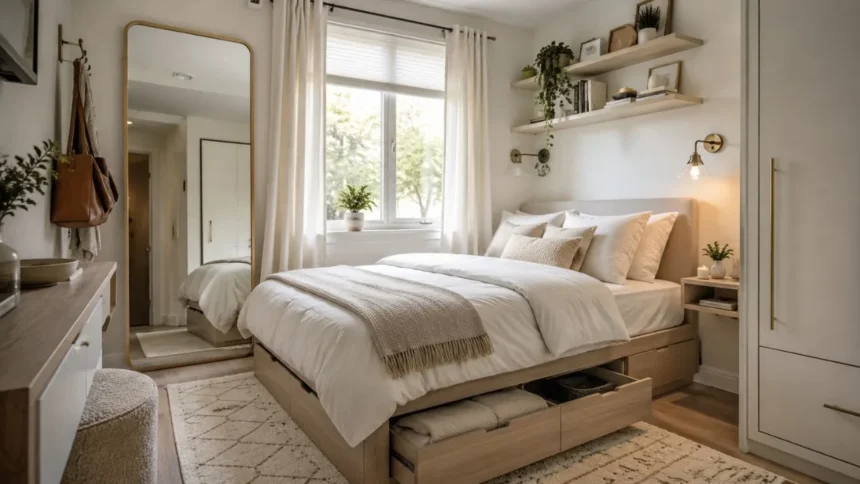
Small Bedroom Decor Ideas That Save Space
A small bedroom can feel comfortable, stylish and organized when every piece has a clear purpose. The challenge is not simply finding smaller furniture. You also need to create enough storage, protect walking space and prevent the room from becoming visually crowded with too many unrelated objects.
Effective small bedroom decor combines appearance with function. A floating bedside shelf can replace a bulky table, while a storage bed can hide bedding, shoes or seasonal clothes. These practical choices allow you to decorate the room without using valuable floor space for items that provide little everyday value.
Colour, lighting and furniture placement also influence how spacious the bedroom feels. Connected colours create visual continuity, mirrors reflect light and correctly positioned curtains can make windows appear larger. These decorating techniques cannot increase the room’s actual dimensions, but they can make the available space feel calmer and easier to use.
This guide explores practical small bedroom decor ideas that save space without removing personality. It covers bedroom layouts, storage furniture, wall-mounted solutions, compact workspaces, lighting, mirrors, textiles and renter-friendly updates. You will also learn which common decorating mistakes can make a tiny bedroom feel even smaller.
Measure the Bedroom Before Decorating
Begin by measuring the bedroom’s length, width and ceiling height. Record the positions of windows, doors, radiators, electrical outlets and fitted wardrobes. These details affect where the bed and storage furniture can go, so accurate measurements should come before shopping or rearranging large items.
Measure your existing furniture as well as the room. A bed or dresser may look reasonably sized when viewed alone but dominate the bedroom once placed beside other pieces. Writing the dimensions down allows you to identify which items are creating problems before spending money on replacements.
Create a basic floor plan on paper or through a room-planning application. Test several layouts while leaving enough space to walk, open drawers and access the wardrobe. Planning first reduces the risk of moving heavy furniture repeatedly or purchasing something that cannot function in the available area.
Measure doorways, staircases and narrow hallways before ordering new bedroom furniture. A compact wardrobe may fit the room but still be impossible to move into the property. Flat-pack, modular or easily disassembled furniture can be more practical when access is restricted.
Declutter Before Adding More Storage
Decluttering is the most affordable way to create space in a small bedroom. Clothes on chairs, unused accessories and crowded surfaces make the room feel tighter than it really is. Removing unnecessary possessions may solve part of the storage problem without requiring additional furniture.
Work through one category at a time rather than emptying the complete bedroom at once. Begin with clothing, then review books, paperwork, beauty products and decorative items. Decide what should remain in the bedroom based on how frequently it is used and whether another room provides more suitable storage.
Avoid purchasing organizers before completing this process. Storage boxes can make clutter look controlled while allowing unused objects to remain. Once you understand what genuinely needs to stay, you can select containers that fit the items and the available spaces correctly.
Keep the most frequently used belongings within easy reach. Seasonal items, spare bedding and occasional accessories can move into under-bed storage or higher shelves. This approach makes everyday routines easier while using less accessible areas for possessions that do not require constant attention.
Choose the Right Bed Size
The bed is usually the largest object in a small bedroom, so its size influences every other decorating decision. A larger mattress may offer comfort, but it can also remove space needed for storage, movement or a work area. Balance sleeping needs with the room’s practical limitations.
Measure the complete bed frame rather than the mattress alone. Upholstered headboards, wide side rails and extended footboards can add several inches to the overall footprint. A simple platform or metal frame may provide the same mattress size while taking up less visual and physical space.
A double bed may be sufficient for one person who does not need a larger sleeping surface. Couples should consider comfort carefully before reducing bed size simply to gain floor space. A bedroom that looks open but produces poor sleep will not function successfully.
Low-profile beds can make the ceiling appear higher because they create more visible wall space. However, they may reduce under-bed storage and can be difficult for people with mobility concerns. The correct height should support both the room’s appearance and the user’s physical comfort.
Position the Bed Strategically
Placing the bed against the longest uninterrupted wall often creates the most balanced layout. This position can establish a strong focal point while leaving other walls available for storage. However, windows, heating systems and doors may require a different arrangement.
Pushing one side of the bed against a wall can save space in a single-person bedroom. The arrangement may feel less formal, but it creates a larger open area for a desk, wardrobe or dresser. Ensure that bedding can still be changed without excessive difficulty.
Couples generally benefit from access to both sides of the bed. Narrow wall-mounted shelves can replace full bedside tables when space is limited. Even a small walking gap may improve comfort and prevent one person from climbing across the mattress every night.
Avoid placing the bed where it blocks a door, wardrobe or natural walking route. A layout should feel safe in darkness and allow quick movement when necessary. Preserving a clear path is more important than achieving perfect decorative symmetry.
Invest in a Storage Bed
A storage bed combines sleeping and organization within the same footprint. Drawers beneath the mattress can hold bedding, clothes, shoes and other items that would otherwise require a separate dresser. This makes storage beds particularly valuable in bedrooms without fitted wardrobes.
Choose the opening style according to the room layout. Side drawers need enough clearance to extend fully, while drawers at the foot require open space beyond the bed. An ottoman-style frame lifts the mattress and provides access from above, making it useful when surrounding floor space is extremely limited.
Before purchasing, consider how frequently you will need the stored items. Large lift-up compartments are excellent for seasonal belongings but may feel inconvenient for clothes used every day. Dividers and labelled bags can prevent the deep space from becoming disorganized.
Check the bed’s weight limit, lifting mechanism and internal construction. A poorly made storage frame may become difficult to open or develop damaged drawers. The additional storage provides value only when the system remains safe, accessible and dependable during regular use.
Use Under-Bed Storage Effectively
You can create under-bed storage even when the frame does not include built-in drawers. Low containers, rolling boxes and zipped fabric bags can use the empty area beneath the mattress. Measure the height carefully before purchasing containers to ensure they slide in without catching.
Store items according to category rather than placing unrelated possessions together. One box can hold spare bedding, another can contain seasonal clothing and a third can organize shoes. Labels reduce the need to pull out every container while searching for a specific object.
Choose containers with secure lids when dust is a concern. Fabric bags may fit into irregular spaces, while rigid plastic boxes provide stronger protection. Rolling containers are useful on hard floors, although wheels can become difficult to move across deep carpet.
Do not fill the space with items you have already decided you do not need. Hidden storage can delay decluttering because unused possessions remain out of sight. Review under-bed containers seasonally and remove anything that no longer supports your current lifestyle.
Take Storage Up the Walls
Vertical storage uses wall height instead of consuming limited floor space. Tall bookcases, wall shelves and over-door units can hold more than short, wide furniture. They also draw the eye upward, helping the bedroom feel taller when the arrangement remains organized.
Install shelves above a desk, dresser or headboard where they do not interrupt walking routes. Use them for books, baskets and light decorative items. Avoid placing heavy or fragile objects directly above the bed unless the mounting system is designed for the weight and wall type.
Tall wardrobes can provide more storage without increasing the furniture’s width. Use upper shelves for suitcases, seasonal clothes or spare blankets. A small folding step may be necessary, so store it safely and avoid climbing on unstable bedroom furniture.
Leaving some wall space empty prevents vertical storage from feeling overwhelming. Covering every wall with shelves can make a compact room appear crowded. Concentrate storage on one or two zones and allow the remaining surfaces to create visual breathing room.
Add Floating Bedside Shelves
A floating shelf can provide enough space for a phone, glass of water and small lamp without the bulk of a bedside cabinet. Because the floor remains visible beneath it, the sleeping area can appear more open and easier to clean.
Choose a shelf depth that supports essential items without extending into the walking path. A narrow ledge may be sufficient for a phone and book, while a deeper shelf is needed for a table lamp. Rounded corners can reduce the risk of painful bumps in a tight layout.
A wall-mounted drawer provides hidden storage while preserving the floating appearance. It can hold charging cables, medication or personal objects that would otherwise clutter the surface. Select hardware suitable for the wall material and the expected load.
Renters can use narrow stools, compact nesting tables or shelves supported by approved no-drill systems. Always follow weight limits and test temporary fixings carefully. A renter-friendly solution should remain stable during normal use and remove without damaging weak paint.
Replace Floor Lamps with Wall Lighting
Floor lamps and large bedside lamps occupy surfaces that may be needed for storage. Wall-mounted sconces or plug-in reading lights provide illumination without using the floor or bedside table. They can also create a cleaner and more intentional headboard area.
Adjustable wall lights are useful for reading because the beam can be directed without lighting the entire room. Position the fixture at a comfortable height before drilling or attaching anything. The light should reach the page without shining directly into your eyes.
Plug-in sconces offer a practical alternative to hardwired lighting. Their cables can be guided neatly along the wall through approved covers or clips. Keeping wires controlled prevents the room from looking cluttered and reduces the chance of tripping.
Battery-operated lights can work in rentals or areas without nearby outlets. Check the expected battery life and brightness before relying on them as the main bedside lighting. Rechargeable models may be more convenient than replacing disposable batteries frequently.
Choose Multifunctional Furniture
Multifunctional furniture allows one item to perform several jobs. A storage bench can provide seating and hold bedding, while a small desk can double as a dressing table. This reduces the number of separate pieces required within the bedroom.
A folding desk can create a workspace when needed and return the floor area afterwards. Wall-mounted versions are useful in extremely narrow rooms, although they require secure installation. A compact secretary desk can provide storage while hiding work materials behind a closed front.
Nesting tables offer flexible surfaces without permanently occupying the space required by several tables. They can function as bedside furniture, laptop stands or temporary surfaces for guests. When not needed, the smaller pieces fit beneath the largest one.
A Murphy bed can transform a bedroom into a multipurpose room, but it needs professional planning and dependable installation. The complete bed must have enough clearance when opened. Never sacrifice safe anchoring or an accessible walking route for the promise of additional daytime space.
Select Tall and Narrow Furniture
Tall, narrow furniture provides storage while preserving more of the floor. A vertical chest of drawers often fits a small bedroom better than a wide dresser. It also creates an opportunity to store less frequently used items in the upper drawers.
Choose furniture that matches the scale of the room. Deep wardrobes and heavy cabinets may dominate the available space even when their width is limited. Check the depth as carefully as the height and width before ordering.
Furniture with visible legs can make the room appear lighter because more flooring remains visible. Mid-century-inspired pieces often use compact proportions and raised bases that work well in small spaces. However, a fully closed base may provide additional hidden storage.
Secure tall furniture to the wall when the manufacturer recommends it. Narrow units can become unstable when drawers are opened or weight is distributed unevenly. Safety must remain part of the decorating plan, especially in homes with children or pets.
Organize a Small Wardrobe
A small wardrobe becomes more useful when its interior is divided according to your clothing. Add a second hanging rail for shirts or folded trousers when full-length hanging space is not required. This can nearly double the usable area within one section.
Shelf dividers and stackable organizers can prevent folded clothing from collapsing into untidy piles. Place frequently worn items at eye level and move occasional pieces higher. Keeping categories together makes it easier to see what you own and avoid unnecessary purchases.
Use slim hangers to create more space along the rail. Matching hangers can also make the wardrobe feel visually calmer. Avoid forcing so many garments inside that they become creased or difficult to remove.
Hooks on the inside of wardrobe doors can hold belts, scarves or lightweight bags. Hanging organizers may also work, but very deep products can prevent the doors from closing. Measure the internal clearance before adding any door-mounted storage.
Use the Space Behind Doors
The space behind a bedroom or wardrobe door is often overlooked. Slim hooks, rails and hanging organizers can hold bags, accessories, robes or tomorrow’s outfit. These solutions provide storage without introducing another piece of floor furniture.
Choose organizers according to the available clearance. A deep rack may collide with the wall or prevent the door from opening fully. Test the normal movement of the door before filling the storage with heavy items.
Over-door hooks are simple to install, but they can prevent some doors from closing correctly. Check the gap between the door and frame before purchasing. Padded hooks can help protect the top surface from scratches.
Avoid loading the back of the door with too many visible objects. A crowded organizer can become the first thing you see when entering the room. Use closed pockets, consistent colours or a limited number of categories to maintain a cleaner appearance.
Create a Space-Saving Work Area
A small bedroom may also need to function as a home office or study space. Choose a narrow desk that provides enough depth for essential equipment without dominating the room. A floating desk can preserve floor space and make the work zone feel lighter.
Place the desk near natural light when possible, but avoid screen glare. Using the wall above it for shelves or a pegboard keeps stationery off the work surface. Closed containers can hide cables and paperwork at the end of the day.
A stool or compact chair can slide completely beneath the desk when not in use. However, comfort still matters when you work for long periods. Choose supportive seating and avoid a decorative chair that causes pain during regular use.
Create a clear boundary between work and sleep. Store the laptop and documents out of sight after working hours, or close a fold-down desk. This helps the bedroom return to a calmer purpose rather than feeling like an office throughout the evening.
Use Mirrors to Reflect Light
Mirrors can reflect windows and lighting, making a compact bedroom feel brighter. Position a mirror where it reflects an attractive part of the room rather than clutter or an open doorway. The reflected view becomes part of the overall design.
A full-length mirror provides practical value while visually extending the wall. Mounting it on a wardrobe door can save floor space. Freestanding mirrors should be secured appropriately, particularly when they are heavy or placed near a walking route.
Mirrored wardrobe doors can make a large storage unit appear less visually solid. However, they also require regular cleaning and may not suit everyone’s preferred atmosphere. Consider whether the repeated reflections will feel spacious or distracting.
One well-positioned mirror usually creates more impact than several small designs. Too many reflective surfaces can make a bedroom feel busy. Select a size and shape that relates to the surrounding furniture and remaining wall area.
Create Visual Space with Colour
Light colours reflect more light and can make a bedroom feel open, but white is not the only option. Warm cream, pale green, soft blue, light taupe and muted pink can create a spacious effect while giving the room personality.
Using similar tones across walls, bedding and curtains reduces visual interruption. This tonal approach allows the eye to move through the space without stopping at strong colour boundaries. Texture and small accents can then provide interest without making the room feel fragmented.
Dark colours can still work in a small bedroom when used intentionally. Deep green, navy or warm brown may create a cozy, cocooning atmosphere. Balance darker walls with sufficient lighting and avoid combining them with too much bulky dark furniture.
Limit the palette to a few connected shades. Many unrelated colours can make the room appear divided into smaller sections. Repeating one accent colour through cushions, artwork and storage boxes creates a more organized and deliberate design.
Hang Curtains to Emphasize Height
Curtains mounted above the window can draw attention toward the ceiling. Extending the rod slightly beyond the window frame also exposes more glass when the curtains are open. This allows additional daylight to enter and can make the window appear wider.
Full-length curtains usually create a cleaner appearance than panels ending halfway down the wall. The fabric can finish just above the floor to avoid gathering dust or blocking movement. Measure from the final rod position rather than the top of the window.
Choose fabric that provides privacy without making the room unnecessarily dark. Sheer curtains can soften daylight, while blackout blinds or lined panels support sleep. Layering the two allows you to adjust light levels according to the time of day.
Avoid curtains that overwhelm a narrow bedroom with heavy folds or large patterns. A simple texture or colour connected with the walls can make the window treatment feel less dominant. Save stronger patterns for one controlled feature when the room already contains several storage elements.
Choose the Right Rug Size
A rug adds comfort and can visually define the bed area. In a compact bedroom, the rug should connect clearly with the bed rather than appearing as a small separate island. A runner on each side can work when a larger rug is outside the budget or space.
A larger rug can begin beneath the lower portion of the bed and extend beyond the sides and foot. This placement provides softness where you step without hiding the complete rug. Measure carefully so it does not block doors or wardrobe drawers.
Choose a low-pile rug when clearance is limited. Thick rugs may prevent doors from opening and can make rolling storage containers difficult to use. A non-slip pad improves stability and can add comfort without excessive thickness.
A subtle pattern can hide everyday marks and add character to a simple room. When the bedding and artwork are already busy, a plain textured rug may provide better balance. The rug should connect the design rather than introducing another unrelated theme.
Decorate Above the Bed Safely
The wall behind the bed is a natural focal point that does not require extra floor space. Paint, wallpaper, lightweight art or a decorative headboard can create interest without adding furniture. This makes the area valuable in a room where every inch matters.
A painted arch or rectangular panel can visually frame the bed at a low cost. The feature may replace the need for a physical headboard. Choose a colour connected with the bedding to make the complete sleeping area feel coordinated.
Lightweight fabric, baskets or unframed prints may be suitable when secured correctly. Avoid placing heavy glass frames, large mirrors or unstable shelves directly above where you sleep. Decorative impact should never come at the expense of safety.
Leave enough space between the headboard and artwork for the arrangement to breathe. A crowded wall can make the bed area feel compressed. One larger piece often looks calmer and more modern than many small objects competing for attention.
Use Closed Storage to Reduce Visual Clutter
Open storage makes every possession part of the room’s decor. This can feel overwhelming in a small bedroom because clothes, packaging and personal products introduce many colours and shapes. Closed drawers, baskets and cabinets create a calmer visual background.
Use matching or coordinated storage boxes on open shelves. The containers do not need to be identical, but similar colours and materials help the arrangement appear organized. Labels can identify contents without requiring transparent boxes.
Keep a small number of books, plants or meaningful objects visible. These items give the room personality while the less attractive necessities remain hidden. Leaving some shelf space empty prevents the storage wall from looking completely packed.
Closed storage still requires internal organization. A full drawer can become as frustrating as an open pile when items are impossible to locate. Dividers and category-based storage make the hidden space easier to maintain.
Create a Small Bedroom for Two People
A shared small bedroom requires careful planning because clothing, charging devices and personal items can quickly double. Begin by identifying which storage can be shared and which needs to remain separate. Clear ownership helps prevent one person’s belongings from spreading across the complete room.
Use wall-mounted bedside shelves or narrow tables on both sides when possible. Individual reading lights and charging points can make the bedroom more comfortable without requiring large cabinets. Matching pieces are not necessary, but their sizes should feel reasonably balanced.
Divide wardrobe space according to clothing needs rather than automatically splitting every section in half. One person may require more hanging space, while the other needs additional drawers. A practical arrangement should reflect what each person actually owns.
Maintain clear access around the bed and agree on simple organization habits. Under-bed boxes, laundry storage and hooks should have defined purposes. A shared compact room remains calmer when both people can return belongings to an obvious location.
Make a Rental Bedroom Feel Larger
Renters can improve a small bedroom without painting or installing permanent furniture. Large mirrors, coordinated bedding, freestanding shelves and plug-in wall lights can create a more functional room. These items can also move with you when the tenancy ends.
Use removable hooks and adhesive strips only on suitable surfaces and within their stated limits. Test a hidden area before applying several products. Paint that is old, damaged or recently applied may lift even when the product is marketed as removable.
A large rug can cover unattractive flooring while introducing colour and softness. Curtains mounted through tension rods may improve privacy when drilling is not allowed. Confirm that the rod can support the chosen fabric safely.
Ask for written permission before attaching heavy shelves, changing fixtures or painting walls. Some landlords may approve improvements when professional installation or restoration is agreed. Clear communication protects both the property and your security deposit.
Decorate a Small Bedroom on a Budget
Begin with free improvements such as decluttering, cleaning and rearranging the furniture. These steps reveal whether the bedroom needs additional storage or simply a better layout. They also prevent you from purchasing organizers for items that should leave the room.
Shop second-hand for mirrors, narrow drawers, bedside tables and wall decor. Measure everything before collecting it and inspect furniture for damage or pests. A low price does not provide value when the piece is unsafe, too large or expensive to transport.
Use paint, fabric and replacement hardware to update existing furniture. A basic bedside table can feel more modern after cleaning and adding new handles. Removable vinyl may refresh drawer fronts when permanent changes are not suitable.
Spend first on items that improve daily function, such as storage, lighting or comfortable bedding. Small decorations should come later. A room with effective organization and good light will normally feel more finished than one filled with inexpensive accessories.
Common Small Bedroom Decor Mistakes
The most common mistake is purchasing furniture that is too large. A wide dresser, deep wardrobe or oversized headboard may provide useful features but remove essential walking space. Always compare the complete dimensions with the actual room layout.
Adding too many storage products can create another form of clutter. Boxes, carts and shelves occupy space even when they are intended to organize it. Declutter first, then select the smallest number of storage systems needed for what remains.
Another mistake is filling every wall with shelves, hooks and artwork. Vertical space is valuable, but complete coverage can make the room feel visually heavy. Concentrate storage in selected zones and preserve some open wall area.
Poor lighting can make a small bedroom feel cramped and unwelcoming. One harsh ceiling fixture creates shadows and limits flexibility. Combining general, bedside and task lighting makes the room more comfortable without requiring additional floor furniture.
Refresh a Small Bedroom Step by Step
Start by removing clutter and cleaning the complete bedroom. Sort possessions, empty unnecessary furniture and create clear floor space. This first stage allows you to see the room’s proportions and identify the most serious functional problem.
Measure the room and test alternative bed positions. Decide where storage, lighting and any workspace need to go. Complete the layout before buying decorative accessories because furniture placement determines which surfaces remain available.
Introduce storage through the bed, walls and wardrobe. Choose one or two solutions that address the largest categories of clutter. Avoid purchasing a different organizer for every small problem because the room may become filled with containers.
Finish with colour, textiles, lighting and personal decor. Repeat a limited palette and keep surfaces edited. Live with the updated room briefly before adding anything else, since the new layout may feel complete with fewer decorations than you expected.
Final Thoughts
Small bedroom decor should make the room easier to use as well as more attractive. The most effective ideas protect floor space, use wall height and combine several functions within one piece of furniture. Good organization provides the foundation for every decorative improvement.
Begin with the bed because it controls much of the layout. Storage frames, wall-mounted bedside shelves and compact lighting can improve the sleeping area without using additional floor space. Tall storage and organized wardrobes can then handle clothing and personal belongings.
Colour, mirrors, curtains and connected textiles help the bedroom feel calmer and brighter. These visual techniques work best when the room is not overcrowded. Removing one unnecessary item may sometimes create more space than adding another storage product.
A small bedroom does not need to feel empty or impersonal. Artwork, plants, books and favourite colours can still give it character. Choose each feature intentionally, preserve clear movement and create a compact bedroom that supports both comfort and everyday life.
Frequently Asked Questions
How can I make a small bedroom look bigger?
Use a connected colour palette, layered lighting and a well-positioned mirror. Keeping the floor visible and reducing visual clutter can also make the room feel more open.
What furniture is best for a small bedroom?
Choose compact multifunctional furniture such as a storage bed, narrow dresser or floating desk. Furniture with raised legs can also make more of the floor visible.
Where should a bed go in a small room?
Place the bed against the longest suitable wall while preserving access to doors and wardrobes. A single bed can sit against one wall when additional floor space is needed.
How do I add storage without making the bedroom crowded?
Use under-bed containers, tall furniture, wall shelves and organized wardrobe interiors. Closed storage can hide practical items and reduce visual clutter.
What colours work best in a small bedroom?
Warm white, beige, pale green, soft blue and light taupe can create an open atmosphere. Darker colours can also work when balanced with sufficient lighting and simpler furniture.